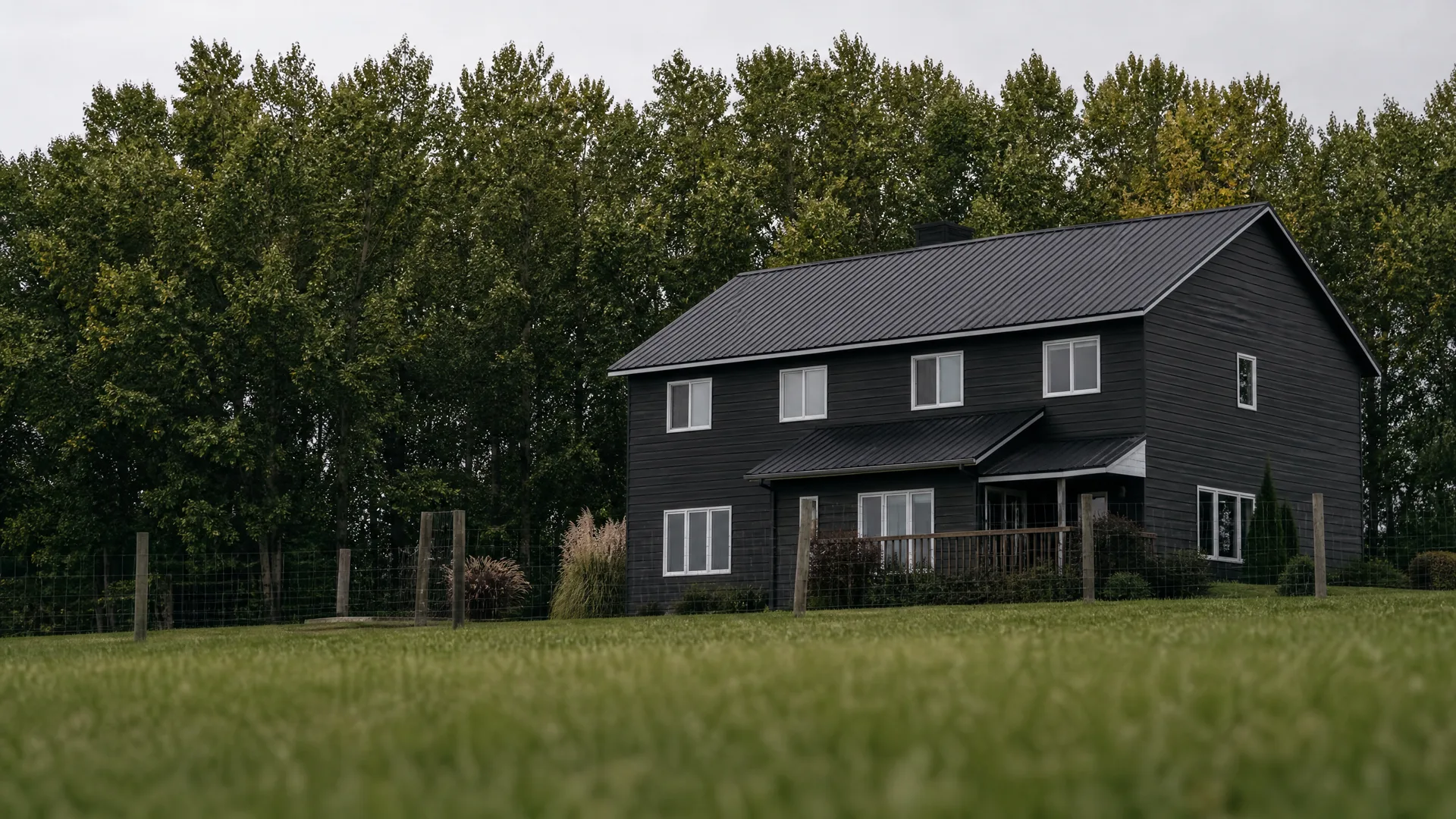
A two-story black-clad house with a dark metal roof, white-trimmed windows and a small covered porch, standing behind a wire fence on a grassy lawn with tall deciduous trees behind it under an overcast sky.

Heat Pump Installation in Rugby, ND

Tell us about the job

Takes about a minute. No obligation.

New system or replacementHeat PumpPierce County, ND
Step 1 of 2

What ZIP code is the job in?

Electricity runs the heat here

Power in Pierce County ran about 11 cents per kilowatt-hour in 2025, cheaper than most of the country. Most homes here already heat with electricity, so the heat pump isn't competing with gas. It's the main way heat gets into the house.

Every kilowatt it uses shows up on the bill

A heat pump that runs well uses less power to move the same heat. One that doesn't will draw more, month after month, through a winter that doesn't let up. Here, that difference has nowhere to hide.

9 months
September through May, your system heats
2 months
July through August, it cools
1°F
the average winter night it heats against
78°F
the average summer afternoon it cools against
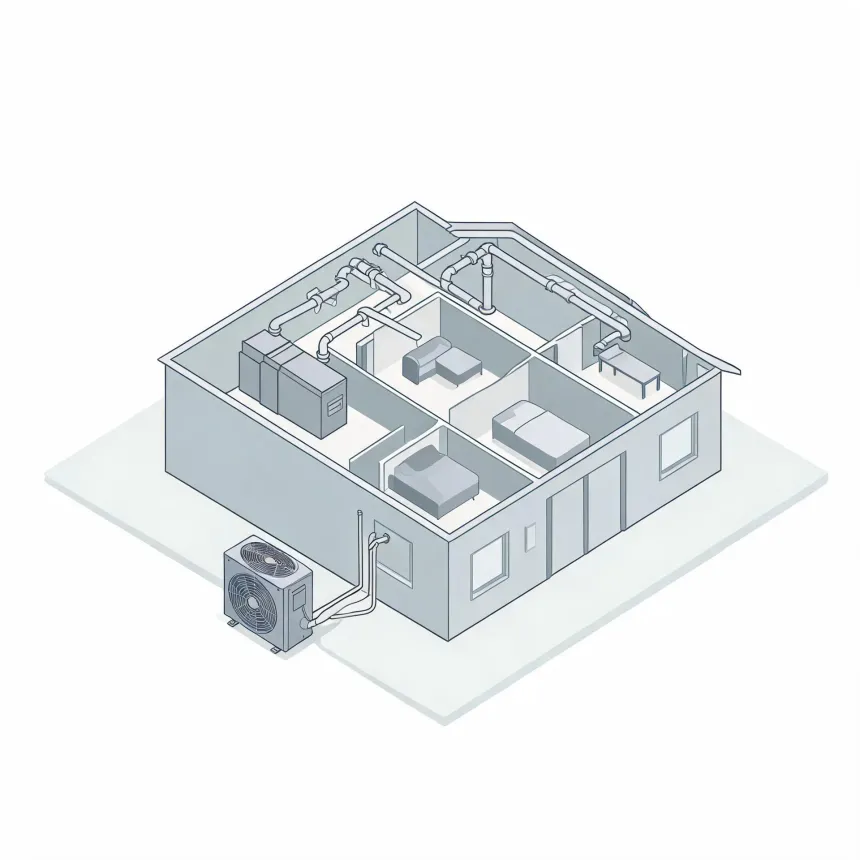
Isometric line illustration of a cutaway single-story house showing interior rooms with beds and furniture, ceiling ductwork connected to an indoor air handler, and an outdoor condenser unit linked by refrigerant lines.
Your system heats September through May and cools July through August.

NOAA nClimDiv, 1991–2020 normals

Pierce County logged 32 winter storms and 29 hail events between 2015 and 2024.

A heat pump installed here has to hold up against that weather, year after year, not just run efficiently.

Nine months of heat, two of cooling. This runs most of the year here.

Cooling runs July through August
Heat runs September through May
Climate zone 7

Half the homes in Pierce County were built in 1972 or earlier. A house that age usually wasn't built with a heat pump in mind, and the ductwork or electrical panel may still reflect that. Installing one now means sizing the system to the house, not the other way around. A unit too big for the space cycles on and off and never settles into the steady low output that keeps the power draw down. A unit too small struggles through the stretch of hard winter this county gets and leans on backup heat to make up the difference. Getting the size and setup right matters more here than it would somewhere with a milder stretch of cold to cover.

Sizing it right is what keeps the bill down

An installer who gets the size and setup right the first time is the whole ballgame here. Power is cheap in Pierce County, but a heat pump that runs well still uses less of it than one that doesn't, month after month, through a winter that doesn't quit. Get a quote on installing one sized for your house.

Find a contractor
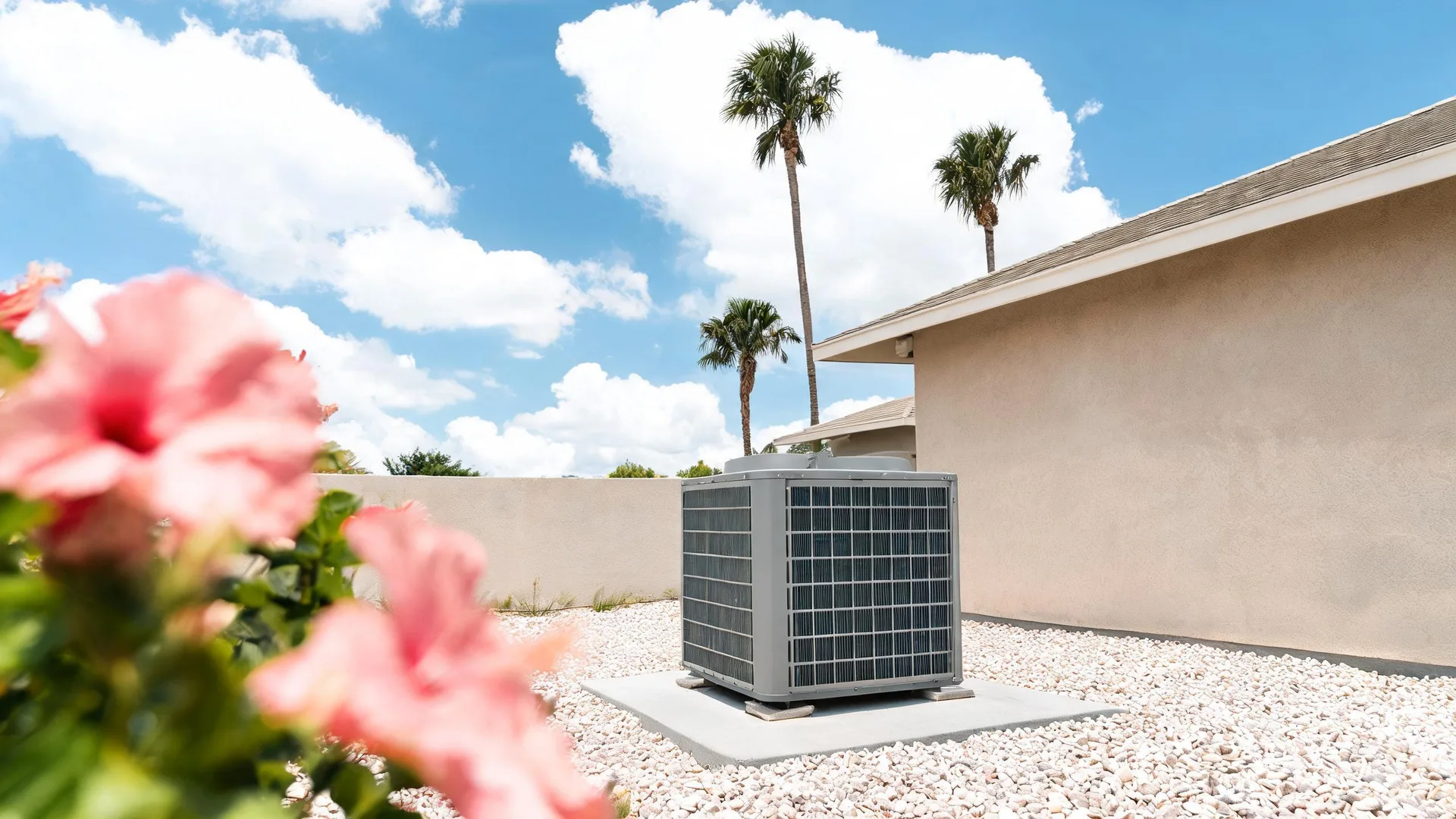
A gray heat pump condenser unit mounted on a concrete pad against the gray lap-siding exterior wall of a house.

It runs almost all the time here, so it wears like it

The clip beside this runs the system through a full day and into the night, because that is close to how often it actually runs here. A heat pump installed in Rugby does not get much of a break. It works through the stretch of hard winter this county gets, then keeps working through warm summer stretches too. That kind of runtime adds up on the moving parts, the compressor and the outdoor coil especially, faster than it would somewhere the machine gets to sit idle half the year. Pick equipment built for that kind of duty, and an installer who sets it up to run steady rather than cycling on and off trying to keep up.

Sizing comes from a load calculation, not the old unit's size

A contractor works out heat loss and heat gain room by room, looking at square footage, window area, insulation and air leakage, then adds it up for the whole house. Matching the replacement to whatever was there before skips that step and just repeats whatever mistake was already built in. The outdoor unit and the indoor coil both get picked to match that number, not rounded up for a margin of safety.

Oversized and undersized both cost you, in different ways

A heat pump too big for the house satisfies the thermostat fast and shuts off, so it never runs long enough to move the moisture out of the air or settle into its steady, efficient stage. It short cycles, and every start draws more power than a steady run does. One too small never gets ahead of the load, so it runs flat out and leans on backup heat strips to close the gap, which costs far more to run than the compressor alone. Right sized, it runs long, steady stretches at low output, which is where this equipment is built to work.

When you're comparing systems, ask what the manufacturer rates the unit down to at low outdoor temperatures, not just its output at mild conditions. Every heat pump loses capacity as the air outside gets colder, but how much it loses separates one model from another. Ask whether it's a single-stage, two-stage or variable-speed compressor, because that's what decides whether it runs flat out every cycle or throttles down to match what the house actually needs. Ask what backup heat is paired with it and at what outdoor temperature that backup kicks in, since a system that leans on backup heat too early will cost more to run than the compressor by itself. Ask for the sound rating too. A unit that sits right outside a bedroom window matters differently than one tucked around back. And ask what the warranty actually covers, parts versus labor, and for how many years, because a compressor failure outside that window is a different bill than one inside it.

Close to half the homes in Pierce County heat with electricity, more than any other fuel. Bottled or LP gas comes next, and utility gas barely reaches homes here at all. So a heat pump fits into a house that's already wired for electric heat, not one that has to be converted over to it. Replacing an electric furnace or baseboard heat with a heat pump means the house keeps running on what it already runs on. The wiring in place is a known starting point for the installer, not a guess. What takes the real thought isn't the fuel. It's sizing the unit to the house it's going into.