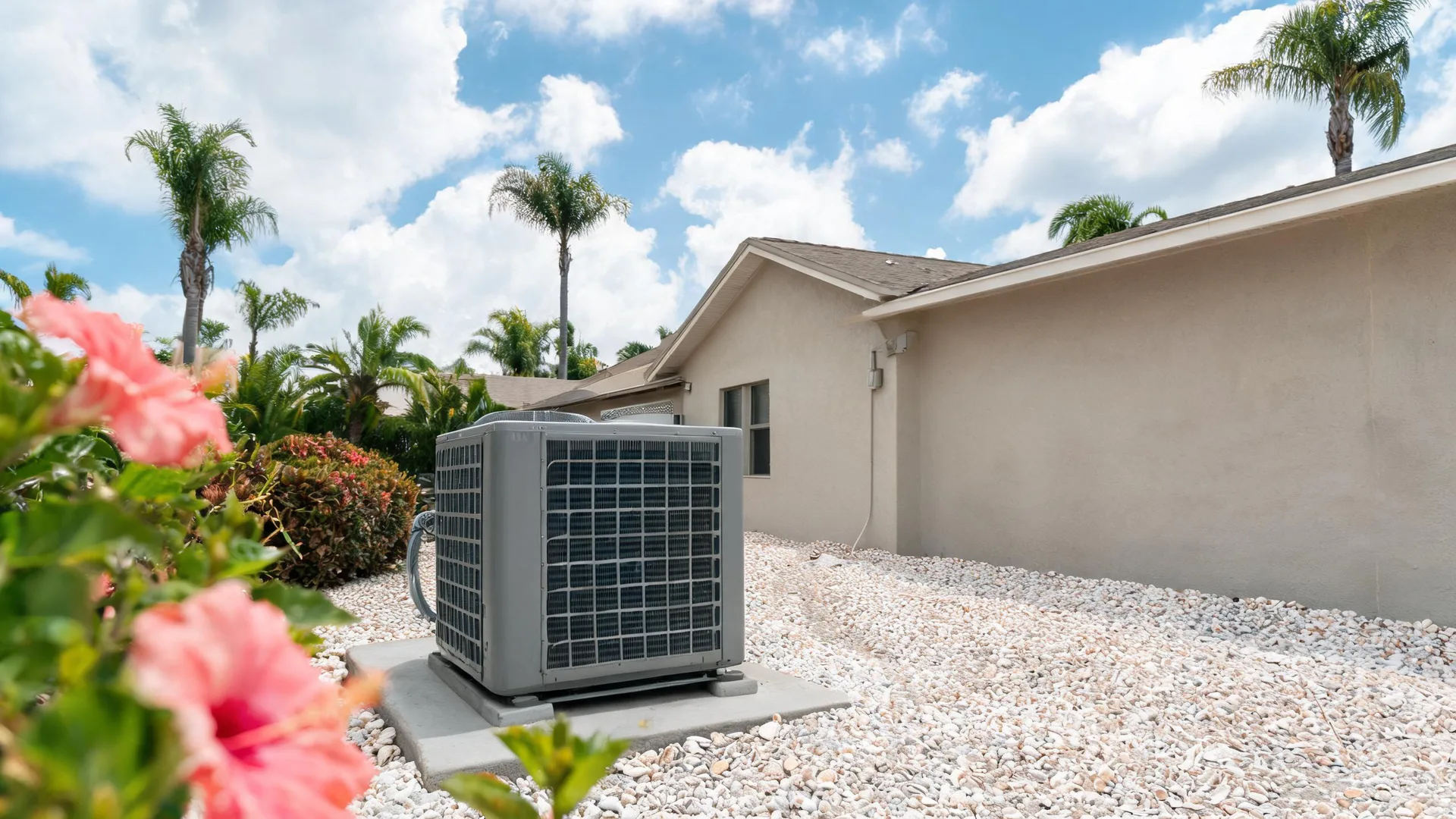
A grey outdoor HVAC unit mounted on a concrete pad beside the beige-sided exterior wall of a suburban house.

Heat Pump Installation in Powers Lake, ND

Tell us about the job

Takes about a minute. No obligation.

New system or replacementHeat PumpBurke County, ND
Step 1 of 2

What ZIP code is the job in?

Electricity here is cheap, but a heat pump still runs most of the year

Burke County paid about 10.26 cents per kilowatt-hour in 2025, lower than most of the country. A heat pump here still runs on most days of the year, heating through the cold months and cooling through the warm ones. Low rates don't cancel out that much runtime.

Efficiency decides what that runtime adds up to

Two heat pumps pulling the same cheap power can land on different bills if one holds its efficiency better than the other. With a system running this many months, the difference between a well-matched installation and a poor one shows up every time the meter turns.

10 months
September through June, your system heats
2 months
July through August, it cools
2°F
the average winter night it heats against
78°F
the average summer afternoon it cools against
Isometric line illustration of a cutaway house showing interior rooms, an air handler with ductwork in the attic space, and an outdoor condenser unit beside the exterior wall.
Your system heats September through June and cools July through August.

NOAA nClimDiv, 1991–2020 normals

Almost half the homes in Burke County already heat with electricity.

A heat pump fits into that setup instead of fighting it.

Heat starts in September, so August is the month to get it done

Cooling runs July through August
Heat runs September through June
25 hail events from 2015 to 2024

Get the installation right and your rate stays low on every bill

Burke County already has cheap power on its side. What the installation decides is whether the system makes the most of it, month after month.

Find a contractor
A man in a dark shirt and work boots carries a canvas tool bag filled with tools up wooden porch steps toward a navy blue front door of a shingled house, with a potted shrub to the right.
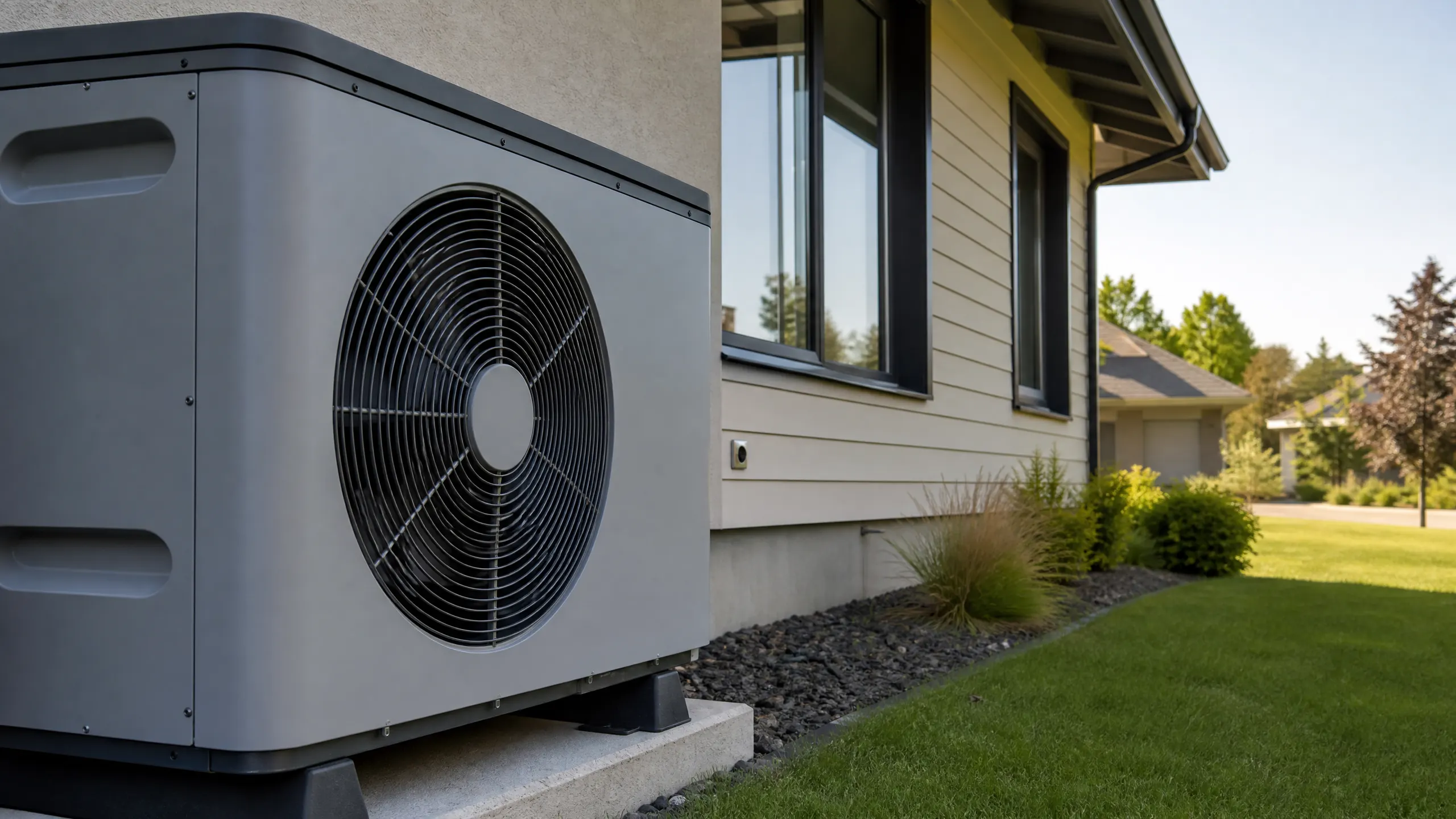
A residential heat pump outdoor unit mounted on a concrete pad next to a house with gray vinyl siding.

This house has history. The system still has to fit it.

Half the homes in Burke County were built in 1969 or earlier. A house that age wasn't built with a heat pump in mind, and the ductwork or electrical panel may still reflect that. None of that rules out an install. It just means the system has to be sized and fitted to the house as it actually is now, not to a standard plan. A contractor who sizes it against your ducts and your panel, not just the square footage, is the one who gets this right.

Ask for the load calculation, not a guess off square footage

A heat pump sized right comes from a room by room load calculation that accounts for windows, insulation and layout. Two houses the same size can need different sized systems. A contractor who quotes a number before looking at the house is sizing off habit, not off your house.

Ask what happens on the coldest days

Every heat pump has a point where it needs backup heat to keep up. Ask what that backup is, how it switches on, and what temperature triggers it. A system that leans on backup heat too early will cost more to run than one matched to handle more of the cold on its own.

The label on a heat pump carries two efficiency ratings, one for cooling and one for heating. Both describe the same idea. For the same amount of power drawn, a higher rated unit moves more heat than a lower rated one. That gap doesn't show up on the first bill. It shows up over a full year of the system cycling on and off, over every degree of heating and cooling it has to make up. A higher efficiency unit usually costs more upfront, and the compressor and coil inside it are often built to hold that efficiency longer before anything drifts out of tune. A low rated unit isn't broken. It just has to draw more power to do the same job, every time it runs. Installation affects this as much as the rating does. A unit that's sized wrong, or hooked to ductwork that chokes its airflow, won't hit the number on its label no matter how high that number is.

Burke County sits in climate zone 7, one of the coldest zones in the 2021 energy code. That rating is what sets the floor for any new heat pump installed here. Under the federal minimums, a split system heat pump made from 2023 onward has to pull at least 7.5 Btu of heat for every watt hour it uses over the winter, and at least 14.3 Btu over the summer. Those numbers apply everywhere, but a zone 7 winter is where the heating side of that rating actually gets tested. A unit that barely clears the minimum will spend a hard Powers Lake winter working closer to its limit than the same unit would in a milder zone. There's also a federal tax credit available for qualifying installations, worth checking against whatever system you're considering.