






A black two-story house with gabled roof and white-framed windows stands behind a mown green lawn, backed by a row of tall deciduous trees and a wire fence.

Heat Pump Installation in Oakes, ND

Tell us about the job

Takes about a minute. No obligation.

New system or replacementHeat PumpDickey County, ND
Step 1 of 2

What ZIP code is the job in?

Electricity here runs about 12.17 cents per kilowatt-hour, cheaper than most of the country pays. That sounds like good news, and it is. But a heat pump in Dickey County earns its keep differently than one in a mild climate. It has to work through a hard winter and still cover summer cooling, so it draws power most months of the year. Cheap power helps, but a unit that wastes it still adds up over that many months of running. How efficiently it turns electricity into heat or cooled air matters more here than in a place where the system barely runs half the year.

9 months
September through May, your system heats
3 months
June through August, it cools
6°F
the average winter night it heats against
79°F
the average summer afternoon it cools against
Isometric grey-toned illustration of a cutaway house showing interior rooms, ceiling ductwork and an air handler, connected by lines to an outdoor condenser unit beside the building.
Your system heats September through May and cools June through August.

NOAA nClimDiv, 1991–2020 normals

Electricity heats 46.1% of homes in Dickey County, more than any other fuel.

A heat pump replacing an electric furnace or electric baseboard is swapping one electric system for another, not asking the house to take on a fuel it never had.

39 hail events, 42 winter storms, nights averaging 6°F. This is what a heat pump here runs through every year.

39 hail events from 2015 to 2024
42 winter storms from 2015 to 2024
Winter nights average 6°F

Dickey County falls under zone 6A, a cold, humid climate zone in the 2021 energy code. Any split-system heat pump installed here has to meet the federal minimum for that kind of equipment, removing at least 14.3 Btu of heat per watt-hour of electricity over the summer and delivering at least 7.5 Btu per watt-hour over the winter. That's not a target a contractor aims for. It's the floor every new unit has to clear before it can go in. Some systems are built to do better than the minimum, and in a place where the heat pump runs most of the year, that difference shows up on the bill.

Choose the heat pump that earns back its cost here

Picking which heat pump goes in is the one choice here that decides what every bill after it looks like. The unit has to clear the federal minimum, but it doesn't have to stop there, and in a county where the system runs most months of the year, the gap between the minimum and a stronger unit is real money over and over. Settle this one before the installer orders equipment.

Find a contractor
A man in a dark work shirt, tan cargo pants and boots, seen from behind, climbs porch steps toward a navy front door while carrying a worn leather tool bag.
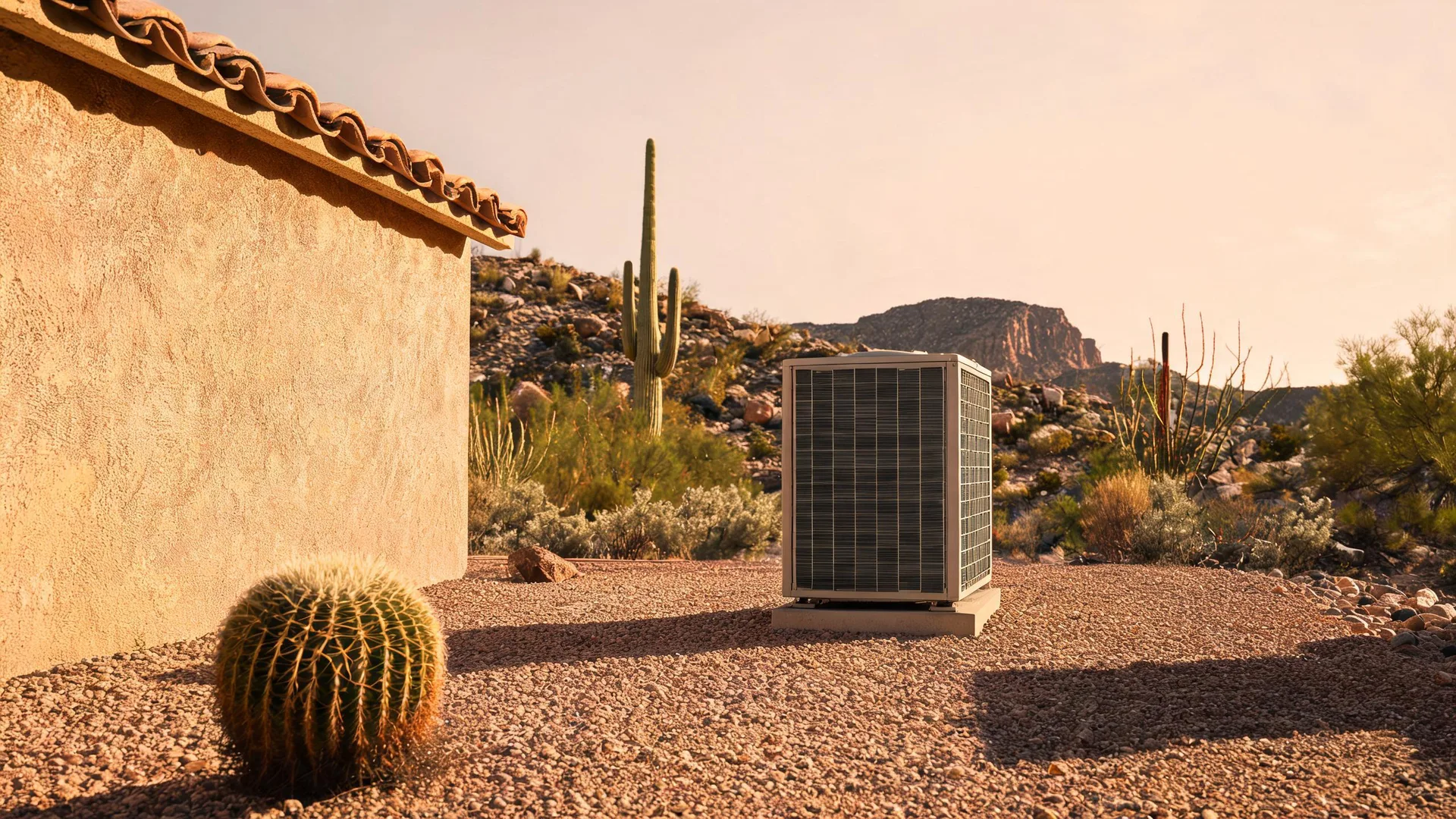
A residential heat pump outdoor unit mounted on a concrete pad next to a house with gray vinyl siding.

Half These Homes Predate the Heat Pump Going Into Them

Half the homes in Dickey County were built in 1964 or earlier. A house that age wasn't built with a heat pump in mind, and the ductwork or electrical panel may still reflect that. Installing one here often means checking whether the existing ducts can move the air a heat pump supplies, and whether the panel has room for what the unit draws. None of that rules out a heat pump. It just means the install has to account for a house that predates the equipment going into it.

The old system doesn't get reused

A furnace, boiler or electric baseboard coming out gets disconnected and hauled away. None of its parts carry over into the heat pump going in. The one exception is ductwork already in the house, and even that has to be checked for whether it can handle what the heat pump moves before it's reused rather than replaced.
What has to be undone first

Removing the old equipment means capping or clearing whatever fed it. A gas line gets capped off. Electric baseboard gets disconnected from its circuit, and that circuit may get reused for the heat pump instead. The old thermostat comes out too, since a heat pump needs one built for how it runs.

Two numbers sit on that yellow sticker, one for cooling and one for heating, and they tell you how much heat the unit moves for the electricity it uses. A higher number means less power spent for the same comfort. The cooling number gets tested at a steady outdoor temperature, nothing extreme, so it tells you how the unit performs on an ordinary warm day. The heating number is an average worked out across a whole season of varying temperatures, not a single cold snap. Neither number promises what your bill will look like, because that also depends on how well the ductwork moves air and how tight the house holds what it's paid to heat or cool. What the rating does tell you is how two units compare before either one is installed, which matters most in a system that runs for months at a stretch rather than a few weeks a year.

Cooling starts in June here, and heat comes on by September, so there's no long stretch where this machine sits idle. That's worth knowing before you plan the install. Do it in May and the unit is ready for the first hot stretch without anyone rushing the job. Wait until the house is already cold or already warm and you're choosing equipment under pressure, taking whatever the installer can get on short notice. A heat pump that's going to run nine months of heating and three months of cooling deserves to go in on a day when nobody's in a hurry. Spring, before either season needs it, is that day.