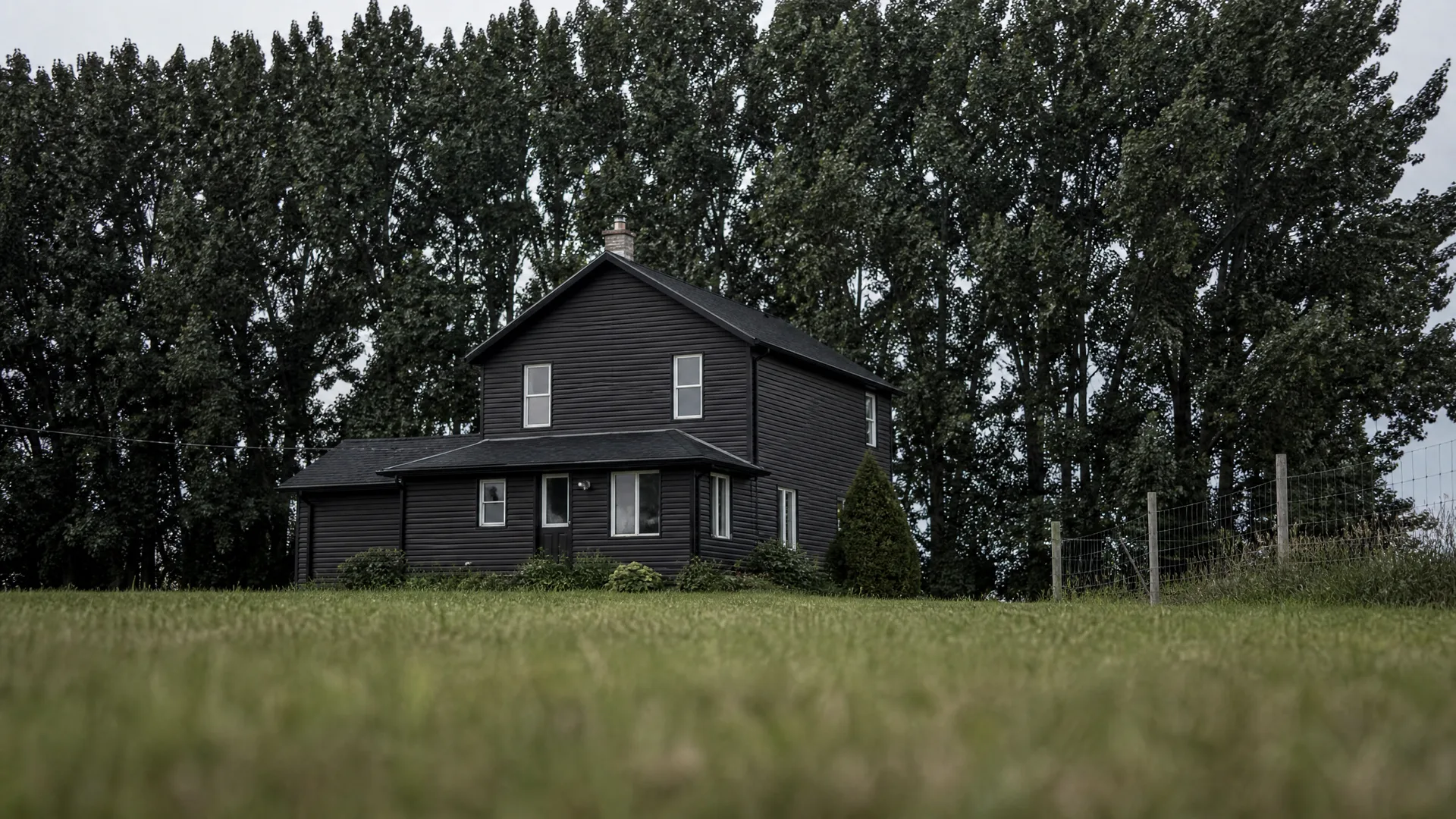






A two-storey black-clad house with a chimney stands in front of a row of tall deciduous trees, viewed low across a blurred grassy lawn under an overcast sky, with a wire fence to the right.

Heat Pump Installation in New England, ND

Tell us about the job

Takes about a minute. No obligation.

New system or replacementHeat PumpHettinger County, ND
Step 1 of 2

What ZIP code is the job in?

Power here is cheap. Hettinger County paid an average of 12.64 cents per kilowatt-hour in 2025, lower than most of the country. That works in your favor with a heat pump, because the thing runs on electricity and it runs often once it's in. A heat pump that moves heat efficiently will make the most of that low rate through the winter. One that struggles, say an oversized unit or one installed without the right refrigerant charge, burns through more of that cheap power than it needs to just to keep up. The rate is good here. What you get out of each kilowatt-hour depends on the equipment and how it's put in.

9 months
September through May, your system heats
2 months
July through August, it cools
8°F
the average winter night it heats against
81°F
the average summer afternoon it cools against
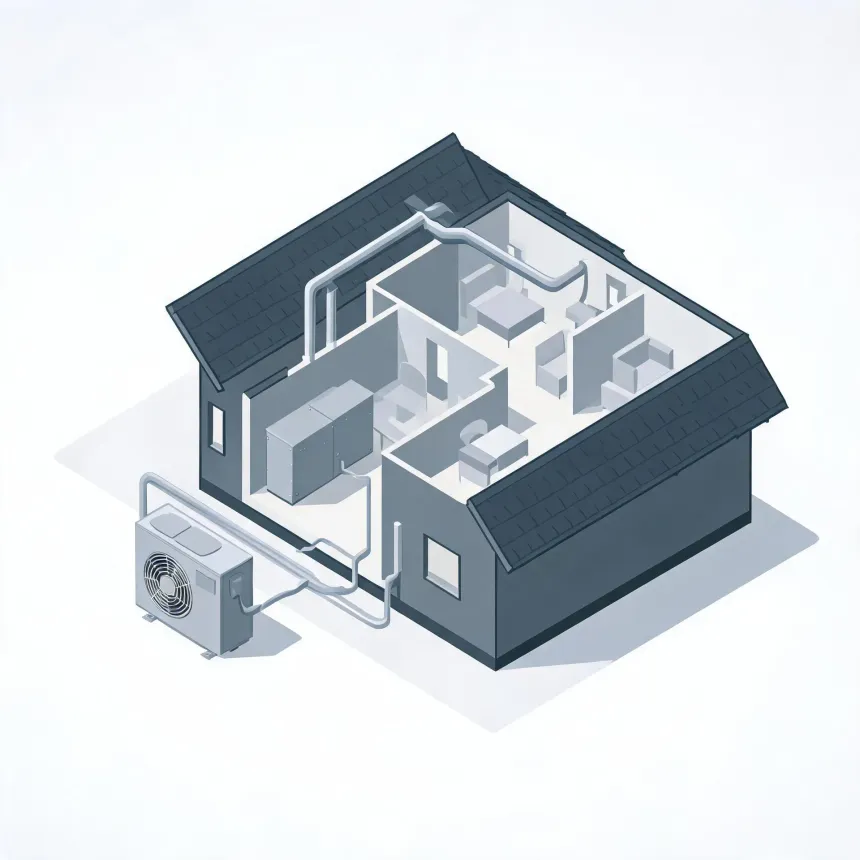
Isometric grayscale illustration of a cutaway house showing interior rooms, ductwork and an indoor air handler connected by lines to an outdoor condenser unit on the ground outside.
Your system heats September through May and cools July through August.

NOAA nClimDiv, 1991–2020 normals

A heat pump in Hettinger County runs through a long cold season and whatever wind and ice come with it.

Size it for this place, not off a chart for somewhere milder.

Nine months of heat, two of cooling: get it in before September

Cooling runs July through August
Heat runs September through May
Climate zone 6A
Most homes here already burn gasGas heats 47.5% of homes in Hettinger County, electricity 31.0%. Replacing a gas furnace with a heat pump changes what runs the house.

Half the homes in Hettinger County were built in 1964 or earlier. A house that age usually wasn't set up for a heat pump. The ductwork, if it has ducts at all, was sized for a gas furnace blowing hot air, not for the steadier, cooler air a heat pump puts out. Whoever installs the new system should size the unit and check the ductwork against the house you actually have, not a generic layout. Skip that step on an older home and you can end up with rooms that never quite warm up, or a system that runs longer than it should to get there.

The rate is good. Make sure the equipment earns it.

Get the sizing and the charge right at installation and you keep that low rate working for you all winter. Get them wrong and you pay more of it to a system that's struggling to keep up.

Find a contractor
A man in a cap, olive shirt and dark pants carries a canvas tool bag up concrete steps toward a dark blue front door, with a potted shrub beside the entry.
A gray heat pump condenser unit mounted on a concrete pad against the gray lap-siding exterior wall of a house.

Built for the long haul, not just the cold

That long heating season doesn't run alone. Hettinger County saw 72 damaging wind events and 20 winter storms between 2015 and 2024, on top of 54 hail events. A heat pump installed here sits outside through all of it, running most days of the year. Ask whoever installs it how the unit and its mounting hold up to wind and ice, not just how it performs on a mild day. Sizing it for this place means sizing it for what the weather does to it, not only how cold it gets.

The equipment is half the bill

A heat pump installation is two line items, not one. There's the unit itself, the compressor, the air handler or indoor coil, the outdoor condenser, and there's the labor to put it where it needs to go. A bigger unit costs more up front, but so does a harder install. Running new line sets, adding or modifying ductwork, upgrading the electrical panel or running new circuit capacity to handle the load, all of that is labor before the unit ever gets set outside.
The install decides what you're buying

Two homeowners can buy the same unit and end up with different systems. One installer checks the duct sizing, measures the space room by room, and charges the refrigerant line to the exact length run. Another hangs the same box and calls it done. The work you can't see after the cover goes back on, the charge, the airflow, the sealing on the ducts, is what decides whether that unit runs the way it was designed to or fights itself for years.

A heat pump has to be sized against the heat loss of the house it's going into, room by room, not picked off a chart by square footage alone. Too big and it short cycles, blasting heat for a few minutes and shutting off before the air ever mixes evenly through the rooms. Too small and it runs flat out and still can't keep up on the coldest days, leaning hard on backup heat to make up the difference. The sizing comes from a load calculation, the walls, the windows, the insulation, how the place holds or loses heat, not a guess based on the old furnace that's coming out. A furnace and a heat pump don't fail the same way when they're undersized, so the furnace that was in there before tells you very little about what the heat pump needs to be. Get the load calculation done properly and the rest of the install, the ductwork, the refrigerant charge, the airflow, has something real to be sized against.

Hettinger County falls in climate zone 6A, which the energy code treats as cold with a long heating season. Any split-system heat pump installed here, if built from 2023 on, has to clear federal minimums too: at least 14.3 Btu of cooling for every watt-hour it uses, at least 7.5 Btu of heat for every watt-hour in winter. Those numbers set a floor, not a target. A unit that barely clears them will cost more to run through a winter this long than one built with room to spare. The federal tax credit for qualifying heat pumps is worth checking against whatever you're quoted, since it can offset some of that upfront cost. What meets the minimum and what's worth installing in this county aren't always the same unit.