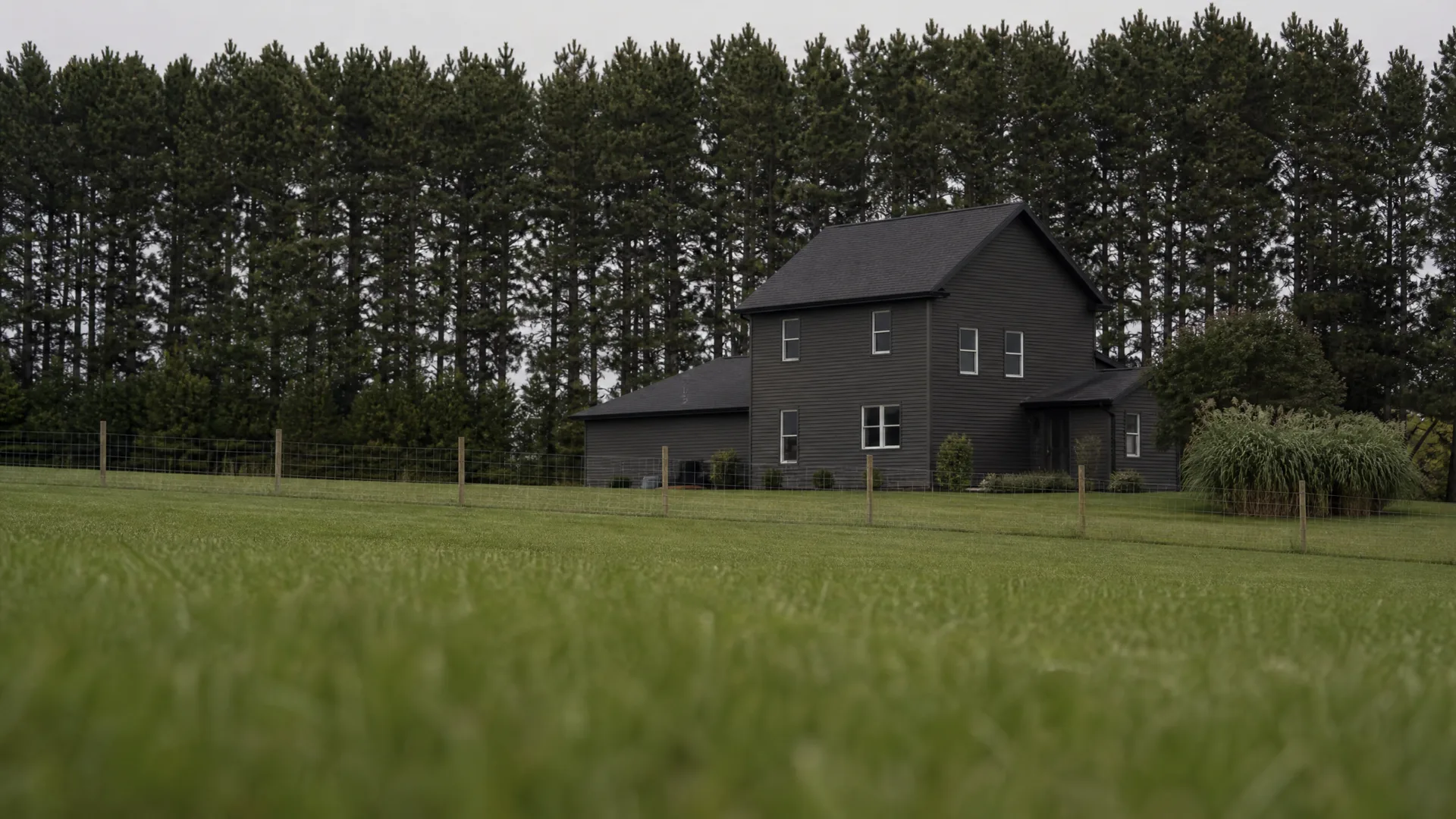






A dark-clad two-story house with a gabled roof and white-trimmed windows stands behind a wire fence at the edge of a mown grass field, with a dense row of tall conifers behind it under an overcast sky.

Heat Pump Installation in Napoleon, ND

Tell us about the job

Takes about a minute. No obligation.

New system or replacementHeat PumpLogan County, ND
Step 1 of 2

What ZIP code is the job in?

Electricity in Logan County runs about 11.57 cents per kilowatt-hour, cheaper than most of the country pays. That sounds like good news, and it is. But a heat pump here is working hard most months of the year to keep up with the cold, and a system that runs that much adds up even at a low rate. The lower the cost per kilowatt-hour, the more that total depends on how little power the system actually needs to do its job. A unit that wastes power still costs you for every one of those hours, just at a smaller rate. Where you land on the bill has more to do with the machine than with the rate you're paying for it.

9 months
September through May, your system heats
2 months
July through August, it cools
5°F
the average winter night it heats against
79°F
the average summer afternoon it cools against
Isometric illustration of a cutaway house showing interior rooms, ceiling ductwork and an air handler, connected by lines to an outdoor condenser unit on a pad beside the building.
Your system heats September through May and cools July through August.

NOAA nClimDiv, 1991–2020 normals

Logan County saw 35 winter storms between 2015 and 2024.

A heat pump here has to keep working through every one of them.

Nine months of heat, two of cooling: this system earns its keep in winter

Cooling runs July through August
Heat runs September through May
38 hail events from 2015 to 2024
Installing a heat pump here means fitting it to an older houseHalf the homes in Logan County were built in 1967 or earlier.

Logan County falls under zone 6A, the cold end of the national energy code, and that rating sets a floor for what can go into your home. Any split-system heat pump installed new has to clear federal minimums too: at least 14.3 Btu of cooling for every watt-hour it uses, and at least 7.5 Btu of heating for every watt-hour over the winter. Those numbers aren't a sales pitch, they're the baseline every unit sold has to meet before it ever reaches your house. A federal tax credit is available on qualifying equipment, on top of that. What's worth asking a contractor is how far above that floor a given system sits, since in a place that leans on heating as hard as this one does, that gap is where your winters get easier or harder.

What you install now is what you pay to run for years

The system going into your house now is what you'll be paying to run every winter after. A contractor can tell you where a given unit sits above the minimum efficiency ratings, and that gap is worth asking about before you decide.

Find a contractor
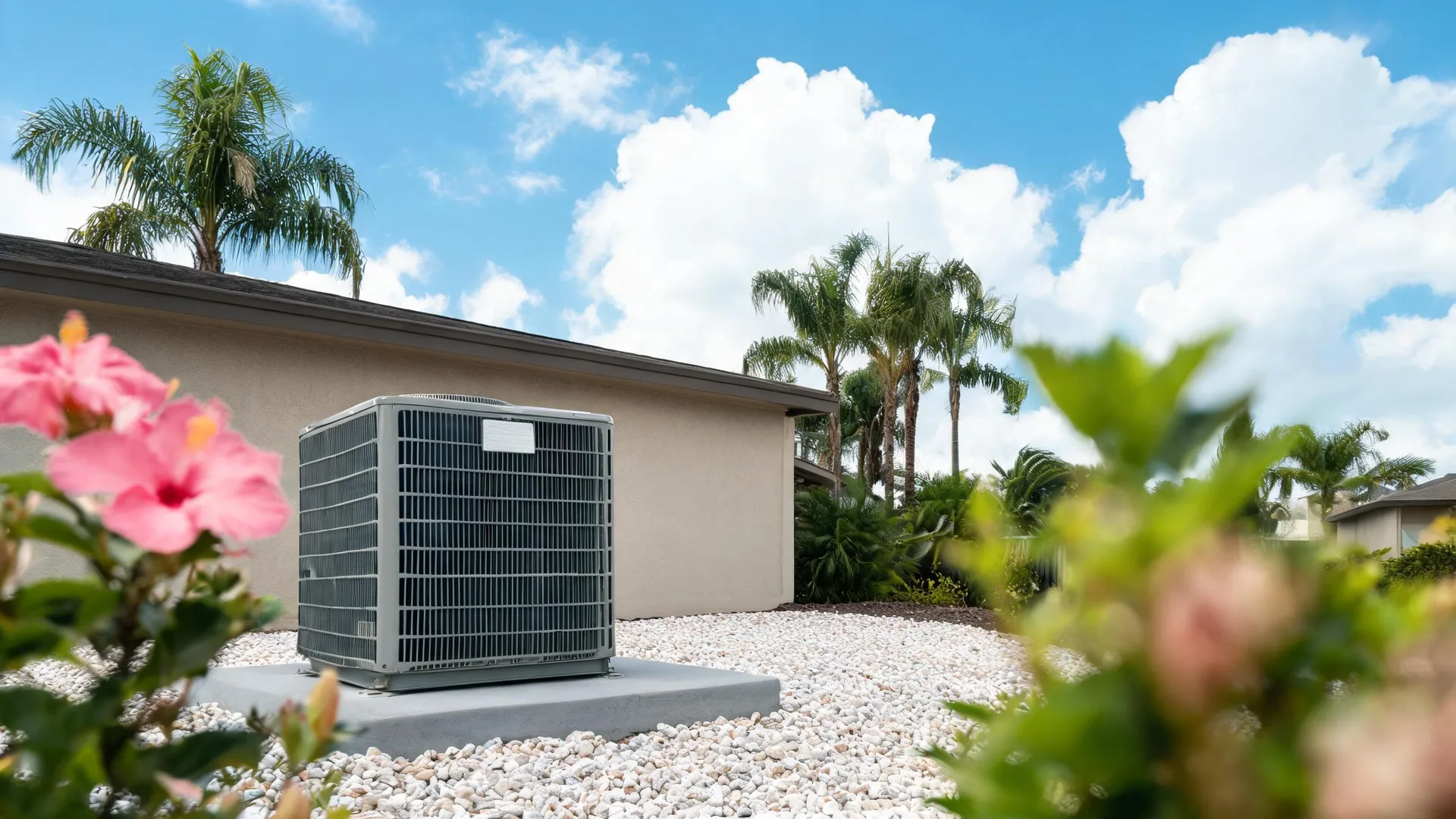
A gray heat pump condenser unit mounted on a concrete pad against the gray lap-siding exterior wall of a house.

Sizing this for the house you actually have

An older house changes what sizing and ductwork work means for this job. If your home is one of the half built in 1967 or earlier, ask the contractor to size the heat pump for the house as it stands now, not for a generic square footage number. Ask what the load calculation found, and whether your existing ductwork, if you have any, can handle what the new system needs to move. A unit sized for a newer, tighter house can run wrong in an older one, and in a county that leans on heating this much, that mismatch shows up on every winter bill that follows.

The equipment is most of the bill

Installation covers the condenser, the air handler, the line set, and the labor to put them in correctly. Of those, the equipment itself is where the range comes from. A compressor built to run efficiently across a wide range of outdoor temperatures costs more than one built to meet the minimum. That difference shows up once, on the invoice, instead of every month on the bill after.
What's hiding behind your walls changes the job

A straight swap, same spot, same ductwork, same electrical, is the cheapest version of this job. The price moves when the ductwork needs resizing to handle what a heat pump moves differently than what was there before, when the electrical panel needs work to carry a new circuit, or when the old line set can't be reused. None of that shows up until a contractor is actually in the house looking at what's there.

A heat pump that's too big for the house will short cycle, kicking on, satisfying the thermostat fast, and shutting off again before it's dehumidified the air or settled into a steady rhythm. One that's too small runs flat out and still can't keep up when the temperature drops, leaning hard on backup heat strips to make up the difference. Getting the size right starts with a load calculation, not a square footage chart. A contractor measures the walls, the windows, the insulation, the ceiling height, and works out how much heat the house actually loses on the coldest days and gains on the hottest. That number, not the size of the old equipment, is what the new system should be built around. Replacing like with like is sometimes right and sometimes just repeats whatever mistake was made the first time.

Logan County also sees hail, 38 events between 2015 and 2024. The outdoor unit sits through that weather the same way it sits through every winter storm the county gets. A cabinet and coil built to a minimum spec hold up to that differently than one built with heavier gauge metal and a coil guard. This is where buying on price alone catches up with you. The cheapest unit on the quote might be the one that dents in a bad hailstorm or struggles to keep defrosting through a hard winter. Ask what the equipment is rated to handle before you compare numbers on the invoice.