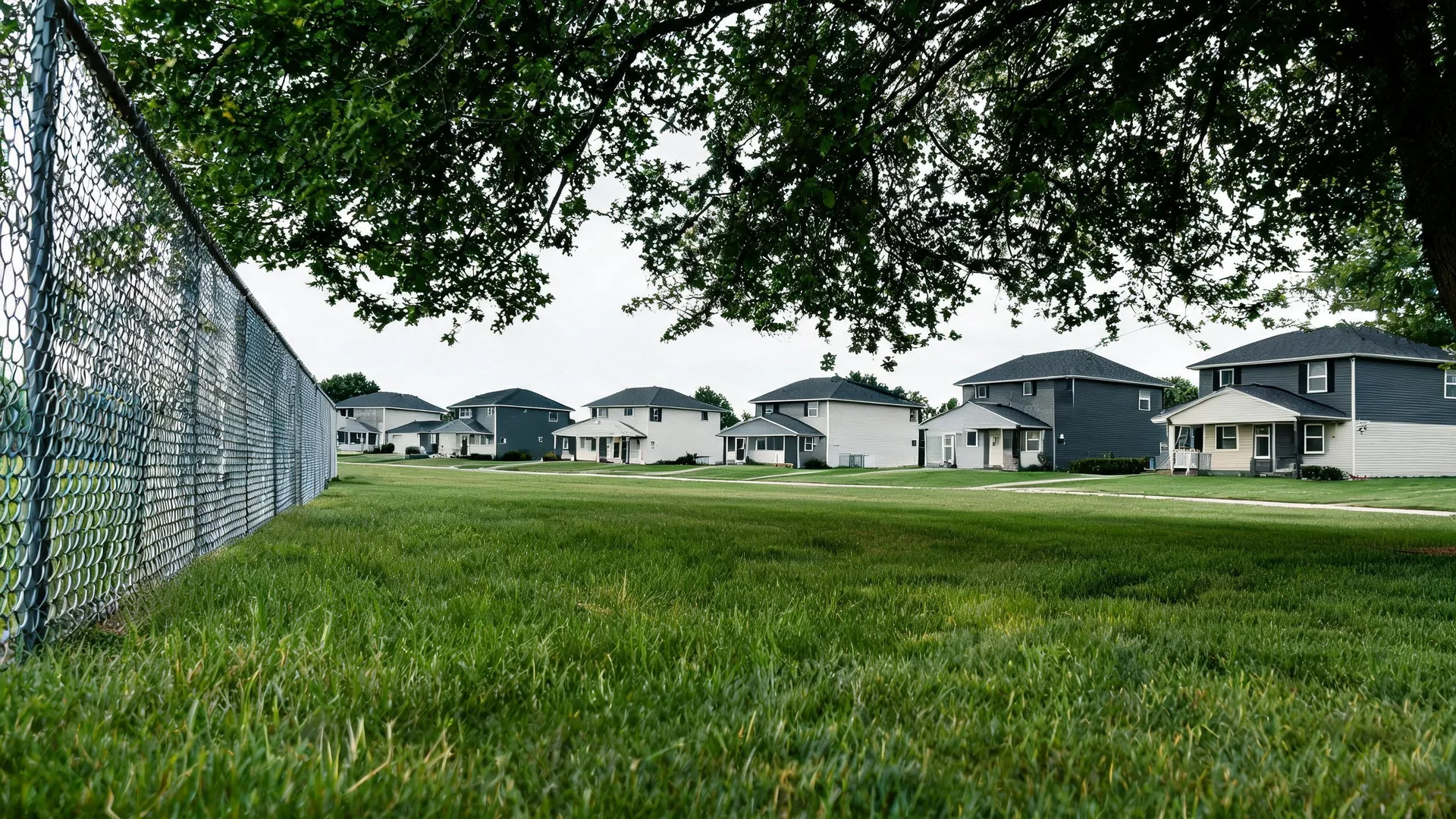






A chain-link fence runs along the left edge of a large mown lawn, with a row of one- and two-story houses with gray and white siding in the background under an overcast sky, framed by overhanging tree branches.

Heat Pump Installation in Mohall, ND

Tell us about the job

Takes about a minute. No obligation.

New system or replacementHeat PumpRenville County, ND
Step 1 of 2

What ZIP code is the job in?

Electricity here runs 10.72 cents per kilowatt-hour on average, cheaper than in most US counties. That sounds like good news, and it is. But a heat pump in Renville County still works harder over a year than most of the systems that rate charges against. It has to pull heat out of winter air that barely has any, then flip around and cool homes through the warm months too. Every bit of output costs something at the meter, so a system that wastes less of that power keeps paying off long after the lower rate already helped. The cheap power here makes efficiency worth more, not less, because you keep a bigger share of what you save.

9 months
September through May, your system heats
2 months
July through August, it cools
3°F
the average winter night it heats against
79°F
the average summer afternoon it cools against
Isometric cutaway illustration of a small house showing ducted air distribution, an indoor air handler, and an outdoor condenser unit connected by lines, with a sofa and bed in the rooms.
Your system heats September through May and cools July through August.

NOAA nClimDiv, 1991–2020 normals

Heat here starts up in September, nine months of the year.

Install before August ends and the new system is already proven before it has to carry a Renville County winter.

Hail, blizzards and nights at 3 below all land on this one machine

33 hail events from 2015 to 2024
25 winter storms from 2015 to 2024
Winter nights average 3°F

Half the homes in Renville County were built in 1973 or earlier. A heat pump going into a house that age isn't going into a blank slate. The ductwork, the electrical panel, the spot where the old system sat all came from a different time, built around whatever equipment was standard then. A heat pump moves air differently than a furnace or a straight AC unit did, and it asks more of a panel than older homes were built to give. None of that means the job can't be done right. It means the installer has to look at what the house already has before deciding what the house gets.

Get the equipment right, and the low rate does its job

The equipment decision is what decides whether the cheap power here actually saves you anything. A heat pump sized and chosen right keeps more of that low rate working for you on every bill through the year. Get the equipment right before it goes in, not after.

Find a contractor
A man in a cap, olive shirt and dark pants carries a canvas tool bag up concrete steps toward a dark blue front door, with a potted shrub beside the entry.
A gray air-source heat pump mounted on a concrete pad next to a house with gray vinyl siding, surrounded by gravel and flanked by green shrubs and white hydrangea flowers.

What the house already has decides what it can take

Before a contractor quotes equipment, they should walk the house. The panel that ran the old system may not have the capacity a heat pump needs. The ducts may have been sized for a furnace pushing hot air hard, not the steadier, cooler airflow a heat pump puts out. None of that shows up on a nameplate or a spec sheet. It shows up over years of running, in whether the system keeps up on the coldest nights or short cycles trying to. Ask what the walkthrough found before you ask what the equipment costs.

The old equipment doesn't just get unplugged

A furnace or straight AC system gets disconnected from the gas line or the electrical circuit, and the refrigerant in the old AC or heat pump has to be recovered into a tank rather than vented. That recovery is a legal requirement, not a courtesy. The old outdoor unit, the indoor coil, sometimes the line set all come out, since a heat pump usually needs its own matched coil and lines rather than reusing what the AC left behind.
What stays and what goes depends on what it was

If the old system was a furnace paired with central air, the furnace may come out entirely or stay as backup heat alongside the new heat pump, depending on how the installer designs the system. If it was a straight AC with no furnace, the whole outdoor and indoor unit typically goes. Either way, the thermostat gets swapped too, since a heat pump needs one built to control it rather than a simple heat-cool furnace stat.

Two systems can list the same specs and still perform nothing alike, so ask what the rating actually measures. The efficiency number on the sheet is measured at a mild outdoor temperature, not at the cold end where the system has to work hardest. Ask what the unit is rated to do at low outdoor temperatures specifically, and whether it needs backup heat kicking in above that point or well below it. Ask what sound level it runs at too, since the outdoor unit sits right outside a window or a patio in most installs. Compare the warranty on the compressor against the warranty on parts, because those are often different lengths and the compressor is the expensive part to replace. And ask who services that brand locally, since a system nobody nearby can repair is a problem no spec sheet shows.

Renville County falls under zone 7 of the 2021 energy code, the coldest tier that code has. Whatever goes into this house has to be built for cold climates as a baseline, not as an upgrade option. Federal rules back that up on their own terms: any split-system heat pump made from 2023 onward has to deliver at least 7.5 Btu of heat for every watt-hour it uses over the winter, and remove at least 14.3 Btu of heat per watt-hour over the summer. Those are floors, not targets a good system reaches for. A heat pump that only just clears them will still run, and still cost more to run than one built with room above the minimum.