





A large outdoor air-conditioning unit mounted beside a vinyl-sided house, surrounded by mulched garden beds and green shrubs.

Heat Pump Installation in Cando, ND

Tell us about the job

Takes about a minute. No obligation.

New system or replacementHeat PumpTowner County, ND
Step 1 of 2

What ZIP code is the job in?

Electricity here actually runs cheap. Towner County homes paid about 11 cents per kilowatt-hour in 2025, lower than most US counties. That helps, because a heat pump here is working a lot of the year to keep a home warm through a hard winter. A unit that moves heat efficiently uses less of that electricity to do the same job. One that runs poorly still costs less per kilowatt-hour than it would elsewhere, but it burns through more of those cheap kilowatt-hours just to keep up. How well it's sized and installed decides how much of that low rate you actually get to keep.

9 months
September through May, your system heats
1 months
July through July, it cools
-1°F
the average winter night it heats against
77°F
the average summer afternoon it cools against
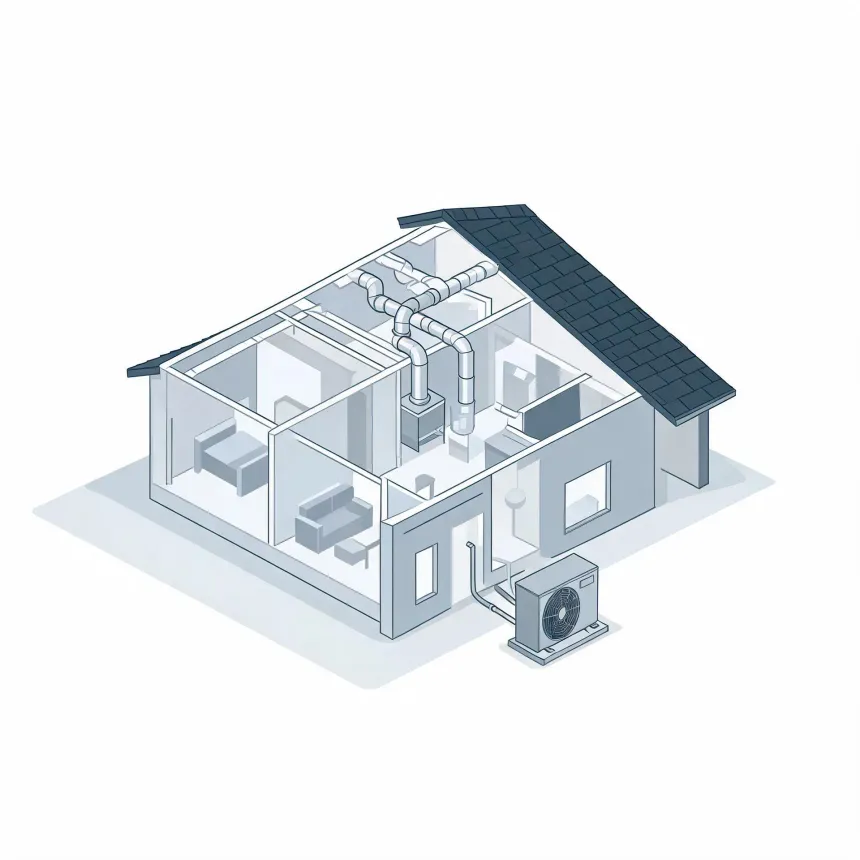
Isometric line illustration of a cutaway house showing interior rooms with furniture, ceiling ductwork connected to an indoor air handler, and an outdoor condenser unit linked by refrigerant lines.
Your system heats September through May and cools July through July.

NOAA nClimDiv, 1991–2020 normals

Heat runs from September through May here, nine months out of twelve.

August is the month to put in a new system, before that first cold night asks something of it.

Half these homes were built by 1969. Your heat pump has to work with what's already there.

Half the homes here were built by 1969
Climate zone 7
Power here costs 11.00 cents per kilowatt-hour

More than half the homes in Towner County already heat with electricity, 57.9 percent, more than any other fuel. If your house is one of them, a heat pump fits into wiring and ductwork already built for electric heat. That makes a straight swap simpler than switching a home over from gas or propane. It doesn't mean every home here is the same, some have baseboard heat with no ducts at all, and that changes what installation involves. Worth finding out which kind of electric heat your home has before you assume the swap is simple.

Get the sizing and install right, and you keep what you pay for

A heat pump sized and installed to fit your house is what makes that low rate worth something. Get it right, and you keep more of it on every bill, all winter long.

Find a contractor
A man seen from behind in a dark shirt and tan pants climbs concrete steps toward a navy blue front door, carrying a canvas tool tote in his right hand, with a large blue planter and shrub to the left.
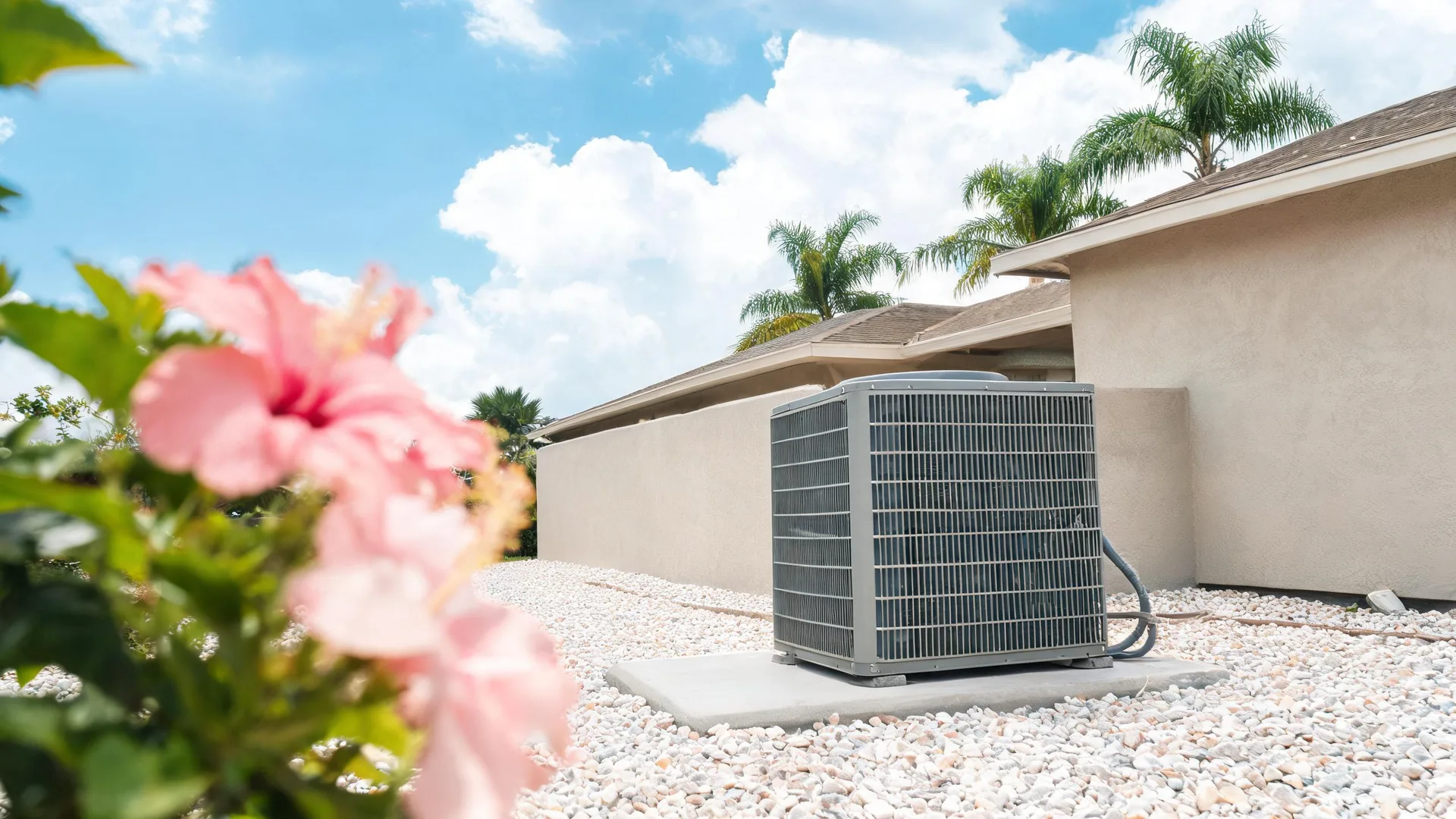
A gray air-source heat pump mounted on a concrete pad next to a house with gray vinyl siding, surrounded by gravel and flanked by green shrubs and white hydrangea flowers.

Winter is where this machine earns its keep

Hard winters mean this unit is pulling heat from outside air for most of the year, and that air does not give it up easily. Towner County saw 37 winter storms between 2015 and 2024, heavy snow, ice, blizzards, each one a stretch where the heat pump has to keep working while the air outside gets harder to draw heat from. Summer asks less of it. The dew point here averages 52 degrees in June, July and August, lower than most of the country, so the system is not fighting heavy air to cool a house down the way units do further south. Hail is part of the load too, 35 events in those same years, and the outdoor unit sits through all of it. None of this means a part fails on a schedule. It means the compressor, the outdoor coil and the defrost cycle see more hours and rougher conditions than they would somewhere milder. Sized and installed right, the system carries that load the way it is built to. Undersized or set up wrong, it shows the strain sooner, first in what it costs to run and then in the parts themselves.

Sizing is what the install is actually pricing

A heat pump has to be matched to the house, the load calculation, the ductwork or lack of it, and the climate it has to work in. One sized too big short cycles, turning on and off without running long enough to settle into steady heating. One sized too small runs constantly and leans on backup heat strips to make up the difference. Either mistake costs more to live with than the unit itself, and no two houses call for the same size unit even if they look alike from the outside.
The work behind the walls is where the job gets bigger or smaller

Swapping one heat pump for another in a house already wired and ducted for it is a different job than putting one into a house with baseboard heat and no ducts. Line sets, electrical capacity, a new air handler, duct modifications, all of that is decided by what's already there before anyone touches the new equipment. The equipment on the quote is one line. Everything it takes to connect it to this particular house is the rest.

When you're comparing quotes, ask what two numbers they used to size the unit, not just the square footage. A proper load calculation looks at insulation, window count and air leakage, not just floor space. Ask about the heating performance rating too, how much heat the unit pulls from outside air once it gets cold, because that number separates units more than anything else on the spec sheet. Ask what happens below the unit's rated operating point, whether it leans on backup heat strips and at what temperature that kicks in. Ask who sizes the ductwork, since a heat pump moves a different volume of air than old electric resistance heat did, and the same ducts don't always carry it well. And ask what the warranty actually covers, parts or labor, and for how many years on the compressor versus everything else. Two systems can look identical on paper and perform nothing alike once they're running.

Towner County falls in climate zone 7, the coldest tier in the 2021 energy code, which covers the harshest winter conditions in the country. Any split-system heat pump installed here, if built on or after January 1, 2023, has to deliver at least 7.5 Btu of heat for every watt-hour of electricity it uses over the winter, and remove at least 14.3 Btu for every watt-hour over the summer. Those are federal floors, not targets, so a contractor can't quote a unit that falls short of them. That narrows what can legally go into your house before sizing or ductwork even enter the conversation. A federal tax credit is available on qualifying equipment, worth asking about when you're comparing quotes.