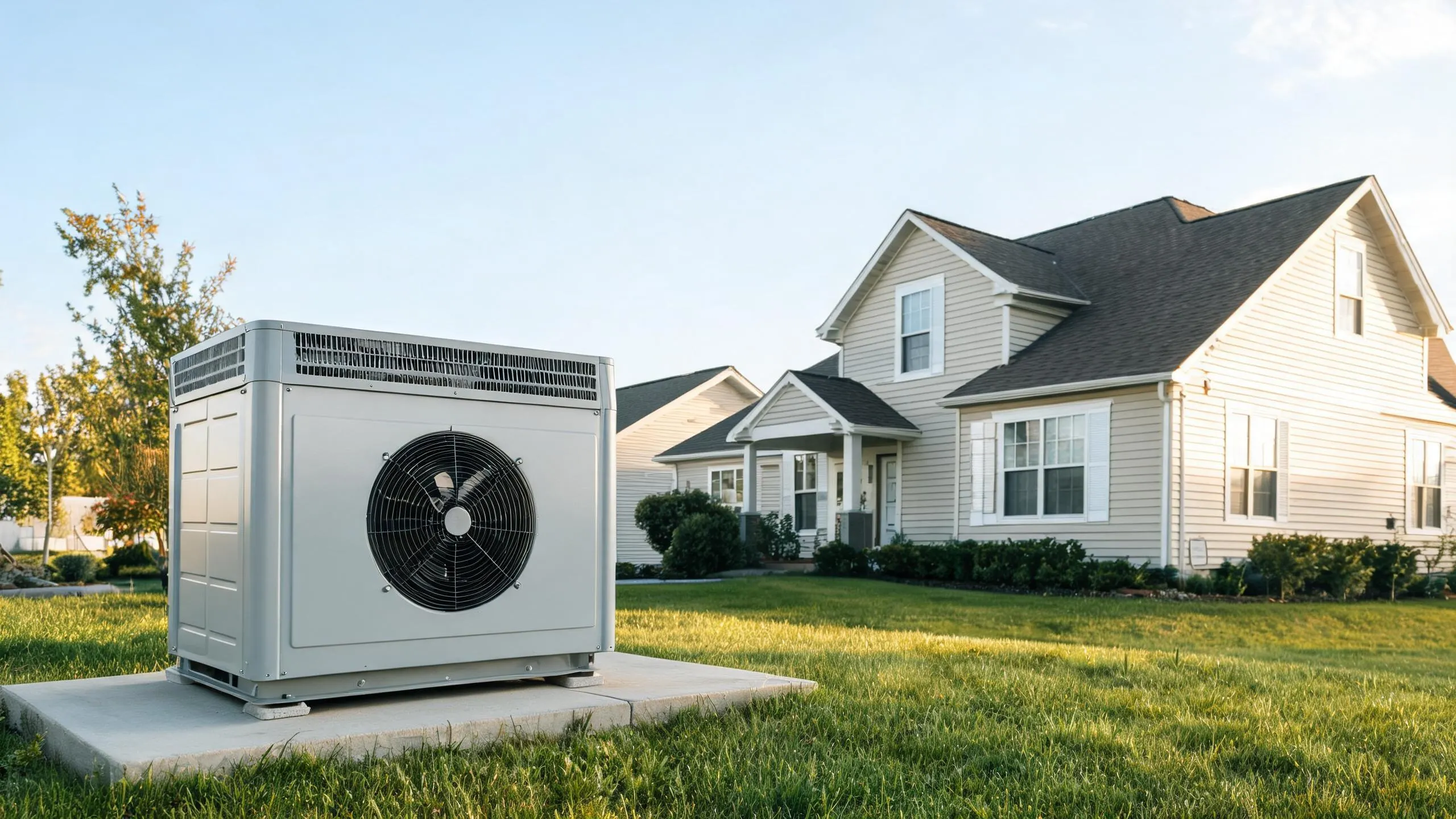







An outdoor heat pump unit mounted on a concrete pad in the front yard of a gray suburban house.

Heat Pump Installation in Bowman, ND

Tell us about the job

Takes about a minute. No obligation.

New system or replacementHeat PumpBowman County, ND
Step 1 of 2

What ZIP code is the job in?

Half the homes in Bowman County heat with utility gas, and most of the rest run on bottled or LP gas or electricity. A heat pump works differently than any of those. It moves heat instead of burning fuel or running pure resistance heat, and it handles cooling too, so it replaces both a furnace and a window or central AC unit. If gas runs to your house now, a contractor can tell you whether a heat pump makes sense on its own or alongside the furnace you already have for the coldest stretches. Either way, the ductwork already in place matters as much as the equipment itself.

10 months
September through June, your system heats
2 months
July through August, it cools
9°F
the average winter night it heats against
81°F
the average summer afternoon it cools against
Isometric line illustration of a cutaway house showing interior rooms with furniture, ceiling ductwork under a dark shingled roof, and an outdoor condenser unit connected by lines on the right.
Your system heats September through June and cools July through August.

NOAA nClimDiv, 1991–2020 normals

Heat season in Bowman County runs September through June.

Have the installation finished before August is out, so the system is ready for whatever role it plays that first cold stretch.

A standard heat pump sized right handles Bowman winters and summers both

Power costs 11.51 cents a kWh statewide
70 damaging wind events from 2015 to 2024
44 hail events from 2015 to 2024
A standard heat pump, sized rightOvernight lows average 9°F here in winter, and this equipment is built for that.

Half the homes in Bowman County went up in 1972 or earlier. A house that age wasn't built with a heat pump in mind, and the ductwork is the part that matters most. Older runs are sometimes narrower than what a heat pump needs to move enough air, especially for the lower, steadier heat a heat pump puts out compared to a furnace blast. A contractor can check what's there before anything gets sized. The equipment has to match the house, not the other way around.

A new system here has to clear Zone 6A's minimum

Zone 6A rules apply here, so any heat pump installed has to meet federal minimums of 14.3 SEER2 for cooling and 7.5 HSPF2 for heating. That sets a floor on what a contractor can put in, not a ceiling, and a federal tax credit is available on top of it.

Find a contractor
A man seen from behind in a dark shirt and tan pants climbs concrete steps toward a navy blue front door, carrying a canvas tool tote in his right hand, with a large blue planter and shrub to the left.
A dark gray heat pump unit mounted on a concrete pad next to a house with gray siding and a stone veneer wall.

Check the ducts before you buy the equipment

Before any equipment gets ordered, have the ductwork looked at on its own. A contractor can measure what's there against what the new system needs to move, and resize or replace runs if they come up short. That's a different visit than the sizing calculation for the heat pump itself, and skipping it is how a system ends up fighting the house it's in.

Ask for the load calculation, not a guess

The right size for a heat pump comes from a room by room heat loss and heat gain calculation, not a rule of thumb based on the old furnace or the square footage. A contractor who sizes off the nameplate of your current system is carrying over whatever mismatch was already there. Ask to see the numbers, not just the final recommendation.
Ask what happens on the coldest night

Every heat pump has a point where its heating output starts to drop off, and systems differ in where that point is and what backs it up when it gets there. Some pair with a furnace that takes over, some switch to electric resistance strips, some are built to keep pulling heat well below zero on their own. Ask each contractor what their specific system does on the coldest night of the year, not just how it runs the rest of the season.

What you pay for on install day isn't just the outdoor unit and the indoor coil. Labor is a big piece of it, and the job runs longer than a straight furnace swap because the refrigerant lines, the electrical circuit, and in a lot of cases the ductwork all need work too. A heat pump also needs a way to shed condensate and a way to manage the air handler, and if the electrical panel doesn't have room for a new circuit, that's its own job before the heat pump goes in at all. The backup heat source factors in too. A system backed by strip heat is simpler to wire in than one paired with an existing furnace, and that difference shows up in the bid. None of this is optional work tacked on to pad the price. It's what makes the equipment actually work in the house it's going into.

Install day starts with the outdoor unit going on a pad or bracket, set where the line run to the indoor coil is short and clean. The electrician and the installer are often working at the same time, one pulling the new circuit, the other setting the air handler or tying into the existing furnace if that's how the backup heat works. Refrigerant lines get run, brazed, and pressure tested before any refrigerant goes in, since a leak is easier to find before the system is charged than after. Once the lines hold pressure, the system gets evacuated to pull moisture and air out, then charged to the weight the manufacturer specifies rather than just until the gauge looks right. The condensate drain gets tested with actual water, not just eyeballed, because a clogged or unsloped line shows up as a puddle under the air handler instead of a problem caught that day. Last comes startup, where the contractor checks airflow, confirms the thermostat is reading the system correctly, and walks through how the backup heat takes over before calling the job done.