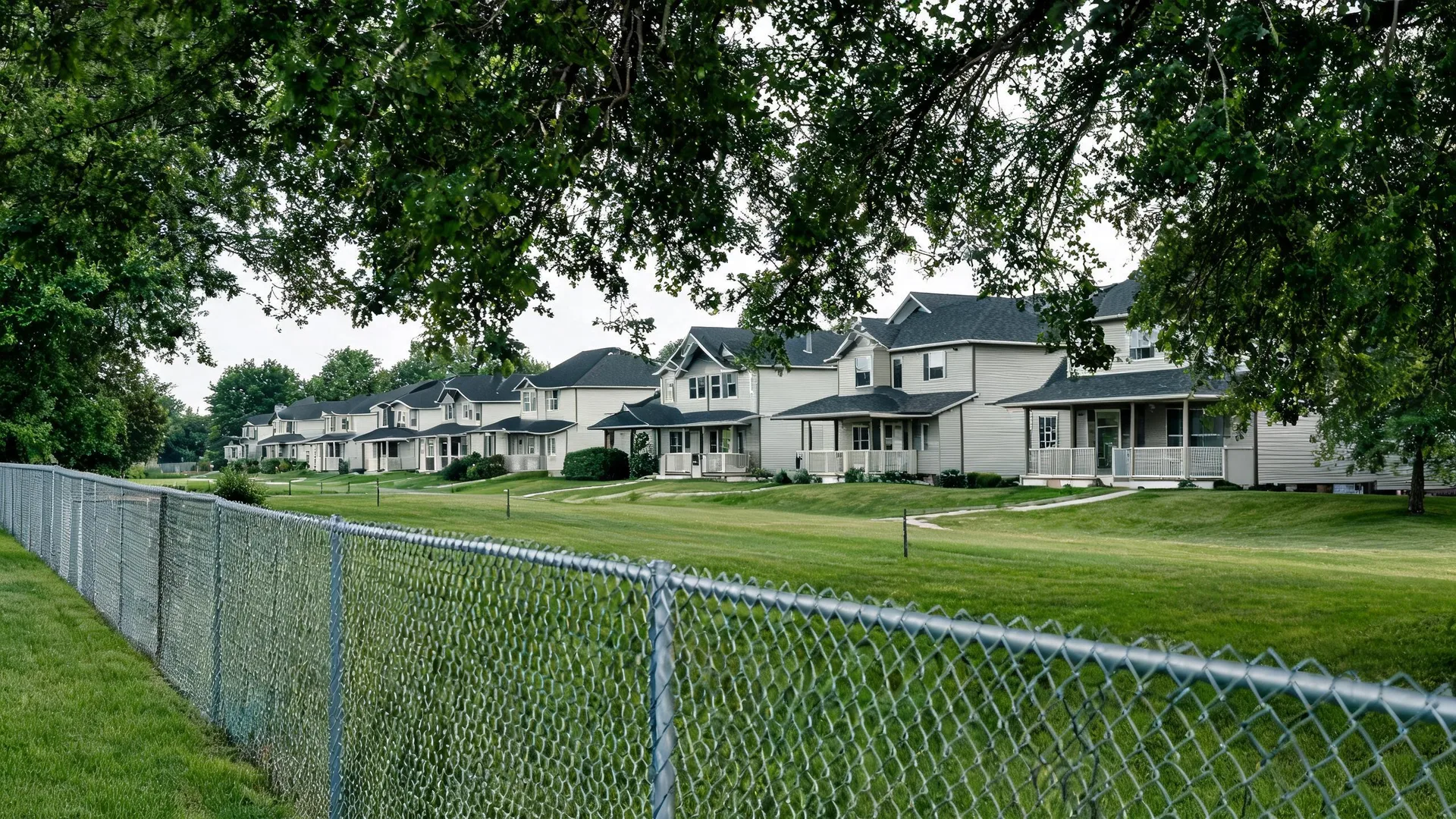




A chain-link fence runs diagonally across a mown grass field in front of a row of similar two-story light-colored houses with porches and gray roofs, framed by overhanging tree branches.

Heat Pump Installation in Beach, ND

Tell us about the job

Takes about a minute. No obligation.

New system or replacementHeat PumpGolden Valley County, ND
Step 1 of 2

What ZIP code is the job in?

Most houses in Golden Valley County run on utility gas, 56.9 percent of them. Another 23.5 percent use bottled or LP gas, so gas heat of one kind or another is what most of your neighbors have. Electricity heats a smaller share. A heat pump still fits into a gas house. It runs on electricity and heats the home on its own, or it can work alongside the furnace that is already there, taking over the mild months and letting the furnace handle the coldest stretch. Either way it also gives you cooling in summer, something a gas furnace never did.

9 months
September through May, your system heats
2 months
July through August, it cools
8°F
the average winter night it heats against
81°F
the average summer afternoon it cools against
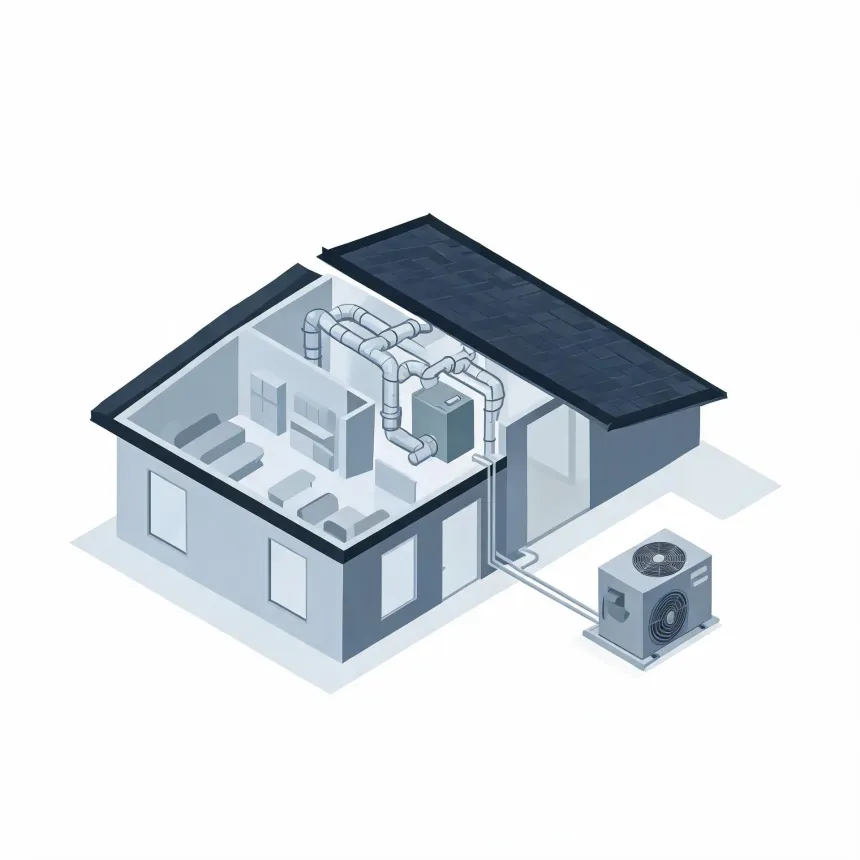
Isometric illustration of a cutaway single-story house showing interior ductwork and an air handler connected by lines to an outdoor condenser unit on a pad beside the building.
Your system heats September through May and cools July through August.

NOAA nClimDiv, 1991–2020 normals

Heat here runs nine months a year, September through May.

Get a heat pump installed in August, before the heating months start, so it's running and tested on your schedule.

A standard heat pump handles 8 degree nights here, sized right, nothing extra

17 winter storms from 2015 to 2024
Winter nights average 8°F
Power costs 11.51 cents a kWh statewide

Half the homes in Golden Valley County were built in 1957 or earlier. A heat pump going into a house that age isn't going into a blank slate. The ductwork, the electrical panel, the way the place was insulated were all decided decades ago, often for a furnace alone rather than a system that also has to move cooled air in summer. None of that rules out a heat pump. It just means the install has to work with what's already there instead of assuming a newer, more standard setup. Whoever sizes the unit and plans the install needs to look at your house specifically, not just the year it was built.

A standard heat pump, sized to your house

Electricity in North Dakota runs 11.51 cents per kilowatt-hour, an average rate with nothing about it that calls for a bigger or pricier unit. A standard heat pump, sized to this house, is the right call here.

Find a contractor
A gray outdoor HVAC unit mounted on a concrete pad beside a house with gray lap siding and a stone foundation.

The install has to match the house, not the year

A load calculation catches what the year built can't tell you. Someone has to go through your house, the walls, the windows, the ductwork if you're keeping it, and size the heat pump to that, not to a number pulled from a chart. That's the step that matters more in a house from this era than a newer one, since nothing about the original build was done with a heat pump in mind.

Ask for the heat loss number, not a guess

Installers can look at the same house and come back with different sized units unless they actually run a load calculation. Ask what the number is and ask them to walk you through how they got it. If someone sizes it off square footage alone, get a second opinion.
Ask what happens on the coldest nights

Every heat pump has a point where its heating output starts to drop off, and every model handles that differently. Ask the installer what this unit does on the coldest nights you get, and whether it leans on backup heat for that stretch or covers it alone.

What drives the cost of a heat pump install isn't the unit sitting in the truck, it's everything that has to happen before it can run. Matching the right size to the house takes a load calculation, not a guess, and that's labor and judgment, not a part. If the ductwork already there is too small or leaky for the airflow a heat pump needs, that has to be fixed or replaced before the system can work right. The electrical panel has to have the capacity for a new circuit, and older panels sometimes need upgrading to take it. Where the outdoor unit goes, how far the line set has to run, whether the indoor coil fits the existing furnace or needs its own air handler, all of that adds steps. None of it is optional, and none of it shows up until someone's actually looked at the house.

Install day starts with the outdoor unit and the indoor coil or air handler, and most of the work happens between those points. The line set has to be run, carrying refrigerant back and forth, so expect some work through a wall or up through a closet depending on where the furnace already sits. The electrical circuit gets tied in next, its own job if the panel needs work first. Once everything is connected, the system gets charged with refrigerant, and the installer checks that charge against what the manufacturer specifies for that line length, not just whether the unit turns on. Then comes airflow, checking what's moving through the vents and adjusting the blower to match the ductwork. A heat pump that's wired up and running isn't finished until someone's confirmed it's moving the right amount of air and holding the right charge.