


Heat pump vs furnace in Golden Valley County, North Dakota

Get My Quote

Serving Golden Valley County homes

A person in a light blue shirt adjusts a round white thermostat on a blue wall, with a living room containing a sofa, coffee table, rug and fireplace visible through a doorway and a tool bag on the wood floor.

Tell us about the job

Takes about a minute. No obligation.

New system or replacementGolden Valley County, ND
Step 1 of 3

What kind of equipment?

Which costs less to run in Golden Valley County?

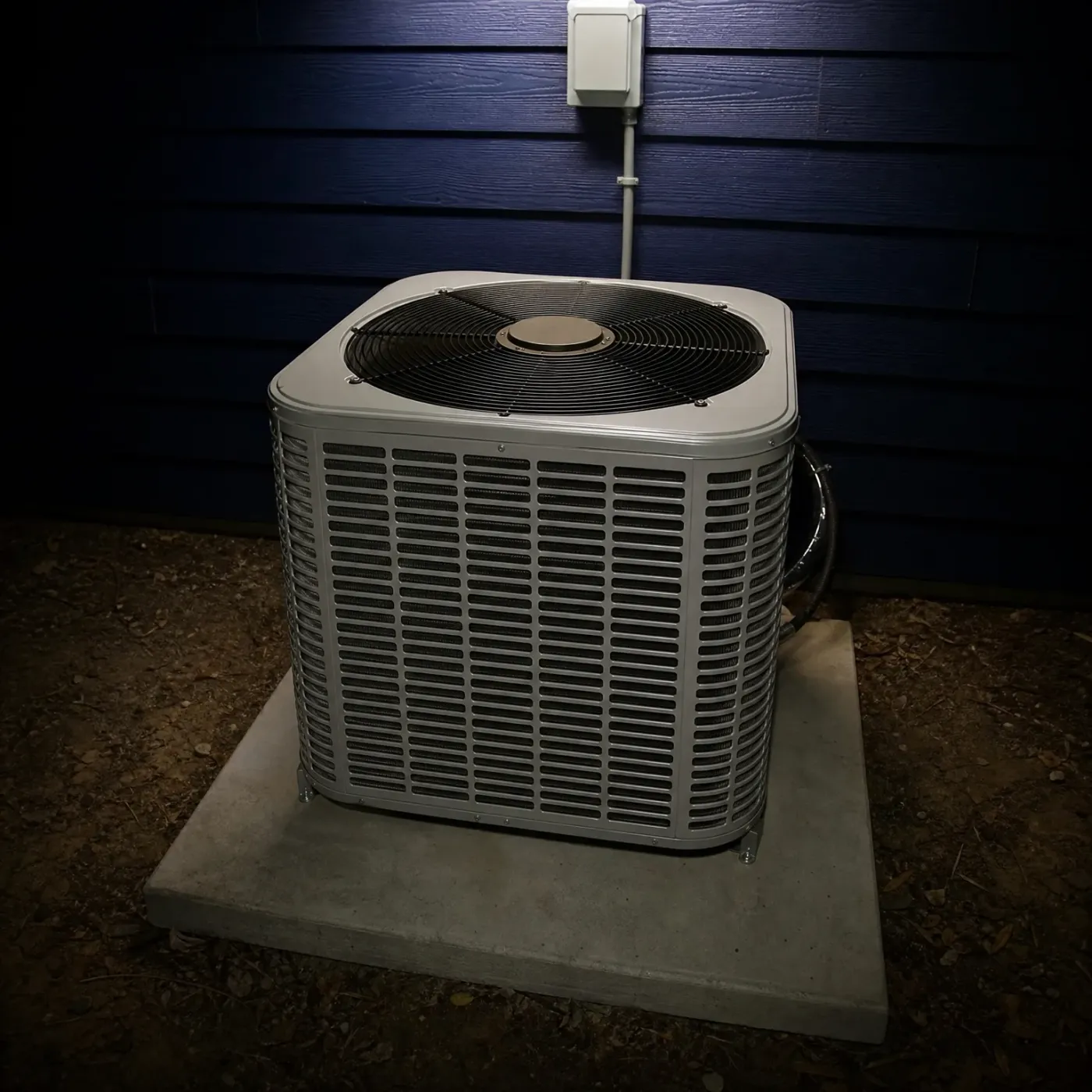
An outdoor air conditioning condenser unit on a concrete pad beside a dark horizontal-sided wall, with a conduit and electrical disconnect box above it, photographed at night.

Heat pump

To heat your home here$1.53per 100,000 Btu

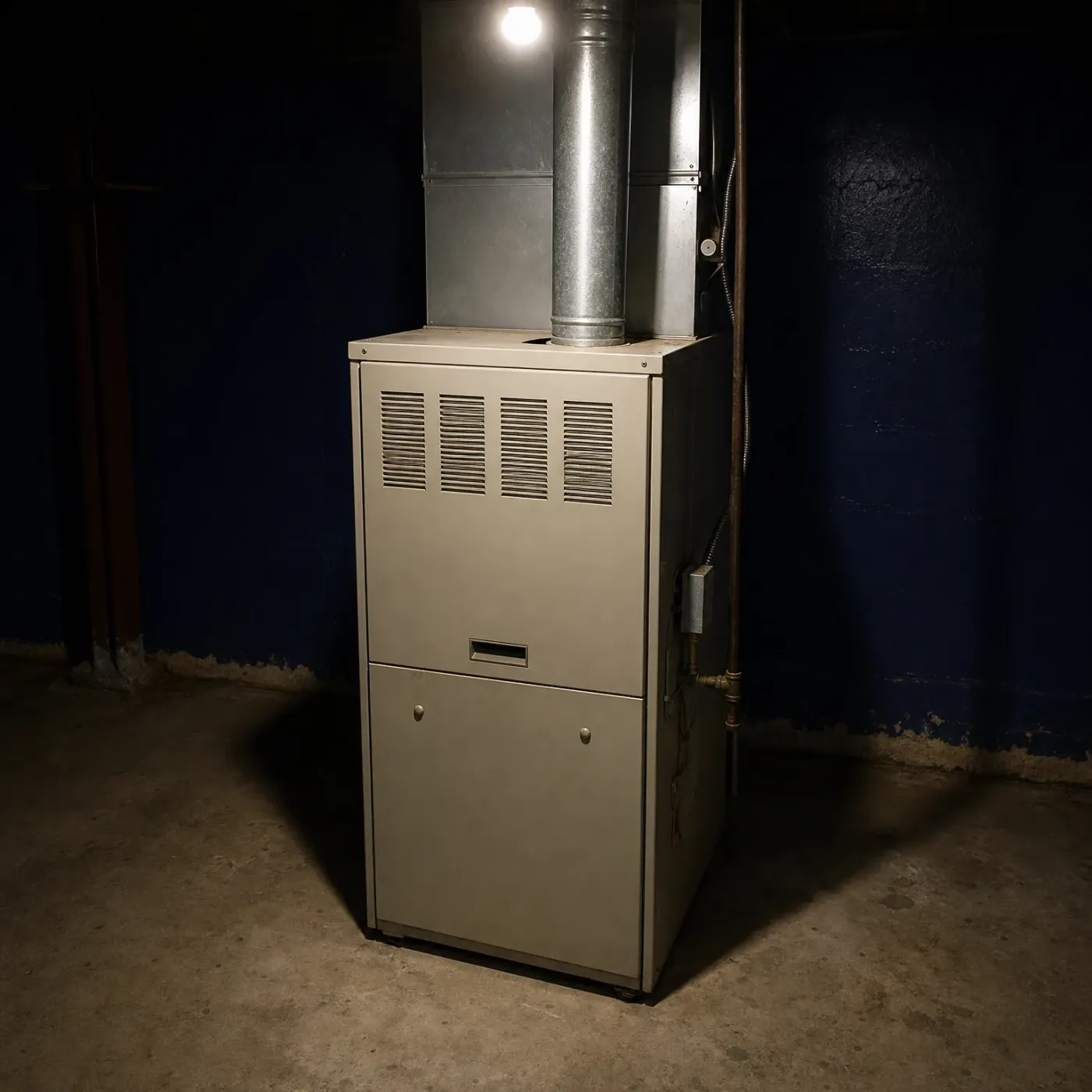
A beige sheet-metal furnace with louvered vent panels stands on a concrete basement floor against a dark blue painted wall, with sheet-metal ductwork and a copper pipe above and behind it.

Furnace

To heat your home here$1.05per 100,000 Btu

At North Dakota's gas and electricity prices, a gas furnace makes the same heat as a heat pump for at least 31% less.

Btu stands for British thermal unit, the standard measure of heat energy.

Where does a heat pump shine?

  • Steady, even comfort

    Instead of short bursts of heat, it keeps a gentle, steady output going. The house stays at one comfortable temperature.

    A golden retriever sleeps on a braided gray rug beside a navy upholstered armchair holding an open book, with a lit floor lamp, side table with mug, curtained window showing frost-covered branches at dusk, and a stone fireplace with built-in blue shelves.
  • No gas line, nothing burning in the house

    A heat pump runs on electricity alone. Nothing burns inside the house.

    A stainless steel kettle sits on a black glass cooktop set into a white speckled countertop above navy blue cabinets, with a wooden cutting board, round marble board, two pepper mills, a mug and a vase of white flowers nearby.
  • Heats and cools in one system

    A heat pump runs the same way all year. It pulls heat into the house in winter and pushes it out in summer.

    Living room with a light blue sectional sofa, linen and navy pillows, a wooden coffee table with potted plants, a large window with a beige roman shade overlooking green trees and flowering shrubs, a navy built-in bookshelf, a blue ceramic table lamp, and a woven chair in the foreground.

Where does a furnace shine?

  • Strong, steady heat in hard cold

    Winter nights here average 8°F, and a furnace burning gas or propane keeps putting out hot air at that temperature without losing capacity. It won't struggle to keep pace as the night gets colder.

    A two-story dark blue house with white trim, a covered front porch and lit windows at dusk, with snow on the roof and a shoveled path leading to the front steps between snowbanks.
  • Runs on the gas most homes here already use

    Most homes in Golden Valley County already heat with utility gas, so the line running to your house is likely already there. A furnace just uses what's already hooked up.

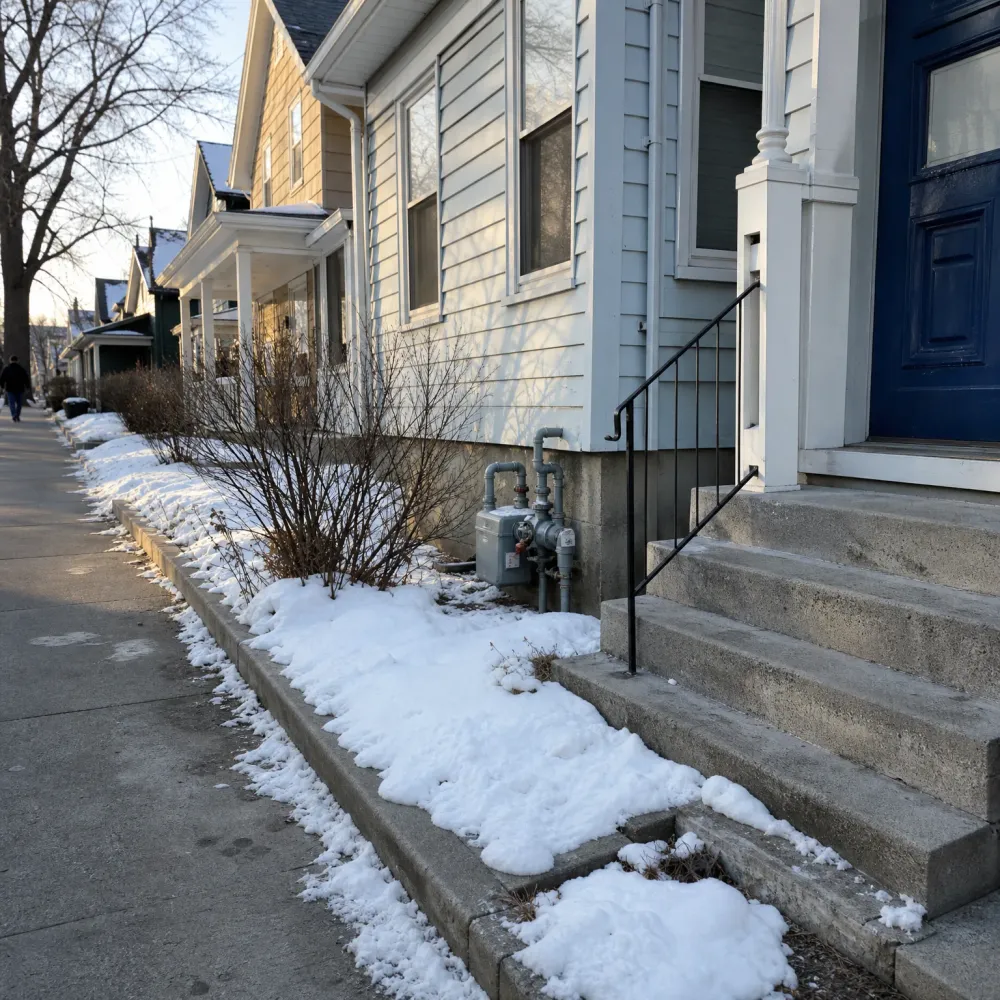
    A sidewalk beside a pale blue clapboard house with concrete front steps, a black metal handrail, a gas meter, bare shrubs, and melting snow along the strip, with a distant person walking on the sidewalk.
  • Pairs with any central AC

    Most central air systems are built around a furnace. The two share the blower, the ducts and the thermostat.

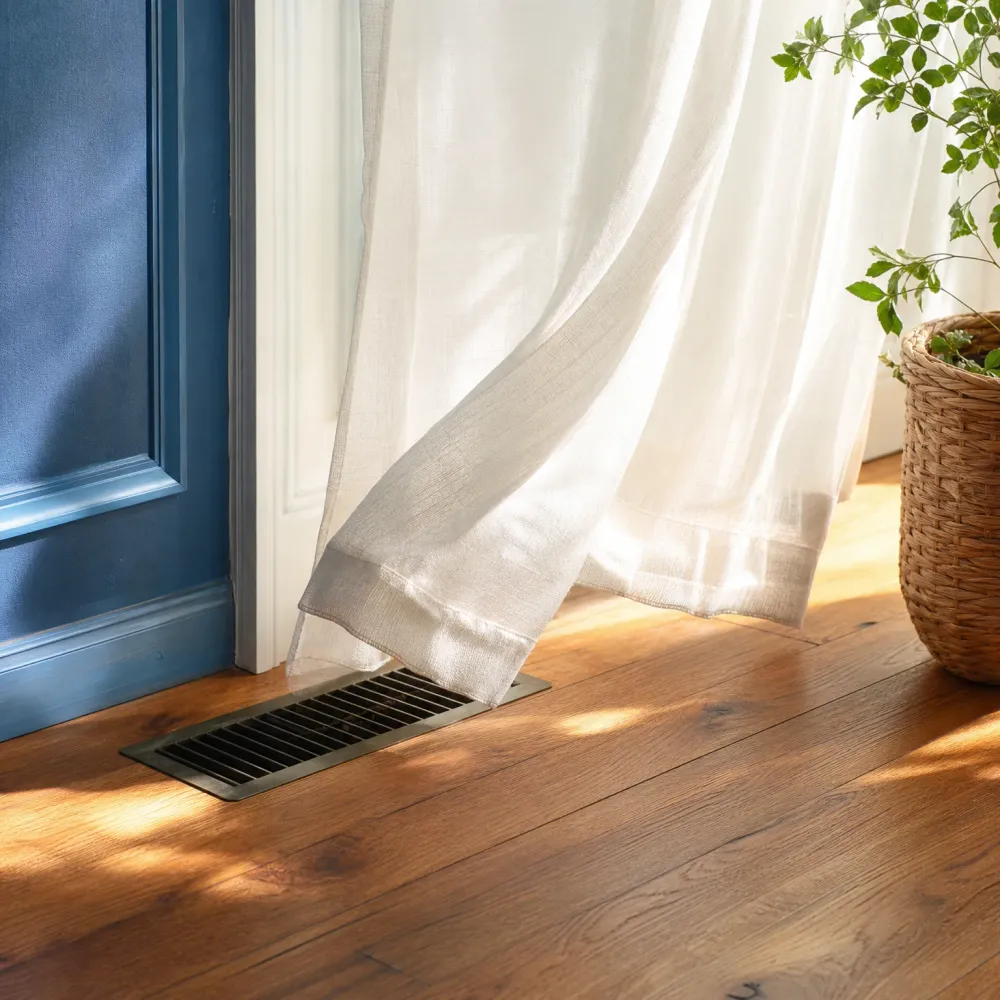
    A metal floor vent set into a hardwood floor beside a white sheer curtain, white trim and blue wall, with a potted plant in a woven basket at right in sunlight.

A furnace is the cheaper choice here

Winters in Golden Valley County decide this. The overnight low averages 8°F across December, January and February, and about 185 nights a year here drop to freezing or below. Thirty of those nights hit 0°F or colder. Heat runs nine months here, September through May, so most of the year your system is working against real cold, not mild chill.

A standard heat pump loses ground in exactly that kind of cold. Below 40°F it puts out less heat than its rating says. Below about 35°F it typically needs backup heat to keep up. Every single one of those 185 freezing nights falls under both marks. That doesn't mean the heat pump stops working. It means on the coldest nights here, a backup heat source is doing part of the job, and that backup is almost always electric resistance heat, the most expensive way to warm a house.

Run the numbers at North Dakota prices and the gap is plain. A gas furnace makes 100,000 Btu of heat for $1.05. A heat pump, even without counting what backup heat adds on the cold nights, makes the same heat for $1.53. That's a furnace running for close to a third less, before backup costs are even in the picture. In a county where the heat runs nine months and over half those nights are at or below freezing, that difference adds up every winter, not just on the worst nights.
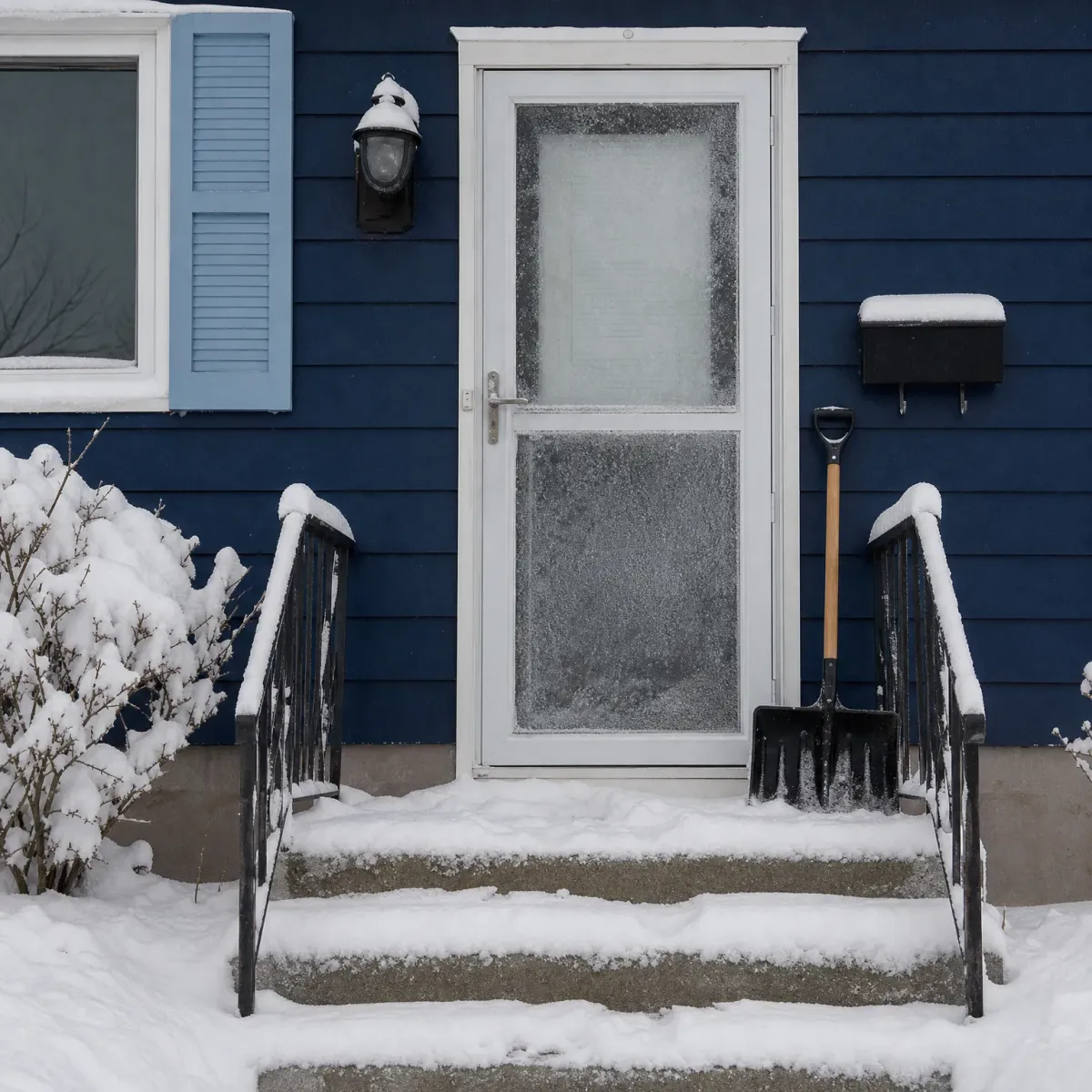
Snow-covered concrete steps and black metal railings lead to a white storm door on a dark blue clapboard house, with a snow shovel leaning at right and a snow-laden shrub at left.

What the gas line and the summer months mean for you

Most homes in Golden Valley County are already set up for this. Utility gas heats 57 percent of homes here, and another 23.5 percent run on propane. Only 17 percent heat with electricity. If your house came with a gas line, a furnace uses something already there. If it didn't, that's worth checking before you decide, since running a new gas line is its own cost.

Summer is the other half of this. Cooling runs about two months here, July and August, against nine months of heat. A furnace only heats. For those two months it does nothing, and you still need a separate air conditioner to pair with it. A heat pump handles both jobs in one system, cooling your house in summer and heating it the rest of the year, though here it's doing the smaller share of its work in summer and the harder share in winter.

So the choice comes down to what you're optimizing for. If keeping winter costs down matters most, and you already have gas or propane to the house, a furnace is the cheaper machine to run in Golden Valley County, by a clear margin. If having one system for both heating and cooling matters enough to accept higher winter running costs, a heat pump still does the job, just not as cheaply as the furnace does here. Either way, pair it with central air and you've covered the two months a year this county actually needs cooling.

Sources: NOAA nClimDiv · NOAA 1991–2020 seasonal normals · Census ACS 2020–2024 · EIA SEDS 2024 · 10 CFR 430.32 · PNNL Building America guide · PNNL-37127 field study

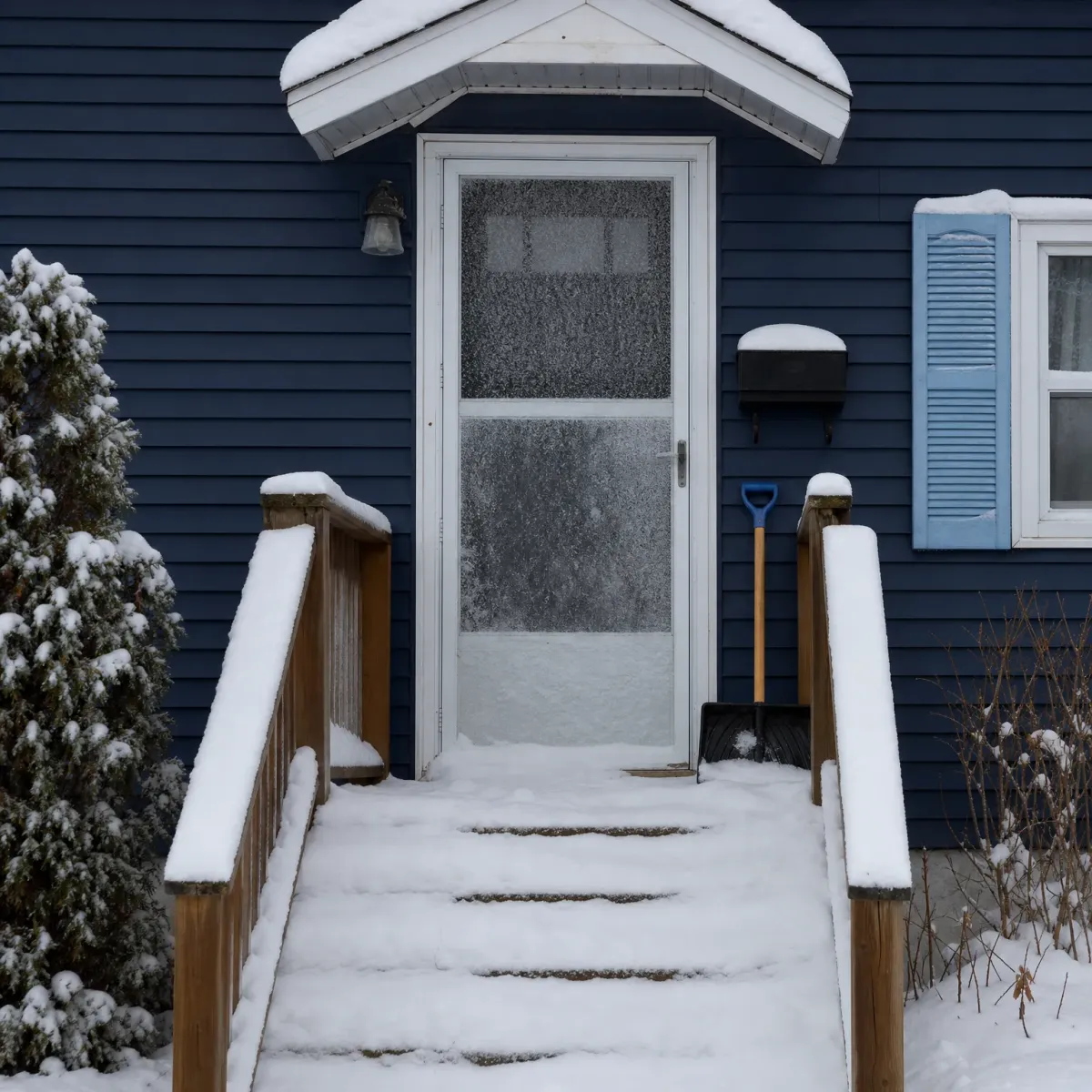
Snow-covered wooden steps and railings lead to a white storm door on a dark blue clapboard house, with a snow shovel leaning beside a wall-mounted box and an evergreen shrub at left.

Common questions about heat pumps and furnaces

  • Can a heat pump heat a house through a North Dakota winter?

    On its own, no, not through the coldest nights here. Below about 35°F a standard heat pump usually needs backup heat, and about 30 nights a year here reach 0°F or below. A cold-climate model holds up better in deep cold, but even those are commonly paired with a backup source for the hardest nights.

  • Do I need backup heat with a heat pump here?

    Yes. The overnight low here averages 8°F in December, January and February, well below the 35°F mark where a standard heat pump typically needs backup heat and the 40°F mark where its output starts falling short of its rating. With about 185 nights a year at or below freezing, backup heat is doing real work most winters.

  • Can I keep my furnace and add a heat pump?

    Yes, and here that often makes more sense than relying on the heat pump alone. A heat pump's output falls below its rating once it's under 40°F outside, and the overnight low here averages 8°F across December, January and February. Keeping the furnace as backup means it carries the house on the roughly 185 nights a year that drop to freezing or below.

  • Is a heat pump cheaper to run than a furnace in Golden Valley County?

    No, a furnace costs less to run here. The heat pump works out to $1.53 per 100,000 Btu against $1.05 for a gas furnace, because North Dakota's electricity price per Btu runs well above its natural gas price. That gap holds for a full winter of use, not just the coldest nights.