A snow-covered suburban street at dusk with lit houses and bare trees under a twilight sky.

Furnace Repair in Beach, ND

Tell us about the job

Takes about a minute. No obligation.

RepairFurnace or heatingGolden Valley County, ND
Step 1 of 2

What ZIP code is the job in?

Nine months of runtime

Furnaces in Golden Valley County run from September through May. That's most of the year asking the burner, the igniter and the blower to work, with only a short break in summer. A furnace built for occasional use somewhere else would wear out fast under that schedule.

What that means for a repair

A furnace running nine months a year doesn't fail for no reason. Whatever brought yours down has been building for a while under that load. Get it diagnosed properly so you know if you're fixing the actual problem or just the symptom that showed up first.

9 months
September through May, your furnace is on duty
8°F
the average winter night it heats against
57%
of homes here heat with gas, so most furnaces here burn gas
17 winter storms
in ten years, the nights a failure hurts most
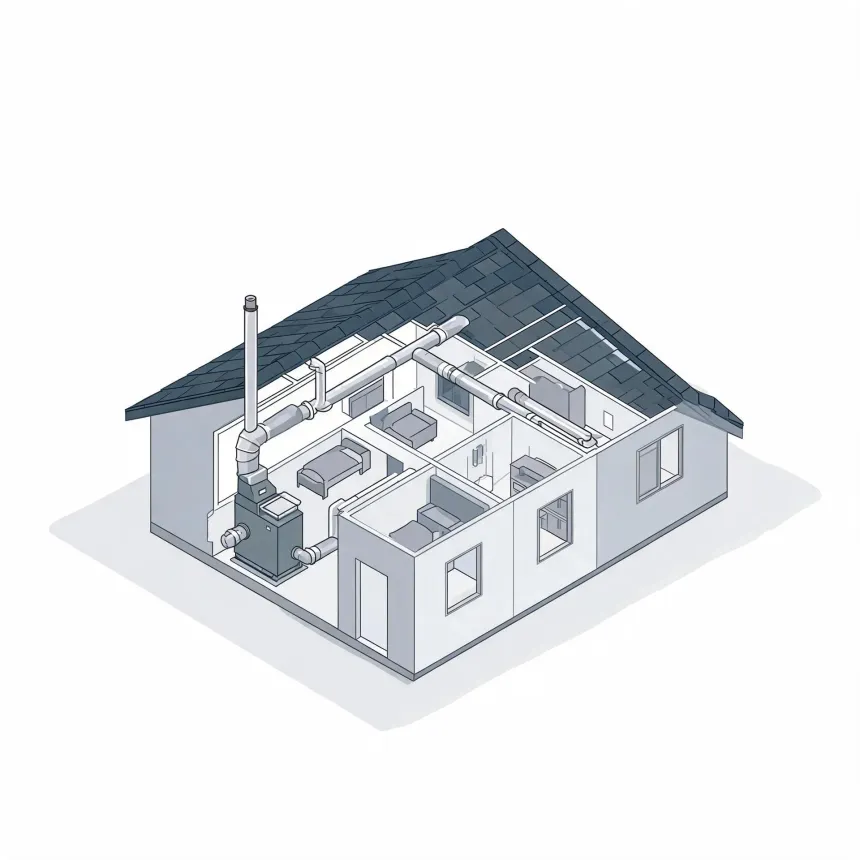
Isometric cutaway illustration of a single-story house showing interior rooms with furniture, ceiling ductwork, a furnace unit with a tall flue pipe, and a dark shingled roof.
Your furnace works hardest from November through March.

NOAA nClimDiv, 1991–2020 normals

Half the houses in Golden Valley County went up in 1957 or earlier.

A furnace that old has likely already been replaced once. If yours hasn't, ask how much is left in it before you sink money into this repair.

Natural gas here runs $8.44 per million Btu, and this furnace burns it most of the year

Climate zone 6A
Heat runs September through May
Winter nights average 8°F
September is when it breaksFurnaces here sit idle all summer, then get asked to run full time the day it turns cold.

A furnace that won't light right or short cycles is wasting gas every time it tries. At $8.44 per million Btu, a furnace struggling to do its job is not a small thing to live with for the next few months. Get the repair done now, before the cold settles in for good, rather than paying for bad combustion all winter. If the technician tells you the fix is minor, fine. If they tell you it's the third thing to go this year, that's worth hearing too.

Know which one you're paying for

If the technician finds a repair that makes sense, get it done. If they find a furnace on its last legs, better to hear that now than after you've paid for a part that outlives the rest of the unit by a month.

Find a contractor
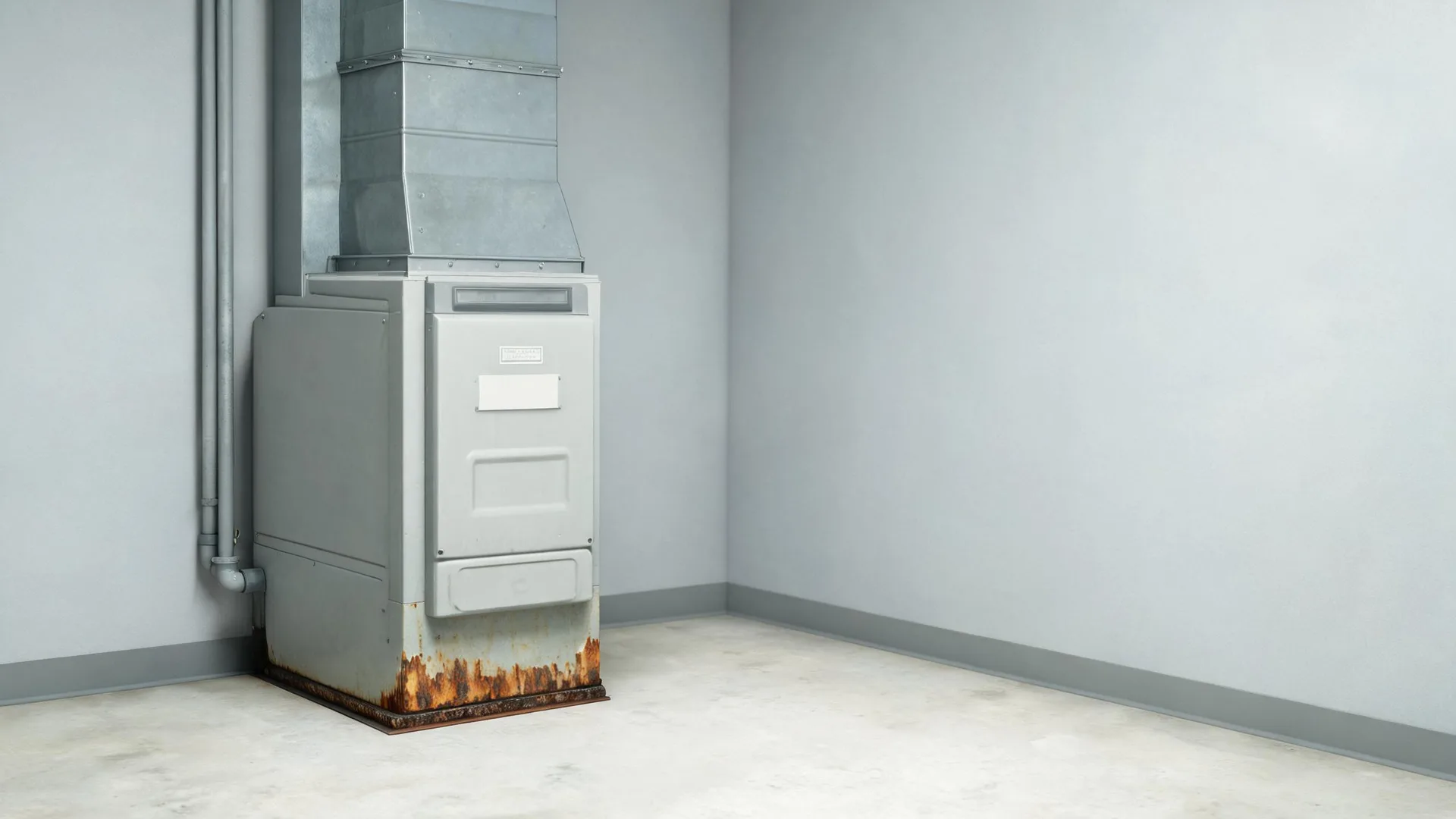
A gray residential gas furnace installed in an unfinished basement, surrounded by ductwork, a metal flue pipe, and a gas supply line.

Little time to catch up

Nine months of runtime a year leaves a short window for anything to rest. By the time September comes around, the furnace is asked to carry full loads right away, and whatever was wearing thin over the summer gets found out fast. Have the technician check the whole system while it's apart, not just the part that quit. If something else is close behind, you want to know now, not partway through a hard winter.

A cracked heat exchanger gets worse with every cycle

Metal that's already cracked flexes again each time the burner fires. The crack grows a little more with every heat cycle until it's leaking exhaust into the air the blower moves through the house. Shutting it down when you first hear a tick or smell exhaust stops that. Letting it run because the house is still warm does not.

A failing igniter or flame sensor takes the blower motor with it

When a furnace can't light clean, it tries again and again, short cycling instead of running a normal heat cycle. Each failed start puts a hard draw on the blower motor and the control board that's never supposed to happen that often. A part that would have been a simple swap on its own turns into two or three parts once the rest of the system has been stressed trying to compensate for it.

An unfinished basement featuring concrete block walls, exposed floor joists, a bare concrete floor, and a forced-air furnace with a large metal exhaust duct in the corner.

A new furnace would cut about $100 a year off heating for a typical Golden Valley County home.

  • A new high-efficiency furnace$440 a year
  • An older furnace$540 a year

Estimates for a typical Golden Valley County home, compared with an older unit built to the previous federal minimum, from EIA household energy data, North Dakota fuel prices and NOAA climate normals. Your home will differ.

Repair makes sense when one part has failed and the heat exchanger is sound.

Replacement makes sense when the heat exchanger is cracked or the furnace keeps needing parts.

Most furnace repairs are worth doing. A new flame sensor or a new igniter costs little and brings the furnace back to normal. The question changes once the heat exchanger or the control board is the problem, or once the same furnace has needed a tech out two or three times in a year. Every repair after that point is a bet that nothing else fails this season, and heat exchangers don't heal, they just get watched more closely. Ask the technician straight out what else on the unit is close to the end of its life. If the compressor or exchanger is original and the furnace has run hard for many winters, a repair now is a patch, not a fix.