Repair or replace a propane furnace in Fort Yates, ND

Get matched with a pro who works on furnaces in Sioux County.

Get a furnace pro

Should I repair or replace my propane furnace?

Your propane furnace is acting up again and you're trying to figure out if it's worth fixing or if you should just replace it. With winters as hard as they get around Sioux County, you don't want to gamble on a system that might quit in January. But you also don't want to spend money replacing something that had years left in it.

Repair it if it's under 15 years old, replace it if it isn't

A propane furnace usually has 15 to 20 years of service in it. If yours is younger than that and the repair is a single part, a repair gets you through this winter and several more after it. If it's older, or if it's already needed more than one repair in the past year or two, replacing it makes more sense, because a furnace that's starting to fail isn't a safe bet against a Sioux County winter. Propane heats most homes in this area, and a furnace that short-cycles or won't hold a flame in January leaves you with no backup plan. Age and repair history tell you more than how the furnace is running today.

A gray furnace with white PVC vent pipes stands beside sheet-metal ductwork in a basement with a smooth concrete floor, exposed wood framing, and plastic sheeting on the walls.

When repair makes sense

A furnace that still looks sound, like the one here with clean connections and no rust, is usually worth fixing. If the cabinet and venting are in good shape and the problem is a single part, a repair gets you through the rest of winter without much risk.

A beige furnace with two access panels stands against a concrete basement wall, with galvanized sheet-metal ductwork, a white PVC pipe, flexible conduit and insulated ducting around it.

When it's time to replace

Rust on the cabinet and aging flue piping, like this unit shows, are signs the furnace is wearing out from the inside too. Past a certain point, propane burns less efficiently and parts fail more often. Replacing it before it fails on a hard January night is the safer bet.

Repair or Replace: Weighing Your Options

Repair

  • A cracked heat exchanger means replacement, not repair, since that part isn't sold separately from a new furnace in most cases.
  • An igniter or flame sensor failure is usually a straightforward fix that doesn't call for a second opinion on the whole system.
  • If the furnace has been reliable up to now and this is its first real breakdown, a repair is the lower-risk move going into a Sioux County winter.
  • A blower motor replacement costs less than a new furnace and can be done in a single visit by most contractors.
  • Repairing an older furnace still makes sense if parts are available and the cabinet isn't rusted through.

Replace

  • If the furnace has broken down more than once this winter already, another repair just delays the next failure.
  • A furnace that's been patched a few times usually keeps needing it, and each propane-fueled breakdown in a North Dakota winter carries more risk than the last.
  • Scorch marks near the burner or a yellow flame instead of blue point to a combustion problem that a simple part swap won't resolve.
  • Rust working through the cabinet or heat exchanger means the furnace is failing from the inside, not just one bad component.
  • A newer furnace burns propane more efficiently, which matters where propane is the main heating fuel for most of the season.
  • If the contractor can't get the exact replacement part, waiting on a special order isn't a good bet during a hard winter.
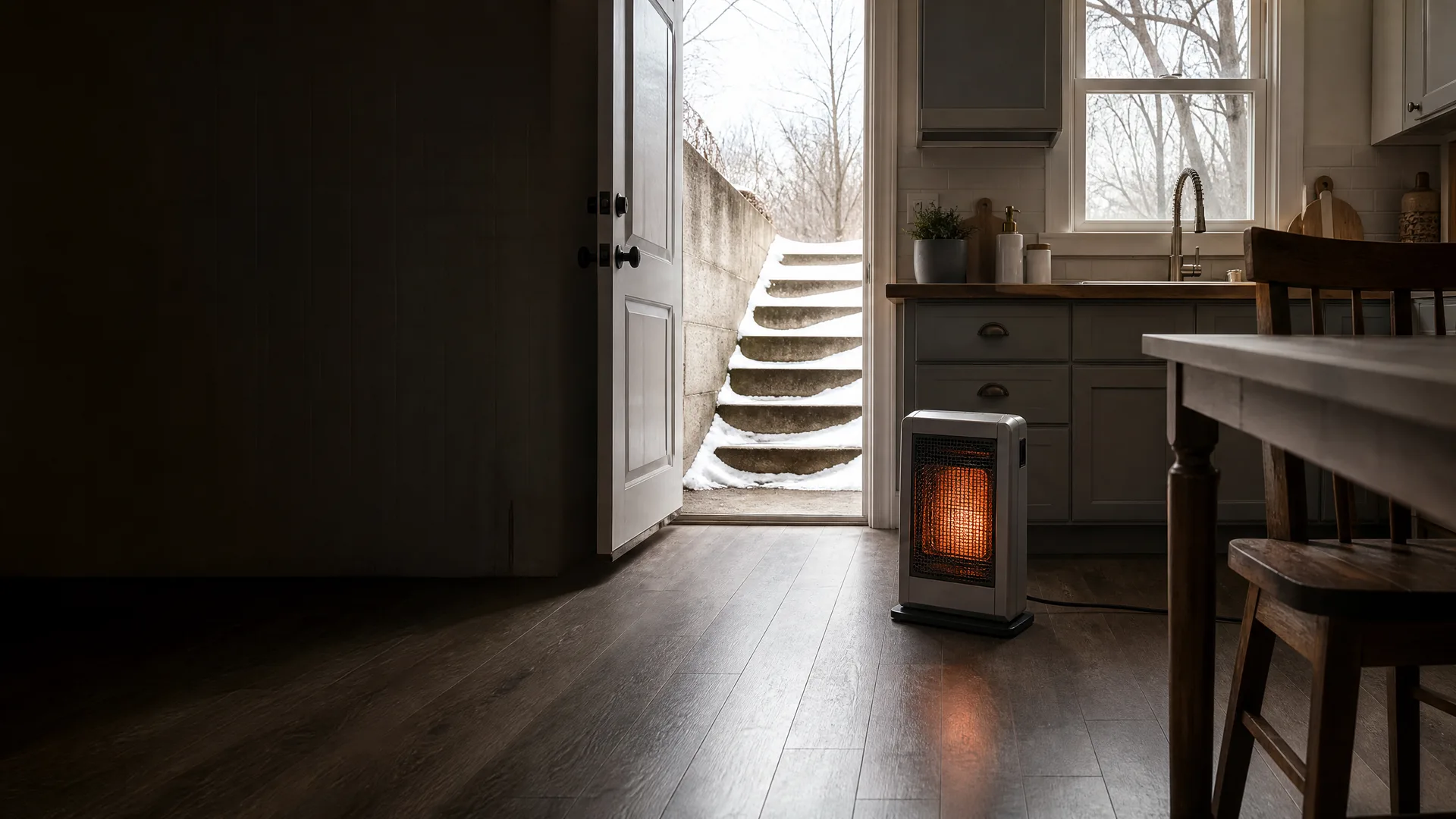
A portable electric space heater with glowing orange elements sits on a dark wood floor near an open exterior door that reveals snow-dusted concrete steps, with a kitchen counter, sink, window and wooden table to the right.

The space heater has been running since five. You got up in the dark to feed it another cord and left the basement door open, the way you always do when the furnace is down, so you can hear if anything changes. Outside it's still full winter, the kind of cold that settles into Sioux County and doesn't move for days. The coffee's gone lukewarm on the table next to the heater's glow. You've already decided you can't keep doing this morning after morning, waiting to see if the furnace catches or doesn't. Somewhere in the back of your mind you've started composing what you'd tell a contractor, if one called, about how long this has been going on.


Matched to your furnace job

Send it once and finding someone is no longer on you.

You only hire the pro if you want to.

  1. The thermostat calls for heat and signals the control board.

  2. The inducer motor starts, clearing the heat exchanger of air.

  3. The igniter heats up or sparks to light the burners.

  4. Propane flows to the burners and ignites.

What are you noticing with your furnace right now

Maybe it's short cycling, kicking on and off every few minutes instead of running a full cycle. Maybe one room stays cold no matter how high you set the thermostat, or you've noticed the burner flame looks yellow or uneven instead of steady blue. Some households hear a bang or rattle at startup, or catch a faint propane smell near the furnace that wasn't there before. A thermostat that won't hold a set temperature, or a pilot or igniter that quits working more often than it used to, are both worth paying attention to. Left alone through a Sioux County winter, a furnace that's struggling can fail on the coldest night, and a cracked heat exchanger or gas leak puts more than comfort at risk.

A dark high-efficiency furnace on a concrete pad in a basement, connected to galvanized ductwork, white PVC vent pipes, and copper and black gas piping, with concrete walls and wood framing nearby.

Furnace in good shape

This is what a furnace should look like. The cabinet is clean, the gas lines and venting are intact, and there's no rust on the unit or the ductwork around it. A furnace like this, with a single failed part, is almost always worth repairing.

A gas furnace with a louvered upper panel stands on a concrete pad in a basement, flanked by sheet-metal ductwork, white PVC and metal pipes, and insulated columns.

Furnace showing its age

This furnace is older and it shows. The ductwork above is original, the flex conduit to the left has seen wear, and the condensate line running down the side is a spot where failures show up over time. At this point, a major repair may just delay the same decision.

A smiling man in a denim shirt and white t-shirt stands in an open dark doorway of a stucco house, facing a woman with long brown hair and a green jacket seen from behind in the foreground.

What a furnace decision means for your house

A furnace that quits in January in Sioux County isn't a maintenance item, it's your pipes and your family needing an answer fast. If yours is down to one bad part and the cabinet is sound, fixing it keeps you heated through the cold without the disruption of a full swap. If it's the heat exchanger or the unit is old and tired, patching it just means you're back in this spot again next winter, maybe at 2 a.m. instead of now.

Either way, the choice is easier when someone's actually looked at your furnace instead of guessing from a description over the phone. Once you send in what's going on with yours, you're not the one tracking down who's available and who knows propane systems in this area. A contractor who works on these furnaces gets your information and follows up, and from there it's a conversation about your actual unit, not a guess about furnaces in general.

Interior corner of a room with a window and sheer curtain at left, a gray upholstered sofa with a cushion at right, and a round wooden table holding stacked books and a round vase with an olive branch.
A gray-haired bearded man in a dark coat and scarf dusted with snow stands smiling in a dimly lit entryway with a white front door, a side table with a lit lamp, an oval mirror, and a patterned rug.
An older bearded man in a dark snow-dusted coat and gray scarf stands just inside a dimly lit home entry, with a framed picture, lit table lamp, and an adjoining room with a fireplace behind him, and snow visible through the open door.
A gray-haired, bearded man in a dark snow-dusted coat stands smiling in a dimly lit entry hall with a staircase, a lit table lamp, a framed picture, and a living room visible through a doorway.
An older man with gray hair and a beard, wearing a dark jacket dusted with snow, stands smiling in a dimly lit hallway with lamps and a living room visible behind him.

Winter nights average 7°F

A night that averages 7°F means your furnace runs long stretches without much of a break once it gets dark. A single failed part, an igniter or a flame sensor, can leave a house cold fast at that temperature.

NOAA nClimDiv 1991-2020

An older beige furnace with a louvered vent panel stands on a concrete basement floor beside galvanized sheet-metal ductwork, a metal flue pipe and vertical pipes along a concrete wall.
Before you get your furnace installation
A beige high-efficiency furnace with white PVC vent pipes stands beside galvanized sheet-metal ductwork in a basement with a concrete floor, exposed wood studs, and metal piping along the wall.
After you get your furnace installation

15 to 20 years

That's the typical working life of a propane furnace. If yours is near that mark and needs a major part, replacement gets you a unit that should outlast a repair bill.

Find a pro near me

One failed part

If the furnace is otherwise sound and it's down to a single part like an igniter or flame sensor, a repair is usually the right call and the quicker one.

Find a pro near me
A woman wrapped in a thick beige fleece blanket sits on a sofa with an open book on her lap, beside a lit table lamp, with a frost-covered window behind her.
A gray-haired woman in a cream knit sweater stands in a dimly lit kitchen at night, looking to her right, with a round loaf of bread in the foreground and a dark window and potted plant behind her.
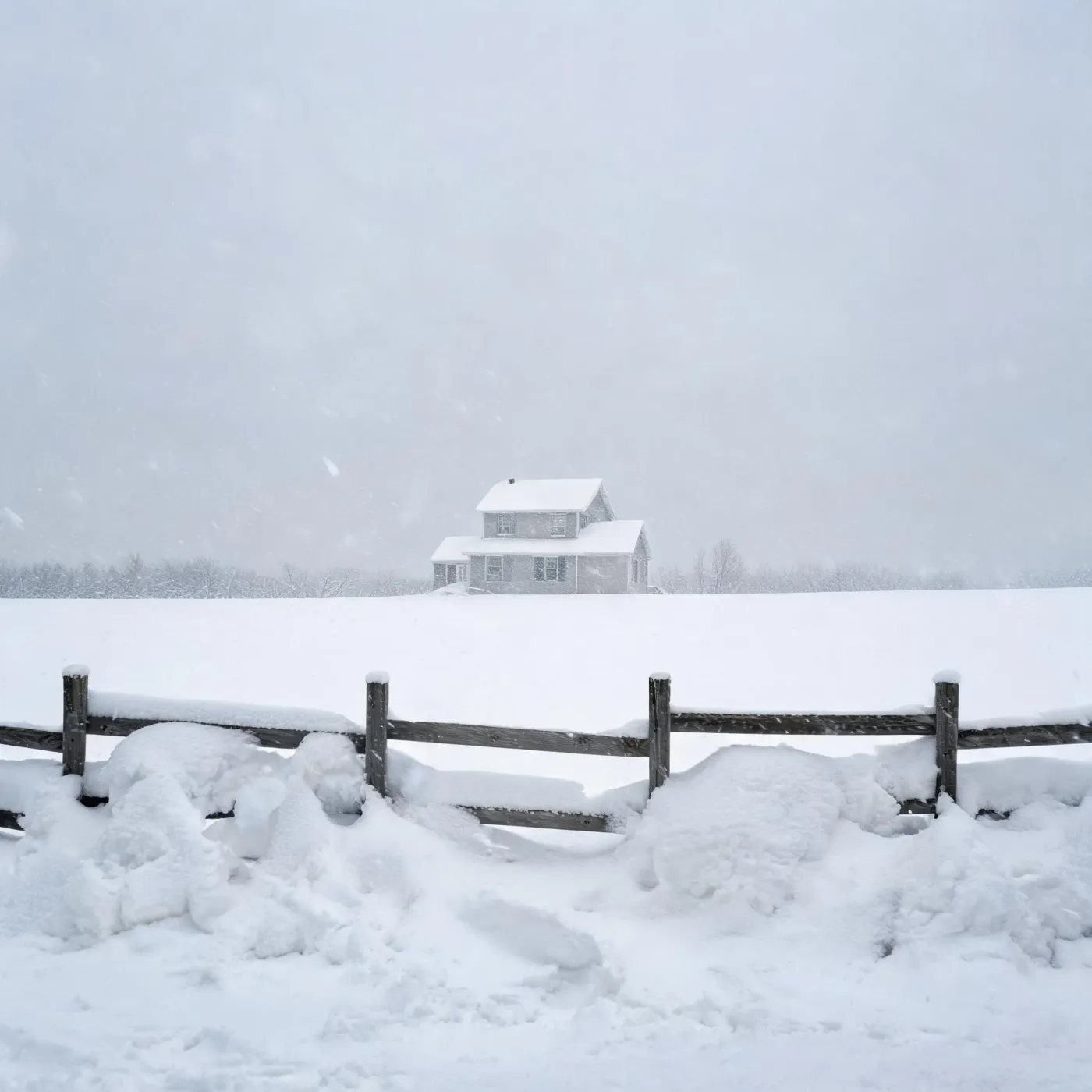
A two-story light-colored house with snow-covered roofs stands beyond a snow-filled field, with a weathered wooden post-and-rail fence half buried in drifts in the foreground under an overcast, hazy sky.

Winter nights in Sioux County average 7°F across December, January and February, according to NOAA climate data. At that temperature your furnace isn't cycling on and off, it's running for hours at a stretch just to hold the house steady. That's hard use on an igniter or a flame sensor that's already weak, and it's why a part that's been struggling all fall tends to quit on one of these long, cold nights rather than a mild one. If your furnace is already down to one bad part, this is the kind of cold that turns it into an overnight problem instead of something that waits until morning.

NOAA nClimDiv 1991-2020

A single failed part on a sound furnace is worth fixing. A cracked heat exchanger, a cabinet gone to rust, or a unit pushing 15 to 20 years isn't. That's the whole decision. What you've seen in your own furnace, the rust or the clean connections, the one bad part or the age of the thing, points you to an answer already. Sioux County winters don't leave room to wait on a furnace that's failing, and they don't require you to replace one that's still sound either. Once you know which side of that line yours falls on, the next step is getting someone qualified to look at it and give you a straight answer on repair or replacement. Send the form and that search is off your plate. A contractor who works on propane furnaces in this area will reach out, look at what you've got, and tell you plainly what it needs. You don't have to track down who's available or who answers calls this week. That part is handled once you ask.

An empty basement with bare concrete walls and floor, exposed wooden joists and pipes overhead, and a dark furnace with sheet-metal ductwork and vent pipes in the right corner.

Get matched with a furnace pro in Sioux County

One request ends the search for a furnace installer.

New system or replacementFurnace or heatingSioux County, ND
Step 1 of 2

What ZIP code is the job in?