










Why your propane furnace won't light in Center, ND

RepairFurnace or heatingOliver County, ND
Step 1 of 2

What ZIP code is the job in?

Why won't my propane furnace light in Center, ND?

A furnace that won't light on a cold morning in Center is one of those problems that doesn't wait. You've probably already checked the thermostat, flipped the breaker, maybe reset it once or twice. When it still won't fire, it usually comes down to a few parts that wear out or drift out of adjustment, not the propane itself running out, though that's worth a look at the tank gauge first.

Most often it's the igniter, the flame sensor or the pressure switch

A furnace needs several things to agree before it lights: power to the igniter, a clean flame sensor to confirm the flame once it's there, and a pressure switch that only closes when the inducer motor is moving air correctly. A hot surface igniter weakens with age and stops glowing hot enough to catch the gas. A flame sensor coated with a thin layer of residue reads no flame even when there is one, and the furnace shuts itself down rather than run unsafe. Cold intake and exhaust vents, common with how hard winters get in Oliver County, can also trip the pressure switch and keep the whole sequence from starting. Each of these is a specific part failing, not the furnace wearing out overall.

A dim unfinished basement with concrete walls, exposed floor joists, a small window, and a furnace connected to metal ductwork and PVC venting.

November, and it's already dark by six. You're down in the basement because the house hasn't warmed up since this afternoon, and the furnace is sitting there cold, quiet, not even trying. You crouch by the access panel and catch that faint dusty smell furnaces get when they haven't run in a while. No clicking, no hum, nothing. Upstairs the thermostat still reads the temperature you set it to, stubborn and useless. Outside, Oliver County is settling into the kind of November evening that turns into a hard winter fast, and the propane tank out back doesn't mean much if the furnace won't light to use it.

Reset It or Call for Repair

Call for repair now

  • A furnace that won't light is a safety system doing its job, not a part that needs convincing, and someone qualified can find which one tripped it.
  • Open flame or gas smell at the furnace means you shut off the gas valve and call before you touch anything else.
  • A local contractor who services this equipment all winter has likely seen your exact furnace fail this same way before.
  • Waiting overnight on a hard winter night in Oliver County risks frozen pipes once the house drops below freezing.
  • One qualified call means no explaining the problem three times to three different companies before anyone shows up.

Try one thing first

  • If the breaker tripped once and the furnace relit on its own, that's worth noting but not yet worth worrying about.
  • A thermostat with dead batteries or a wrong setting can look exactly like a furnace that won't light.
  • Checking that the propane tank itself hasn't run low takes a minute and rules out the simplest cause.
  • A furnace that lit, ran briefly, then shut off again is telling you something specific, and that's a call, not a retry.
  • If the same reset fails twice, stop resetting it and get someone out before the house loses more heat.
  1. Thermostat calls for heat and sends power to the control board.

  2. Inducer motor starts to clear the heat exchanger of gas fumes.

  3. Pressure switch confirms the inducer is pulling enough draft.

  4. Hot surface igniter or spark heats up to light the burners.

A closed silver laptop and a ceramic mug of dark coffee sit on a wooden table in front of two chair backs, with a kitchen counter, tiled backsplash, wooden cutting boards, a vase of greenery and a potted plant by a window behind.

A cold house in Center adds up fast once propane is the fuel

With most homes in Oliver County running on propane, a furnace that won't light isn't just a comfort problem. Pipes in an unheated basement can freeze in a hard enough cold snap, and once the house drops below a certain point, every space heater you plug in is pulling power that costs more than the propane would have. The longer it sits dark, the more that gap grows.

Finding someone to look at it shouldn't be its own project. You don't need to call around Center and the surrounding towns asking who's free, explain the same symptoms three separate times, then sit with a stack of quotes trying to guess which one is fair. One licensed contractor who works on furnaces in this county through every winter already knows what usually trips on a cold start here. You call once, and the rest of that work is gone.

A gray upholstered sofa with a matching cushion sits beside a potted plant and a wooden table holding a small green plant in a stone pot, near a curtained window.
A gray high-efficiency furnace with two access panels stands in a bare basement corner, connected to sheet-metal ductwork, white PVC vent pipes, and flexible gas and electrical lines.

Why the igniter is usually the part

Most propane furnaces built in the last couple decades use a hot surface igniter instead of a standing pilot. It's a small ceramic strip that glows hot enough to light the gas, and it's the part that takes the most heat cycles of anything in the furnace. After enough winters, it cracks or wears thin in one spot. When that happens, it either won't glow at all or it glows too weak to catch the gas, and the furnace shuts itself down instead of trying again.

A gas furnace with metal ductwork, copper and yellow gas piping stands against a wall in an empty room with a bare concrete floor.

The flame sensor is doing its job

If the furnace lights for a second and then shuts off, that's usually the flame sensor working correctly, not failing. It's a thin metal rod near the burner that confirms a flame actually caught. Propane burns clean, which means the sensor can build up a light film faster than you'd expect from a dirtier fuel. Once that film is thick enough, the sensor can't read the flame anymore, and the control board treats it as no ignition and locks out the burner.

What are you noticing right now in your house

You've probably got your hand on a vent and it's blowing cold, or not blowing at all. The thermostat might show the temperature you set, but the house doesn't match it. Down at the furnace, you may hear the inducer motor try to start and then quit, or hear nothing at all, just a click from the board and silence after. Maybe you caught a whiff of propane near the unit, faint, not strong. If the house has been losing ground for a few hours already, check on any water lines running through the basement or an exterior wall. A short cold snap won't hurt them, but a furnace that's been down since morning in a North Dakota winter is a different situation.

A gray-haired man in a dark sweater sits on a light gray sofa in a living room, looking toward a sunlit window with trees outside.
A gray-haired man in a dark blue sweater sits on a light gray sofa in a sunlit living room, looking off to the side, with a potted plant, shelving unit, and large glass doors behind him.
A bearded man with graying hair in a dark green sweater sits on a sofa in a living room, looking off to the side, with a sliding glass door and a dim kitchen doorway behind him.
A gray-haired man in a dark knit sweater sits on a light gray sofa in a living room, looking toward a sunlit window, with houseplants, a lamp, and framed art in the background.

No calling every shop in Oliver County

A furnace that won't light in Oliver County isn't something to keep testing yourself with a cold basement and a dropping thermostat number. Someone who works on these furnaces every winter in Center knows which part fails first in this cold and won't need to guess twice. Instead of calling around to find someone free today, comparing quotes, and explaining the same problem over and over to different companies, one request puts it in front of a local contractor who handles this equipment all season. You've already checked the thermostat and the breaker. What's left is the part of the furnace that needs a trained eye, and that's not something to leave for tomorrow when the house is already losing heat and the propane isn't doing its job.

Keep testing it yourself and you risk missing a cracked heat exchanger or a gas leak that a pressure switch was built to catch, both of which need a trained eye, not another reset.

Call someone who works on propane furnaces in Oliver County every winter and they'll know within minutes whether it's the igniter, the pressure switch, or something further down the line.

A gray metal furnace with two white PVC vent pipes stands on a concrete floor beside galvanized sheet-metal ductwork in a basement or utility space with wood framing.
Before you get your furnace repair
A gray furnace cabinet in a basement with sheet-metal ductwork, white PVC vent pipes, and black gas piping against a concrete wall and wood-framed partition on a bare concrete floor.
After you get your furnace repair

Before you get your furnace repair

The house is cold and you're not sure why the furnace stopped trying. Maybe you've reset the breaker a couple times, checked the thermostat batteries, and it still won't fire. Finding someone to look at it means searching around, calling a few places, explaining the same thing more than once, then waiting to see who can actually come out in a North Dakota winter. Meanwhile the propane furnace sits there cold and the house keeps losing ground, especially if the basement pipes are exposed to that drop in temperature.


After you get your furnace repair

One call connects you to a licensed contractor local to Oliver County, someone who works on propane furnaces like yours all winter and has a good idea what's failed before they even open the panel. No sorting through quotes from companies you don't know, no repeating the story to a second or third caller. The furnace gets diagnosed by someone who knows what a tripped pressure switch or a worn igniter looks like in this cold, and the house starts warming back up instead of you guessing at what's wrong.

Why does a dead furnace matter so much here?

  • Winter nights average 6°F

    Winter nights here average 6°F, so a furnace that won't light can let a house cool fast, and it's not something to leave until morning.

  • Heat runs September through May

    Furnaces in Oliver County run from September through May. Nine months of the year, yours has to work, and a no-light call can happen on any one of them.

  • 62.6% of homes heat with propane

    62.6% of homes here heat with propane, which means a local contractor is working on this exact kind of furnace all winter, not guessing at it.

NOAA nClimDiv 1991-2020 · ACS 2020-2024

A beige high-efficiency furnace stands on a concrete basement floor beside sheet-metal ductwork, with white PVC vent pipes and a gas line running along an insulated wood-framed wall.
A furnace like this is drawing gas and air the way it's built to, flame steady behind the burner view port.
An older metal furnace with a louvered front panel stands against a concrete basement wall, connected to sheet-metal ductwork and a flue pipe, with copper and steel pipes running alongside.
Dust built up on the cabinet and vents like this often means the burners inside haven't been cleaned in a while either.

Winter nights average 6°F

At 6°F, a furnace that won't light doesn't give you much time to figure it out yourself. A basement that cold will pull heat out of the floors above it fast, and pipes along an outside wall start to worry you within hours, not days.

NOAA nClimDiv 1991-2020

A propane furnace that won't light almost always comes down to one of a handful of parts: the igniter, the pressure switch, the inducer motor, or a safety switch that tripped for a reason. Finding which one it is isn't a guessing game, and it isn't something to keep testing with a screwdriver and a cold basement. Someone who works on propane furnaces in Center every winter has likely seen your exact furnace fail this same way before, in this same cold, and knows where to look first instead of working through every part by trial and error. That's one contractor, local to Oliver County, not a handful of companies calling you back at once to size up the job over the phone. You'll still need to wait on the diagnosis itself, but you won't be the one running down who's available and starting the explanation over with each call. The furnace stays cold until someone qualified gets to it. What changes is how much of that time you spend chasing the right person instead of waiting on the right fix.

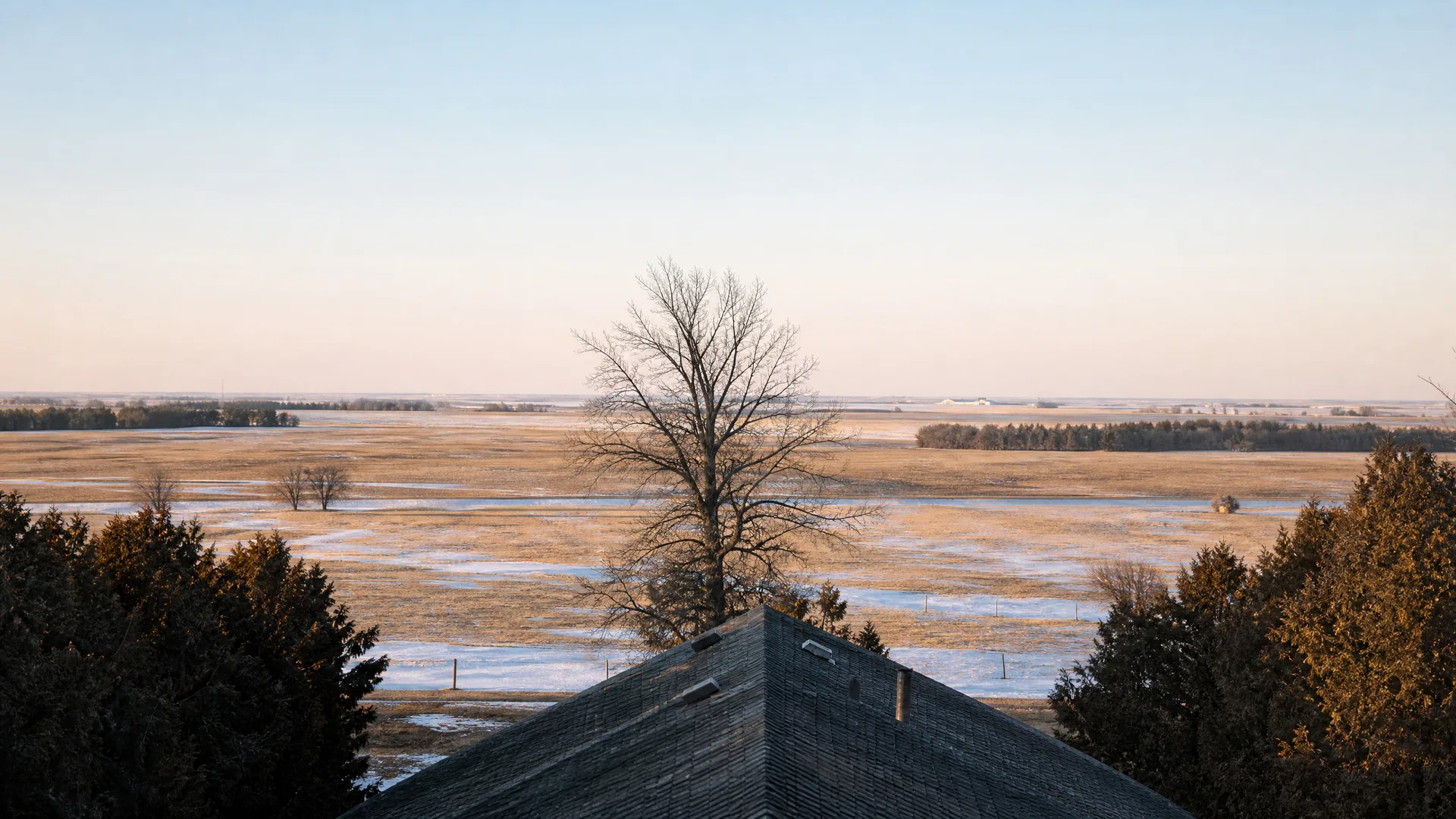
Elevated view over a flat field with patches of snow, a bare deciduous tree at center, evergreen trees at both sides, and the shingled ridge of a roof in the foreground under a pale sky.

No phone calls to make

Skip the search

No charge to send it. You decide if you hire them.

One call gets a local contractor out to your furnace instead of you sorting through search results and quotes while the house keeps cooling down. Someone who works on propane furnaces in Oliver County all winter can usually tell which part failed before they even open the panel.