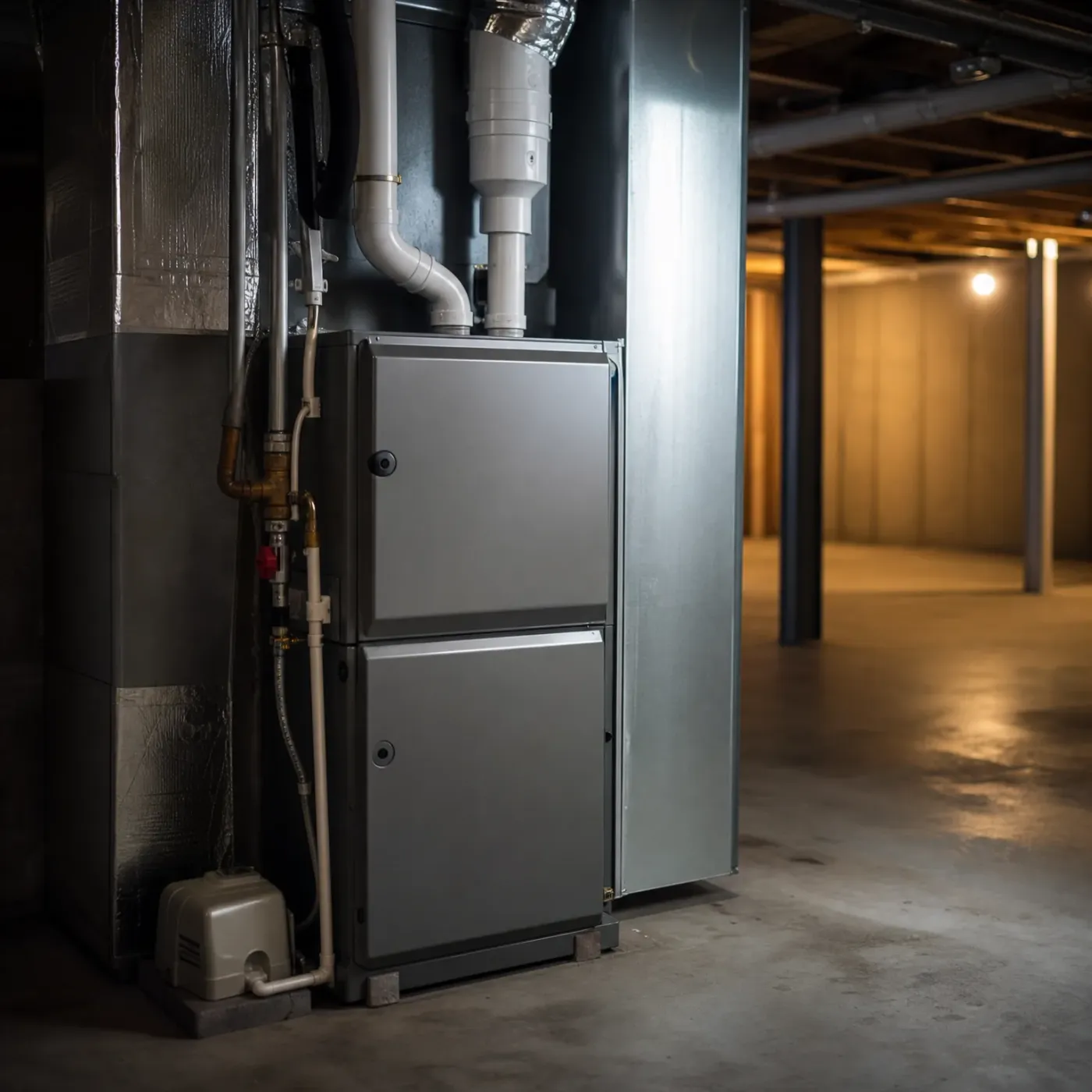




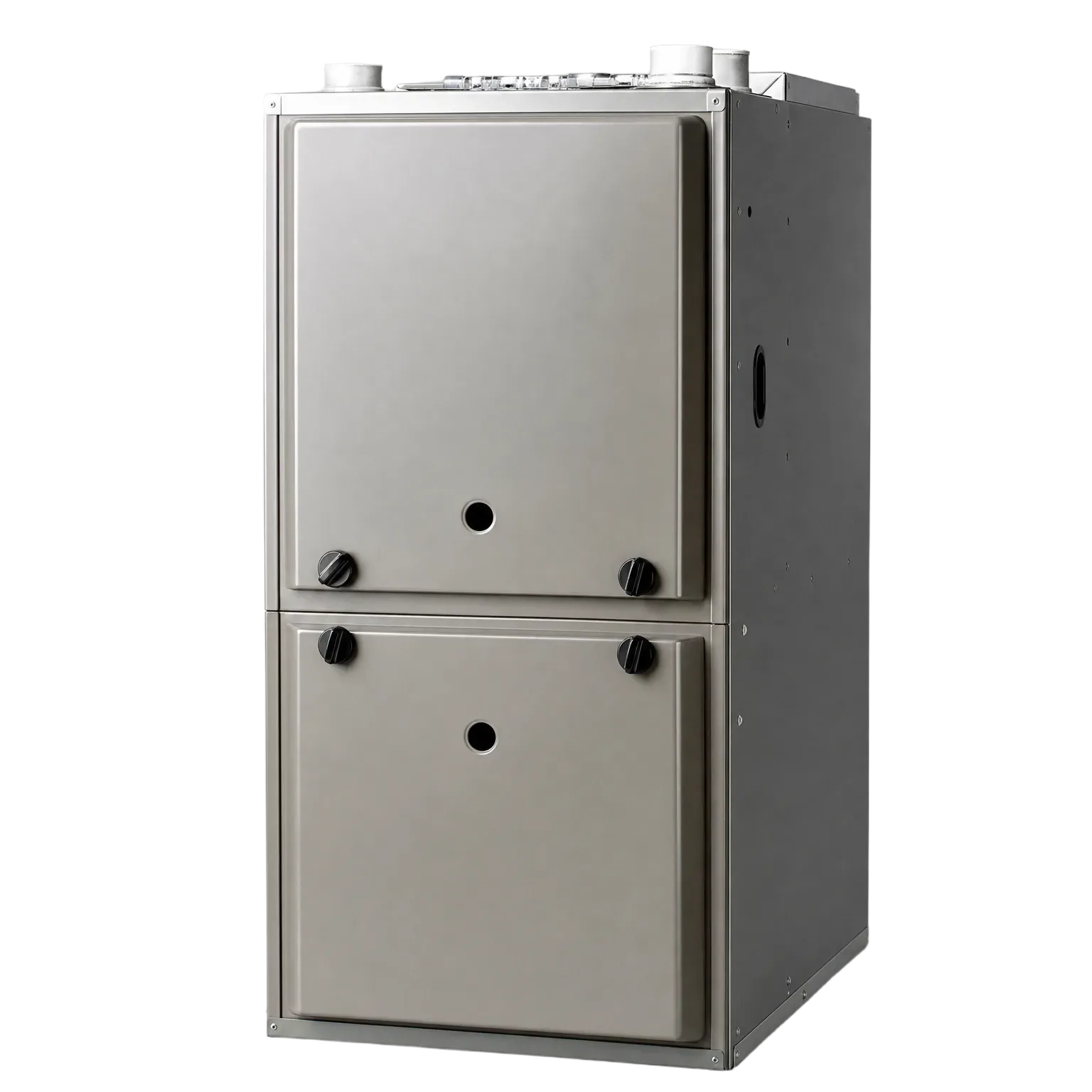

A gray high-efficiency furnace with PVC venting, copper and plastic piping, and a condensate pump sits beside sheet-metal ductwork in a concrete-floored basement.

Let someone else find the pro

Repair or replace a propane furnace in Center, ND

Your propane furnace is struggling in Center, maybe it won't light, maybe it's running up your bill, and you need to know whether it's worth fixing or time for a new one. That depends on its age, what's actually wrong, and what a repair would run against a replacement. Send the details once and let a local contractor who works on these furnaces all winter sort it out.

Let a pro reach out

A propane furnace under ten years old is usually worth repairing if the problem is a single part, like an igniter or a flame sensor. Past fifteen years, failures tend to stack up, and a cracked heat exchanger or a failing blower motor often costs enough on its own to make a new furnace the better bet. Winters in Oliver County don't leave much room to guess wrong. A furnace that's limping along in November can quit outright during a stretch of hard cold, and propane furnaces that short-cycle or struggle to stay lit are usually close to that point. Most homes around Center run on propane heat, so when the furnace goes down, there's no backup system warming the house while you sort out the decision. A local contractor who works on this equipment every winter can look at the age, the repair history, and what's actually failed, and tell you straight whether to fix it or replace it.

Why does a furnace in Center need to be this reliable?

  • Winter nights average 6°F

    Six below zero is the average night, not the worst of it. A furnace that hesitates to light on a night like that leaves a house cold fast.

  • Heat runs September through May

    Nine months of heat means the furnace is the system doing the real work in your house most of the year, not the air conditioner.

  • 62.6% of homes heat with propane

    Most of your neighbors already heat with propane. Parts and service for it are what contractors around Center deal with every week.

NOAA nClimDiv 1991-2020 · ACS 2020-2024

When repair is the right call

A single failed part is a repair, almost every time. An igniter that won't glow, a flame sensor that's gone dirty or weak, a draft inducer motor that hums but won't spin up, these get fixed and the furnace runs like it did before. If the cabinet is sound and the heat exchanger hasn't cracked, there's no reason a ten or twelve year old furnace can't run another winter on a new part. Cost matters too. A repair that runs a few hundred dollars against a furnace that has years left in it is money well spent. What doesn't make sense is sinking repair after repair into a unit that keeps finding new ways to fail. If this is the first time it's acted up, get it looked at and fixed. If it's the third time this winter, that's a different conversation.

When replacement makes more sense

A cracked heat exchanger ends the conversation. That part can't be patched, and it's not safe to run a furnace with one. A failed blower motor on an older unit is close behind, since the labor and part together can run close to what a new system costs. Age matters on its own too. Past fifteen years, a furnace has usually already had its igniter, its flame sensor, maybe its inducer motor replaced once, and the parts still original to it are the ones most likely to go next. At that point a repair buys a few more months, not a few more years. A new furnace sized right for your home also runs more efficiently burning propane than one built fifteen or twenty years ago, which matters over a winter this long and this cold.

A middle-aged man with grey hair and a beard, wearing a grey knit sweater, sits on a light sofa in a sunlit living room with a houseplant, wooden cabinet and framed landscape picture behind him.
A man with greying hair and a beard in an olive sweater sits on a sofa in a living room, looking to his left, with an armchair, round side table and large glass doors onto trees behind him.
A gray-haired bearded man in a dark blue shirt over a white t-shirt sits on a leather sofa in a living room with built-in shelves, a floor lamp, an armchair and large windows, looking off to the side.
A man with gray-brown hair and stubble in a dark sweater sits on a light-colored sofa in a living room, looking off to the side, with a houseplant, framed picture, shelving and a sunlit window behind him.

One request and it's handed off

One installer gets your project, so there's no bidding war over it.

You only hire the pro if you want to.

A gray furnace with sheet-metal ductwork, PVC vent pipes and a yellow gas line stands on a concrete basement floor beside wooden stair framing.

Furnace running right

This is what a healthy setup looks like: steady flame, tight connections at the gas line and flue, ductwork carrying warm air without a fight. A furnace in this shape holds its heat through a six-below night without you thinking about it.

An older gas furnace with a louvered front panel stands on a concrete basement floor beside galvanized sheet-metal ductwork, a metal flue pipe, gas piping and a flexible conduit along a concrete wall.

Furnace in trouble

Scorch marks near the burner, a flue pipe that's loose, a gas line fitting that looks worn, these are signs the furnace is past patching. When the cabinet and connections look this tired, a repair might buy a month, not a winter.

Repair the Furnace or Replace It

Repair

  • A single part failure, like an igniter that won't glow or a flame sensor gone weak, is almost always worth fixing rather than replacing the whole furnace.
  • If the furnace is under ten years old, repair keeps a unit with plenty of working life left and avoids spending on equipment it doesn't need yet.
  • A furnace that's heated the house through past winters without major trouble is proven in a way a new installation hasn't had the chance to be.
  • Repair gets heat back fast, which matters on a night when it's six below and the house is already losing warmth.
  • If the blower motor, igniter or flame sensor is the only thing wrong, replacing the furnace means paying for parts that still work fine.

Replace

  • Past fifteen years, failures tend to stack up, and a cracked heat exchanger or a failing blower motor often costs enough to repair that a new furnace makes more sense.
  • A cracked heat exchanger is a safety issue, not just a repair job, since it can let combustion gases into the house air.
  • Nine months of heat a year means an aging furnace is working close to its limit most of the time, and an old one is more likely to fail at the worst moment.
  • A new furnace installed now means not gambling on whether the next cold snap finds another part giving out.
  • If repairs have already happened more than once in the past year or two, another one just delays the same decision.
  1. A contractor checks the thermostat call and the control board for a response

  2. Igniter should glow hot enough to prove it can light the burners

  3. Flame sensor confirms a real flame, or it shuts gas off fast

  4. Draft inducer motor spins up first to clear the vent of fumes

Winter nights average 6°F

At 6 below, a furnace has no room to hesitate. Gas has to light on the first try, every time, because a house loses heat fast once that flame doesn't catch. That's what makes a single bad part, left alone, turn into a cold house by morning.

NOAA nClimDiv 1991-2020

Repair or Replace, Decided Simply

  • A furnace under ten years old with one failed part, like an igniter or flame sensor, is almost always worth repairing.
  • Past fifteen years, a cracked heat exchanger or failing blower motor usually means replacement makes more sense than repair.
  • Nine months of heat a year in Oliver County means the furnace carries most of the work most homes do.
  • A six-below night gives a struggling furnace no room to hesitate before a house starts losing heat.
  • Propane and cheap power here keep a new furnace affordable to run once it's in and working right.
  • The right call comes down to the furnace's age, what part failed, and what fixing it costs against a new one.

Most of what decides this comes down to two things: how old the furnace is, and what broke. A furnace under ten years old that's lost an igniter or a flame sensor is a repair, almost without exception. That part gets replaced, the furnace runs like it did before, and there's no reason to spend more than that. Past fifteen years, the math changes. A cracked heat exchanger or a blower motor on its way out often costs enough to fix that a new furnace, bought outright, makes more sense than paying to extend the life of one that's already most of the way through it.

What makes this decision matter more in Center than it would somewhere milder is the season itself. Nine months of the year, this furnace is the thing keeping the house warm, not a system that gets occasional use. On a night that drops to six below, which is just an average night here, not a severe one, a furnace that hesitates to light costs a house its heat fast. There's no slack for a part that's failing to keep failing.

Once a furnace is running right, propane and the area's low power costs keep it affordable to heat with. That part takes care of itself. What doesn't take care of itself is catching a bad part before it turns into a cold house, or knowing when a furnace has aged past the point where fixing it is still the better spend. That's the judgment call, and it rests on the furnace in front of you, not a general rule.

A woman with shoulder-length dark brown hair in a cream knit cardigan sits in an upholstered armchair beside a window, looking off to the side, with a white bookshelf and potted plant blurred behind her.
A woman with her hair in a bun sits wrapped in a beige knitted blanket on a couch, holding a sleeping child against her chest in a warmly lit room with a lamp and houseplant in the background.

Furnace Installation

Done looking for a furnace pro

Only one pro gets your request, so you hear from one company.

A black smartphone standing upright against a plain light gray background, its screen filled with solid green.
New system or replacementFurnace or heatingOliver County, ND
Step 1 of 2

What ZIP code is the job in?


