 Get my match
Why your propane furnace won't light in Beulah, ND
A local pro who knows furnaces gets your details and gets in touch.
A propane furnace that won't light in January is not a small problem out here. Winters in Mercer County are hard, and most homes around Beulah run on propane to get through them.
A furnace that won't fire is usually telling you something specific. It could be the igniter has failed, or the flame sensor is dirty and shutting the burner down on purpose. It could be the gas valve, or a pressure switch that isn't satisfied, or something as simple as the propane tank running low. Each of those has a different fix, and guessing at it from the thermostat on the wall doesn't get you very far.
What it isn't, most of the time, is the power. Power is cheap and steady here, and furnace control boards run on very little of it. If the house has lights and the furnace still won't light, the problem is almost always in the furnace itself or in the propane supply feeding it, not in the electricity.
Figuring out which part failed takes someone who can look at the furnace directly, test the igniter, check the sensor, read what the control board is telling it. That's not a guessing game you want to play alone in the cold, and it's not one this page plays either. What happens next is simple: you tell it what's going on with your furnace, and that gets you matched with a contractor who works on propane furnaces in the Beulah area and knows what a hard shutdown in a North Dakota winter means for a house.
From there, the contractor reaches out to you. You're not the one calling around, checking who's available, explaining the problem over and over. Once you send the details, that part of it is off your plate. The furnace still needs a diagnosis and a repair, but finding the right person to do it stops being something you have to manage yourself.
Why won't my propane furnace light in Beulah?
A furnace that won't light leaves you checking the thermostat and the pilot window, trying to guess what's wrong before you call anyone. Out here, with propane running most homes through a Mercer County winter, a no-light furnace isn't something to sit on. There's usually one specific part behind it, not a mystery, and knowing the likely cause helps you understand what a contractor will check first.
Most often it's a bad igniter, a dirty flame sensor, or the propane itself
A furnace that won't light almost always comes down to one of three things. The igniter can wear out and stop glowing hot enough to catch the gas. The flame sensor can get coated with a film that keeps it from telling the control board a flame is there, so the system shuts the gas off as a safety step. Or the propane tank itself is low, which happens more in a hard Mercer County winter when the furnace is running long hours to keep up. Any one of these stops ignition cold, and the furnace will keep trying and failing until the actual part is found and replaced or the tank is filled.
Thermostat calls for heat and signals the control board.
Inducer motor starts and pulls air through the heat exchanger.
Pressure switch confirms draft before gas is allowed to flow.
Igniter heats up or sparks to create a flame source.




A furnace that won't fire doesn't wait for a convenient hour. It happens overnight, and a Mercer County house can lose a lot of heat before anyone wakes up to notice. Outside walls feel it first. Pipes running along them are the ones at risk if the house sits cold for several hours straight. Once a part is the problem, a reset or a new filter won't bring the furnace back. An igniter that's failed or a pressure switch that's tripped usually needs an actual replacement part before gas gets to the burners again. If the furnace has a standing pilot, it won't restart itself even after the fix is done; someone has to light it by hand. In the meantime, space heaters feel like the obvious fix, but they draw enough power to move the bill even where electricity is cheap. And if the furnace is lighting, then shutting off again a few minutes later, that's usually a safety switch doing exactly what it's supposed to do. It's not something that fixes itself by waiting it out.
What a Dead Furnace Costs You
- A furnace that won't light at 2 a.m. in a Mercer County January means the house is losing heat with nobody awake to catch it.
- Pipes along outside walls can be the first thing to suffer if the furnace stays down through a hard overnight freeze.
- A failed igniter or a tripped pressure switch usually needs a part on hand, not just a reset, before the furnace will fire again.
- Propane furnaces with a standing pilot stay out until someone relights them by hand, even after the problem is fixed.
- Running space heaters to cover the gap pushes a cheap power bill higher fast if the furnace stays down for days.
- A furnace that lights and then shuts off again is often a safety switch doing its job, not a problem that clears on its own.


A furnace that stays dark overnight in Beulah means the house is working against a real cold, not a mild chill. Bedrooms upstairs lose heat faster than the thermostat on the main floor shows, so kids and older adults feel it before the number on the wall changes. If nobody catches it until morning, you could be waking up to a house in the 40s and a day spent waiting for it to recover instead of just getting through breakfast. Space heaters help a room but they pull a lot of power for what they give back, and propane furnaces exist because a space heater was never meant to carry a whole house through a Mercer County night. A dog or cat left in a cold house through a stretch like that is at risk the same way the pipes are. None of this means panic. It means a furnace that won't light is worth acting on the same day you notice it, not something to leave until the weekend when the house has already gone cold around everyone in it.


Get your furnace to the right pro
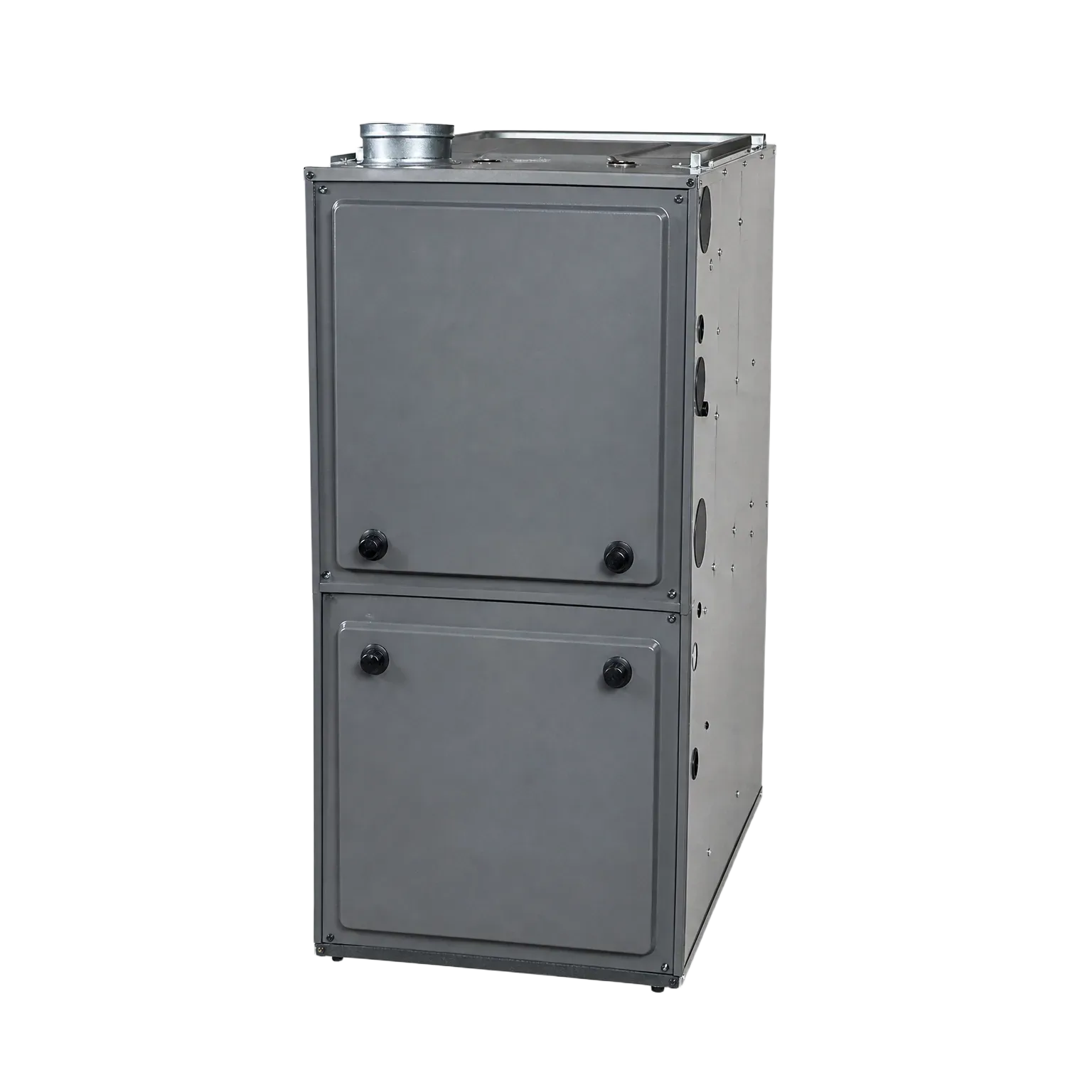
Send the request today and let a furnace pro reach out to you.
Sending the form costs nothing.
Why a flame sensor matters so much
A flame sensor is a thin metal rod sitting right in the burner flame. It proves to the control board that gas is actually burning once the igniter does its job, and if it doesn't sense a flame within a few seconds, the board shuts the gas valve to keep raw propane from filling the house. That rod gets coated with a thin layer of carbon every time the furnace runs, cycle after cycle, all winter. Once that coating builds up enough, it can't read the flame anymore even though the furnace is lighting just fine for a second. The board reads that as no flame, cuts the gas, and the furnace shuts down and tries again, usually locking out after three tries.
What a pressure switch is protecting against
The pressure switch checks that the inducer motor is actually pulling exhaust out through the vent pipe before gas is allowed to flow at all. It's a safety step, not a formality. Cold snaps across Mercer County can mean a vent pipe partly blocked with frost or ice buildup at the termination outside, and that changes the draft enough for the switch to never close. No closed switch, no gas valve, no flame, every time. A furnace that worked fine in November and won't light in a January deep freeze often comes down to exactly this, not a part that failed but a vent that's fighting the cold outside.
How cold does it get, and how long does the furnace run in Beulah?
Winter nights average 6°F
Winter nights here average 6°F through December, January and February, so a furnace that won't light isn't a minor delay before the house cools off.
Heat runs September through May
Heat runs from September through May in Mercer County, about nine months of the year, which is most of the year this furnace has to work without fail.
58.4% of homes heat with propane
58.4% of homes in Mercer County heat with propane, the same fuel this furnace runs on, so a stuck valve or dead igniter is a common call out here.
NOAA nClimDiv 1991-2020 · ACS 2020-2024
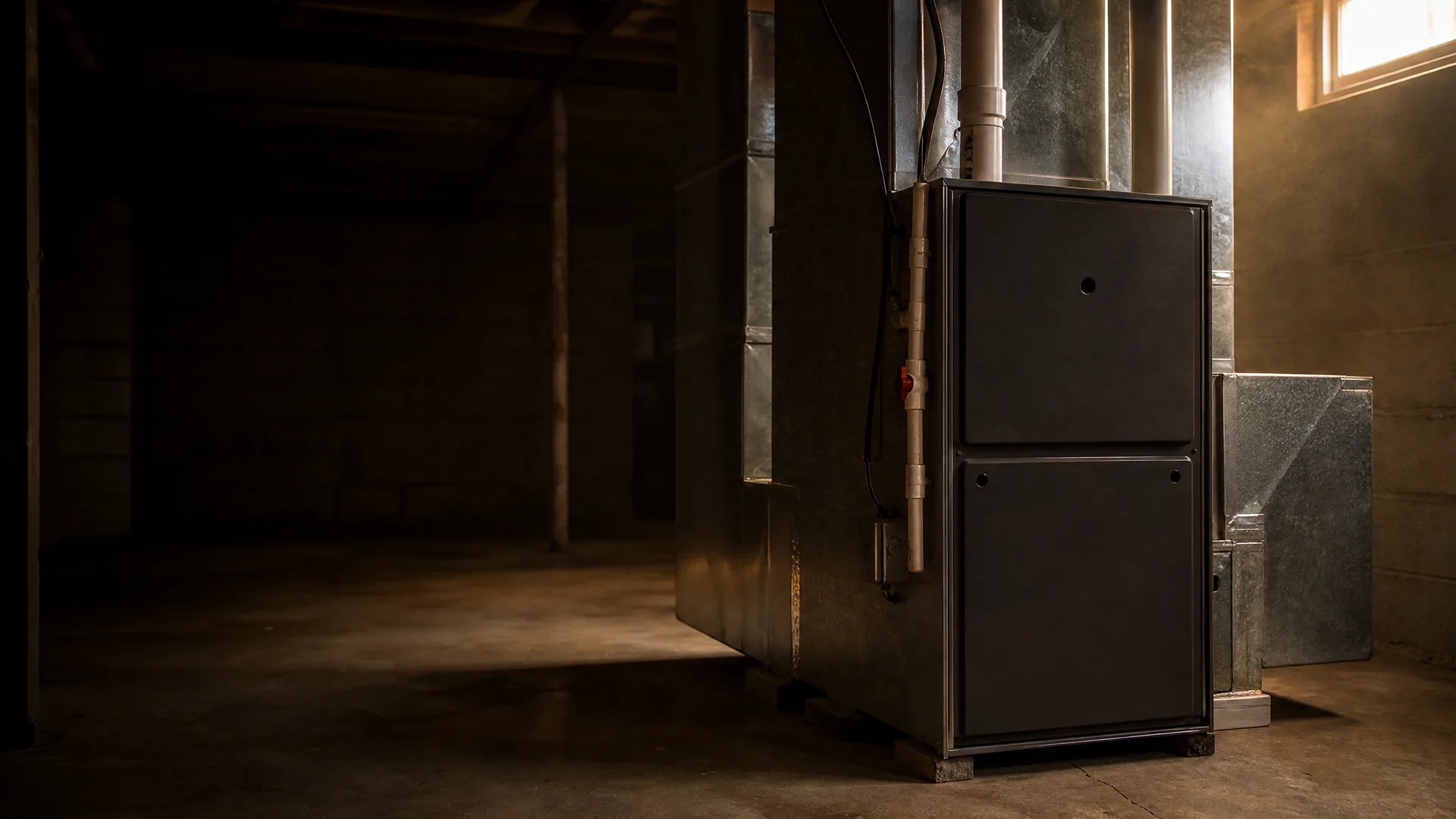
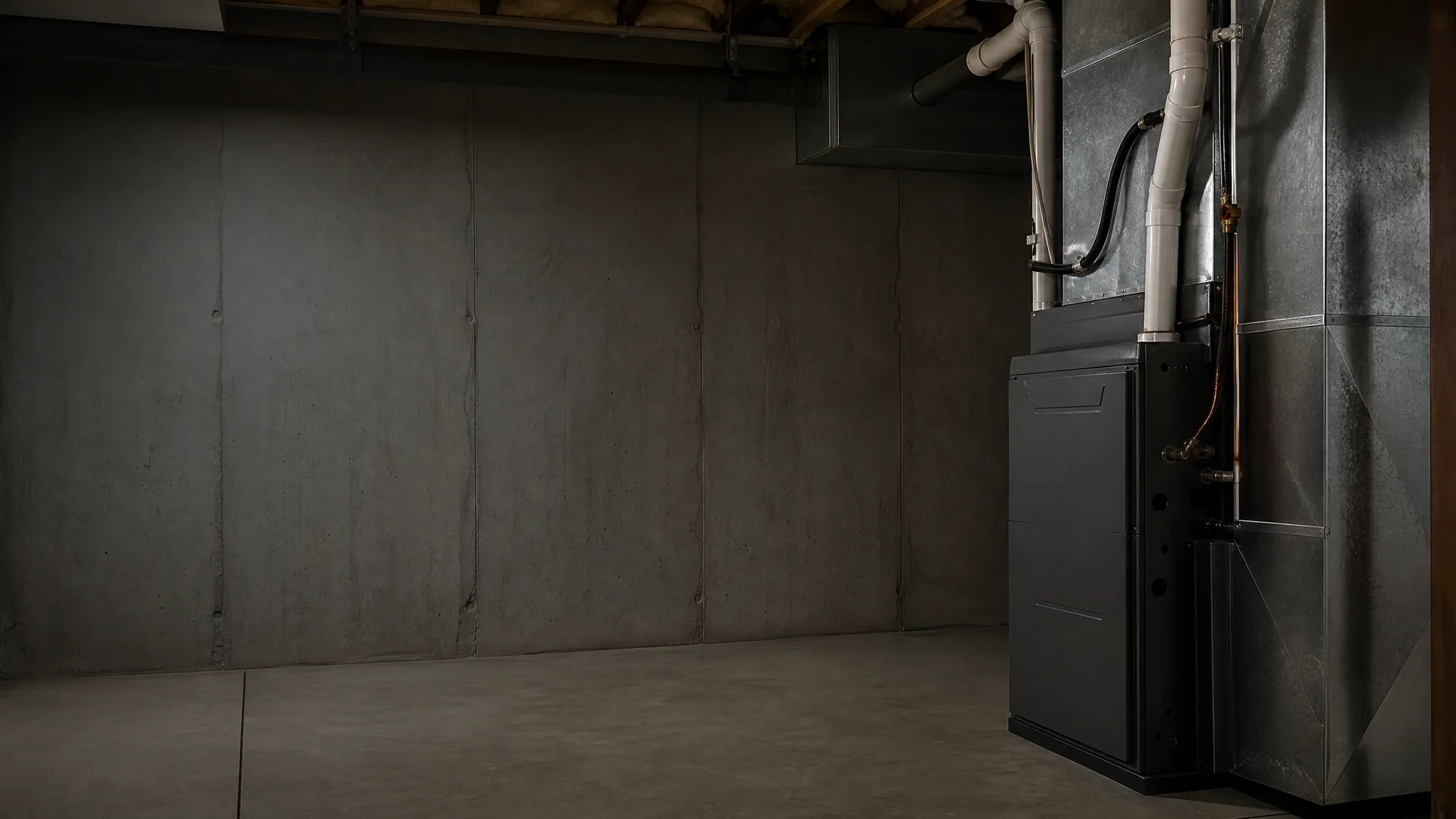
You go down to the basement around six, after dark, to grab something from the freezer, and the cold hits you before you're halfway down the stairs. The furnace sits there dark. No hum from the inducer, no glow from the igniter window. You put a hand near the cabinet anyway, out of habit, and feel nothing. A thin haze of dust still hangs in the air under the single bulb, stirred up from somewhere, settling slow. Upstairs the thermostat probably still reads warm enough, for now, but down here you already know what a November night outside Beulah does to a house once the furnace stops trying.
Winter nights average 6°F
At 6°F, a furnace that won't light has maybe an hour before the house starts to feel it. Water lines along the outside walls are what to watch first if the burner won't fire back up tonight.
NOAA nClimDiv 1991-2020
What a Dark Furnace Means Tonight
- A furnace that won't light is almost always the igniter, the flame sensor, the pressure switch, or the gas valve, in that rough order of likelihood.
- The symptoms you can see, a clicking sound, a glow that fades, a brief flame that dies, point a contractor toward the right part before they arrive.
- At 6°F outside, a dark furnace in Beulah is a timed problem, not a wait-and-see one.
- Rust on the cabinet or burner, a furnace that's run many winters already, raises the odds the fix is bigger than a sensor wipe.
- Once you send the form, the search for who to call is no longer sitting on you.
- A working furnace fires the same way every time it's asked to, no hesitation, no guesswork needed.
A propane furnace that won't light almost always comes down to one of four things: the igniter, the flame sensor, the pressure switch, or the gas valve. Each fails a different way. An igniter glows weak or not at all. A flame sensor lets the burner catch, then shuts it down seconds later. A pressure switch keeps the whole sequence from starting because it never confirms draft. A gas valve stays closed even when every other part is doing its job. What you saw before the furnace went dark, a clicking that didn't catch, a flame that lit and died, a fan that ran but no heat followed, tells a contractor which of these it probably is before they ever open the cabinet.
None of that changes what 6°F outside does to a house with no heat moving through it. The clock on that is short, and it doesn't wait for you to figure out the cause first. A furnace that's already rusted at the burner or has a few hard winters behind it is more likely to need a part replaced than a sensor cleaned, but either way the house needs heat back, not a diagnosis you work out alone at the thermostat.
Once you send the form, that search is off your hands. You've already done the part that mattered: you noticed what the furnace was doing before it quit, and that's what gets the right contractor to the right fix instead of a guess.
Find a furnace repair pro in Mercer County
Get the furnace repair search off your mind today.