A Grant County pro who repairs furnaces gets your request.
A propane furnace that won't light in Elgin, in the middle of a hard North Dakota winter, is not something you want to sort out by trial and error. Cold here does not wait, and a furnace that stays dark for a day while you figure out what's wrong is a real problem in Grant County.
A few things cause this. The igniter can fail. The flame sensor can be dirty enough that the furnace lights and then shuts itself back off. The gas valve can fail to open. Low propane in the tank, or a thermostat that isn't calling for heat the way it should, can look like the same problem from where you're standing. Knowing which one it is takes someone who can actually look at the unit.
That's the part that takes time when you're on your own. Finding a contractor who works on propane furnaces, calling more than one to see who can come out soonest, explaining the same symptoms again to each of them, then weighing quotes against each other while your house keeps losing heat. None of that gets you any closer to a lit furnace. It just delays getting to the person who can.
This page is built to skip that part. Tell it what's happening with your furnace, and it matches you with a contractor who takes on propane furnace work in the Elgin area and knows what a North Dakota winter does to this kind of system. That contractor reaches out to you directly. No list of names to work through on your own, no explaining the problem five separate times, no guessing which company actually answers the phone this week.
What happens with your furnace once that contractor is on site, the diagnosis, the fix, what it takes to get it running again, that's between you and them. What this page handles is getting you to that call faster than searching around would.
A propane furnace that won't light usually comes down to one of a few things. If the igniter is cracked or worn out, it can't get hot enough to start the flame, and that's the most common reason a furnace stays dark. A dirty flame sensor will shut the furnace down even if it does light for a second, because the sensor can't tell the burner is working and the control board cuts the gas for safety. Low propane in the tank, or a tank valve that got bumped shut, will stop it just as fast as a bad part will. A thermostat with a dead battery or a draft inducer that won't start can also keep the burner from ever getting its chance. Some of these you can check yourself, like the tank gauge or the thermostat. Others, like the igniter or the sensor, need a furnace apart to know for sure, and with Grant County winters, that's not something to leave guessing for long.
A furnace running right has a steady flame and a burner that locks in without a second try on the coldest morning.
A furnace on a pallet with a dark burner and no flame is one that's already failed to light on its own.
A furnace does not just light. It goes through steps in order, and each one has to pass before the next is allowed. The inducer motor starts first and clears the exhaust path. A pressure switch confirms that before the igniter is even allowed to heat. Once the igniter is hot enough, the gas valve opens and the burner should catch. If the igniter is weak, it may heat partway and still fall short of what the control board needs to see, so the board cancels that attempt rather than risk gas flowing unlit. It will try again, usually up to three times, before it locks out and waits for someone to reset it. Even if the igniter does its job and the burner lights, a fouled flame sensor can fail to detect that flame and shut the gas valve again within seconds. Either failure leaves the furnace dark, but the board keeps a record of which step failed, stored as a blink pattern on a small light near the burner.
How the Start Sequence Fails
A furnace fires in a set order: the inducer motor runs first, then the igniter heats, then the gas valve opens and the burner lights.
A pressure switch checks that the inducer is pulling exhaust before the gas valve is allowed to open at all.
If the igniter doesn't reach full temperature within a few seconds, the control board cancels the cycle instead of letting gas flow unlit.
Most control boards will try the start sequence three times before locking out and waiting for a reset.
A flame sensor that can't detect the burner lit will shut the gas valve again within seconds, even if the igniter worked.
The same control board that runs the sequence also stores a fault code, usually as a pattern of blinks on a small light.
Get your furnace to the right pro
Describe what your furnace is doing once, in one form.
Get matched with a pro who fixes furnaces in Grant County.
No charge to send it. You decide if you hire them.
Locks Out or Never Starts
Ignition lockout
The furnace tries to light, fails three times, and shuts itself down until you reset it at the thermostat or the panel.
You'll usually hear the inducer motor run and a few clicks from the igniter before the burner never catches.
A reset sometimes gets the furnace running again for a while, especially if the problem is a dirty flame sensor rather than a dead igniter.
This is the furnace protecting itself from pumping unburned propane into the house, not a sign anything electrical has failed.
A unit that locks out once a week and resets fine each time still needs a look, because the part causing it won't fix itself in weather this cold.
No ignition attempt
Nothing happens when the thermostat calls for heat: no inducer motor, no igniter glow, no clicks from the gas valve.
This points to a problem earlier in the sequence, like a failed control board, a tripped limit switch, or no power reaching the furnace at all.
A reset at the panel does nothing, because the furnace isn't getting far enough into its start sequence to fail and lock out.
If the thermostat display is blank or the furnace's switch is in the wrong position, that's worth checking before assuming a part has failed.
This kind of failure tends to mean a longer wait for parts, since whatever's wrong is further upstream in the furnace than a worn igniter or a dirty sensor.
The furnace doing its job
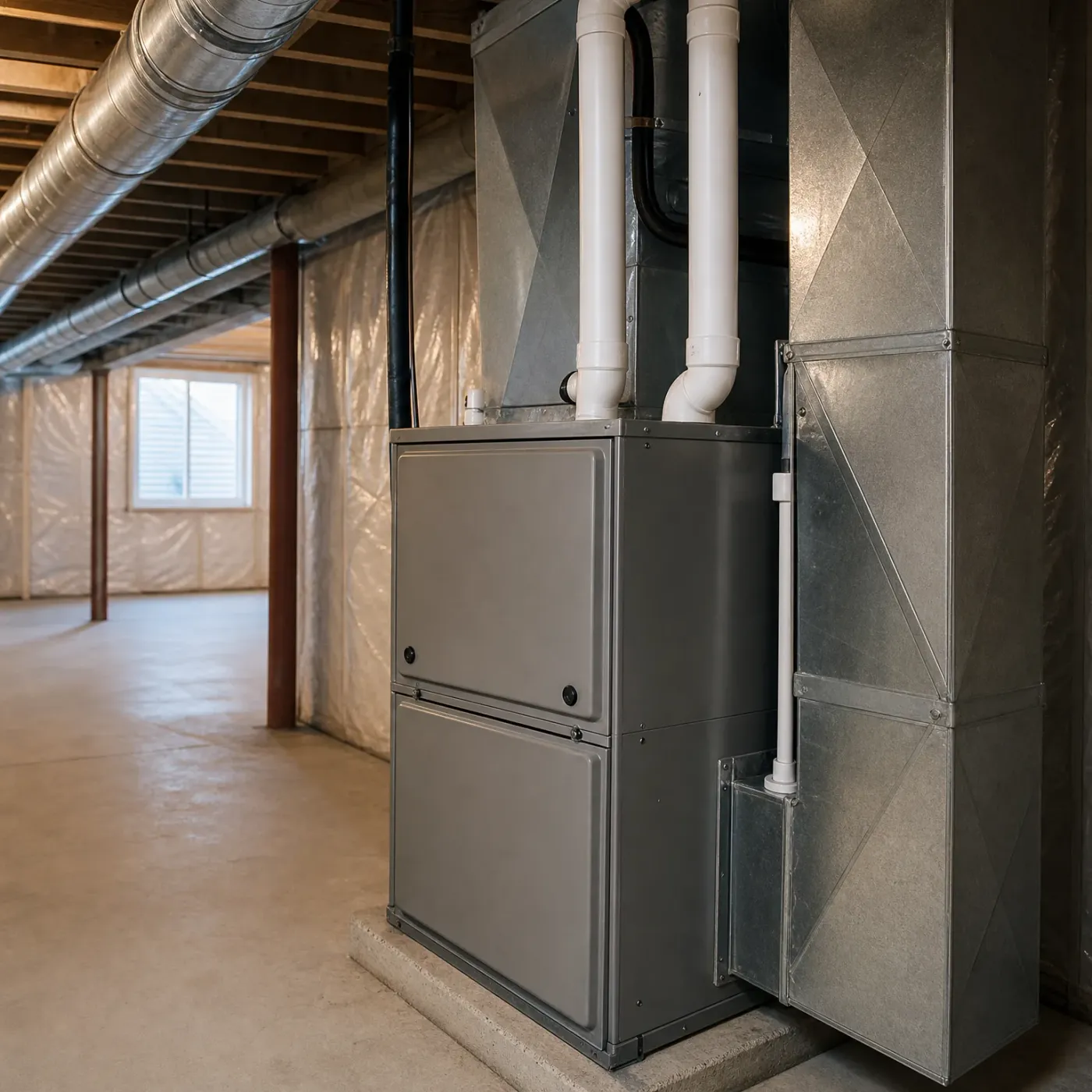
This is what a working furnace looks like in a Grant County basement. The ducts carry warm air out, the pipes bring in gas and venting, and the burner lights every time the thermostat calls for heat. No hesitation, no lockout.
The furnace that's given up
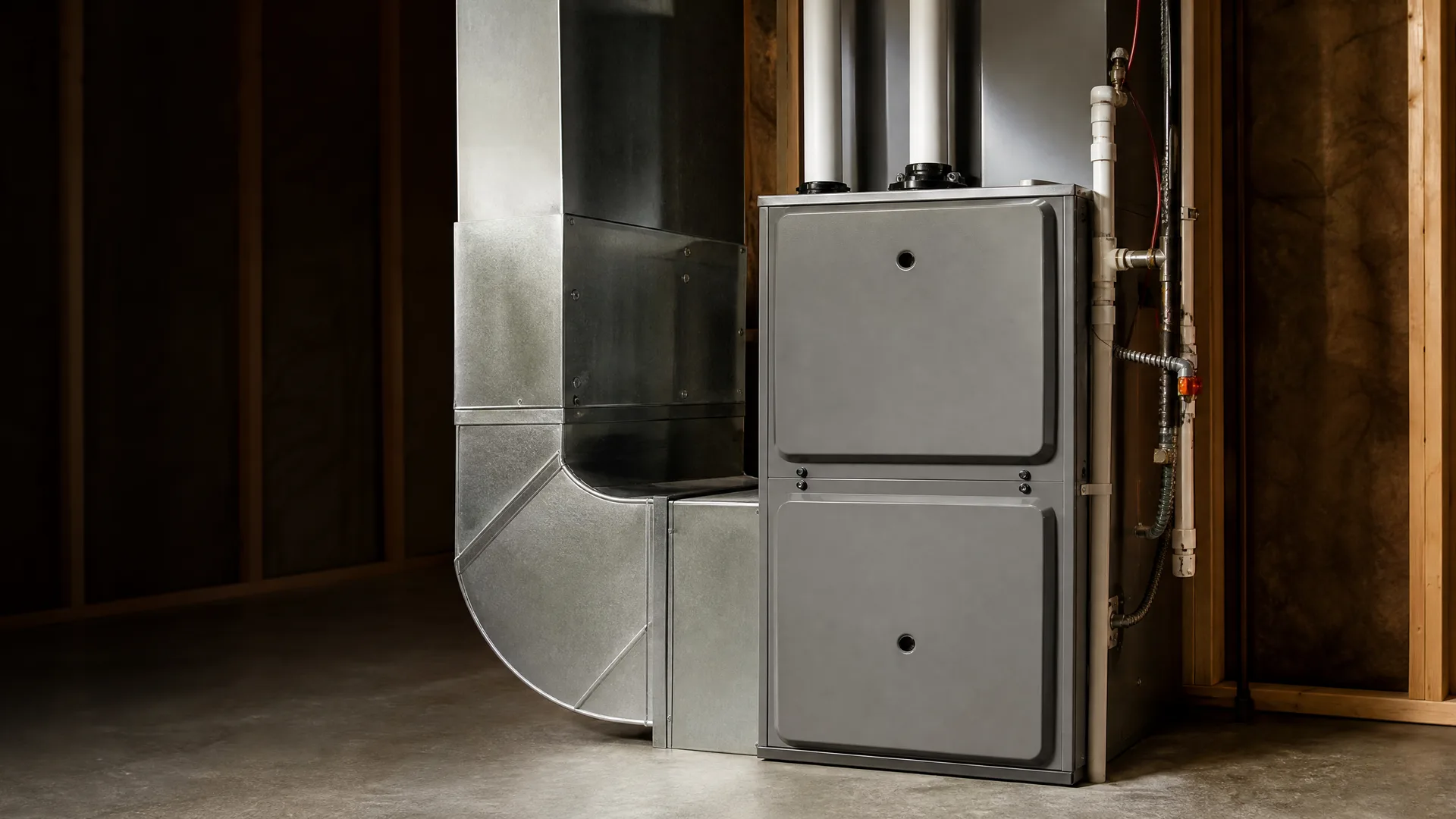
Rust on the cabinet and old PVC venting often mean a furnace that's worked hard for a lot of winters. One that won't light anymore may be past the point where a new igniter or sensor fixes it for good.
What a dark furnace means for your house tonight
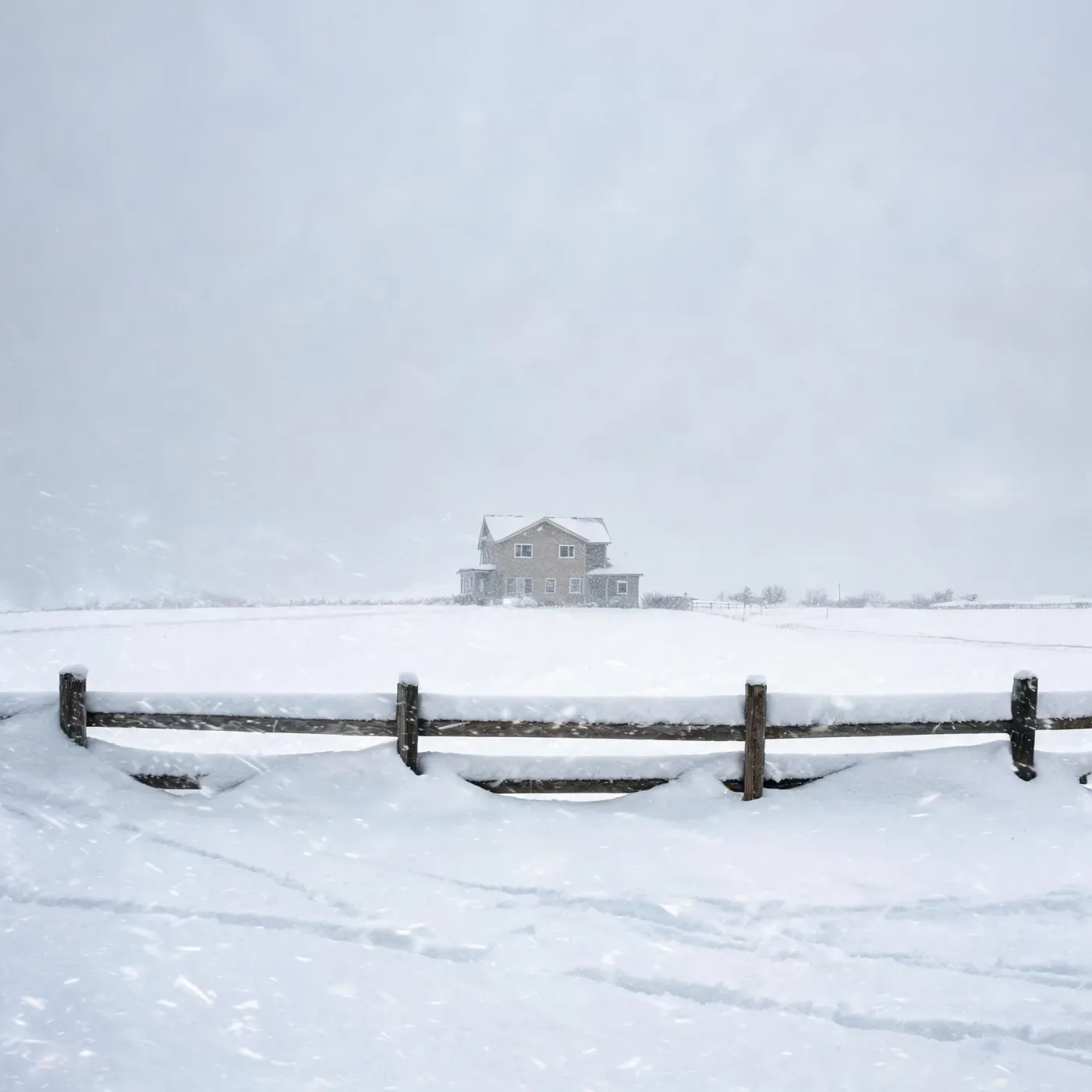
A furnace that won't light doesn't just sit there quiet. In a Grant County winter, your house starts losing heat the moment the burner fails to catch, and propane furnaces don't have a backup way to warm the place while you figure out the cause. Pipes along outside walls are the first thing at risk, and a basement that depends on that furnace for its only heat will drop fast once the temperature outside is well below freezing.
You could spend the evening on the phone trying to find someone who works on propane furnaces out this way, explaining the same thing to each one, then waiting to hear back before you know if anyone's even coming. Getting matched with a contractor who already covers Elgin and the area around it skips that part. You give the details once, and the contractor who takes it on calls you, already knowing what they're walking into.
December through February, the overnight low in Grant County averages 7°F, according to NOAA climate data. That's the stretch when a furnace that won't light turns into a real problem fast, not a minor annoyance. At that temperature a house with no heat source starts cooling off within hours, and pipes along outside walls are at risk the longer the burner stays dark. If you're checking on a furnace that failed to start, a cold snap at 7°F overnight is exactly when you'll notice it, usually before sunrise, when the house has had all night to lose heat and the thermostat still reads cold.
NOAA nClimDiv 1991-2020
Before you get your furnace repairAfter you get your furnace repair
A furnace that locks out after three failed tries isn't broken for good. The control board is built to stop trying so gas doesn't keep flowing to a burner that won't light.
That lockout is a safety step, not a repair. The igniter or flame sensor behind the failed light still needs a contractor to fix it before the next cycle works.
Winter nights average 7°F
At 7 below zero overnight, a furnace that won't light turns a cold house into a frozen one fast. Pipes start to feel the cold within a few hours. That's not a night to spend waiting and hoping it fires on the next try.
NOAA nClimDiv 1991-2020
Where this leaves you tonight
A furnace that won't light is almost always the igniter, the flame sensor, the gas valve or a pressure switch stuck on a lockout.
None of those four things fix themselves, and running the thermostat up and down again just resets the same lockout.
A Grant County winter with overnight lows near 7°F doesn't leave room to wait a few days and see what happens.
Finding a contractor on a night like that usually means calling around, explaining the same problem more than once, and comparing quotes you have no way to judge.
Getting matched with a contractor who knows propane furnaces skips that search and the repeated explaining.
The furnace still needs a diagnosis and a repair, but finding who does that work is the part that's handled for you.
A furnace that won't light almost always traces back to one of four things: a cracked igniter, a dirty flame sensor, a stuck gas valve, or a pressure switch holding the control board in lockout. None of those clear up on their own. Flipping the thermostat up and down, or cutting power and restoring it, just gives the board another three tries before it locks out again. That's worth knowing before you spend an hour resetting it and hoping for a different result.
What makes this not worth sitting on is the cold outside. Grant County runs overnight lows near 7°F through the heart of winter, and a house with no heat source starts losing warmth the moment the burner fails to catch. That's not a problem that gets better by waiting it out until morning.
The part that usually eats the most time on a night like this isn't the repair itself. It's finding someone to do it: calling around to see who answers, explaining the same symptoms to three different people, then trying to judge quotes you have no real way to compare. Getting matched with a contractor who works on propane furnaces skips all of that. You still need the igniter checked, the flame sensor cleaned, or whatever the actual fault turns out to be, and that takes a real diagnosis. But the search for who does that work, and the back and forth of explaining it over and over, is the part that's off your plate.