Profile view of a bearded man wearing a dark green baseball cap and a dark gray T-shirt against a plain light background.

Heat pump vs propane heat in Fort Yates, ND

New system or replacementFurnace or heatingSioux County, ND
Step 1 of 2

What ZIP code is the job in?

In Fort Yates winters, a heat pump alone will struggle once temperatures drop well below freezing, and that's most of the winter here. Cold air holds less heat for the unit to pull from, so below a certain point its output falls off and it can't keep up with the house. That's why most homes in Sioux County heat with propane. A furnace burns fuel to make heat directly, so it doesn't lose capacity when the temperature outside drops. Some homeowners pair a heat pump with a propane furnace, letting the heat pump handle the milder stretches in fall and spring and the furnace take over once it gets truly cold, which can mean less propane burned over the year without leaving the house short on heat in January. Whether that combination makes sense for your house depends on what you have now and what it would take to add to it.

A woman with long light-brown hair in a gray knit sweater sits in a living room looking off to the side, with a sectional sofa, houseplant, lamp, wooden table and large windows behind her.
A woman in a chunky gray turtleneck sweater sits indoors looking off to the side, with a blurred dining table, chairs, pendant lamp and window behind her.
A woman in a cream knit sweater with her hair in a bun stands near a window, looking off to the side, with a gray sofa, houseplant and open kitchen with pendant lights blurred behind her.
A woman with long brown hair in a cream knit sweater stands near a window, looking to the side, with a white sofa, shelving, and a hallway visible behind her.

Most heat pumps lose real capacity once outdoor air drops into the teens and single digits. Below that, the compressor is working hard for less heat, and in a Sioux County January that's a losing trade against propane.

Propane burns hot no matter how cold it gets outside, so the furnace puts out the same heat on the coldest night of the year as it did in November. That steadiness is why it's the main heat source in homes here.

Why does propane make more sense than a heat pump here?

  • Winter nights average 7°F

    Winter nights average 7°F. At that temperature a heat pump is losing capacity right when you need the most heat from it.

  • Heat runs September through May

    Heat runs September through May. That's nine months leaning on the system, so what struggles in January costs you most of the year.

  • 72.8% of homes heat with propane

    72.8% of homes heat with propane. That's what the installers around Fort Yates size for and service most often.

NOAA nClimDiv 1991-2020 · ACS 2020-2024

Running propane as your main heat

A propane furnace keeps its full output no matter how far the temperature drops. At 7 below or 20 below, it burns the same and heats the same. That matters in Sioux County, where winter nights stay cold for months at a stretch. Most homes here already run on propane, so parts, service and fuel delivery are all familiar to contractors working in Fort Yates. The furnace sits in the basement or a closet doing its job, and you're not thinking about it. The tradeoff is the tank and the fuel bill, since propane has to be bought and delivered, and the price moves with the market.


Adding a heat pump alongside it

A heat pump paired with your propane furnace handles the milder stretches, spring and fall mostly, and the warmer days that bracket the hard winter months. It runs on electricity, which is priced typical here, so those months cost less to heat than propane would. Once outdoor air drops into the teens and below, the furnace takes over, because that's where the heat pump's output falls off. You get a system that splits the work by season instead of leaning on one fuel all year. It costs more upfront to have both, and someone has to set the switchover point correctly.

A beige furnace with two louvered front panels stands on a concrete basement floor beside galvanized ductwork, metal pipes, and a wooden post.
Before you get your furnace installation
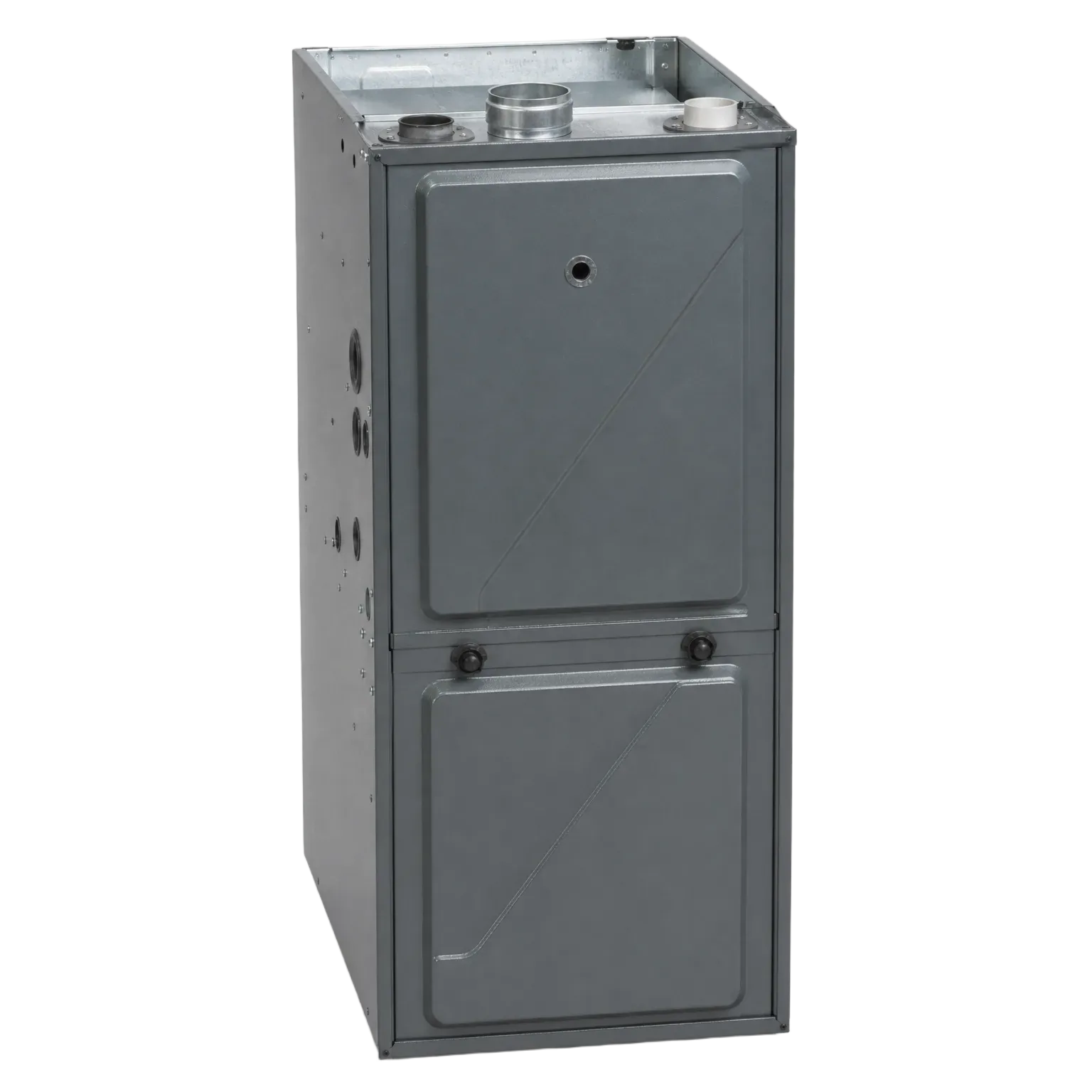
A gray high-efficiency furnace stands on a concrete basement floor beside galvanized sheet-metal ductwork, with white PVC vent pipes, gas and water lines, and unfinished wood framing behind it.
After you get your furnace installation

What a cold snap costs you

If a heat pump were carrying your house on its own, a week where nights sit at 7 degrees or lower is when you'd feel it. Rooms farther from the unit cool down first, the air coming out of the vents turns lukewarm, and the system runs long stretches without catching up. That's the point where a lot of households start layering blankets and closing off rooms instead of just living in the house normally. A propane furnace doesn't put you in that position. It pulls the same heat out of the flame at 7 below that it does at 35 degrees, so the coldest week of January asks nothing extra of it.

What's riding on the furnace

Heat here isn't a comfort line item, it's what keeps pipes from freezing and keeps the people in the house warm for nine months running. A furnace that falls behind on output during the hardest cold doesn't just mean a chilly living room, it means the whole house loses ground at the exact time losing ground matters most. Propane's steady output across the full range of Sioux County winter temperatures is what keeps that from becoming your problem. The furnace works the same on the mild nights and the brutal ones, so the household inside doesn't have to notice the difference between the two.

A woman and a child wrapped together in a knitted gray blanket on a couch, with the child's head resting on her shoulder and a lit table lamp and houseplant in the background.
An older woman with short gray hair in a cream cable-knit turtleneck sweater smiles while looking to the side in a wooden kitchen, with a round loaf of bread on a board in the foreground and a lit candle by a dark window.

Finding a pro stops being your job

A licensed installer who works in Sioux County gets your project.

You only hire the pro if you want to.

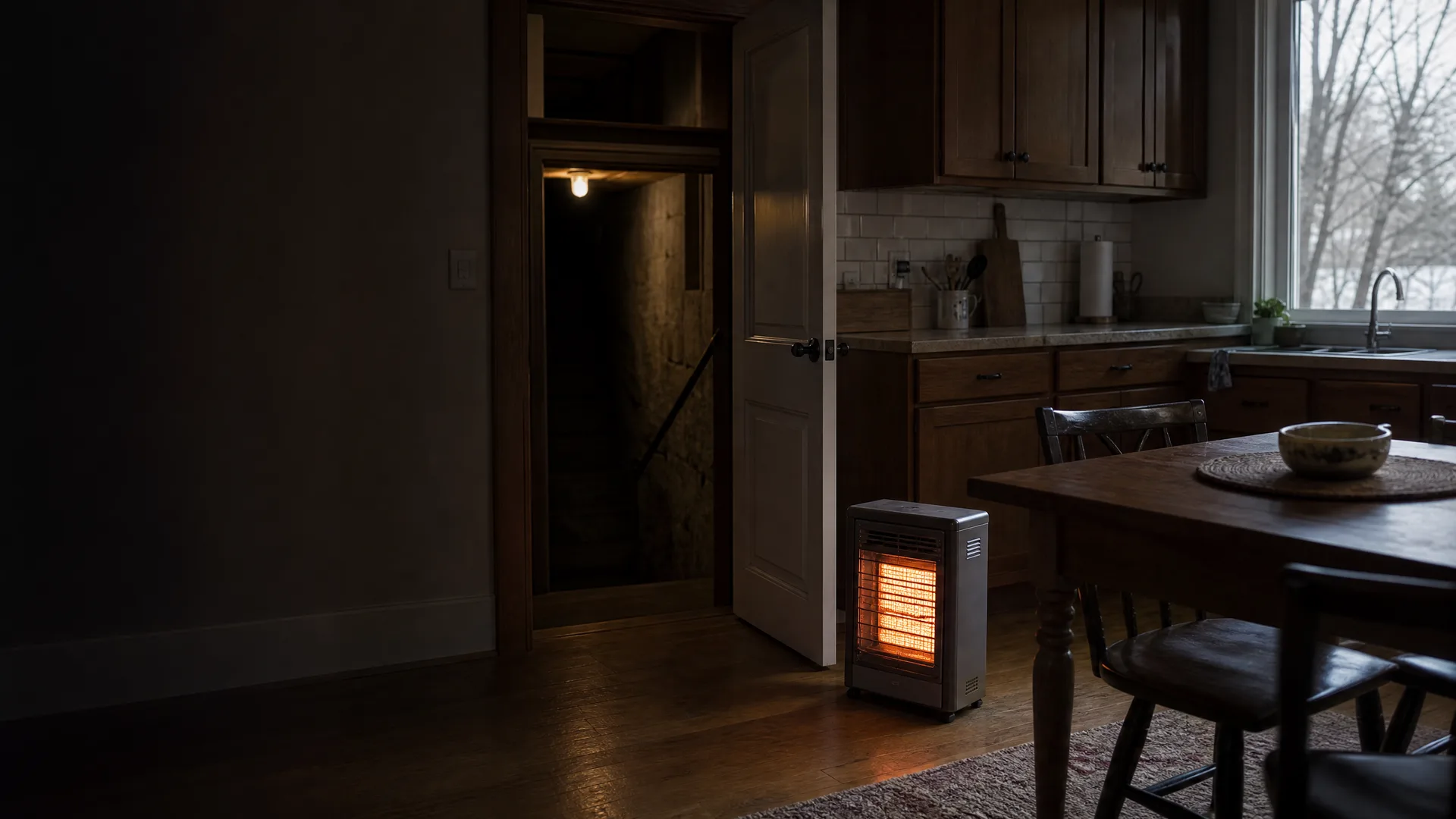
A dim kitchen and dining area with wood cabinets and table, an open door to a lit basement stairwell, and a portable space heater with glowing elements on the floor.

It's a little past six, still dark outside the kitchen window, and the thermometer by the back door read 7 below when you checked it. The space heater is pulled up close to the table, its coil glowing orange, because the vents nearby are only pushing out lukewarm air. The basement door stands open behind it. You went down twice already to look at the furnace, not sure what you were looking for, just wanting to see it running. Your coffee's gone cold faster than usual. The dog won't leave the spot by the heater. Outside, the Sioux County sky is just starting to go gray.

Why does one room never seem to warm up?

You've probably noticed it already: the bedroom at the far end of the house, or the one over the garage, never quite catches up to the rest. The register blows, but what comes out doesn't feel hot to the hand. A thermostat set to 70 reads closer to 70 in the living room and closer to 64 down the hall. If your furnace is aging or undersized for the house, that gap widens on the coldest nights, right when Sioux County sits at 7 degrees or lower. Left alone through a few winters, a furnace working that hard runs longer cycles, pulls more propane to do it, and wears toward a breakdown on the night you can least afford one.

A gray high-efficiency furnace in a basement with white PVC vent pipes, sheet-metal ductwork, copper and black piping, a condensate pump, and insulated walls above a concrete floor.

A furnace sized and running right

This is what a propane furnace looks like doing its job. The burner fires clean, the ductwork moves the heat where it needs to go, and the drain line clears condensate without backing up. No lukewarm vents, no far room left behind.

A beige residential furnace stands on a concrete basement floor beside galvanized sheet-metal ductwork, a round flue pipe, copper gas piping, and a PVC condensate line, with a wood-paneled wall at right.

A furnace on its way out

Grime on the cabinet, an aging flue, panels that don't seal like they used to. A furnace this old is more likely to short-cycle or quit on the coldest night of the year, right when Sioux County needs it most.

How does a propane furnace actually heat the house?

You've seen the burner kick on and felt warm air start coming through the vents a minute or two later, but what happens in between is worth knowing, especially if you're trying to figure out why one part of the system matters more than another when something goes wrong.

The burner heats a metal heat exchanger, and the blower pushes air across it into your ducts

Propane burns inside a sealed chamber called the heat exchanger, not out in the open air. That chamber gets hot, and the blower motor pulls air from your house, pushes it across the outside of the exchanger, and sends it down the ducts into every room. The flame never touches the air you breathe. Exhaust from the burn goes out through a separate vent pipe. This is why a cracked heat exchanger is the one failure a contractor treats as urgent and not a repair to put off: it's the wall between the fire and the air moving through your house. Everything else in the furnace, the igniter, the gas valve, the blower, exists to get air across that exchanger safely and keep it there as long as the thermostat is calling for heat.

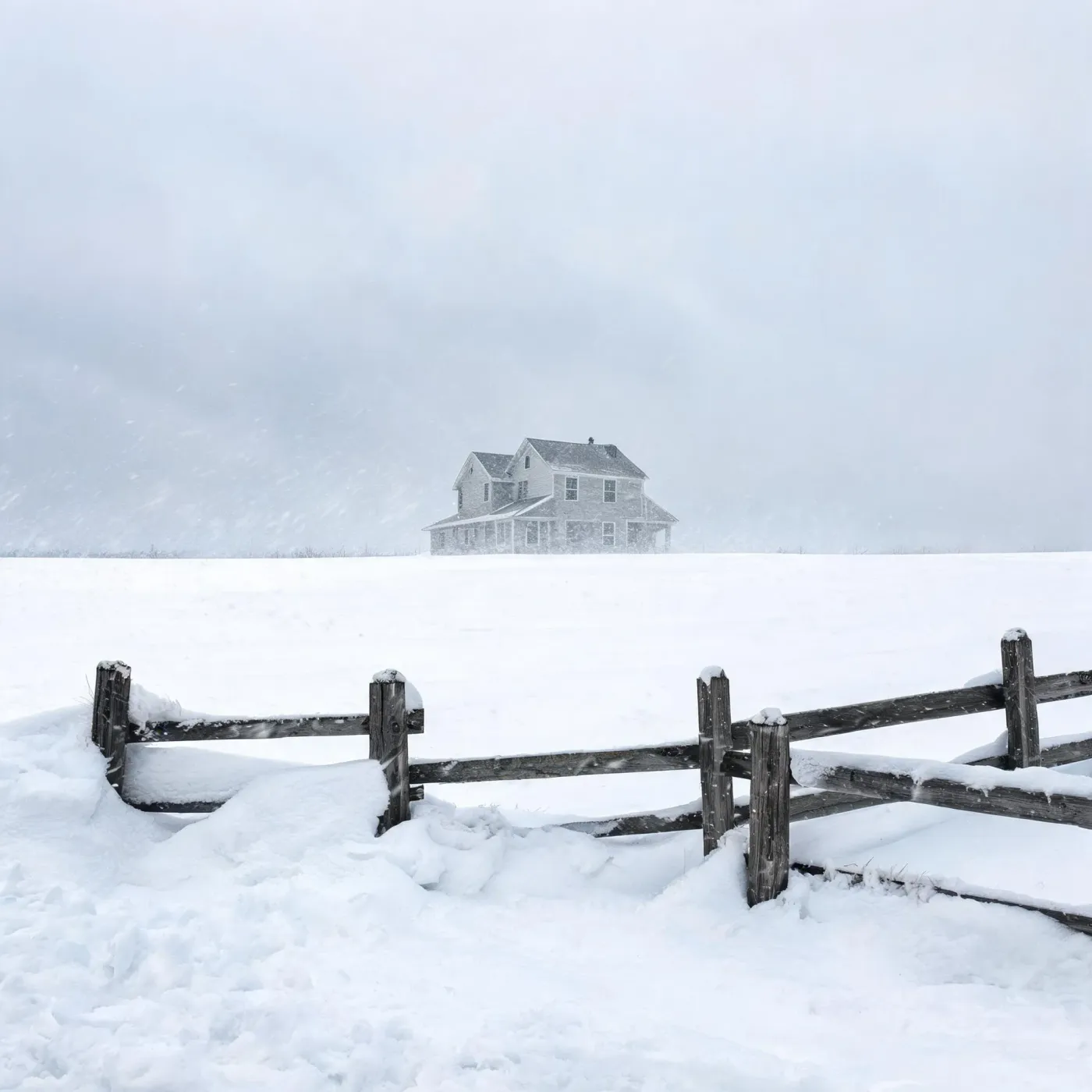
A two-story house with a porch stands alone on a snow-covered field during falling snow, with a weathered wooden split-rail fence partly buried in drifts in the foreground.

That 7°F average comes from NOAA's records for Sioux County, and it covers December through February, not just the odd cold night. A furnace sized for this area has to be able to heat the house from a starting point near 7 above, night after night, for a full three months. That's the baseline it's working from, not the exception. If a furnace is undersized or aging, this is the stretch where it shows: longer burner cycles, more time spent catching up after the thermostat drops back for the night, vents that take longer to feel warm in the morning. A furnace built for Sioux County winters is sized with that number in mind, not for a mild night in October.

NOAA nClimDiv 1991-2020

A gray high-efficiency furnace stands on a concrete basement floor beside galvanized sheet-metal ductwork, white PVC vent pipes, copper and black piping, and unfinished wood stud framing.
This is a furnace running the way it's built to, burner firing clean and heat moving through the ducts without strain.
A gray furnace with two access panels stands on a concrete basement floor beside sheet-metal ductwork, with pipes, flexible conduit and an electrical box on the concrete wall to the left.
Here the panels are off and the pipes and conduit are exposed, the kind of look a furnace gets when something inside needs a tech's hands on it.

Propane is the right call here

  • Propane holds its heat output at 7 below or 20 below, which settles the question for Sioux County winters.
  • A furnace sized right for your house means no lukewarm vents and no room that never quite catches up.
  • A local contractor who services propane furnaces every winter here knows which parts fail first in this cold.
  • Working with one licensed local installer means a single point of contact, not a string of calls from different companies.
  • Nine months of heating load makes the furnace's sizing and installation matter more here than in a milder climate.

A heat pump loses ground the colder it gets, and Sioux County nights don't give it a break. Propane doesn't have that problem. It burns at full strength whether it's 7 above or 20 below, which is the whole reason it's the standard choice around Fort Yates. Once that's settled, what decides how your winter actually feels is the installation itself. A furnace sized for your house and your ductwork heats every room evenly, nine months a year, without the far bedroom lagging behind or the vents going lukewarm on the coldest nights. Get the sizing wrong, or leave a worn part in place, and you'll feel it the first week temperatures drop and stay down.

That's where having the right contractor matters as much as having the right fuel. A local installer who works on propane furnaces all winter in this area has already seen what fails first when it's been below zero for days straight, and sizes the job knowing what a Sioux County January actually asks of a furnace. You're also only dealing with one contractor, not fielding calls from three or four companies trying to win the job. One licensed local installer, one point of contact, start to finish.

The weather here isn't going to change, and a furnace that's sized and installed right is what stands between you and a house that can't keep up. That part is worth getting right the first time.

Sunlit corner of a room with a wooden sideboard holding a ceramic vase of olive branches and a dark wooden bowl, beside a white-framed window, a hardwood floor and woven rug.
A wooden cabinet holding a pale ceramic vase with leafy branches stands beside a beige wall in a sunlit room with hardwood floors, a jute rug, and a window showing green foliage outside.
Sunlit room corner with a beige upholstered sofa holding a rust-brown cushion, beside floor-length linen curtains at a window, over a wood floor with a woven rug.
Corner of a room with beige walls, a framed photograph, a floor-length linen curtain beside a window, an upholstered armchair with a knit pillow, white baseboards and trim, wood flooring and a pale rug.
Sunlit living room corner with a beige upholstered armchair with a cushion, linen curtains beside a wooden-framed window, green vertical panelled wall with a framed print, and a wooden table edge over a woven rug.

Let someone else find the pro

The pro who gets in touch is licensed in North Dakota and works in Sioux County.

I'm done searching

Asking costs nothing, and the choice to hire stays yours.