
Why your propane furnace won't light in Fort Yates, ND

RepairFurnace or heatingSioux County, ND
Step 1 of 2

What ZIP code is the job in?

A propane furnace that won't light usually comes down to one of a few things: the igniter has failed, the flame sensor is dirty or worn, the gas valve isn't opening, or the propane tank itself is low. Cold snaps make this worse. When temperatures drop hard in Sioux County, metal parts contract and a marginal igniter that worked fine in October can quit in January, right when you need it most. Some furnaces will try to light a few times and then lock out, showing an error code on the control board instead of heat. If your tank is low or the regulator is frosted over, the furnace may not even get enough gas to start the cycle. None of this means the whole system is bad. Most of these failures are a single part worth a few dollars, not a sign you need a new furnace. But a furnace that won't light in a North Dakota winter isn't something to leave alone for even a day.

A gray gas furnace stands on a concrete basement floor, connected to sheet-metal ductwork, white PVC vent pipes, and a yellow gas line, with plastic sheeting covering the walls.

Furnace Lighting Normally

This is what a working ignition sequence looks like: the igniter glows, the gas valve opens, and the burners catch on the first try. No delay, no clicking, no smell of propane before it fires. In Sioux County's cold, a furnace in good shape should still light this way every single time.


A metal furnace with louvered panels stands against a concrete basement wall, connected to sheet-metal ductwork and a round flue pipe, with wooden framing posts and a pipe nearby.

Furnace Failing To Light

An older unit like this one often struggles for other reasons too. Dust buildup around the burners and a worn flame sensor can keep it from lighting even when gas is reaching it. If the furnace clicks a few times and shuts off, or won't try at all, something in this sequence needs a contractor's attention.

A woman in a gray turtleneck sweater stands by a window looking outside at snowy ground, with a dimly lit living room containing a sofa, shelves, lamp and a lit candle behind her.
A woman in a cream cable-knit turtleneck sweater stands in a warmly lit living room with a fireplace and shelves behind her, looking out a window toward snow-covered trees and a railed deck.
A woman in a cream knit turtleneck sweater stands by a window looking out at snow, with a lit fireplace, sofa and lamp in the room behind her.
A woman in a gray knit sweater sits by a window looking out at falling snow, with a dimly lit living room containing a sectional sofa, pillows, a lamp and houseplants behind her.

A call for heat doesn't light the burners right away. The control board starts the inducer motor first, clearing the heat exchanger before anything else happens. A pressure switch has to confirm that motor is actually moving air. Only then does power go to the igniter, and it needs fifteen to twenty seconds to get hot enough to light gas. Once it's ready, the gas valve opens, and the flame sensor has a few seconds to confirm a flame caught. If it doesn't see one, the board shuts the valve rather than letting propane keep flowing into the firebox unlit. That's not a malfunction. That's the board protecting the house. A furnace that tries this sequence a couple of times and then stops and locks out is following that same built-in limit. Somewhere in that chain, something didn't happen when it should have. Knowing the order helps narrow it down: a furnace that never starts the inducer points somewhere different than one that lights and quits a few seconds later.

How the Ignition Sequence Works

  • The thermostat calls for heat, and a control board sends power to the inducer motor first, not the igniter.
  • The inducer motor has to prove it's running, usually by closing a pressure switch, before the board allows ignition to start.
  • A hot surface igniter needs about fifteen to twenty seconds to reach full temperature before the gas valve gets a signal to open.
  • The gas valve only opens once the igniter is hot enough, and it stays open just long enough for the flame sensor to confirm a flame.
  • If the flame sensor doesn't detect a flame within a few seconds, the control board shuts the gas valve again rather than letting propane keep flowing.
  • A furnace that tries this sequence two or three times and then locks out is following a safety limit built into the control board, not failing randomly.
A gray high-efficiency furnace in a basement with sheet-metal ductwork, white PVC vent pipes, metal plumbing lines, a condensate pump on the floor, and a window showing green trees outside.
A furnace that's lighting right catches on the first call for heat, every time, with the burners burning steady blue.
An older metal furnace with PVC and metal pipes stands on a concrete basement floor beside galvanized ductwork, with wooden stairs and a water tank in the background.
A furnace that's struggling shows its age: dust caked on, lines worn, sitting quiet when it should be running.
A dark interior hallway with a dim window at the end, a wooden floor, a stair railing on the right, and a bench or rug in the foreground.

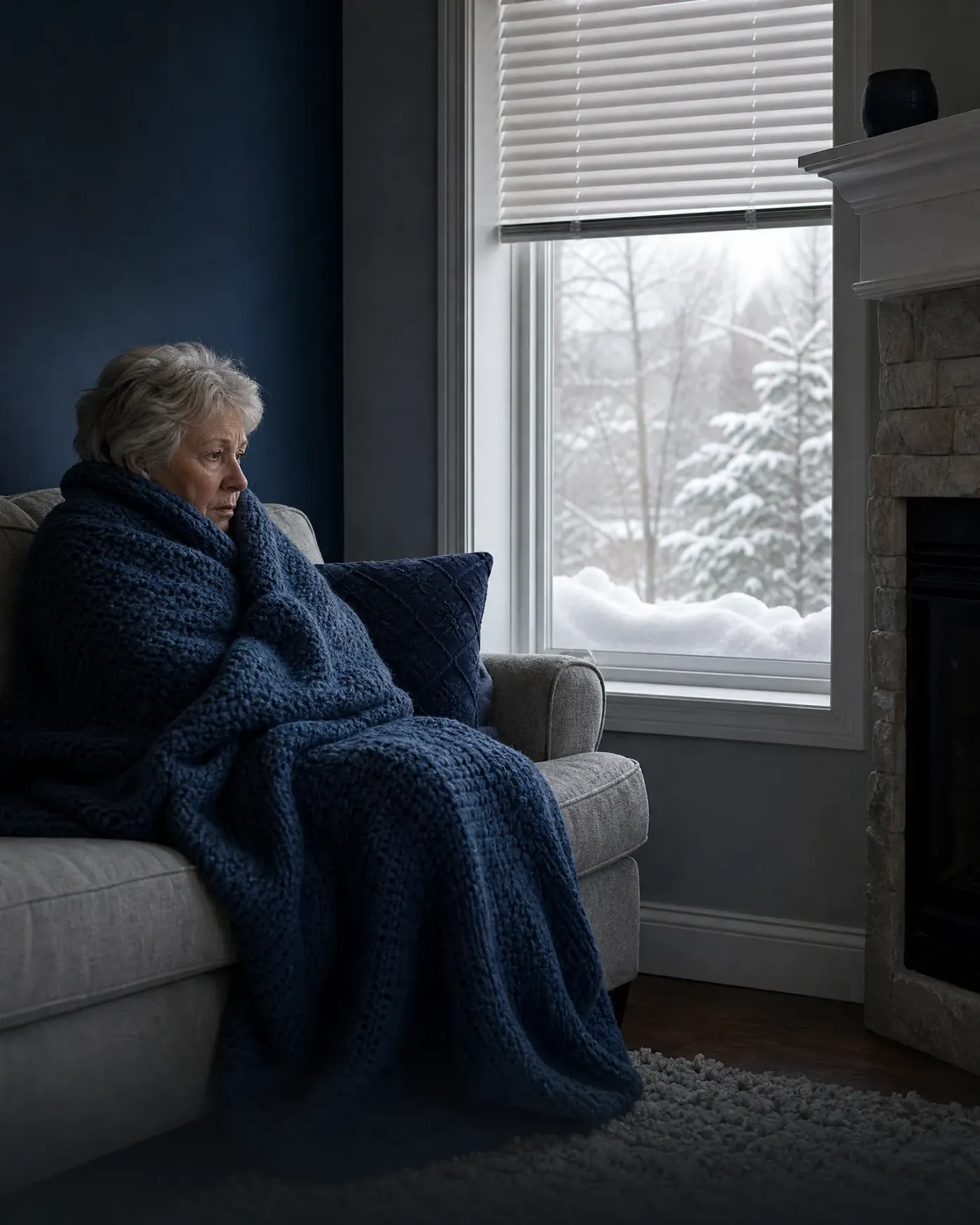
It's 2 a.m. and the house has gone quiet in a way that wakes you up. You lie there a second before you place it: no hum from the vents. In the hallway the floor register is cold under your foot, and the window at the end has frosted over at the edges, lit faint blue by the yard light. Outside, Sioux County is deep into a January cold snap, the kind that finds every weak part in a furnace. You try the thermostat. Nothing catches. Somewhere below you the furnace has tried to light and failed, and now it's just sitting there, waiting on a part it doesn't have. You already know you're not fixing this one yourself tonight.

Get the right pro for your furnace

A furnace that won't fire when it's below zero outside isn't a small thing in Sioux County. Propane burns the way it's supposed to or it doesn't, and when the igniter's weak or the flame sensor's coated, you can end up with a furnace that tries and fails for days before it quits for good. Waiting on that in January costs you more than a service call. Pipes can freeze. Pets and people both feel a house that drops below 60 fast once the furnace stops trying altogether. You don't need to know which part failed to know you need someone who can look at the burner, the gas valve and the sensor and tell you straight. Hand this off now and you're not the one calling around Fort Yates trying to find a contractor free before the next cold front moves through.

Why the flame sensor matters so much

The flame sensor is a thin metal rod sitting right in the burner flame. It proves to the control board that gas is actually burning, not just flowing. A speck of soot or a thin film on that rod is enough to fool the board into thinking there's no flame, so it shuts the gas valve again. This is why a furnace can click, catch for a second, and then die. It isn't the igniter failing twice. It's the sensor telling the board something that isn't true. A dirty flame sensor is one of the more common reasons a furnace tries over and over on a cold morning in Sioux County and never stays lit.

What a low propane tank does first

A propane tank running low doesn't always announce itself. Pressure drops before the tank reads empty, and low pressure can keep the gas valve from opening the way it should, or starve the burners enough that they won't catch. This shows up fastest on the coldest nights, when the furnace is calling for heat longer and more often. If the furnace lit fine a week ago and now won't fire at all, checking the tank gauge costs nothing and rules out the simplest explanation before anyone starts replacing parts that were working the whole time.

Winter nights average 7°F

At 7°F, the kind of night Sioux County sees all winter, your furnace is running close to flat out just to hold the house steady. There's no slack left for a weak igniter or a dirty flame sensor to hide behind. A furnace that limps along in October won't light at all once it's this cold.

NOAA nClimDiv 1991-2020

What a No-Light Furnace Means

  • A furnace that won't light in Sioux County almost always traces back to the igniter, the flame sensor, the gas valve, or a low propane tank.
  • Cold nights near zero or below push a weak part past the point where it can still fake its way through a cycle.
  • A furnace that struggled to light back in October is the same furnace that will fail outright in January.
  • None of these problems clear up on their own, and running the thermostat higher won't make a bad igniter glow any brighter.
  • Once a contractor is matched to the job, tracking down who's available stops being something you have to manage.
  • Fixing the actual part now costs less in lost heat and worry than waiting out a furnace that only sometimes catches.

A propane furnace that won't light in Sioux County is telling you something specific. Not that it's old, not that propane is a bad fuel, but that one part, the igniter, the flame sensor, the gas valve, isn't doing its job anymore. The tank might just be low. Cold is what exposes it. A furnace that clicked a few extra times in October was already struggling, and the hard cold of a Sioux County January doesn't leave room for that struggle to hide. It either lights clean or it doesn't light at all.

None of this fixes itself. Turning the thermostat up doesn't make a weak igniter glow hotter, and waiting another week doesn't clean a flame sensor. The part that's failing now will still be failing tomorrow, usually worse, since cold makes a marginal part fail outright rather than limp along.

What changes once you send the form is who's carrying the problem. Right now, it's yours: figuring out what's wrong, finding someone who can look at it, waiting to hear back. Once you're matched with a contractor, that work is off your plate. You're not the one tracking down who's free or chasing a callback. The furnace still needs the same fix it needed an hour ago, the igniter replaced, the sensor cleaned, the valve checked, but finding the person to do it is no longer something you have to manage yourself.

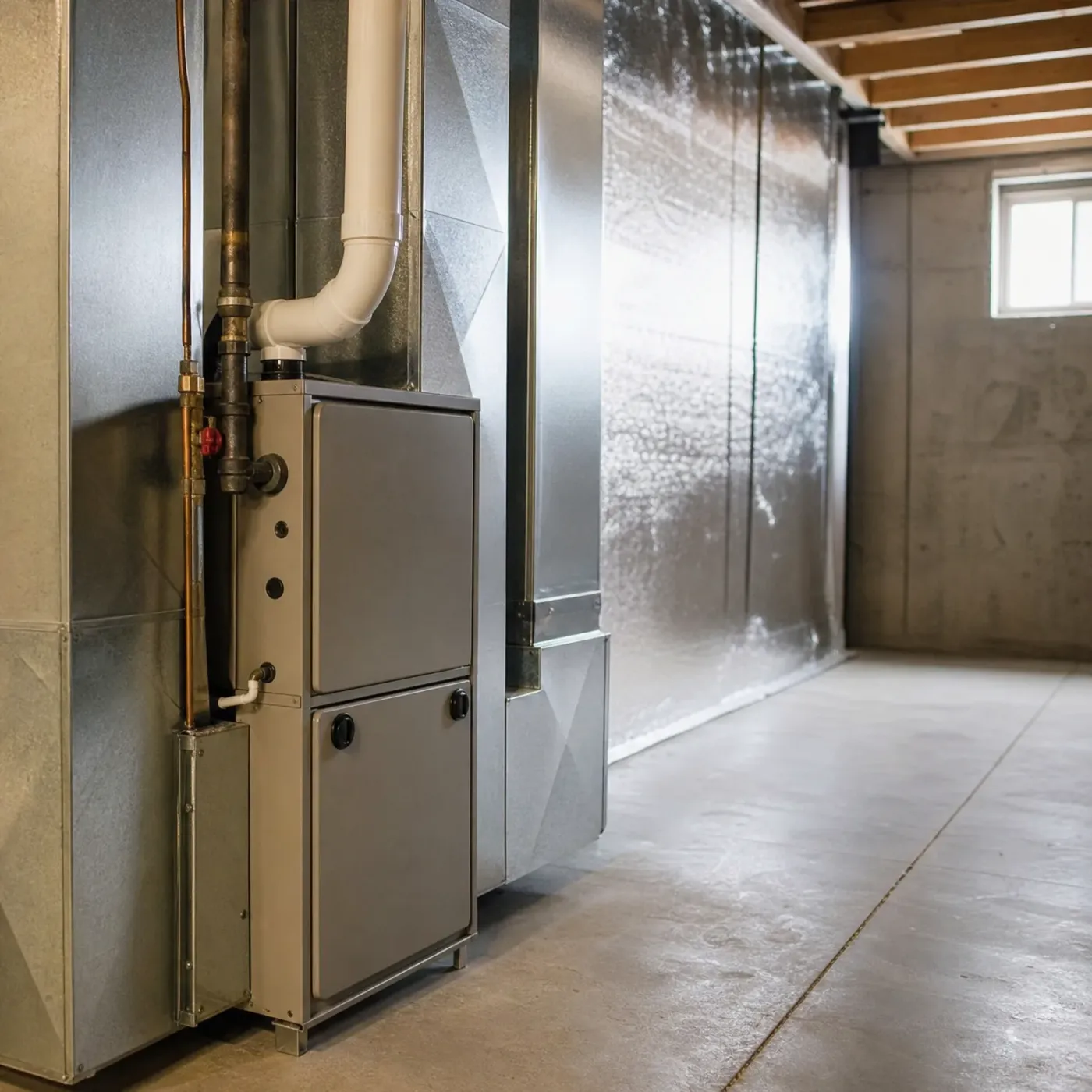
A gray furnace with a white PVC vent pipe and copper piping stands beside large galvanized sheet-metal ducts in an unfinished basement with concrete floor, concrete walls, foil-faced insulation, and a small window.

A pro who works on furnaces

Request a pro

Get the furnace repair search off your mind today.

You only hire the pro if you want to.