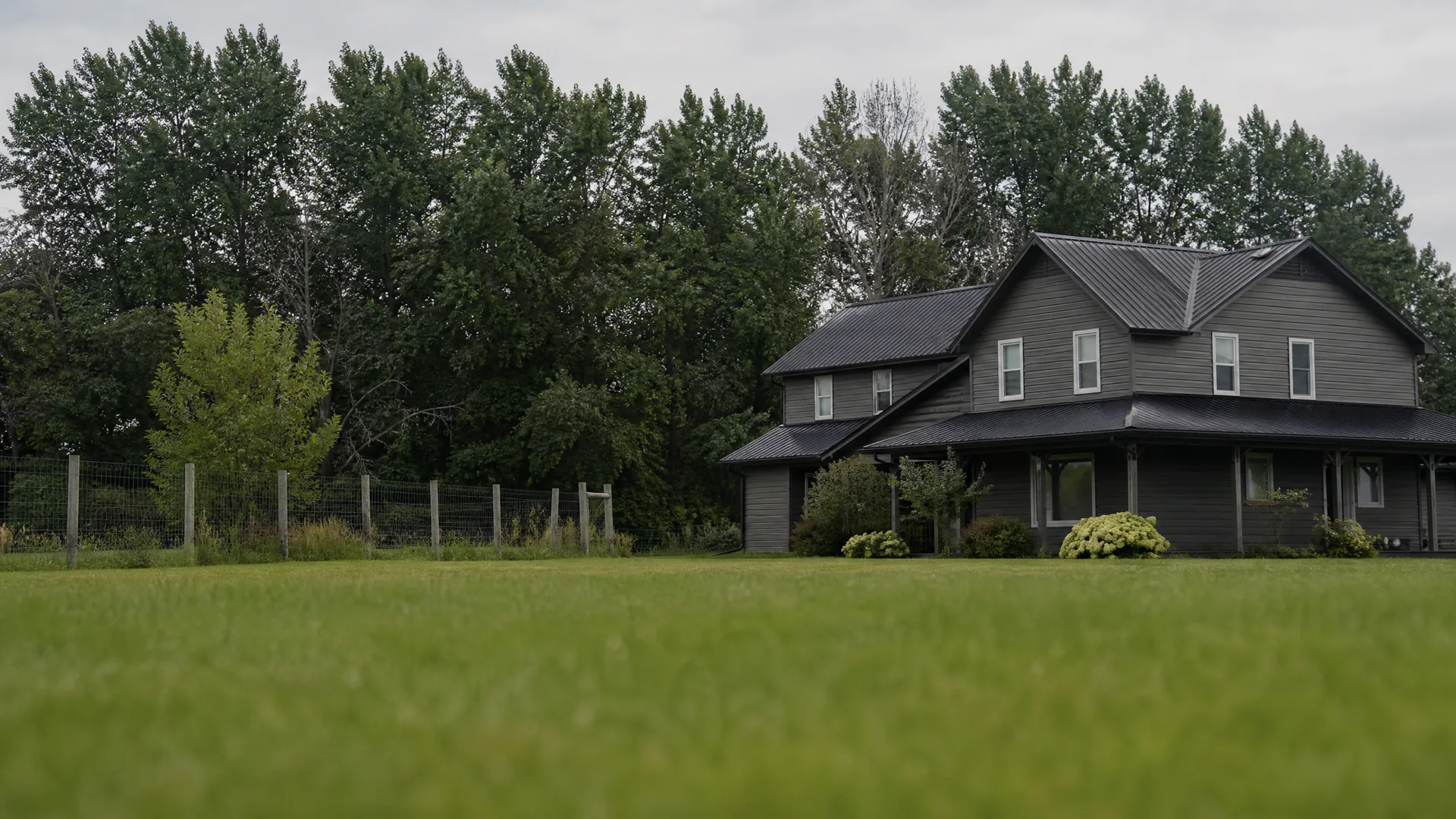





A dark-clad two-story house with a metal roof and covered porch stands behind a mown lawn, with deciduous trees and a wire fence to the left under an overcast sky.

Heat Pump Installation in Wahpeton, ND

Tell us about the job

Takes about a minute. No obligation.

New system or replacementHeat PumpRichland County, ND
Step 1 of 2

What ZIP code is the job in?

Electricity in Richland County runs 12.47 cents per kilowatt-hour on average, and that is cheap next to most of the country. A heat pump here still works harder for its money than it would somewhere mild. Most homes in this area heat with electricity, which means a winter's worth of heating runs through that meter alongside everything else in the house. Low rates help, but a heat pump that's sized and installed right will move more heat for every dollar than one that just barely clears the job. The equipment matters here precisely because the power behind it is affordable.

9 months
September through May, your system heats
3 months
June through August, it cools
5°F
the average winter night it heats against
80°F
the average summer afternoon it cools against
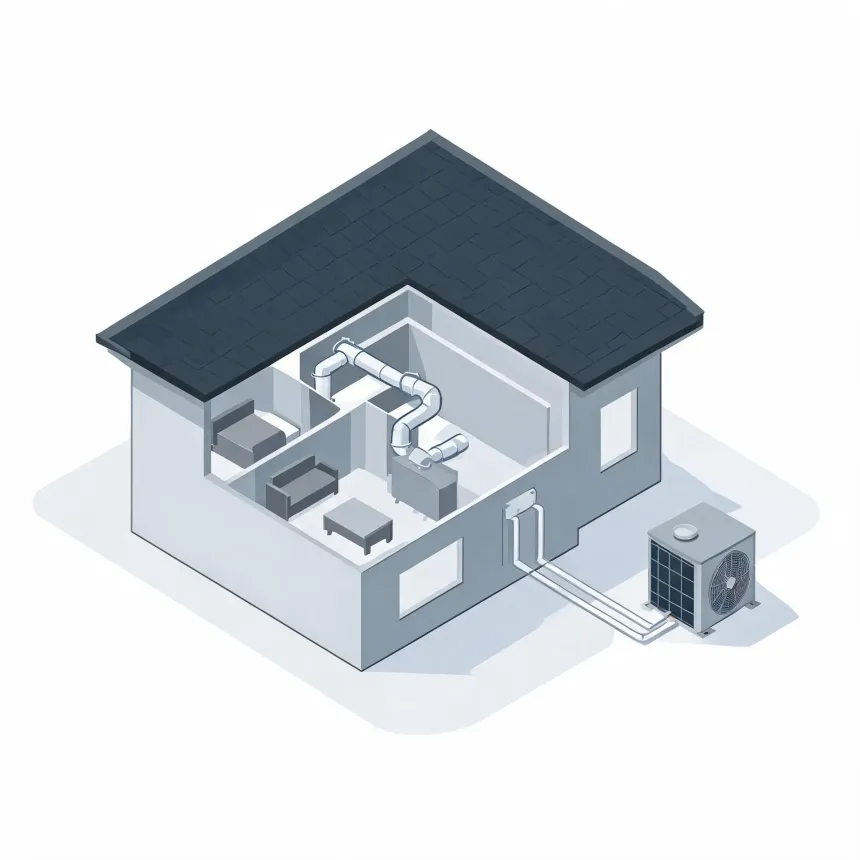
Isometric illustration of a cutaway single-story house showing interior ductwork, an indoor air handler and simple furniture, connected by lines to an outdoor condenser unit beside the building.
Your system heats September through May and cools June through August.

NOAA nClimDiv, 1991–2020 normals

Almost half the homes in Richland County heat with electricity.

A heat pump fits the wiring and setup already in place in most houses here.

Nine months of heat and three of cooling leave a short window to get this installed right

Cooling runs June through August
Heat runs September through May
Climate zone 6A
Half the homes here were built by 1972A heat pump going into a house that age has to match the house, not just the spec sheet.

A heat pump installed here runs through a long, cold winter and still has to cover warm, sticky summer days. That is more total run time than most of the country asks of one. Richland County also puts real weather against the outdoor unit. Damaging wind has hit the county 82 times between 2015 and 2024, hail 45 times, and winter storms with heavy snow and ice 60 times in that same span. The outdoor unit sits through all of that, winter and summer, every year it runs. One sized to the house and installed with that exposure in mind holds up to it. One picked on price or guesswork has more chances to show the strain early.

Get it installed right once, and cheap power keeps paying you back

Get the sizing and install right and that heat pump will keep earning its keep on every bill that follows, for as long as it runs.

Find a contractor
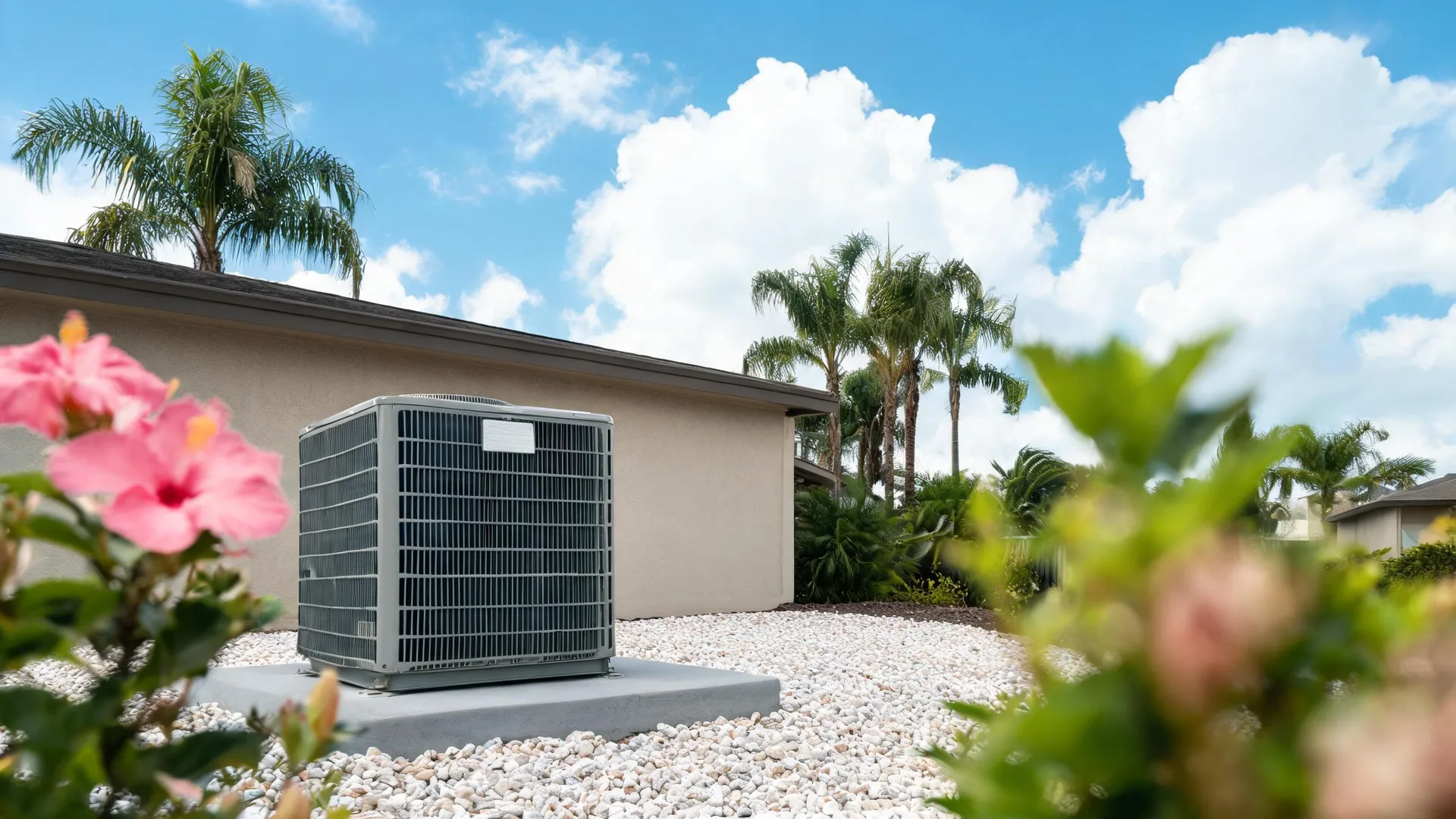
A gray heat pump condenser unit mounted on a concrete pad against the gray lap-siding exterior wall of a house.

Long hours, year after year, in a house that has its own history

This machine runs from the first cold snap through the last humid day and does not get much of a break between. Half the homes in this county were built in 1972 or earlier, and a heat pump going into one of those has more to answer to than the square footage on a listing. Older ductwork, older wiring, a layout nobody designed with a heat pump in mind. The load calculation has to look at the house as it actually sits, not a guess based on size. Get that right and the long hours running don't wear on it the way they would on a unit that was never sized for the place it ended up in.

Sizing sets the price before anything else

The load calculation drives the whole quote. A contractor has to work out how much heat the house loses in winter and gains in summer, room by room, before picking equipment. A unit sized off square footage alone can come back too big or too small, and either way someone pays for that mistake later. The right size costs what it costs. Guessing just moves the cost to the power bill or the repair bill.
The install work is most of the job

The equipment is only part of what you're paying for. Setting the outdoor unit on a stable pad, running the line set, wiring in the disconnect, connecting the air handler or existing ductwork, charging the system to the right level, all of that is labor that determines whether the heat pump runs the way it's rated to. A unit installed badly won't deliver what the spec sheet promises, no matter what it cost going in.

Taking out the old system is its own piece of work, separate from putting in the new one. If the house is heating with a furnace now, that means capping or removing a gas line, and that part of the job falls to someone licensed to do it safely. An old electric furnace or baseboard setup comes out with less to worry about, but the wiring feeding it still has to be checked against what the heat pump needs, not just reused because it's there. Any ductwork that stays gets inspected before the new equipment ties into it. Leaks or a system that was never sized right for the house won't fix themselves just because new equipment is on the other end. Disposal of the old unit, especially the refrigerant in an old air conditioner or heat pump, has to follow proper recovery procedures rather than just hauling it to the curb. None of this shows up on the spec sheet for the new system, but skipping it shows up later.

Richland County falls under zone 6A in the 2021 energy code, a cold climate classification with a long heating season. That classification does not change what equipment can go in, but it does describe the conditions the equipment has to answer to. The federal minimum is the same nationwide: any split-system heat pump built after January 1, 2023 has to deliver at least 7.5 Btu of heat for every watt-hour it uses over the winter, and remove at least 14.3 Btu for every watt-hour over the summer. A unit sold today meets that floor. Buyers here also have a federal tax credit available toward the cost of a qualifying heat pump, worth checking against the specific equipment going in.