




A snow-covered residential street at twilight with illuminated houses, bare trees, and an orange horizon glow beneath a deep blue sky.

Heat Pump Installation in Velva, ND

Tell us about the job

Takes about a minute. No obligation.

New system or replacementHeat PumpMcHenry County, ND
Step 1 of 2

What ZIP code is the job in?

Electricity in McHenry County runs about 11.21 cents per kilowatt-hour, which is cheap next to most of the country. A heat pump here still has to work for its keep, since it's the one system running through a hard winter and a full cooling season both. Cheap power helps, but it doesn't erase a bad match between the unit and your house. Two systems can use that same cheap rate and land on very different bills, just because one holds its efficiency when the temperature drops and the other doesn't. Where you land on that depends on the equipment, not just the rate.

9 months
September through May, your system heats
2 months
July through August, it cools
3°F
the average winter night it heats against
79°F
the average summer afternoon it cools against
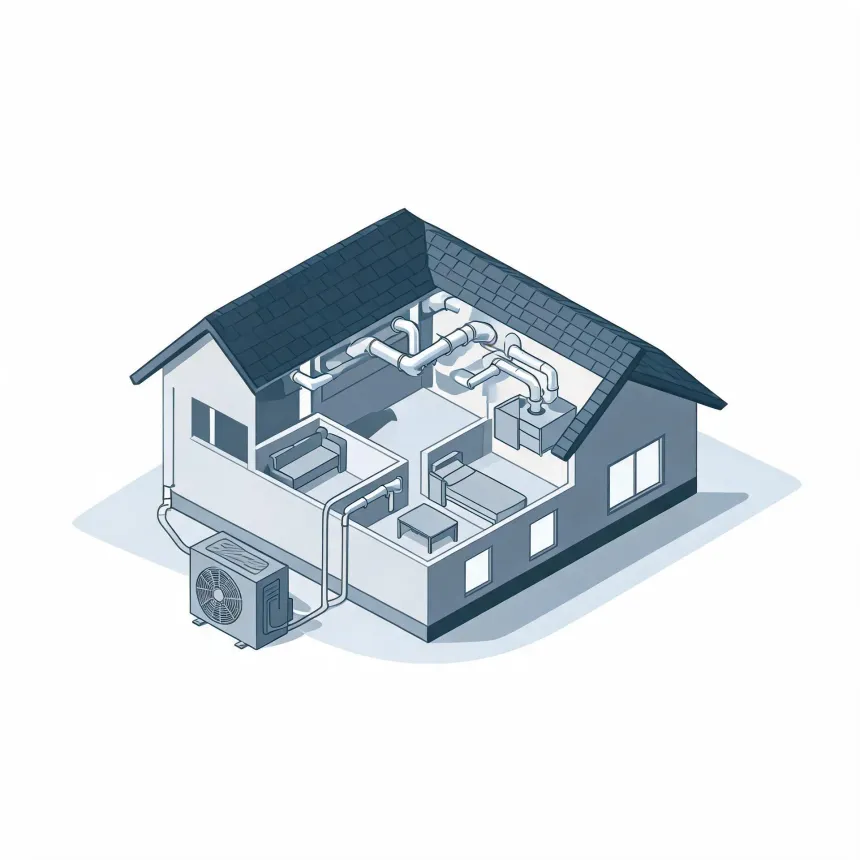
Isometric cutaway illustration of a house showing attic ductwork, an indoor air handler, furnished rooms, and an outdoor condenser unit connected by lines along the exterior wall.
Your system heats September through May and cools July through August.

NOAA nClimDiv, 1991–2020 normals

Heat here runs from September through May.

August is the month to get a new system in, before the first cold morning asks something of it.

Fifty hail events and thirty winter storms between 2015 and 2024. This equipment sits outside for all of it.

50 hail events from 2015 to 2024
30 winter storms from 2015 to 2024
Winter nights average 3°F

Half the homes in McHenry County were built in 1966 or earlier. A house that age usually wasn't built with heat pump ductwork in mind, and whatever has been added or changed since then matters more than the age itself. A heat pump has to be sized to the house, not just the climate. Too big and it short cycles, never running long enough to settle into its efficient range. Too small and it struggles on the coldest days, exactly when a hard winter is asking the most of it. The right fit depends on what your walls, windows and ducts are actually doing, not on the year the house went up.

The Rate Is Cheap. What You Install Decides the Rest.

The rate is fixed, but how the equipment holds up to it isn't. Getting the sizing and the installation right is what decides whether this unit earns back that cheap rate or just wastes it. That's a call for someone who can look at your house, not the climate in general.

Find a contractor
A gray outdoor HVAC unit mounted on a concrete pad beside a house with gray lap siding and a stone foundation.

Size It to the House, Not the Year It Was Built

This machine runs long hours across a hard winter and a full summer, and all that runtime happens inside a house nobody can size up just by looking at the year it was built. A load calculation looks at the house directly: the windows, the insulation, the ducts if they're already there, whatever's been added on since 1966. That's what decides the size of the unit, not the age of the house. Get the sizing wrong and the unit carries that mismatch through every month it runs, not just the first cold snap.

The Old Unit Doesn't Just Walk Away

Whoever installs the new heat pump also has to deal with the old one. The refrigerant lines get disconnected and the line set either gets reused or replaced. The old outdoor unit comes off its pad, and if there's an air handler or indoor coil tied to the old system, that comes out too. None of this is optional work tacked onto the job. It has to happen before the new equipment can go in cleanly.
What's Inside the Old Unit Matters

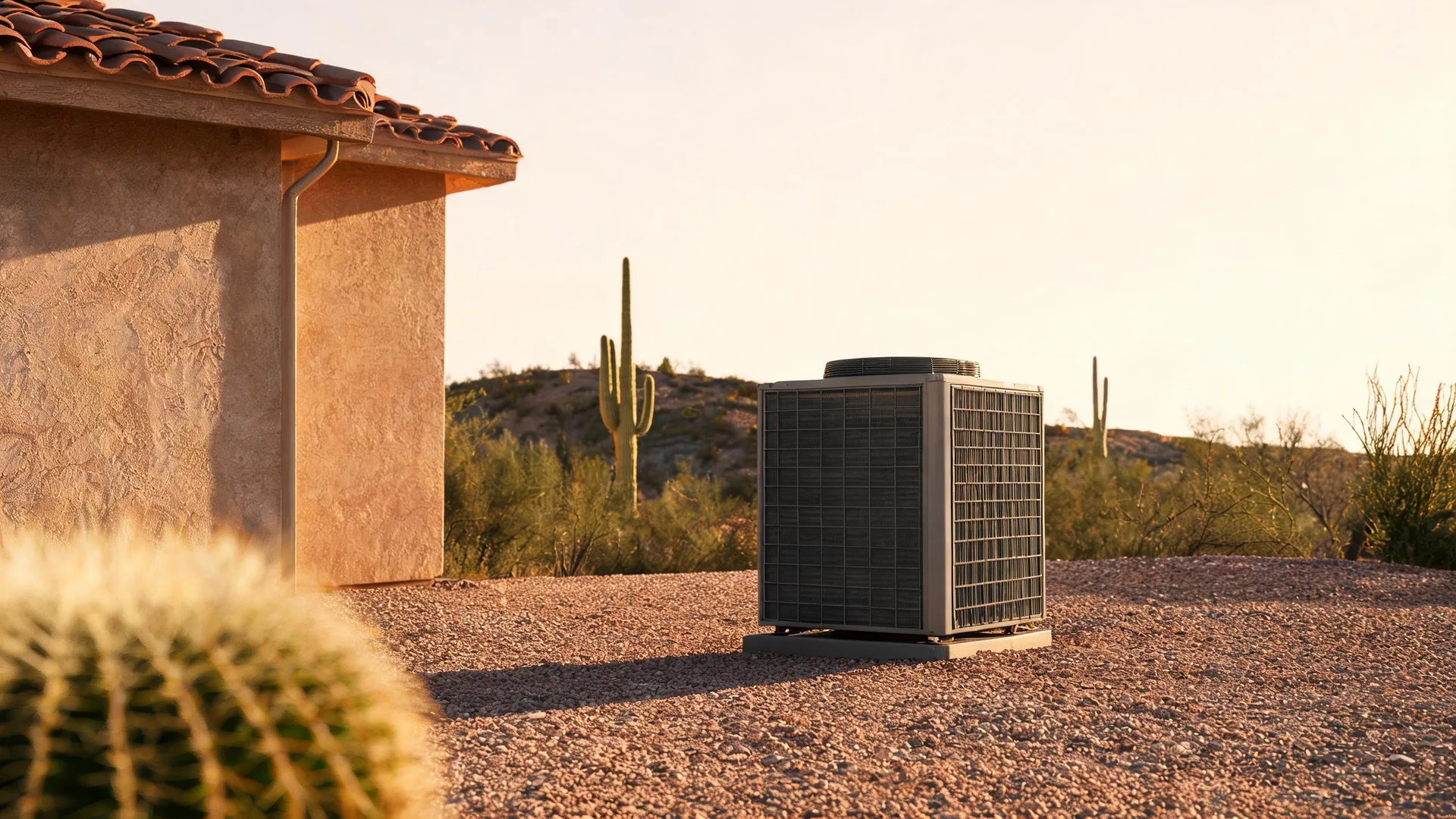
Older heat pumps can hold refrigerant that isn't legal to vent into the air, so it has to be recovered with the right equipment before the unit is scrapped. A contractor handling the changeover should already have that covered as part of the job. It's worth asking how the old unit and its refrigerant get handled, since that tells you something about how the rest of the install will go too.

Two systems can carry the same label and still perform differently once they're running, so the rating on the sticker is only a starting point. Ask what the efficiency rating looks like at low outdoor temperatures, not just at the standard test point, since that's where heat pumps separate from each other. Ask whether it's a single-stage, two-stage, or variable-speed compressor. A single-stage unit runs at full output every time it kicks on, while a variable-speed one can throttle down and run longer at a lower output, which is usually easier on comfort and on the equipment. Ask what the sound rating is for the outdoor unit, since some run noticeably quieter than others at the same capacity. Ask about the warranty on the compressor specifically, not just the general parts warranty, because that's the part most likely to fail and most expensive to replace. And ask what backup heat the system pairs with, since a heat pump stops being the only thing keeping the house warm once it gets cold enough to need help.

McHenry County falls in climate zone 7, the coldest band in the energy code, so any heat pump going in here has to meet the federal minimums built for that kind of cold. For a split system installed new, that means at least 14.3 Btu of cooling delivered for every watt-hour it draws over the summer, and at least 7.5 Btu of heat for every watt-hour over the winter. Those numbers aren't a ceiling. They're the floor every unit sold here has to clear before it's legal to install. A federal tax credit is available on top of that for qualifying equipment, which offsets part of what a higher-efficiency system costs going in. Worth asking which models on your list actually qualify, since not all of them will.