A snow-covered suburban street at dusk with lit houses and bare trees under a twilight sky.

Heat Pump Installation in Medora, ND

Tell us about the job

Takes about a minute. No obligation.

New system or replacementHeat PumpBillings County, ND
Step 1 of 2

What ZIP code is the job in?

The rating is a lab average

The number on a heat pump's label comes from a set of lab tests, not from the coldest night of the year outside your house. It reflects performance across a mix of mild and harsh conditions, blended into one figure. A higher rating means the unit gets more heat out of less electricity over the course of a season, but it will not tell you exactly what a hard cold snap does to your power bill.

A higher number costs more up front

A unit built to earn a better rating usually costs more to buy, since it takes a larger coil, a stronger compressor, or staged operation to get there. Whether that higher rating is worth paying for depends on how hard the system works and how long you plan to keep it. A contractor sizing the system for your home can walk through what rating actually makes sense, rather than just pointing at the highest number on the shelf.

9 months
September through May, your system heats
2 months
July through August, it cools
8°F
the average winter night it heats against
81°F
the average summer afternoon it cools against
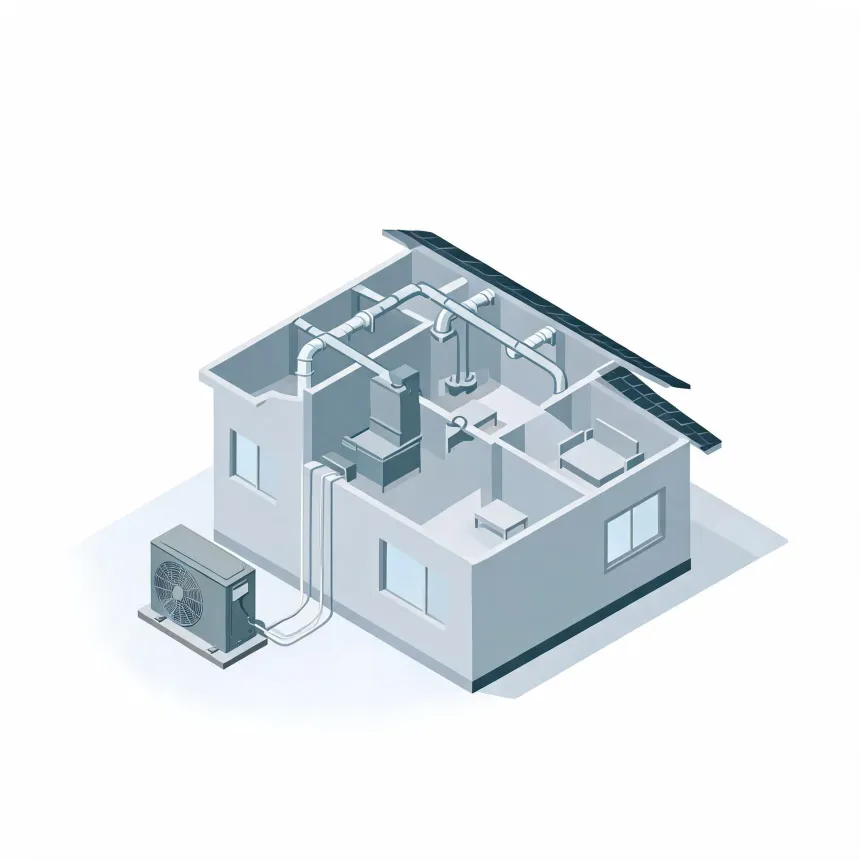
Isometric cutaway illustration of a single-story house showing interior ductwork, an air handler and rooms, with an outdoor condenser unit connected by refrigerant lines on a plain white background.
Your system heats September through May and cools July through August.

NOAA nClimDiv, 1991–2020 normals

The ductwork decides more of the price than the heat pump does.

A system that has to be resized or rerouted through the house costs more to put in than one that drops into what is already there.

A heat pump sized for Medora doesn't need to be oversized for it

Power costs 11.51 cents a kWh statewide
41 hail events from 2015 to 2024
18 winter storms from 2015 to 2024
Have it in before SeptemberHeat runs nine months here, from September through May, so August is the month to get it done.

Winters here average 8°F overnight through December, January and February, and standard heat pump equipment is built to handle that kind of cold. Hail and winter storms show up in the record too, but those matter for how the outdoor unit gets placed and protected, not for what size or rating you buy. A contractor still has to size the system to your home's actual heat loss, not to the weather on the news. Nothing about this county calls for going bigger or paying for a higher efficiency tier than the house needs. A standard unit, sized right, holds up fine against a Medora winter.

Go with the standard fit

A standard size and efficiency fit fine here. There's no local reason to go bigger or pricier.

Find a contractor
A man in a cap, long-sleeve shirt and work pants climbs porch steps toward a dark blue front door, carrying a worn canvas tool bag, with a small potted evergreen beside the entry.
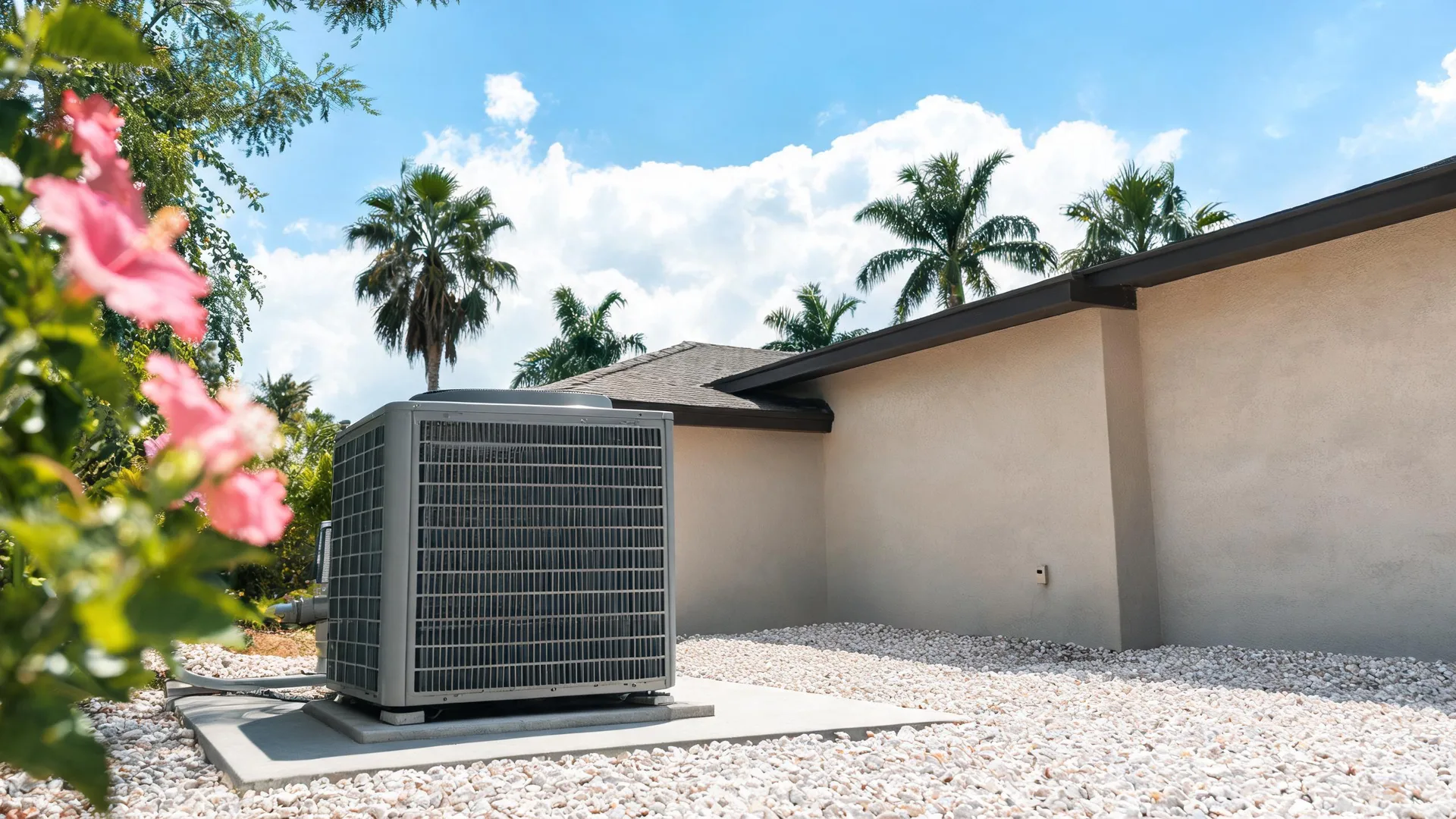
A gray heat pump outdoor unit mounted on a concrete pad next to a residential house with lap siding and stone accents.

The size comes from the house, not the old unit

Sizing a heat pump comes down to a room by room heat loss calculation, not the square footage of the house. A contractor measures wall and window area, insulation levels, ceiling height and air leaks, then works out how much heat the house actually sheds on a cold day. That number tells them what the equipment has to replace to keep up. Guessing by the old system's size just repeats whatever mistake was built into it the first time. Oversize the unit and it short cycles, reaching temperature and shutting off before it has run long enough to dehumidify the air or circulate it evenly through every room. That start stop pattern also wears on the compressor faster than steady runtime would. Undersize it and the unit runs constantly on the coldest days, struggling to keep up and leaning hard on backup heat strips that drive up electricity use. A correctly sized system runs in long, steady cycles that hold a consistent temperature and keep humidity in check at the same time.

The old equipment gets hauled away

A contractor disconnects the old unit, the refrigerant lines, and any electrical or gas connections, then removes it from the property. Refrigerant gets recovered into a tank rather than vented, since releasing it into the air is against the law. Most of what comes out, the cabinet, the coil, the compressor, gets scrapped for the metal.

What stays depends on what you're replacing

Swapping a furnace and AC for a heat pump means pulling out separate pieces of equipment instead of one, plus the old thermostat if it can't handle a heat pump's controls. Ductwork usually stays as is unless it was sized for the old system's airflow. A gas line feeding a furnace that's going away gets capped off by whoever is licensed to do it.

Comparing quotes gets harder when each contractor is proposing a different size system, so ask each one how they arrived at their number and whether it came from a room by room heat loss calculation or a rule of thumb. Ask what happens on the coldest nights, since every heat pump leans on backup heat strips at some point, and the size of that backup and how often it kicks in should be part of the quote. Ask about the compressor, whether it runs at a fixed speed or modulates, since that affects how the system handles the mild days that make up most of the season. Ask what sound level to expect near the outdoor unit, and where it's proposed to sit, since placement affects both noise and how well it sheds ice and snow. Ask what's included for the electrical work and the thermostat, since a heat pump needs controls built for it, not a leftover furnace thermostat. The system that fits your house well on paper should also make sense in how it gets installed.

Install day starts with the old equipment coming out, lines disconnected and the refrigerant recovered before anything new goes in. The outdoor unit gets set on a pad, leveled, and connected to the refrigerant lines, while inside the air handler or coil ties into the ductwork and the electrical whip gets run from the panel or a dedicated circuit. Once everything is connected, the system gets charged with refrigerant to the exact weight the manufacturer specifies, not just topped off by feel. A contractor then checks airflow at the registers, sets the thermostat, and runs the system in both heating and cooling to confirm it cycles properly and holds temperature. Checking the charge and airflow against spec is the last step and the easiest one to skip. A heat pump running slightly off on either one won't heat or cool as evenly as it should.