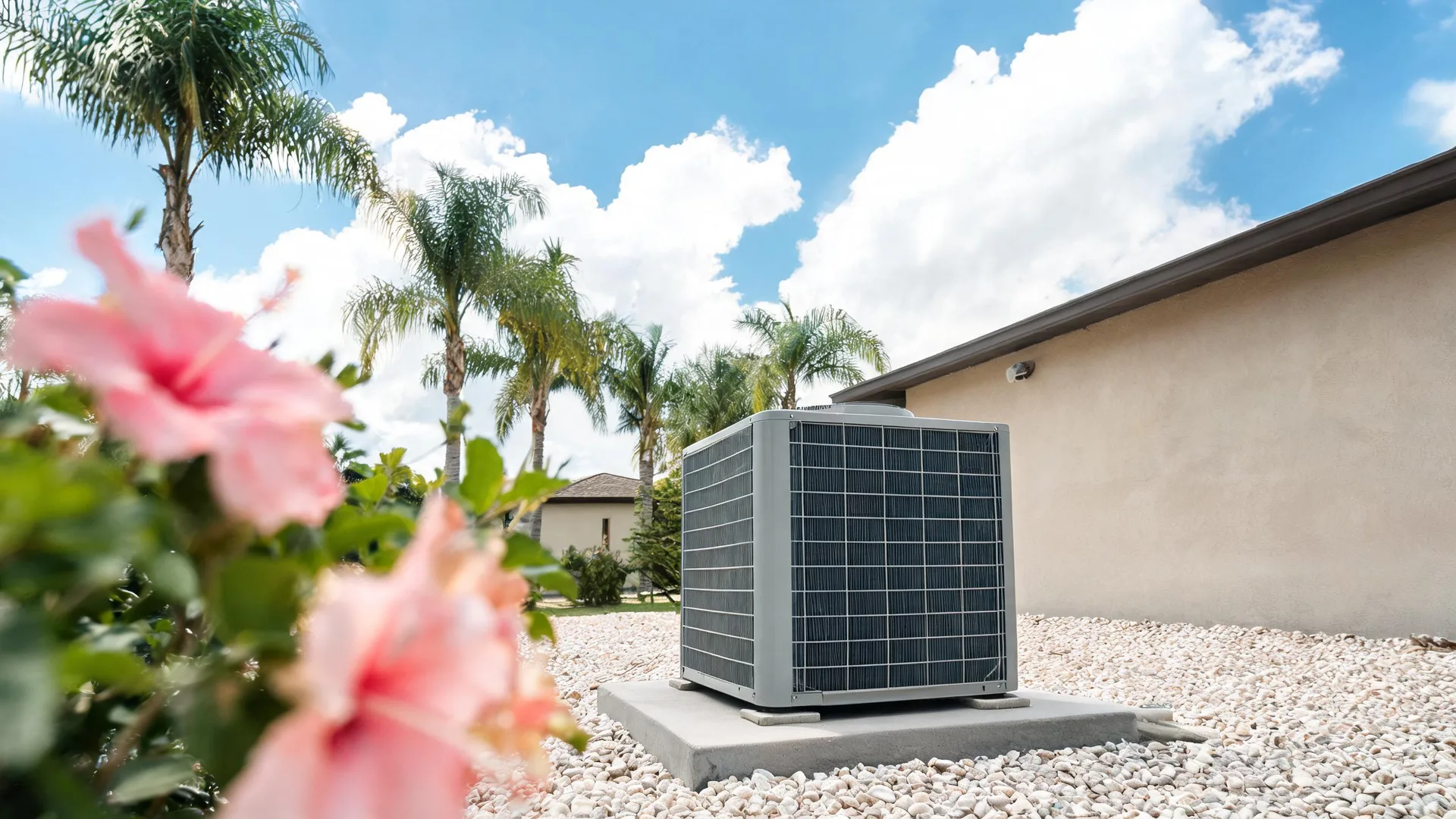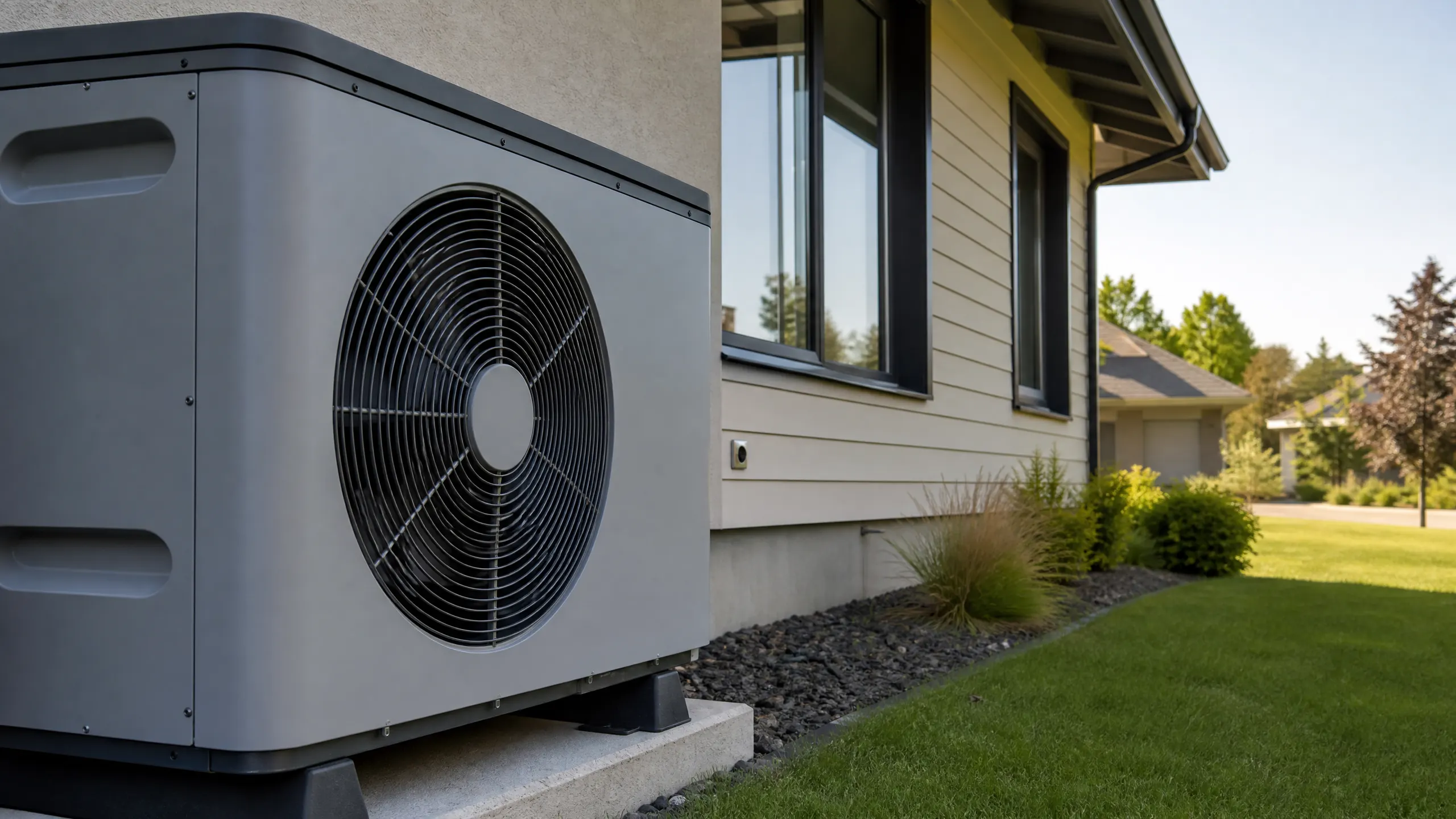
A grey outdoor HVAC unit mounted on a concrete pad beside the beige-sided exterior wall of a suburban house.

Heat Pump Installation in McClusky, ND

Tell us about the job

Takes about a minute. No obligation.

New system or replacementHeat PumpSheridan County, ND
Step 1 of 2

What ZIP code is the job in?

Power here is cheap, but that's not the whole bill

Electricity in Sheridan County runs 12.40 cents per kilowatt-hour, lower than most of the country. A heat pump here still has to work through a hard winter to heat the house. What it costs to run comes down to both of those things together, not just the rate on the meter.


The install decides what you pay for years

A heat pump sized and set up right for this climate uses less power to hold the house at temperature. One that's undersized or poorly matched will run longer and lean harder on backup heat to get through the cold months. That difference shows up on every bill that follows.

9 months
September through May, your system heats
2 months
July through August, it cools
4°F
the average winter night it heats against
79°F
the average summer afternoon it cools against
Isometric line illustration of a cutaway house showing interior rooms, an air handler with ductwork in the attic space, and an outdoor condenser unit beside the exterior wall.
Your system heats September through May and cools July through August.

NOAA nClimDiv, 1991–2020 normals

Half the homes in Sheridan County were built in 1967 or earlier.

A heat pump going into a house that age has to match the house, not just the climate.

Cold, hail and snow all land on the same unit

23 hail events from 2015 to 2024
25 winter storms from 2015 to 2024
Winter nights average 4°F
Get it in before SeptemberHeat runs nine months here, from September through May.

Sheridan County falls in climate zone 6A, the federal government's cold-climate category with a long heating season. Any split-system heat pump installed here has to meet the federal minimum: at least 14.3 Btu of cooling for every watt-hour it uses over the summer, and at least 7.5 Btu of heating for every watt-hour over the winter. That standard applies everywhere, but it matters more here because the heating season is longer and harder than most places. A unit that barely clears the minimum will lean on it for more months than it would in a milder zone. The rating sets the floor. What goes in above that floor is what decides the bill.

Get the install right and the rate on the meter works for you

Cheap power only pays off if the heat pump puts it to good use. A unit matched to this house and sized for a cold winter draws less power to keep up. One that's wrong for the job runs longer and falls back on backup heat more often, and that shows up on the bill every month after.

Find a contractor
A white mini-split heat pump outdoor unit mounted on a concrete pad beside a gray-sided house, surrounded by gravel and green shrubs.

Running day and night, through what the house already has

This machine runs from day into night, every day it's in service. In a house built in 1967 or earlier, it's running through the same ductwork and electrical setup that's been there for decades. Neither one was built with a heat pump in mind. That doesn't rule anything out, but it does mean the install has to account for what's actually in the walls, not just the size of the house. A system matched to that wiring and ductwork runs steadily through the hours shown here. One that isn't ends up working harder than it should, on every cycle, for as long as it's installed.

The size has to match the house, not just cover it

A heat pump too big for the house will short cycle, switching on and off before it finishes a full heating or cooling run. One too small will run constantly and still fall behind in hard cold, leaning on backup heat to close the gap. Getting the size right takes a load calculation on the actual house, not a guess based on square footage.

The ductwork decides as much as the unit does

A heat pump moves a steady, lower-temperature stream of air compared to a furnace, and it depends on the ducts to carry that air where it needs to go. Leaky joints, crushed runs or registers in the wrong place all cut into what the system can deliver, no matter how good the outdoor unit is. Sealing and balancing the ducts during install is part of the job, not an extra.

A load calculation looks at the walls, the windows, the insulation and the layout room by room, then works out how much heat the house actually loses on a cold day and gains on a hot one. Square footage alone never gives you that. Two houses the same size can need different sized units depending on how many windows face north, how high the ceilings run, or whether a room sits over a garage. Get the number wrong on the high side and the unit short cycles, shutting off before it finishes pulling moisture out of the air or evening out the temperature room to room. Get it wrong on the low side and it runs nonstop in the coldest stretch and still can't keep up, handing more of the work to backup heat than it should. The calculation also sets where the system switches over to backup heat, so a sloppy number throws that off too, not just comfort on a mild day.

Propane heats 52.9% of homes in Sheridan County, more than any other fuel. Electricity comes next at 36.1%, and fuel oil barely registers. That matters for this job because a propane furnace usually shares ductwork with central air, and a heat pump can often go into that same ductwork, in the same spot the old furnace sat. The furnace doesn't have to come out. Most installs here pair the heat pump with the existing furnace as backup, so the heat pump carries the load until it gets too cold, then the furnace takes over. That's a simpler job than starting from a house with no ductwork at all, which is why checking what's already there, the ducts, the furnace, the electrical panel, comes before anything gets sized.