





A snow-covered residential street at twilight with illuminated houses, bare trees, and an orange horizon glow beneath a deep blue sky.

Heat Pump Installation in Mandan, ND

Tell us about the job

Takes about a minute. No obligation.

New system or replacementHeat PumpMorton County, ND
Step 1 of 2

What ZIP code is the job in?

Utility gas heats 67.2% of homes in Morton County, more than any other fuel. Electricity covers 17.9%, and propane or LP gas covers 11.6%. A heat pump going into a gas-heated home usually works alongside the furnace rather than replacing it, handling the milder months and stepping back when temperatures drop low enough that the furnace takes over. That setup is called dual fuel, and it lets you keep the furnace already piped and vented into the house while the heat pump takes on cooling too. If your home already runs on electric heat, a heat pump can serve as the main system year-round, since there's no furnace in the picture to share the load with.

9 months
September through May, your system heats
2 months
July through August, it cools
6°F
the average winter night it heats against
81°F
the average summer afternoon it cools against
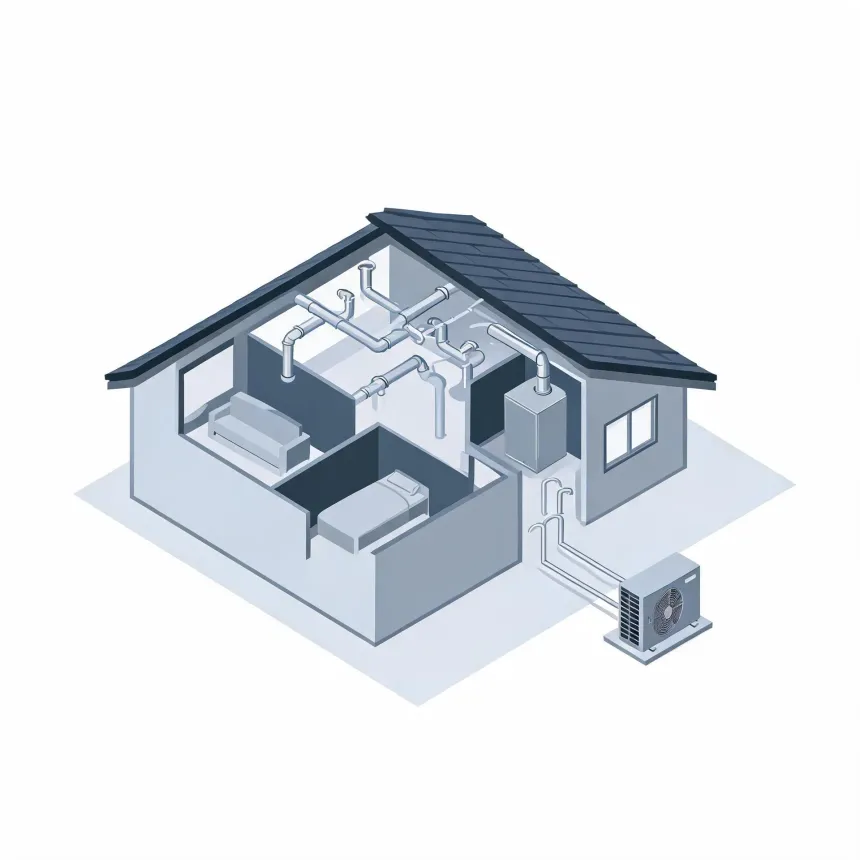
Isometric cutaway illustration of a small house showing ducted air distribution, an indoor air handler, and an outdoor condenser unit connected by lines, with a sofa and bed in the rooms.
Your system heats September through May and cools July through August.

NOAA nClimDiv, 1991–2020 normals

Morton County winters average 6°F overnight through December, January and February.

A heat pump here needs a furnace or other backup ready to carry the coldest nights.

A standard heat pump sized to your home is the right call here

Half the homes here were built by 1980
114 damaging wind events from 2015 to 2024
112 hail events from 2015 to 2024
Install before AugustHeat here starts in September, and homes in Morton County run it through May.

Morton County sees its share of rough weather, with damaging wind and hail each turning up over a hundred times between 2015 and 2024. None of that changes what size or efficiency heat pump makes sense here. A standard outdoor unit, properly installed, holds up to wind and hail the same as any other outdoor equipment. What's worth thinking about instead is power. A heat pump stops running in an outage, same as a furnace blower does, so if losing power for a stretch is a real concern for your house, that's worth raising with the contractor separately from sizing the unit.

A standard heat pump is the right fit for your Mandan home

Electricity here runs 11.51 cents per kilowatt-hour, nothing out of line with the rest of the state. A standard heat pump, sized to your home and paired with your furnace for the coldest nights, is built to run on that without any upsizing or upgrade to make it work here.

Find a contractor
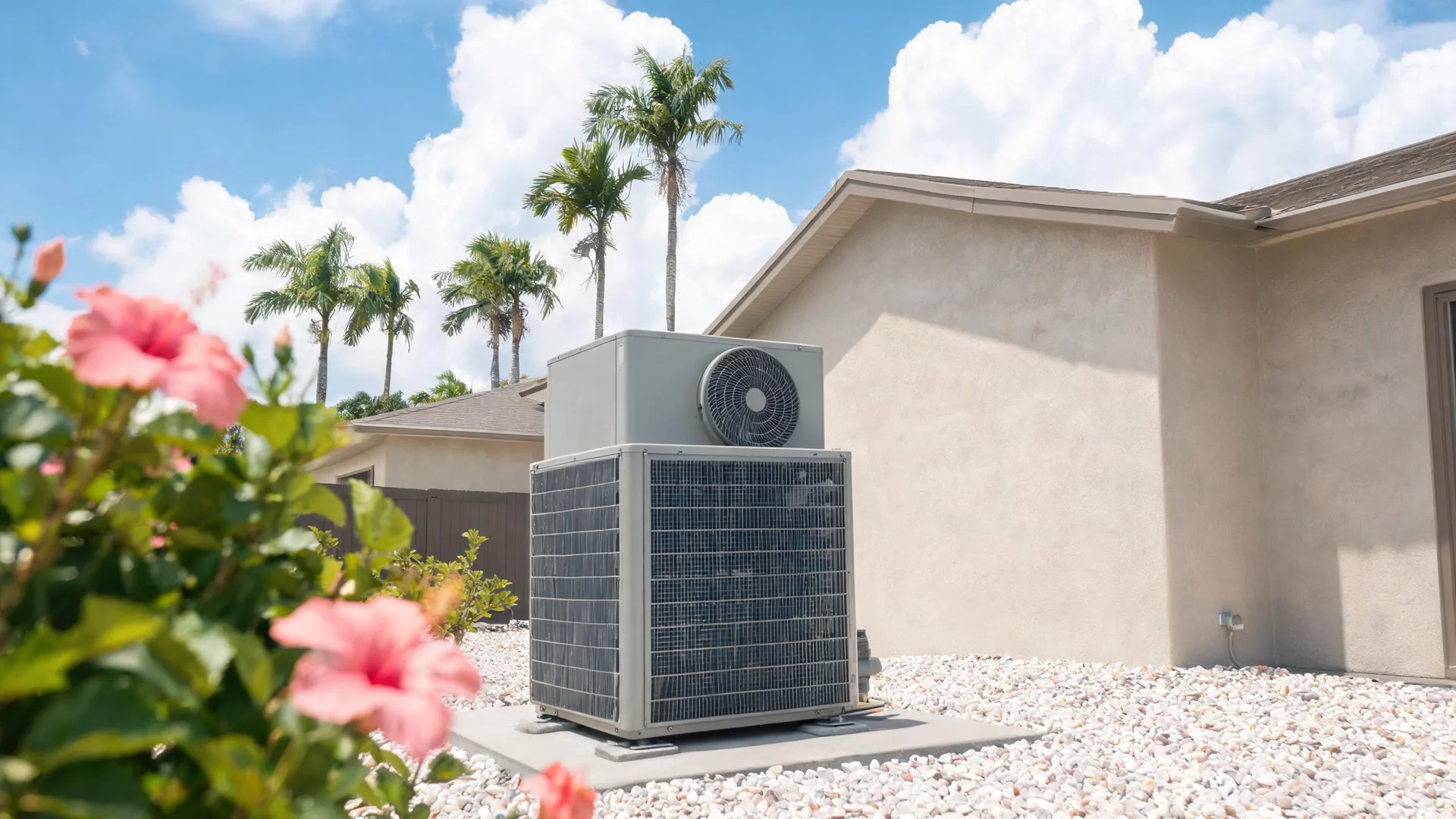
A white mini-split heat pump outdoor unit mounted on a concrete pad beside a gray-sided house, surrounded by gravel and green shrubs.

The coldest mornings are the furnace's job

Mornings here average 6°F through December, January and February, and that's the stretch where the furnace is doing the work, not the heat pump. The heat pump still runs plenty of hours across the year, spring and fall especially, and cooling all summer. Get the handoff point between the two set right during install, so the furnace is carrying the load before the heat pump is pushed past what it can do efficiently.

The old equipment doesn't need to come out

If a furnace is already piped and vented into the house, it usually stays right where it is. The heat pump goes in alongside it as a dual fuel setup, so there's no tearing out ductwork or re-running gas lines to make room.
An old air conditioner is a different story

If this installation is replacing a central air conditioner rather than adding to a furnace, that outdoor unit and its line set typically come out, since the heat pump takes over both heating and cooling through the same lines and outdoor pad.

The efficiency rating on a heat pump's label tells you how much heat it moves for the electricity it uses. A higher rating means more heat moved per unit of power going in, both for heating and for cooling, since one rating system covers both sides of what the unit does. A higher-rated unit costs more upfront, and that gap shows up on the electric bill over the years the unit runs, not right away. The rating is measured under set lab conditions, so it tells you how one unit stacks up against another, not exactly how it will perform in your house. Sizing still matters more than the rating does. A high-rated heat pump that's too big or too small for the home it's in will run up the electric bill and wear out sooner than a correctly sized unit with a lower rating.

Ask about the balance point, the outside temperature where the heat pump hands off to the furnace. A contractor who has sized the system for your home can tell you where that handoff sits and why, not just wave at cold weather in general. Ask what sound level the outdoor unit runs at, since it usually sits right outside a window or a patio. Ask whether the compressor warranty and the labor warranty come from the same place, because they often don't, and a compressor failure years out is a different claim than a part failing in the first season. Ask who sets up the thermostat afterward, too. A dual fuel system needs its switchover point programmed correctly, or the furnace ends up carrying more of the load than it should.