A snow-covered residential street at twilight with illuminated houses, bare trees, and an orange horizon glow beneath a deep blue sky.

Heat Pump Installation in Langdon, ND

Tell us about the job

Takes about a minute. No obligation.

New system or replacementHeat PumpCavalier County, ND
Step 1 of 2

What ZIP code is the job in?

Cheap power, long runtime

Electricity in Cavalier County runs 12.76 cents per kilowatt-hour, cheaper than most of the country. But a heat pump here works through a hard winter and still has to cool the house come summer, so it runs more hours than it would somewhere milder.


Efficiency decides the bill

With a system that runs this many hours a year, the difference between one that runs efficiently and one that does not shows up every month. The install you choose now is what you are stuck paying for later.

9 months
September through May, your system heats
1 months
July through July, it cools
0°F
the average winter night it heats against
76°F
the average summer afternoon it cools against
Isometric grayscale illustration of a cutaway two-story house showing interior ductwork, an indoor air handler unit, and an outdoor condenser unit on a pad beside the building.
Your system heats September through May and cools July through July.

NOAA nClimDiv, 1991–2020 normals

Half the homes in Cavalier County were built in 1968 or earlier.

A heat pump going into a house that age has to be sized and matched to that house, not installed as a generic swap.

Hail, blizzards, cold nights: this is what the system runs against

38 hail events from 2015 to 2024
51 winter storms from 2015 to 2024
Winter nights average 0°F

Heat here runs nine months, September through May. Cooling is short, just July. That's the whole shape of the job this machine does, mostly heat, with one month of cooling at the end of summer. Getting a new system in before September means it goes in on a normal schedule, with time to size it right and get the ductwork or line set sorted without a cold house waiting on the work. Wait until the overnight lows are sitting near 0°F in December and the same job happens under pressure, with whoever you can get, on whatever timeline they have open.

Get the install right, and you pay less for it every month

That runs through most of the year, which means the install itself is what sets your bill for as long as you own it. Get the sizing and the equipment right now, and you're not paying for a bad match every month after.

Find a contractor
A man in a dark long-sleeve shirt and brown work pants, seen from behind, carries a worn canvas tool bag as he steps up porch stairs toward a navy blue front door of a light gray clapboard house, with a potted shrub beside the entry.
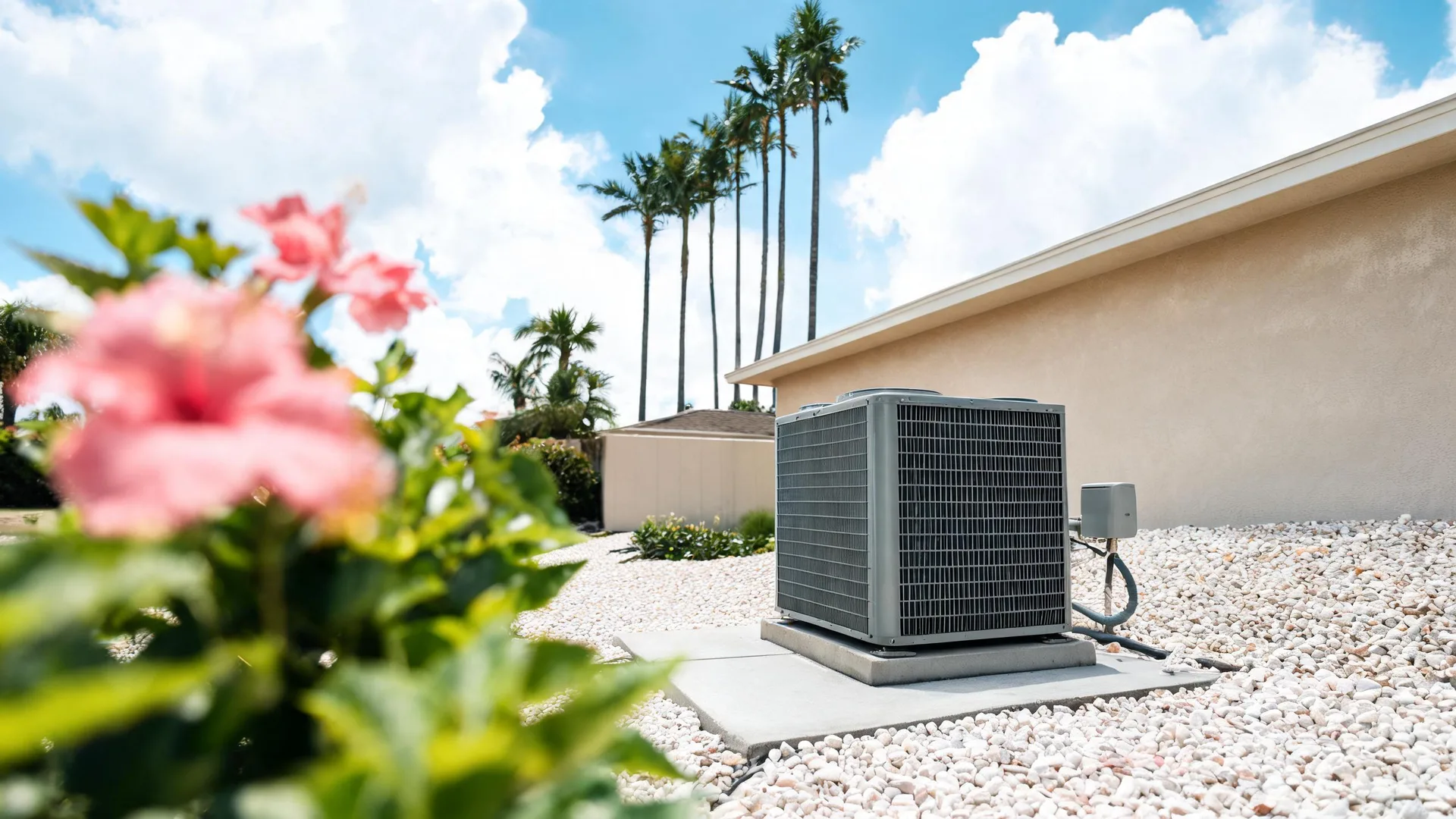
A gray heat pump outdoor unit mounted on a concrete pad next to a residential house with lap siding and stone accents.

This runs for years, so get the match right before it goes in

A heat pump sized off a chart runs wrong for as long as you own it, not just the first winter. Half the homes in this county were built in 1968 or earlier, and a house that age wasn't built with a heat pump's ductwork or line set in mind. Get the sizing and the ductwork checked against the house you actually have before the install happens, not after. That check is what decides whether the system runs the way it's supposed to for every year it's in the ground.

Sizing sets the cost

A heat pump is sized by the heat loss and heat gain of the house, not by the square footage alone. Get it oversized and it short cycles, turning on and off before it ever settles into a steady run. Get it undersized and it runs flat out in the hardest stretch of winter and still falls behind. Either way you paid for a unit that can't do the job efficiently, and that was decided before it ever got bolted in.

The ductwork decides what's possible

A heat pump moves more air across the coil than a furnace does, and most ducts were never built or sealed with that in mind. Leaky runs, undersized returns, or a line set that has to snake through finished walls all add labor before the equipment itself is even considered. Checking the ductwork against the system you want is what tells you whether the install is straightforward or whether it needs rework first.

A heat pump is sized with a room by room load calculation, not a rule of thumb. The contractor measures the house itself: the windows, the insulation, the walls, how much heat the place loses on the coldest night and gains on the hottest day. That number tells them the right capacity. Skip that step and guess off square footage instead, and the unit is wrong before it ever gets installed. The load calculation also decides the ductwork needed to move that air and the line set that connects the outdoor unit to the indoor coil, so sizing the equipment and sizing the installation are really the same piece of work.

Cavalier County sits in climate zone 7 under the 2021 energy code, the coldest tier the code sets. Any split-system heat pump going in has to clear the federal minimums that came into force in 2023: at least 14.3 Btu of cooling for every watt-hour it draws, and at least 7.5 Btu of heating for every watt-hour over the winter. Those numbers are the floor, not a target, so they narrow down what a contractor can put on the truck before the job even starts. A federal tax credit is available on top of that for systems that qualify, which offsets part of what the efficiency costs to buy.