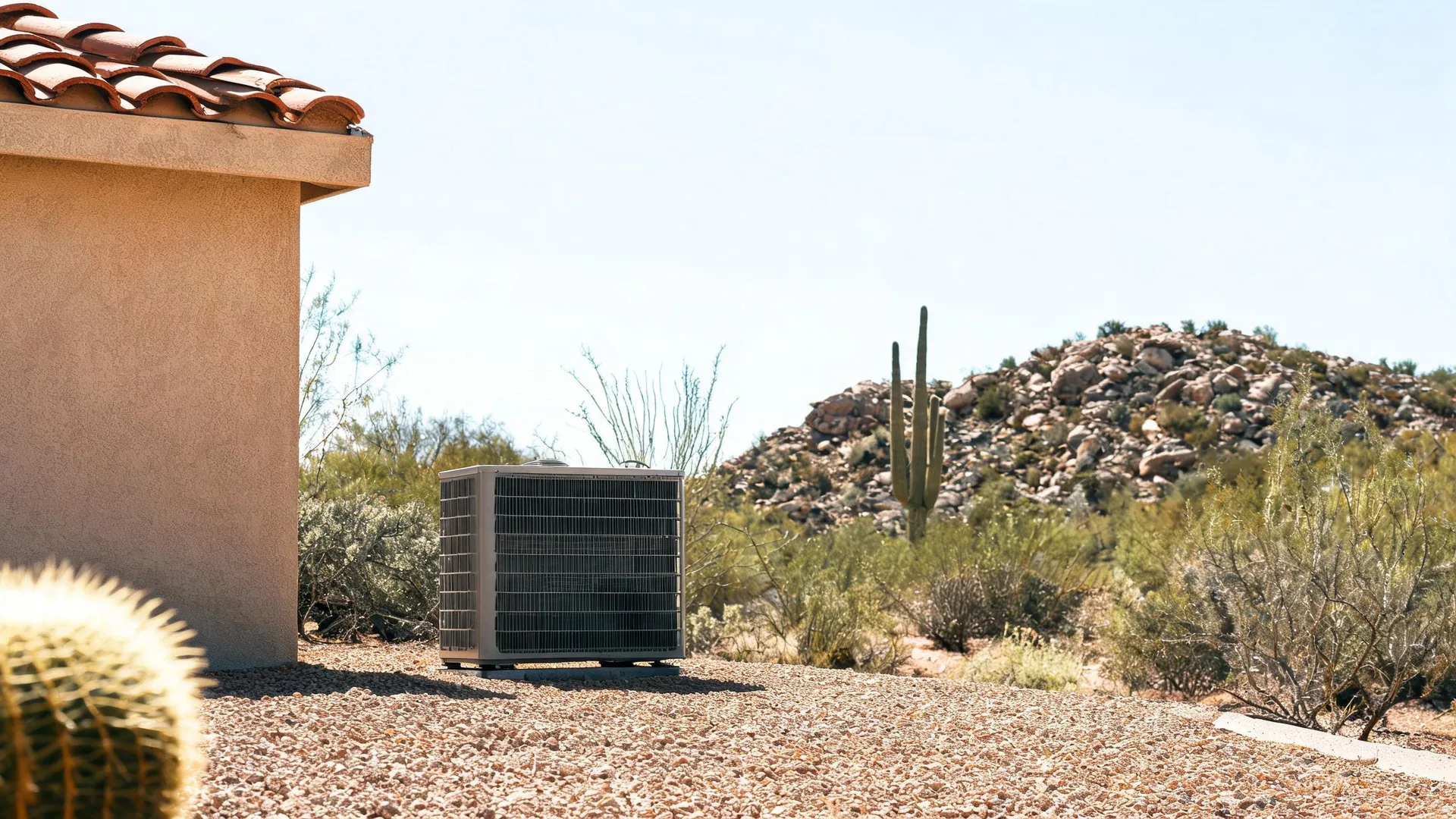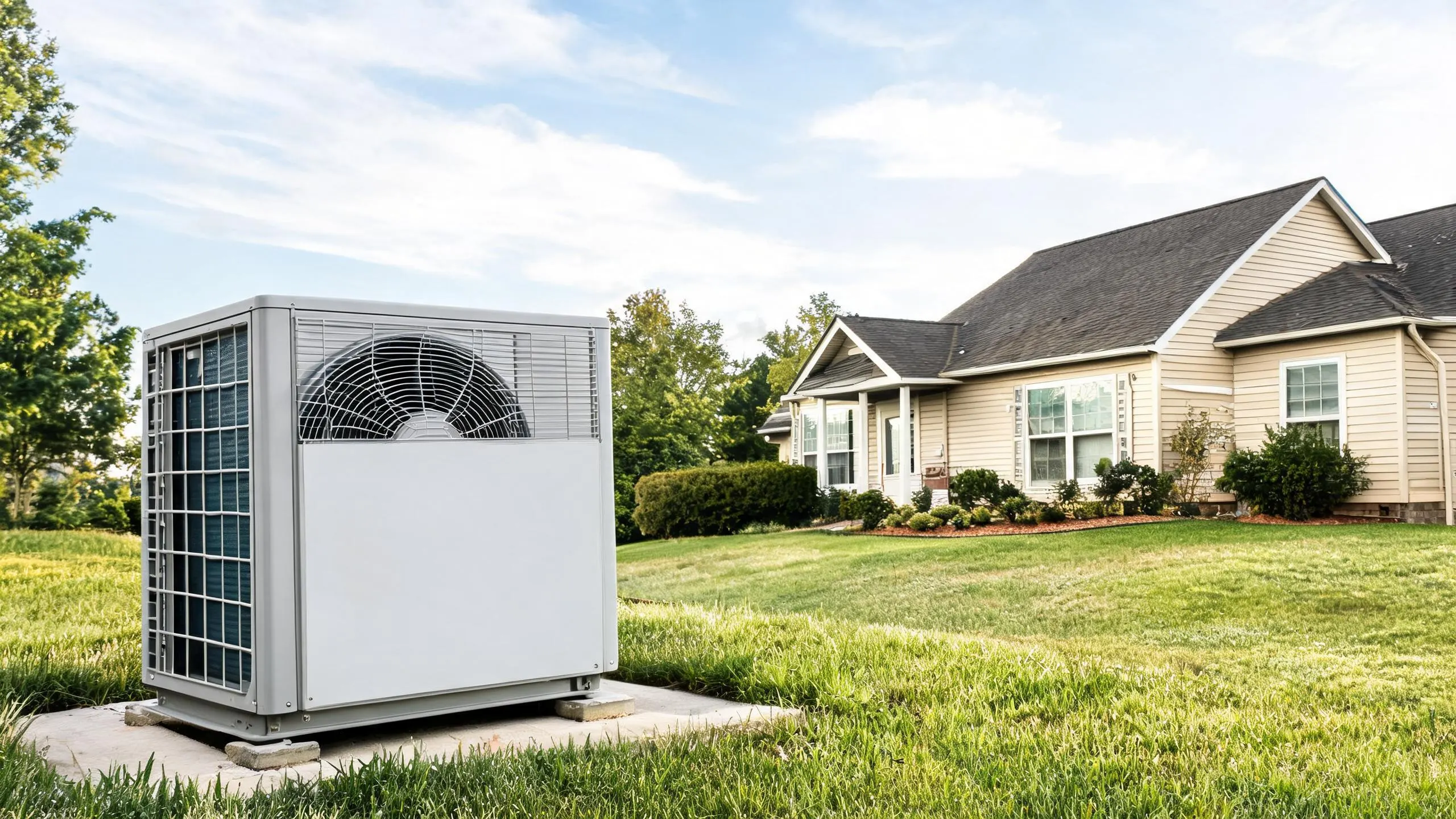
An outdoor heat pump unit mounted on a concrete pad in front of a single-story suburban house with beige siding.

Heat Pump Installation in Jamestown, ND

Tell us about the job

Takes about a minute. No obligation.

New system or replacementHeat PumpStutsman County, ND
Step 1 of 2

What ZIP code is the job in?

Power here is cheap, but a heat pump still runs most of the year

Stutsman County pays about 12.41 cents per kilowatt-hour, lower than most US counties. A heat pump still has to carry the home through a hard winter, and all those hours add up even at a good rate.


The efficiency rating you pick decides what those hours cost

Two heat pumps can heat the same house and use different amounts of power doing it. In a place that leans on the system this much, the difference between a low-efficiency unit and a high-efficiency one shows up on every bill, not just a few.

9 months
September through May, your system heats
2 months
July through August, it cools
4°F
the average winter night it heats against
79°F
the average summer afternoon it cools against
Isometric cutaway illustration of a two-room house showing an indoor air handler with ductwork connected by lines to an outdoor condenser unit on a pad.
Your system heats September through May and cools July through August.

NOAA nClimDiv, 1991–2020 normals

Just under half the homes in Stutsman County heat with utility gas.

Most gas furnaces here pair with central air, so the ductwork a heat pump needs to run on is usually already in place.

Nine months of the year, this is what keeps the house warm

Cooling runs July through August
Heat runs September through May
Climate zone 6A

Stutsman County falls under zone 6A in the 2021 energy code, which the state has adopted. That rating is built for a cold, long heating season, and it shapes what can legally go into a new install here. Any split-system heat pump made from 2023 onward also has to clear a federal floor: at least 14.3 Btu of heat moved per watt-hour of power over the summer, and at least 7.5 Btu per watt-hour over the winter. Those numbers set the minimum, not the ceiling, so systems above them are on the table too. On top of that, a federal tax credit is available for qualifying heat pump installations. Whatever gets installed has to clear the zone 6A bar first, the credit is what's available after that.

Get the efficiency right at install, and every bill after follows

The efficiency rating on the unit decides what this winter costs, and every winter after it. Picking that rating now is part of the install, not an afterthought to it.

Find a contractor
A man in a cap, dark shirt and tan work pants walks up stone steps toward a dark blue front door, carrying a canvas tool bag, with a potted shrub beside the entry.
A gray heat pump outdoor unit mounted on a concrete pad next to a residential house with lap siding and stone accents.

What the Install Actually Involves

The price of an install comes down to what the job actually requires, not just the equipment sitting in the truck. Sizing the unit to the house takes a load calculation, room by room, not a guess based on square footage. A unit sized wrong will cost more than one sized right, no matter what it costs to buy. Cold-climate heat pumps carry a compressor built to keep working at low outdoor temperatures, and that compressor costs more than a standard one. Ductwork matters too. If the existing runs are the right size for the new system, the job is faster and simpler. If they're not, modifying or adding duct runs adds real labor. The refrigerant lines, the electrical disconnect, the condensate drain, the outdoor pad: all of it has to be done to code, and doing it right the first time costs less than doing it twice. A backup heat source, if the system needs one for the coldest days, is its own piece of the job. None of this is padding. It's what decides whether the system keeps the house warm when it matters most.

Two numbers on the same label

The label on a heat pump carries two different ratings, one for cooling and one for heating. A unit can be strong on one and average on the other, so the cooling number alone does not tell you what it costs to heat the house.

The rating assumes it's installed right

That number is measured under set conditions in a lab. A unit sized wrong for the house, or paired with ductwork that restricts airflow, will not deliver the rating on its label. The number is a ceiling the installed system has to be set up to reach.

If the house is already heating with a furnace, that furnace usually doesn't leave. Most installs pair the heat pump with the existing furnace as backup, so the furnace handles the coldest stretches while the heat pump carries the rest of the year. The old central air condenser is what actually gets replaced, since the heat pump takes over that job along with heating. Whoever installs it will check the furnace's blower and controls to make sure they can work with the new system, not just leave them wired the old way. If the furnace is old enough that it's near the end of its own life, that's worth raising at the same time, since opening up the system once costs less than doing it twice.

Half the homes in Stutsman County were built in 1973 or earlier. A house that age wasn't built with a heat pump in mind, and the ductwork, the electrical panel, or the wall where the old furnace sits may not be set up for one either. That doesn't rule anything out. It just means the install has to start with what's actually there instead of what a newer house would have. A load calculation matters more in an older home, not less, since the walls, windows, and insulation are doing less work than they would in a house built to a newer code. Get that part right and the heat pump installed fits the house as it actually is, not as a spec sheet assumes it.