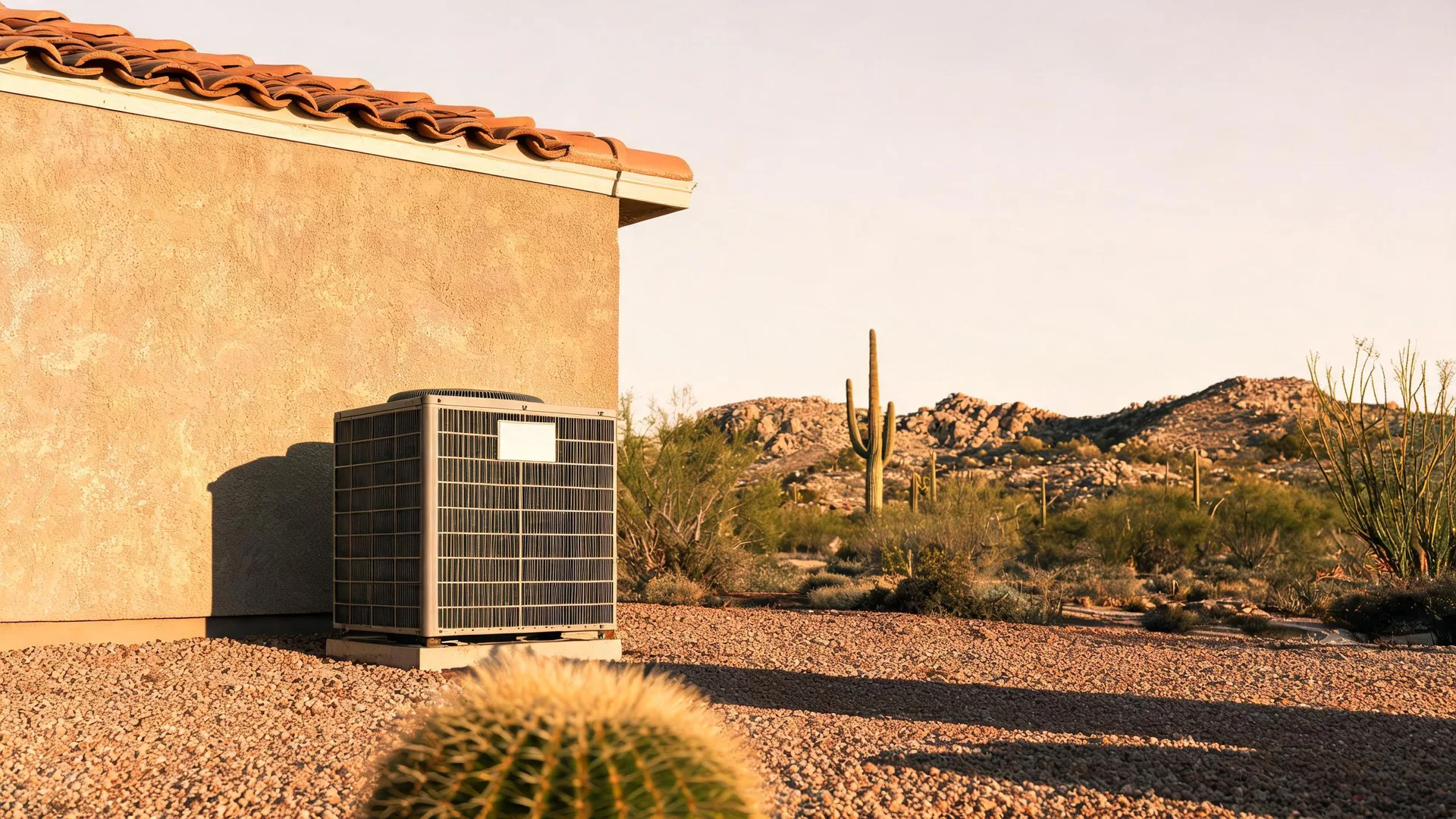
Electricity already leads here
Electricity heats 49.4% of homes in Cass County, with utility gas close behind at 42.9%. A heat pump fits a home already wired for electric heat without much extra work on that side.
Takes about a minute. No obligation.
Electricity heats 49.4% of homes in Cass County, with utility gas close behind at 42.9%. A heat pump fits a home already wired for electric heat without much extra work on that side.
Fargo winters get too cold for a heat pump to carry the load alone on the worst days. Most installations here pair the heat pump with a backup heat source, electric or gas, for when the temperature drops low enough.

NOAA nClimDiv, 1991–2020 normals
Every heat pump has a balance point, the outdoor temperature where it stops keeping up and the backup heat has to take over.
Ask what balance point a contractor is designing to, not just what size unit they're quoting.



Taking out the old system is its own job, separate from setting the new one in. If the old unit is a furnace paired with central air, the furnace and coil come out along with the old refrigerant lines, and whatever's left of the ductwork connections gets checked before the new coil ties in. If it's an older heat pump, the outdoor unit and the indoor air handler both go, along with the line set between them, since reusing old refrigerant lines on a new system is rarely worth the risk of a leak at an old joint. Refrigerant in the old unit has to be recovered into a tank, not released, so a contractor will pull it off before anything gets disconnected. Whatever electrical or gas connection fed the old equipment gets capped or rerouted for the new one, since a heat pump and a gas furnace often don't draw power or fuel the same way. None of this is the hard part of the job, but skipping steps here is how a new system ends up fighting an old mistake underneath it.
Cass County sees its share of hail, wind and winter storms, but none of that changes what a heat pump needs to be here. A correctly sized unit built for this climate, with backup heat for the coldest days, is what the job calls for. No reason to size up or pay for more than that.
Find a contractorA heat pump here works nine months a year, September through May, then hands off to the backup for the rest of winter. Cooling only runs June through August. That split points to late summer as the time to put one in. August is the month before heating starts, so a unit installed then gets commissioned and checked over before it has to carry a cold morning. Put it in once heat is already needed and the first cold snap becomes the first test, with no room to fix a bad hookup before the house needs it.
A contractor works out the right size by looking at the house itself. Square footage, window area, insulation, how many walls face outside, all of it factors in. Matching whatever size was there before just repeats the same mistake if that unit was never sized right to begin with.
A heat pump that's too big cools the house fast, shuts off, and leaves the air damp since it never ran long enough to pull moisture out. One that's too small runs constantly and still can't keep up when the backup heat should be doing less of the work. The right size runs longer, steadier cycles, and that's what keeps the house comfortable and the equipment from wearing out early.
The rating on the label, SEER2 for cooling and HSPF2 for heating, measures how much heat a unit moves for the power it draws. It says nothing about how big a house it can handle. A high rating on an oversized unit still wastes power, because the unit short cycles instead of running the long steady stretches that rating assumes. That number also comes from a lab test under set conditions, so it's a way to compare one unit against another, not a promise of what shows up on your power bill. Ductwork, insulation, and how the thermostat gets used all affect what you actually see at home. Sizing the unit to the house comes first. The efficiency rating is worth paying attention to, but only once the size is right, since the highest rating on a poorly sized unit still gives you a worse result than a mid-range unit that fits the house.
Install day itself follows a order, and most of it happens before anyone touches the new equipment. The outdoor pad or mounting bracket gets set and leveled first, since a heat pump that isn't level puts strain on the compressor over time. Line set gets run between where the outdoor unit sits and where the air handler or indoor coil goes, then the whole system gets pressure tested before any refrigerant goes in, to catch a bad joint while it's still easy to fix. Once it holds pressure, the system gets evacuated to pull out moisture and air, then charged with refrigerant to the weight the manufacturer specifies for that line length. Electrical hookup happens alongside this, tying the new unit into its own disconnect and breaker sized for what it draws. Only after all of that does a contractor power it up, check the temperature split at the vents, and confirm it's moving the air it's supposed to move.