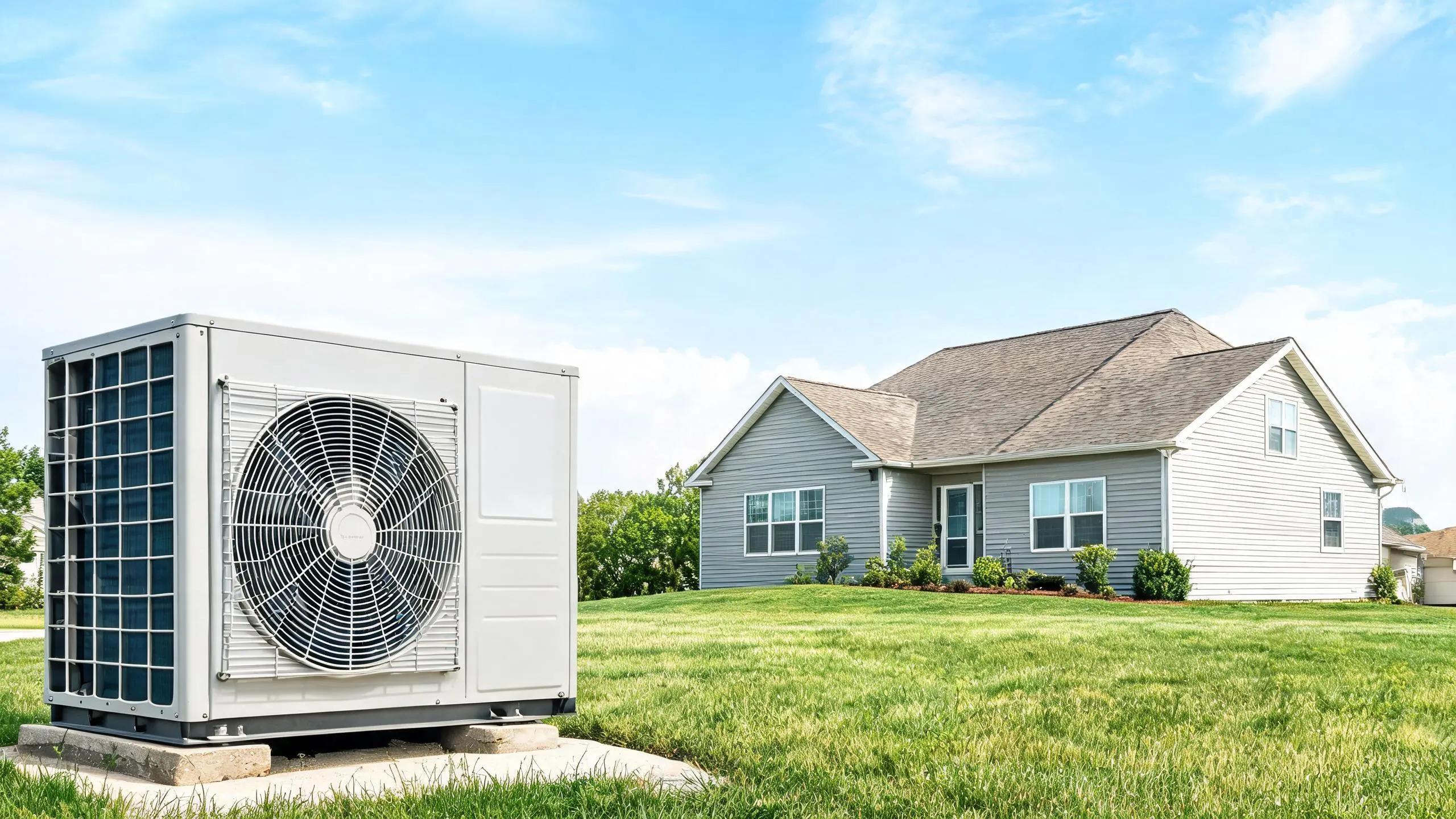




An outdoor HVAC condenser unit on a concrete pad in front of a single-story house with gray siding and a shingle roof.

Heat Pump Installation in Crosby, ND

Tell us about the job

Takes about a minute. No obligation.

New system or replacementHeat PumpDivide County, ND
Step 1 of 2

What ZIP code is the job in?

Electricity in Divide County runs about 10.43 cents per kilowatt-hour, which is cheap next to most of the country. That helps, but it does not decide the bill by itself. A heat pump here has to run through a hard winter to keep a house warm, and it draws power the whole time it is working to do that. The rate per kilowatt-hour is only half the number. How many kilowatt-hours it takes to get the house through winter is the other half, and that comes down to how well the unit is sized and installed.

10 months
September through June, your system heats
2 months
July through August, it cools
3°F
the average winter night it heats against
78°F
the average summer afternoon it cools against
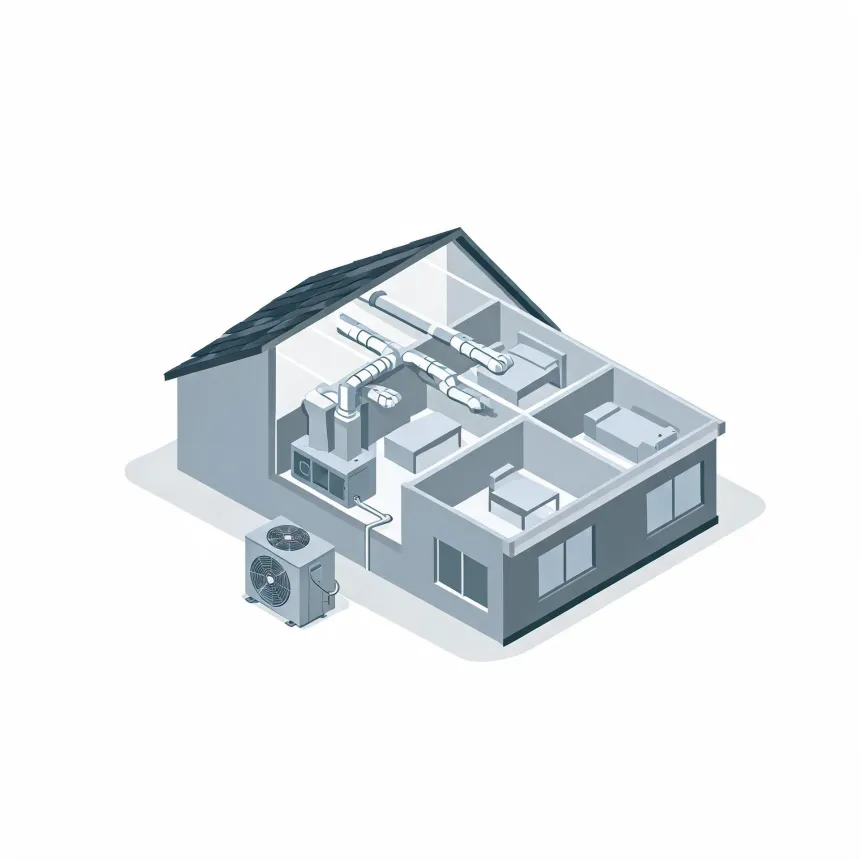
Isometric grayscale illustration of a cutaway house showing interior rooms, ceiling ductwork connected to an indoor air handler, and an outdoor condenser unit beside the exterior wall.
Your system heats September through June and cools July through August.

NOAA nClimDiv, 1991–2020 normals

Half the homes in Divide County were built in 1963 or earlier.

A heat pump going into a house that old has to be sized to that house, not to a spec sheet.

Heat comes on in September, which makes August the month to get this done

Cooling runs July through August
Heat runs September through June
Climate zone 7

Divide County falls under zone 7 of the 2021 energy code, the coldest tier the code has, because heat is needed here most of the year. Any split-system heat pump going in has to clear the federal minimums for units built from 2023 on: at least 14.3 Btu of heat moved per watt-hour over the summer, and at least 7.5 Btu per watt-hour over the winter. That second number matters more here than the first. A unit can only go in if it meets both, so the baseline a contractor is working from is already set before they look at your house. A federal tax credit is available for qualifying heat pumps, worth checking against whatever model gets proposed.

Sizing and installing it right is what keeps that bill down

The rate is already low. What is left to control is how many kilowatt-hours the unit draws to get a house through winter, and that gets decided at installation, not after. Getting the sizing and setup right from the start is what makes the low rate actually pay off.

Find a contractor
A gray outdoor HVAC unit mounted on a concrete pad beside a house with gray lap siding and a stone foundation.

What comes out before anything new goes in

An old heat pump or furnace does not get hauled out and forgotten. If the home is on a heat pump already, the new outdoor unit and indoor coil usually take the same place as the old ones, since the line set and electrical whip are already run there. A straight swap goes faster than a first-time install. If the home is moving off a furnace, that furnace and its ductwork get checked before anything else goes in. Old ducts that were sized for a furnace blowing hot air do not always move enough air for a heat pump, which moves air at a lower temperature for longer stretches. A contractor worth hiring checks static pressure and duct sizing before mounting anything new, not after. The old refrigerant, if there is any, has to be recovered into a tank rather than vented, since it is against the law to release it to the air. Whatever gets pulled out, the breaker and disconnect it was wired to usually get reused or upgraded, not abandoned, and the old pad or mounting bracket often stays if it still holds the new unit level.

Ask for the heat loss number, not a guess

A contractor should size a heat pump off a room by room heat loss calculation for the house, not off the old equipment or a rule of thumb. Too big and the unit short cycles, turning on and off instead of running steady, which wears parts faster and leaves rooms uneven. Too small and it falls behind on the coldest days and leans hard on backup heat. Ask to see the calculation, not just the final number.
Ask what happens when it gets cold

Every heat pump loses capacity as the outdoor temperature drops, and every model has a different curve. Ask at what temperature the unit stops covering the full heating load on its own and what kicks in after that, whether it's electric resistance strips or something else. That crossover point is what decides how much the backup heat gets used, and backup heat is the most expensive way to warm a house.

The efficiency rating on a heat pump's label, the HSPF or HSPF2 number for heating and SEER or SEER2 for cooling, comes from a lab test run at set conditions. It tells you how much heat the unit moves per unit of power it draws, under those conditions. Your house is not the lab. Ductwork, how well the unit is sized to the space, and how cold it actually gets outside all change what the unit draws once it is running. A higher rated unit still uses less power than a lower rated one to do the same job, all else equal, but all else is rarely equal. Two homes with the same unit can see different draws because one has tighter ducts or a better match between the equipment and the heat loss of the house. The rating tells you what the equipment is capable of. What it actually uses comes down to everything around it.

If your house was built in 1963 or earlier, nobody framed it with a heat pump in mind. The walls, the windows, the gaps around them all factor into how much heat the house loses on a cold night, and that number swings more from one old house to the next than it does between newer homes built to a common code. So the contractor sizing your unit needs to run a heat loss calculation on your house, not pull a number off the equipment that came out of it. Ask to see that calculation before you agree to a unit size. If the windows or insulation have been redone since the house was built, mention it, since that changes the number too.