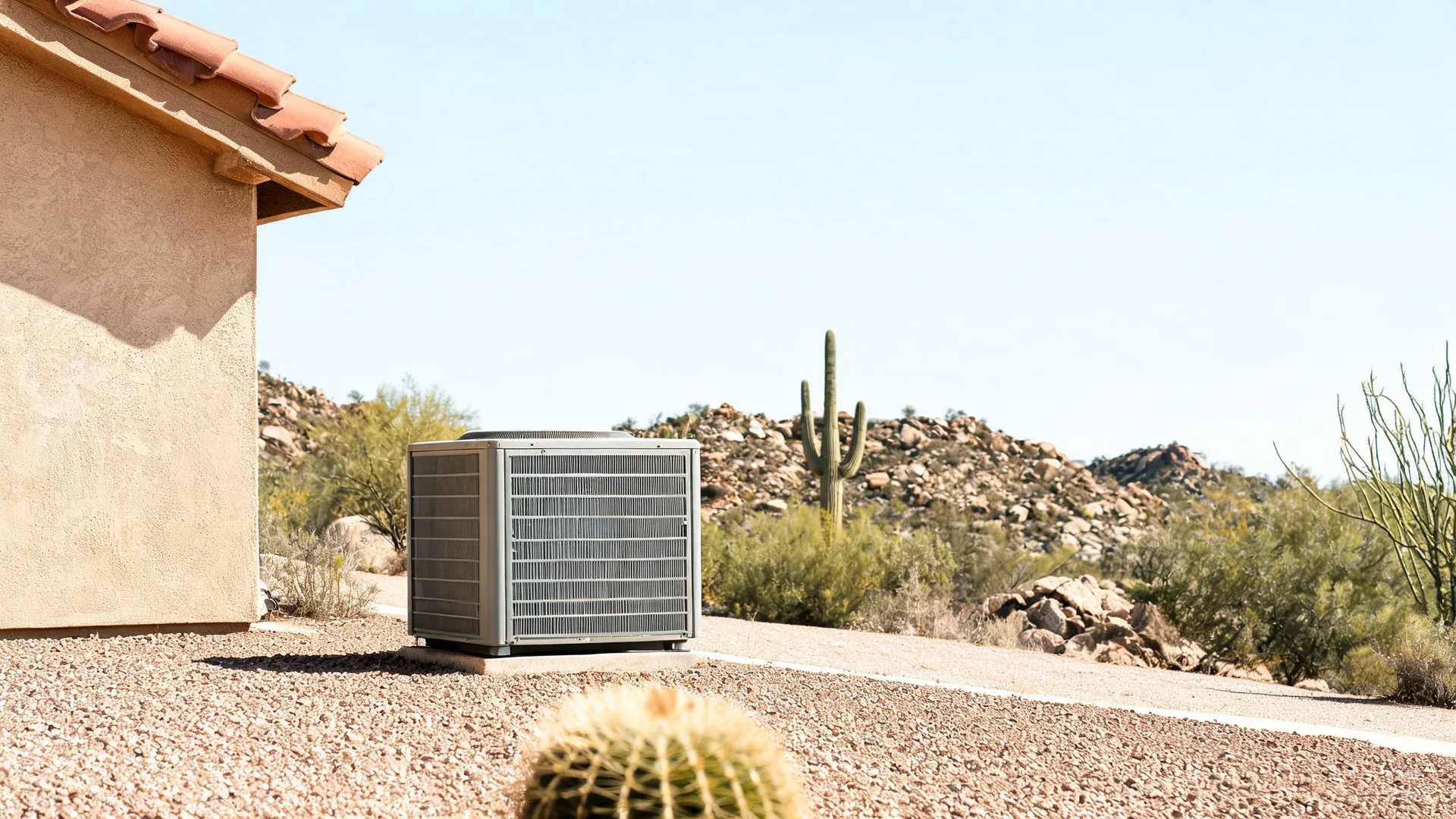
Electricity runs this house
Nearly every home around Cooperstown heats with electricity. A heat pump here is not one option among several. It is pulling the full load, month after month, and every kilowatt it uses shows up on the bill.
Takes about a minute. No obligation.
Nearly every home around Cooperstown heats with electricity. A heat pump here is not one option among several. It is pulling the full load, month after month, and every kilowatt it uses shows up on the bill.
Griggs County pays around 11.24 cents per kilowatt-hour, lower than most of the country. That helps. But a heat pump working through a hard winter and a full cooling season still runs enough hours that how efficiently it does that work matters more here than the rate alone.
NOAA nClimDiv, 1991–2020 normals
Heat here starts in September.
Get the new system in before August ends, and the install happens on your schedule instead of during the first cold snap.



Electricity already heats close to half the homes in Griggs County, more than gas or oil. A heat pump fits into that pattern instead of working against it. If your house is one of the ones already running on electric heat, going to a heat pump means the wiring and the setup are already pointed the right direction. The contractor sizing the install isn't fighting an unusual fuel source or retrofitting around a furnace that was never meant to pair with one. For most homes here, this is the straightforward path, not the exception.
Griggs County pays less for power than most of the country, but a heat pump here still runs through a full winter and a full summer. An efficient unit turns those cheap kilowatt-hours into lower bills. A less efficient one spends them.
Find a contractorHalf the homes in Griggs County were built in 1958 or earlier. A heat pump going into a house that old is going into whatever wiring, ductwork and insulation that house happens to have, not a blank slate. If your system came with the house, it's worth finding out whether the electrical panel has room for what a heat pump draws, and whether the ducts were sized for it. None of that rules a heat pump out. It just means the sizing and the setup matter more than they would in a house built last year.
A contractor has to work out how much heat the house loses on the coldest night and how much heat the house gains on the hottest day, then pick equipment that matches both. A unit sized too small runs constantly and still falls behind. A unit sized too large cycles on and off and never settles into steady, efficient operation. Getting the size right takes a proper load calculation, not a guess based on square footage, and that calculation shapes which equipment fits the job at all.
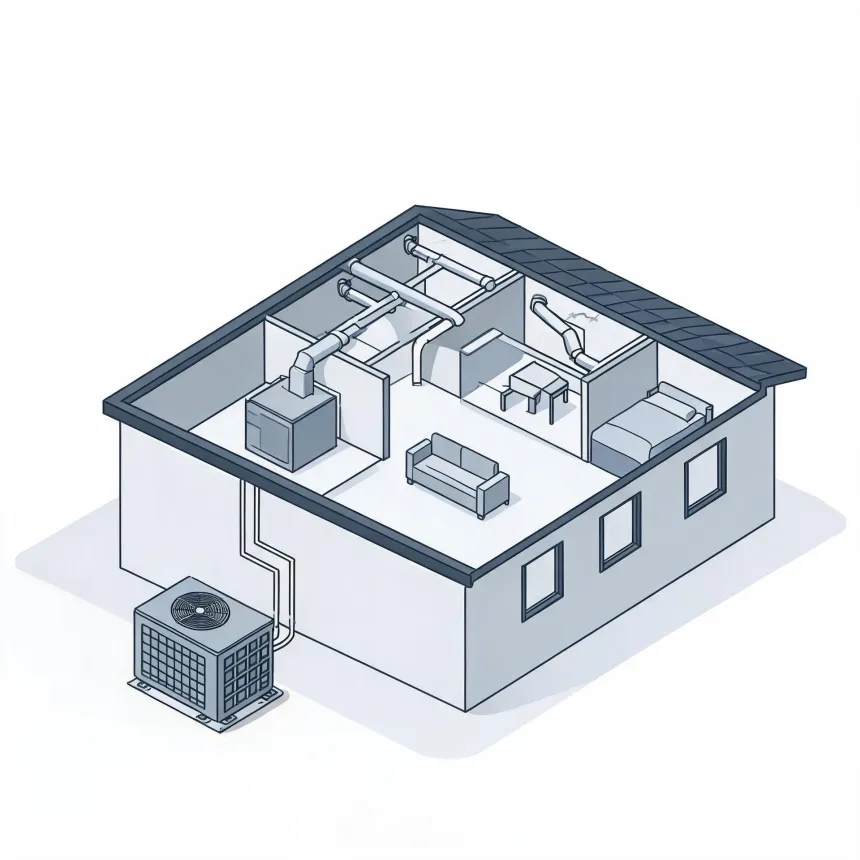
The outdoor unit and the indoor coil are the visible parts, but the labor is in the line set connecting them, the electrical circuit sized to the compressor's draw, and the refrigerant charge checked against the length of that line set. A duct system built for a furnace sometimes needs rework to move the lower-temperature air a heat pump supplies. Skipping any of that step to save time is where a new system ends up running poorly from day one.
The efficiency rating on a heat pump's label tells you how much heat it moves for the power it draws, nothing more. A higher rated unit pulls more heat out of cold outdoor air in winter and more heat out of the house in summer, using less electricity to do it than a lower rated one. That number is measured at specific conditions in a lab, so it won't match exactly what you see at home, but it holds up for comparing one unit against another. Two systems that look alike on the outside can land far apart on that rating depending on the compressor inside and how the coil is built. Chasing the highest number on the shelf isn't always the right call either, since a unit has to be sized to the house first. The rating tells you how well a correctly sized unit will run. It doesn't fix a unit that's the wrong size to begin with.
Griggs County falls in climate zone 6A, a cold zone with a long heating season under the 2021 energy code. Any split-system heat pump installed here, if manufactured from 2023 on, has to clear federal minimums built for that kind of load: at least 7.5 Btu of heat delivered per watt-hour of electricity over the winter, and at least 14.3 over the summer. Those numbers set the floor, not a target to aim for. A unit can't legally be sold here if it falls short of them. That narrows what a contractor can offer you, but it also means the starting point is already a system built to handle real cold, not a mild-climate model that happens to work most of the time. On top of the federal floor, there's a federal tax credit available for qualifying heat pump installations, which is worth asking about when you're comparing equipment.