






A grey residential air-conditioning condenser unit mounted on a concrete pad beside a house, photographed at sunset.

Heat Pump Installation in Carrington, ND

Tell us about the job

Takes about a minute. No obligation.

New system or replacementHeat PumpFoster County, ND
Step 1 of 2

What ZIP code is the job in?

Electricity in Foster County runs about 10.98 cents per kilowatt-hour, and that is cheap compared to most of the country. A heat pump that runs well here still costs less to operate than almost anywhere else it could be installed. But a heat pump works harder in Carrington than it would somewhere milder, pulling heat out of cold air for months at a stretch. How well the unit does that job, the compressor, the coil sizing, the refrigerant charge, decides how many kilowatt-hours it burns doing it. Low rates help, but they do not make up for a system that runs longer than it should to hit the same temperature.

9 months
September through May, your system heats
2 months
July through August, it cools
3°F
the average winter night it heats against
79°F
the average summer afternoon it cools against
Isometric line illustration of a cutaway single-story building showing interior rooms, ceiling ductwork, an indoor air handler, and an outdoor condenser unit connected by refrigerant lines.
Your system heats September through May and cools July through August.

NOAA nClimDiv, 1991–2020 normals

A heat pump in Foster County runs through blizzards, ice and long stretches of cold that push past what the unit was built to shrug off.

Sizing and installing it for this place matters more than it would somewhere milder, because this machine won't get an easy season to recover in.

Nine months of heat starts in September. Get it in before then.

Cooling runs July through August
Heat runs September through May
27 hail events from 2015 to 2024
Built for the House You HaveHalf the homes in Foster County were built in 1973 or earlier.

Foster County falls under zone 6A in the 2021 energy code, a cold, long-winter zone. Any heat pump installed here has to meet the federal minimum for that kind of equipment: at least 7.5 Btu of heat delivered per watt-hour of electricity over the winter, and at least 14.3 Btu removed per watt-hour over the summer. Those numbers set a floor, not a target. A unit built to just clear that floor will run longer through a Carrington winter than one built with room to spare. There is also a federal tax credit available for a qualifying system, separate from anything the climate zone requires.

Get the install right and the low rate is yours to keep

Sizing and installing the system right is what decides whether that low rate works for you or against you. Get the compressor, coil and charge matched to this house, and the install is the one part of the running cost you control before the first bill ever comes.

Find a contractor
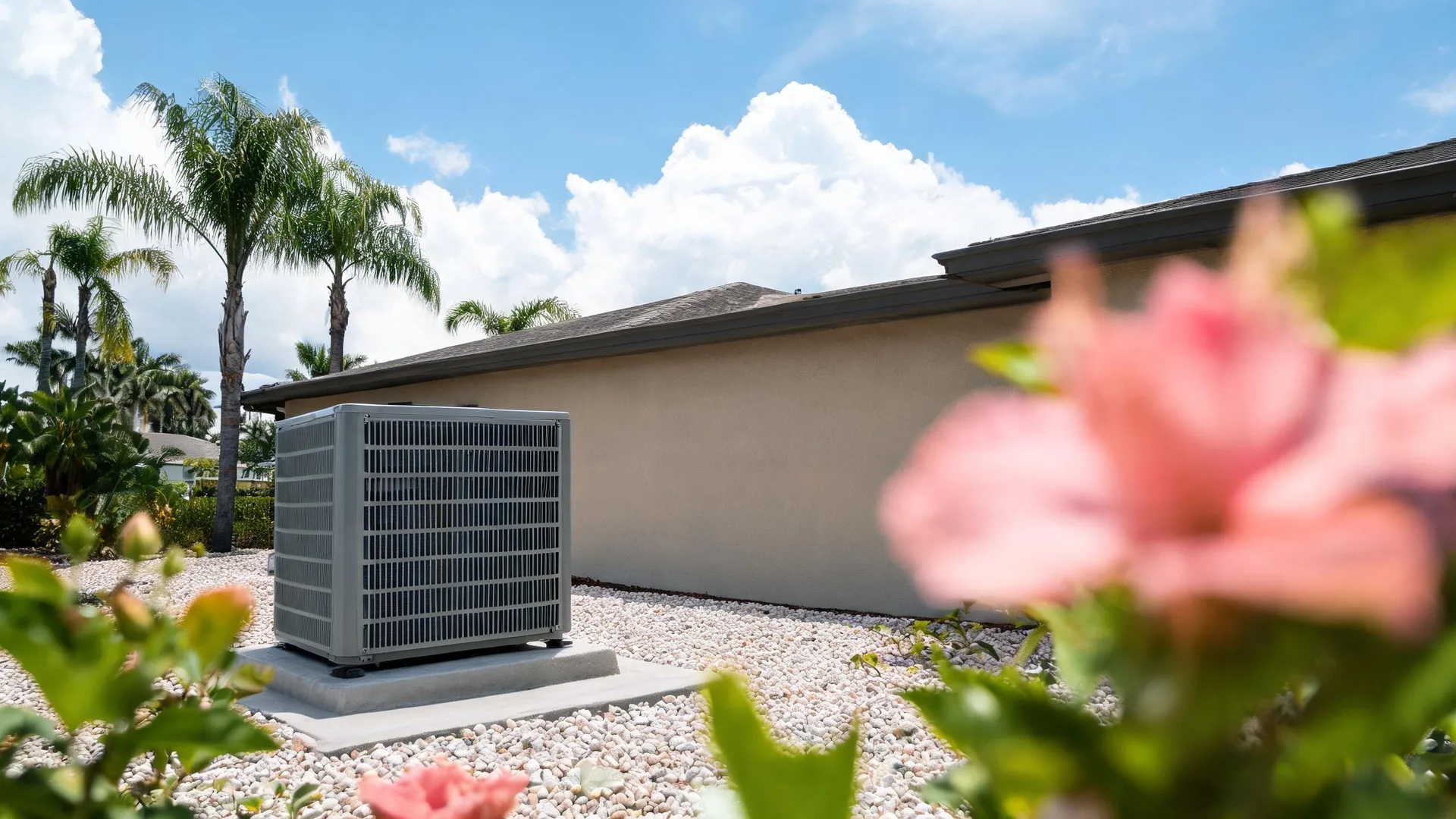
A gray heat pump outdoor unit mounted on a concrete pad next to the stone-accented exterior wall of a house.

Half These Homes Predate the Heat Pump

If this house dates to 1973 or earlier, the ductwork and panel were sized for whatever heated it then, not for a heat pump. Before the new unit goes in, have the contractor check duct sizing, the electrical panel, and where the line set will run. A system sized off a spec sheet without checking those can end up fighting the house it's installed in, and that shows up every month it runs.

What the Rating Actually Measures

The efficiency rating on a heat pump's label is a seasonal average, not a guarantee for any single day. It's measured by running the unit across a range of outdoor temperatures and averaging the heat moved per unit of electricity used. On a mild day the unit will beat its rating. On the coldest days it will fall well short, because the colder the air outside, the harder the compressor has to work to pull heat from it. The number on the label tells you how the system performs over a full season, not how it performs the night it matters most.
Two Units, Same Rating, Different Bills

Two heat pumps can carry the same rating and still cost different amounts to run. The rating is tested on the equipment alone, not on the ductwork, the refrigerant charge, or how well the unit is matched to the space it's heating. A correctly sized unit with a clean charge will hit close to its rated efficiency. The same unit installed with a charge that's off, or ducts too small to move the air it produces, will burn more power to do the same job no matter what the label says. The rating describes the equipment. The installation decides whether the house actually gets it.

What drives the cost of putting a heat pump in isn't the box on the truck. It's labor and what the house needs to make that box work. Running a new line set, upsizing ducts that are too small, adding circuits at the panel, these take time and material before the unit itself does anything. A straightforward swap, same location, same ductwork, same electrical, costs less because there's less to touch. The harder the house makes it to get refrigerant lines run and air moved at the right volume, the more the install costs, regardless of which unit gets set down at the end of the job.

Install day starts with the outdoor unit and the indoor coil, and most of the work happens between them. The line set gets run first, copper tubing that carries refrigerant from one to the other, and every joint along that run gets brazed, not just connected, because a fitting that only seats loosely will leak refrigerant slowly for years instead of failing outright. Once the lines are in, the system gets pulled down into a vacuum to pull out moisture and air, and it has to hold that vacuum for a while before anyone's satisfied it's tight. Only then does refrigerant go in, weighed in by the pound and ounce against what the manufacturer specifies for that line length, because too little or too much charge is the single most common reason a new heat pump underperforms its rating. The electrical hookup and startup checks come last, where the contractor confirms the compressor is drawing the right current and the system actually satisfies a thermostat call in both directions, heat and cool, before calling the job done.