A grey heat pump outdoor unit mounted on a concrete pad in a suburban backyard, with a single-storey house visible behind it.

Heat Pump Installation in Beulah, ND

Tell us about the job

Takes about a minute. No obligation.

New system or replacementHeat PumpMercer County, ND
Step 1 of 2

What ZIP code is the job in?

Most homes here run on propane

Propane heats 58.4% of homes in Mercer County, the kind delivered to a tank and stored on the property. Electricity comes next at 36.9%. A furnace burning propane is what most heating contractors around Beulah are used to servicing.

A heat pump changes what that tank is for

Installing a heat pump here does not have to mean tearing out the propane furnace. Many setups pair the two, with the heat pump handling milder days and the furnace taking over when it gets cold enough that propane heats the house more efficiently. That decision depends on your home and what a contractor finds when they look at it.

9 months
September through May, your system heats
2 months
July through August, it cools
6°F
the average winter night it heats against
80°F
the average summer afternoon it cools against
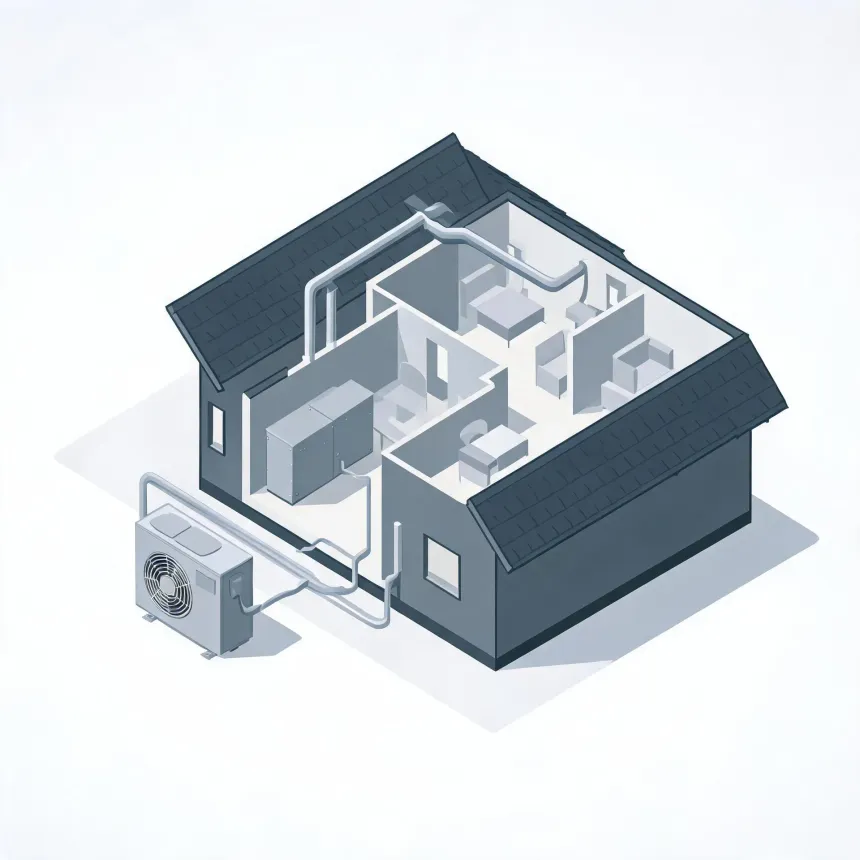
Isometric grayscale illustration of a cutaway house showing interior rooms, ductwork and an indoor air handler connected by lines to an outdoor condenser unit on the ground outside.
Your system heats September through May and cools July through August.

NOAA nClimDiv, 1991–2020 normals

The rating on a heat pump tells you how much heat it moves for the power it uses, not how much heat it can make.

Compare that rating against a unit sized for this house, not just the number on the sticker.

A standard heat pump sized right is all this climate asks for

Power costs 11.51 cents a kWh statewide
41 hail events from 2015 to 2024
24 winter storms from 2015 to 2024
Nine months of heat a yearHeat here runs September through May, so August is the month to get a heat pump in.

A heat pump sized too big cycles on, satisfies the thermostat fast, and shuts off before it finishes pulling moisture out of the air or settling heat evenly through the rooms. One sized too small runs constantly on the coldest days and still falls behind. Getting it right starts with a load calculation, a room by room look at the walls, windows, ceiling height and how much sun the house gets, not a guess based on the size of the old furnace. A contractor measures the house as it stands, because the unit that was right for it years ago may not match what's been added, insulated or replaced since. The outdoor unit and the indoor coil have to be matched to each other too, since pairing mismatched sizes undoes the work of sizing either one correctly.

Go with the standard fit

A standard size and efficiency fit fine here. There's no local reason to go bigger or pricier.

Find a contractor
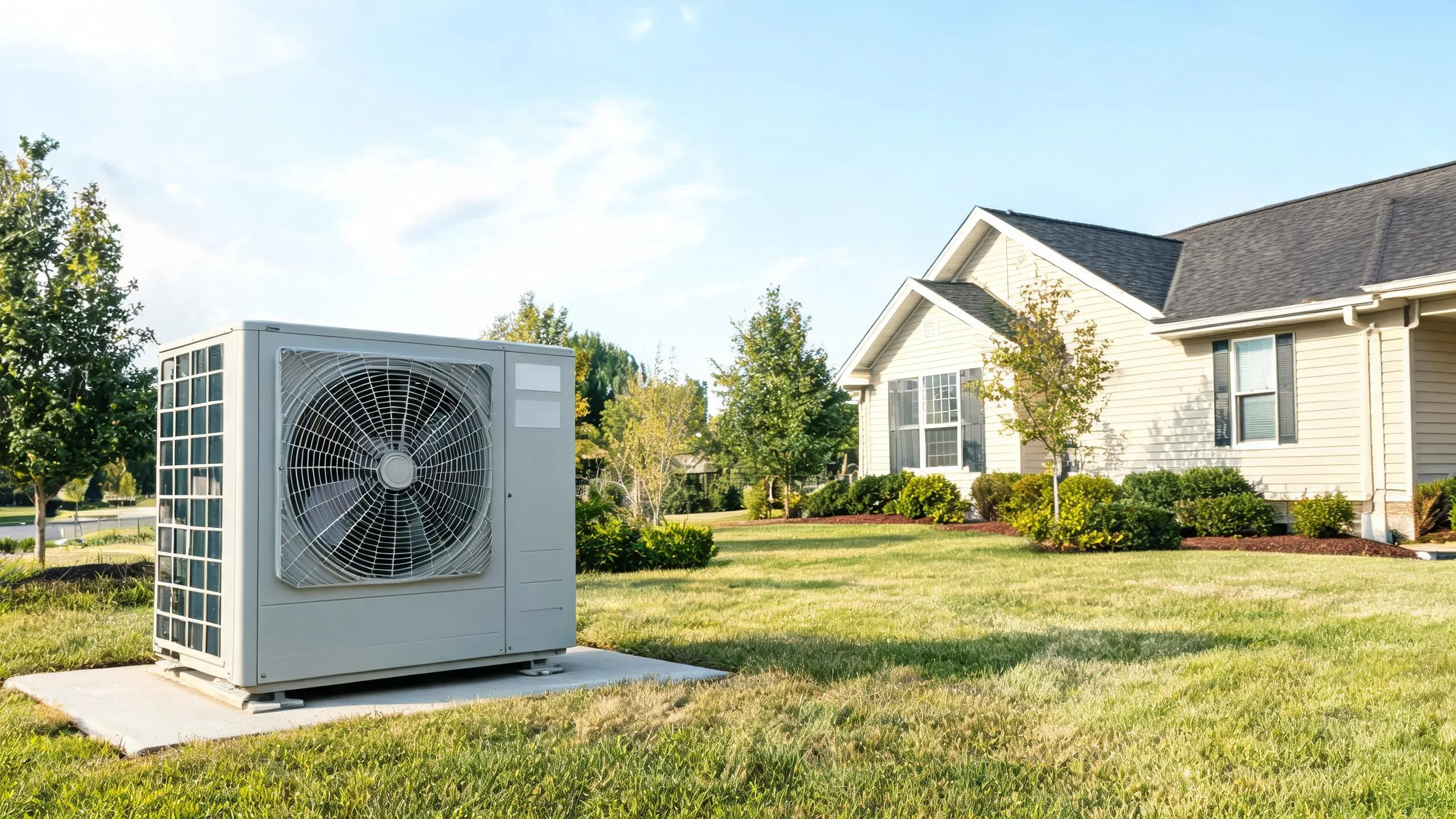
A gray heat pump outdoor unit mounted on a concrete pad next to a residential house with lap siding and stone accents.

What to ask before you pick one

A heat pump runs most of the year, not just the coldest stretch, so the parts that matter are the ones that run every time it cycles on. Ask what compressor is inside it and how that manufacturer's track record looks over the long haul, not just the warranty length. Ask about the defrost cycle, since a heat pump in a cold climate reverses itself periodically to melt frost off the outdoor coil, and how that's controlled affects comfort on raw days. Ask whether the system has a backup heat source built in or paired with it, and how the controls decide when to switch over. Ask who services the brand locally, because a unit that sits unused by nearby contractors is a harder one to get parts for later. The sticker numbers matter less than whether the installer stands behind the sizing and the setup.

The propane furnace doesn't have to go anywhere

When a heat pump pairs with the existing furnace instead of replacing it, the furnace stays put as backup. It sits idle more than it used to. It still needs the same yearly look at the burner, the venting, the ignition. A part that runs less often is not a part that stops needing service.

An old furnace running alone is a different story

If the plan is to take the propane furnace out entirely, whoever pulls it also has to deal with the tank and the gas line that fed it. That line gets capped off. The flue the furnace used to vent through either comes out or gets sealed, so nothing drafts through an opening that no longer leads anywhere.

The number on the quote is one piece of equipment plus the work to put it in, and the work usually moves the number more than the unit does. Running new wiring for a larger circuit costs more than reusing what's there. Setting the outdoor unit on an existing pad is simpler than pouring a new one. If ductwork already fits the airflow a heat pump needs, that's one less thing to touch. If it doesn't, resizing or adding a return can be its own job on top of the install. Pairing with an existing furnace instead of ripping it out changes the controls and wiring needed to make both talk to each other, which is its own line item. None of that shows up on the sticker price of the unit itself, and it's worth asking a contractor to break out labor from equipment so you can see what's driving the total.