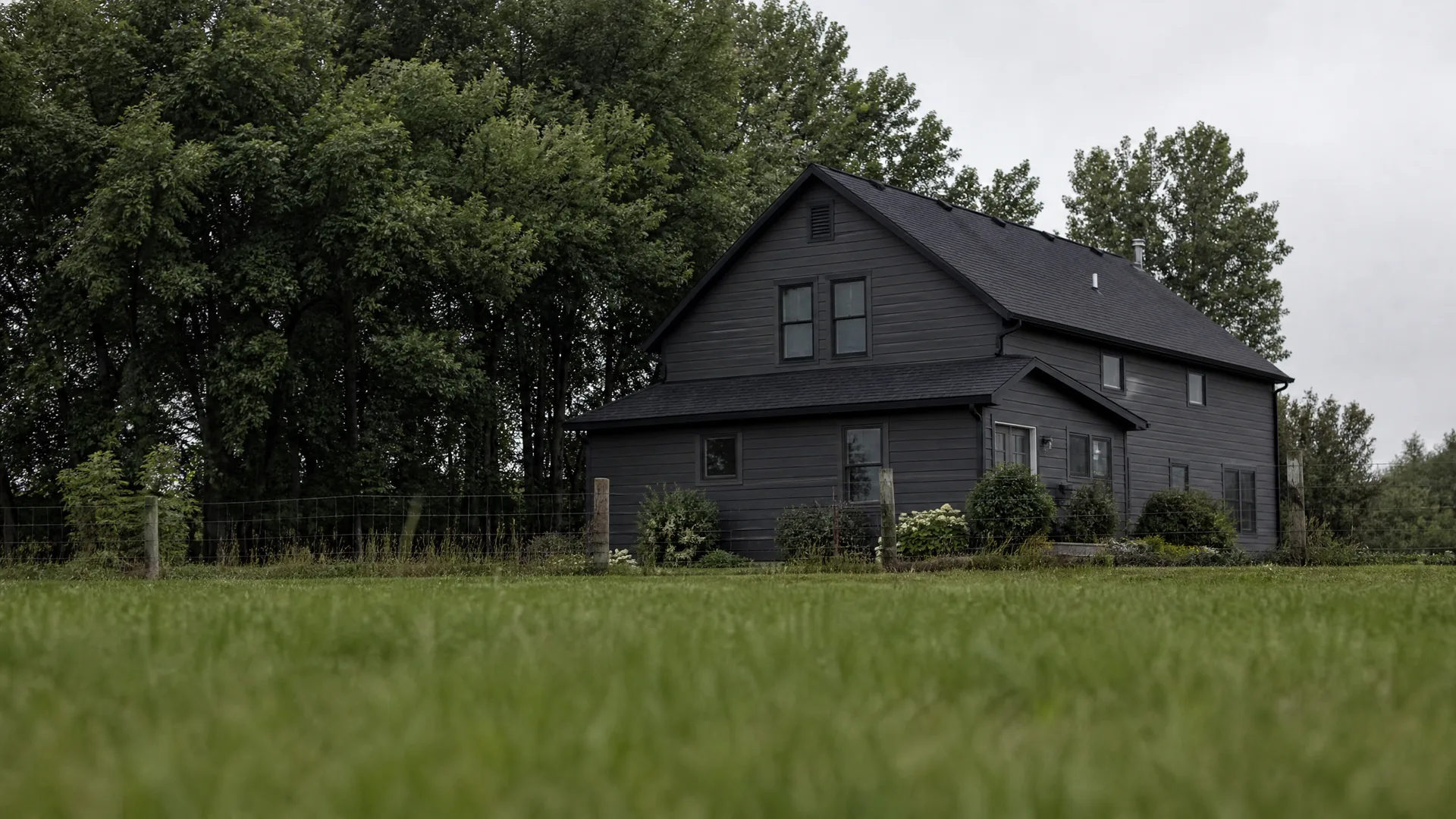





A black-painted two-story house with a steep gabled roof stands behind a wire fence and shrubs, framed by deciduous trees under an overcast sky, with a blurred green grass field in the foreground.

Furnace Repair in Center, ND

Tell us about the job

Takes about a minute. No obligation.

RepairFurnace or heatingOliver County, ND
Step 1 of 2

What ZIP code is the job in?

Furnaces in Oliver County run about nine months out of the year, from September through May. That's most of the calendar spent cycling on and off to keep up with the cold. A furnace in a milder state might rest through half the year. Yours doesn't get that break. All those extra months of runtime mean the igniter, the blower motor and the heat exchanger see more cycles than they would almost anywhere else, and more cycles is what wears a part down. When something acts up here, it's often just the machine catching up to how hard it's been working. Worth having someone check it properly rather than guess.

9 months
September through May, your furnace is on duty
6°F
the average winter night it heats against
26 winter storms
in ten years, the nights a failure hurts most
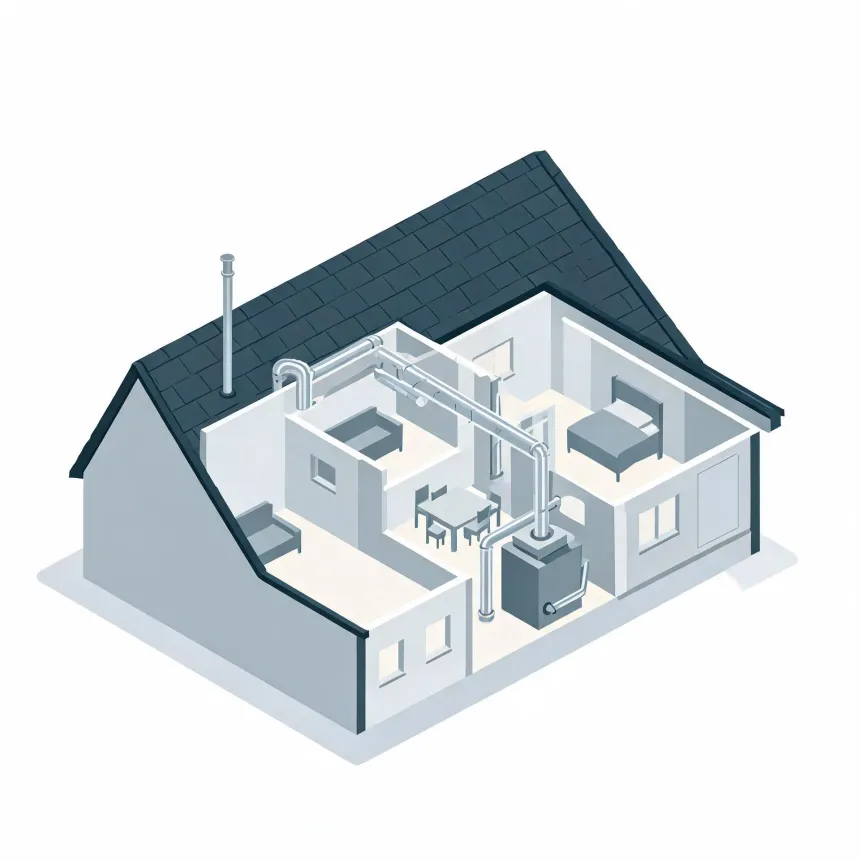
Isometric cutaway illustration of a single-story house with a dark shingled roof, showing interior rooms with furniture and a ducted furnace unit connected to metal ductwork and a roof flue.
Your furnace works hardest from November through March.

NOAA nClimDiv, 1991–2020 normals

A furnace that short cycles, turning off before the room reaches temperature, is losing its flame too early or sensing heat it shouldn't.

That pattern burns out the parts that start the fire faster than normal use ever would.

Propane runs $17.33 per million Btu here, and a struggling furnace burns through it every day it's not fixed

Climate zone 6A
Heat runs September through May
Winter nights average 6°F
September Is When It Finds the Weak PartHeat starts running in Oliver County in September, and whatever was already worn shows up fast.

A furnace that's lost efficiency doesn't use less propane, it uses more, because it has to run longer to put out the same heat. If yours is short cycling or struggling to keep up, every one of those extra cycles is burning fuel at $17.33 per million Btu with less to show for it. That cost doesn't wait for a convenient time. It shows up on the next delivery and the one after that, for as long as the problem sits there. Getting a contractor out to look at it now stops the bleeding sooner rather than later.

Nine Months of Runtime Catches Up With a Furnace

A furnace here doesn't get much of a break between September and May. That kind of runtime is what's likely behind whatever it's doing right now. A contractor can tell you which part gave out and whether it's a quick fix or something bigger, instead of you guessing while it keeps running rough.

Find a contractor
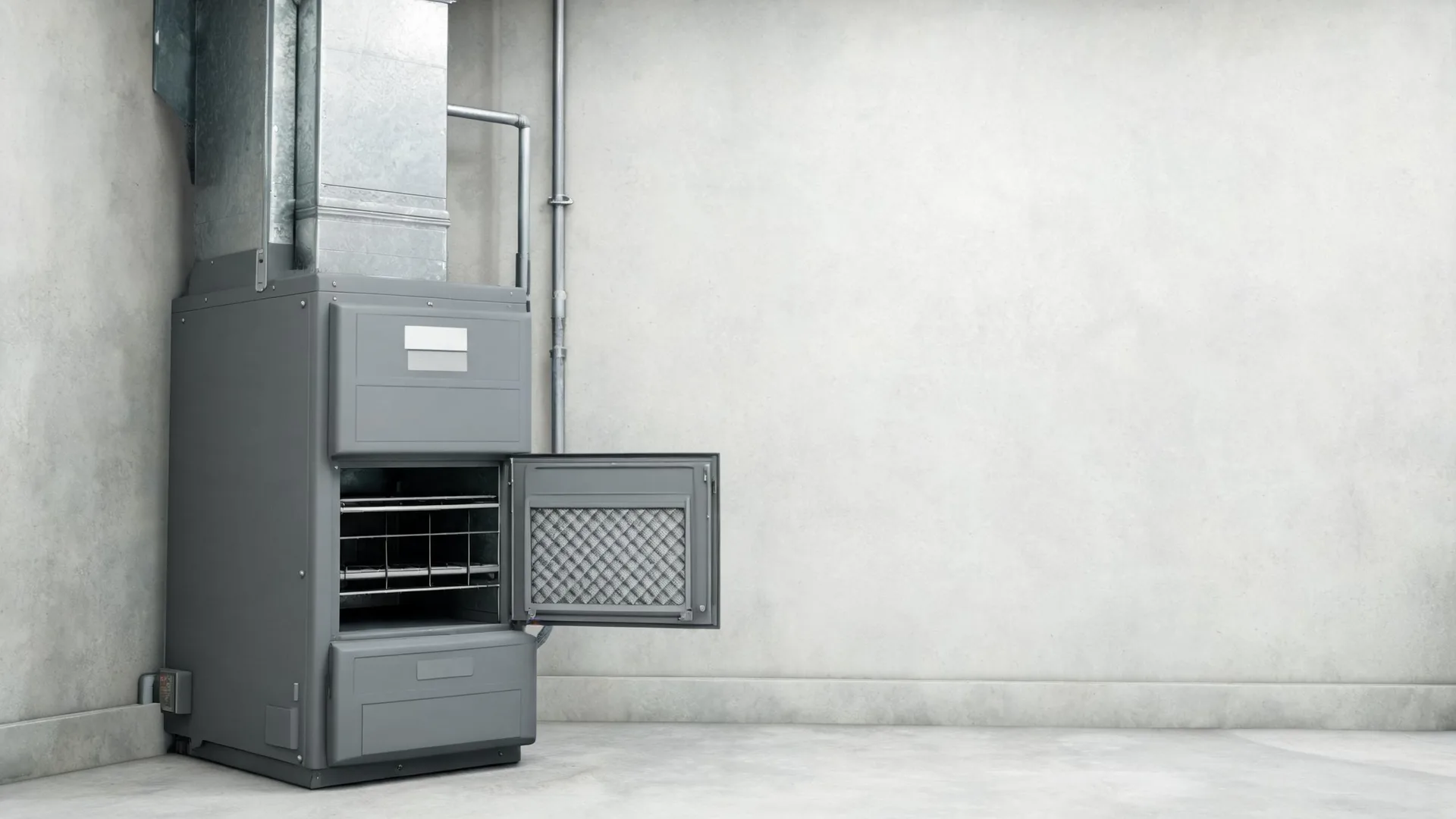
A gray residential gas furnace installed in an unfinished basement, connected to sheet-metal ductwork and PVC pipes.

What Actually Wears Out First

Furnaces fail from a short list of causes, and most of them trace back to the same handful of parts. The igniter is usually first. It heats up to light the gas every time the burner fires, and that heating and cooling, over and over, is what eventually cracks it. A dirty flame sensor is close behind. It coats over with a thin layer of residue from normal combustion, stops sensing the flame, and shuts the burner down as a safety measure even though nothing is actually wrong. The blower motor wears through its bearings after enough hours of spinning and starts making a grinding or squealing sound before it quits. The draft inducer motor fails the same way. Capacitors weaken with age and stop giving the motors the jolt they need to start. The heat exchanger is the part nobody wants to hear about, because once it cracks it has to be replaced, not patched, and a cracked exchanger is a safety issue, not a comfort one. A clogged filter doesn't break anything by itself, but it chokes airflow, makes the furnace run hotter than it should, and pushes every other part toward early failure. Most of these show warning signs before they fail outright: a longer delay before ignition, a motor that hesitates to start, a burner that cycles more than it used to. Catching one of those early is usually the difference between a repair and a replacement.

What's Safe to Check Yourself

Look at the filter first and hold it up to a light. If you can't see through it, swap it. A clogged filter starves the burner of air and can push the furnace into shutting itself off. Check that the thermostat is set to heat and the temperature is actually set above room temperature, since a bumped setting looks like a broken furnace but isn't one. Look at the vent hood or exhaust outside and make sure nothing is blocking it: no snow, no debris. Check that the switch on the furnace itself, which looks like a light switch, hasn't been bumped off. If the unit has a reset button, you can press it once. If it trips again, stop there.

What to Leave for the Contractor

Anything involving the gas line, the burner assembly or the flame itself isn't a homeowner job, and that's true no matter how simple it looks. A furnace that smells like gas, trips its breaker repeatedly, or shuts off on a safety lockout needs a trained eye, because that lockout exists to stop something worse from happening. Taking the cabinet apart to look at the igniter or the heat exchanger risks missing a crack that only shows under the right light and the right test. If the checks above don't fix it, the furnace is telling you the problem is past what a homeowner can safely chase down.

A gray forced-air furnace with metal ductwork stands in an unfinished basement with exposed wooden joists, concrete walls, and a single hanging light bulb.

A new furnace would cut about $220 a year off heating for a typical Oliver County home.

  • A new high-efficiency furnace$880 a year
  • An older furnace$1,100 a year

Estimates for a typical Oliver County home, compared with an older unit built to the previous federal minimum, from EIA household energy data, North Dakota fuel prices and NOAA climate normals. Your home will differ.

Repair makes sense when one part has failed and the heat exchanger is sound.

Replacement makes sense when the heat exchanger is cracked or the furnace keeps needing parts.

Repair and replacement come down to what's actually wrong and what else is close behind it. A cracked heat exchanger means replacement, full stop, because it can't be welded or patched safely. A bad igniter or a weak capacitor is a straightforward repair, since those parts are made to be swapped and don't say anything about the rest of the furnace. The harder call is a furnace that's had two or three different repairs in a short stretch. That pattern usually means the parts around the one just fixed are wearing out too, not that the repairs were wrong. A furnace that's old enough that its parts are getting hard to find is worth weighing against one that still has common, available parts. None of this is a decision to make from a single symptom. It's worth asking the contractor what they found, not just what they fixed.