Propane here runs $17.33 per million Btu
North Dakota households paid that much for propane in 2024. A furnace that has to work harder to put out the same heat burns through more of it, and that difference shows up on the tank.
Takes about a minute. No obligation.
North Dakota households paid that much for propane in 2024. A furnace that has to work harder to put out the same heat burns through more of it, and that difference shows up on the tank.
A clogged filter, a dirty flame sensor or a cracked heat exchanger all make a furnace run longer to heat the same house. In a place where the furnace runs most of the year, that extra runtime adds up fast.
Furnaces in Oliver County run nine months out of the year, September through May.
A part that's starting to wear out will show it almost as soon as the season starts.


Most houses in Oliver County heat with propane, almost two out of three. Electricity comes in a distant second. A propane furnace burns fuel at a burner, and that flame has to be shaped right and vented right to do its job without waste. That's different from an electric furnace, where there's no flame to check and no exhaust to clear. On a propane system, the burner, the venting and the safety controls all want a look, not just a new filter. Skip that and the furnace can still run; it just costs more to get the same heat out of it.
A tune-up gets the burner, the flame sensor and the venting checked before propane prices make a hard-working furnace expensive to ignore. That's what keeps a furnace from burning more than it should.
Find a contractor
Nine months of runtime is a lot of hours on an igniter or a blower motor. Have the furnace looked at before September, while there's still time to order a part if one's failing. Once the season starts, that same worn part is heating the house every day instead of waiting on a bench.
The heat exchanger sits inside the cabinet where no one looks during the season. A hairline crack in it won't smoke or smell most of the time, but it lets combustion gas mix with the air the blower pushes through the house. A tune-up means pulling the panel and checking that exchanger directly, not guessing from how the furnace sounds or runs.
A healthy burner flame is steady and mostly blue. A flame that's lazy, yellow-tipped or flickering means the burner isn't getting the air it needs, and that furnace is burning more fuel than it should to make the same heat. From the living room, both flames sound the same. Only pulling the burner and looking tells you which one you've got.
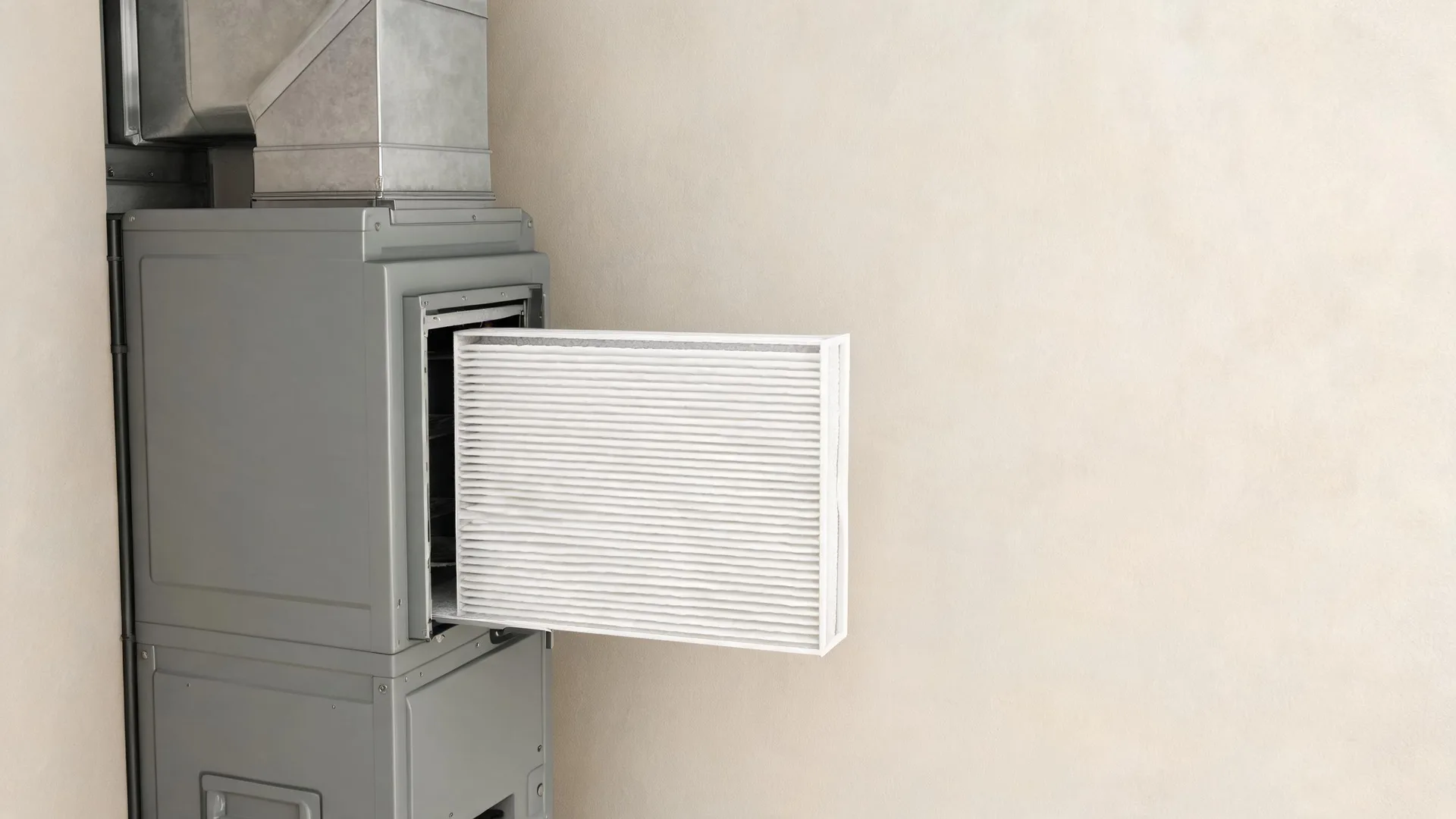
Between visits, the filter is the one thing worth checking yourself. Pull it out, hold it up to a light, and if you can't see through it, swap it. A filter clogged with dust makes the blower pull harder to move the same air, and that strain carries right through to the burner. Keep anything flammable away from the cabinet, and keep boxes or stored items from blocking the return air grille. If the furnace vents out the side wall, walk out after a snowfall and make sure that vent isn't covered or packed in. Past that, leave the cabinet closed. The burner, the flame sensor and the heat exchanger aren't something to check yourself, and taking the panel off between visits does more harm than good.
A tune-up starts before the panel even comes off. A tech checks the thermostat calls for heat properly and that the furnace responds right away, no long delay before the burner lights. The igniter gets tested under power, since a weak one will light the burner most of the time but not always, and that's the kind of failure that shows up as a no-heat call later. The blower wheel gets checked for dust buildup on the blades, which throws it off balance and wears the motor bearing faster than it should. Belts aren't part of this on most furnaces built in the last few decades, since the blower motor drives the wheel directly, but the motor mounts and the electrical connections still get checked for looseness. The gas pressure gets tested at the manifold, because too high or too low both waste fuel and wear the burner unevenly. None of this is guesswork. Each check has a pass or fail, and a tech doing it right tells you which parts passed and which one is starting to go.