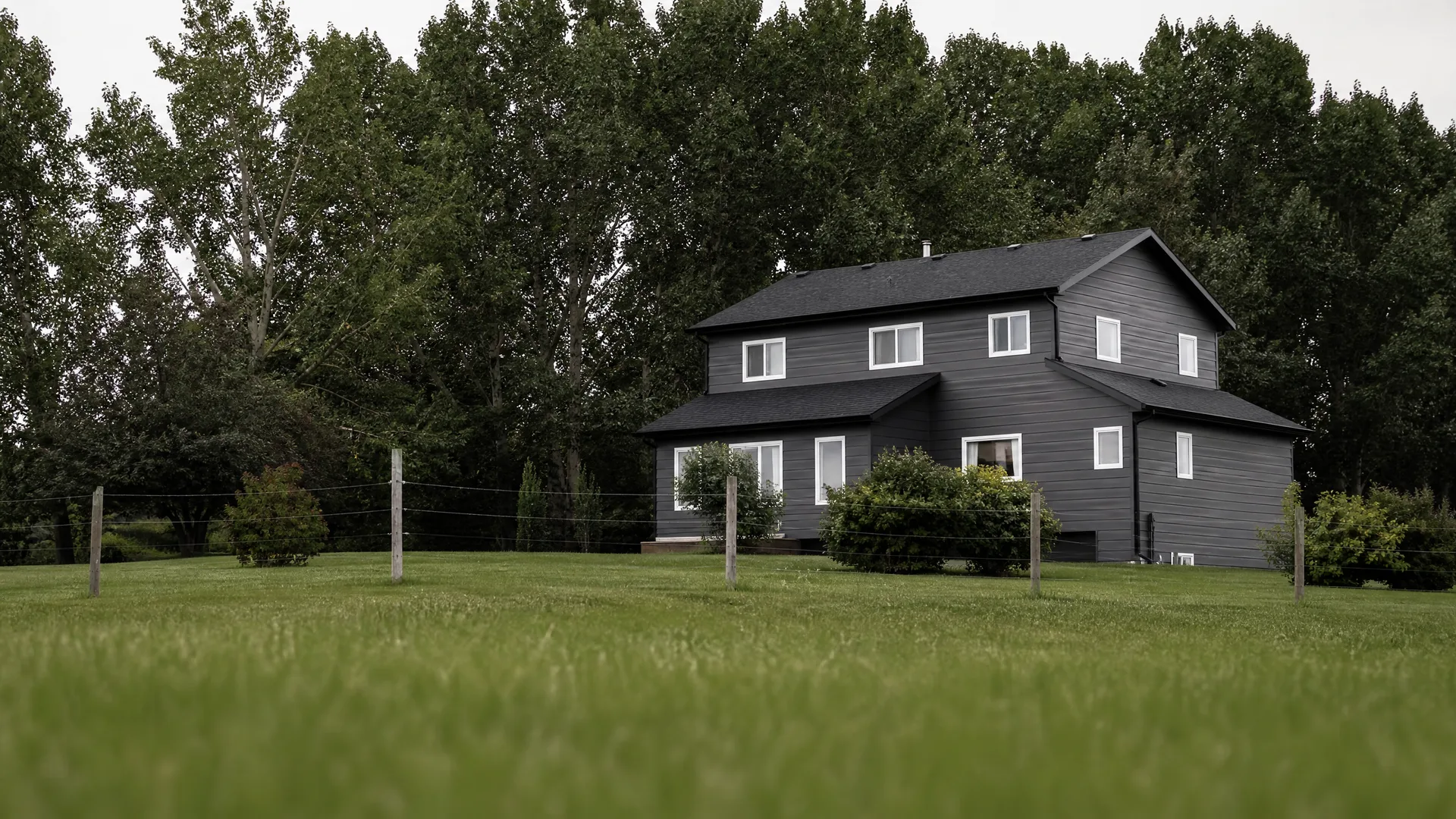





A two-story black house with white-trimmed windows stands behind a wire fence and a mown grass field, backed by tall deciduous trees under an overcast sky.

Furnace Installation in Center, ND

Tell us about the job

Takes about a minute. No obligation.

New system or replacementFurnace or heatingOliver County, ND
Step 1 of 2

What ZIP code is the job in?

Propane ran $17.33 per million Btu in North Dakota in 2024. That is the fuel most furnaces around Center burn, and it is not a cheap one. A furnace that wastes heat up the flue is burning dollars at that rate every time it fires. Here, with a hard winter putting real hours on the system, a few points of efficiency are not academic. They show up on the propane bill before the season is over.

9 months
September through May, your furnace is on duty
6°F
the average winter night it heats against
80% AFUE
the federal minimum any new unit must meet
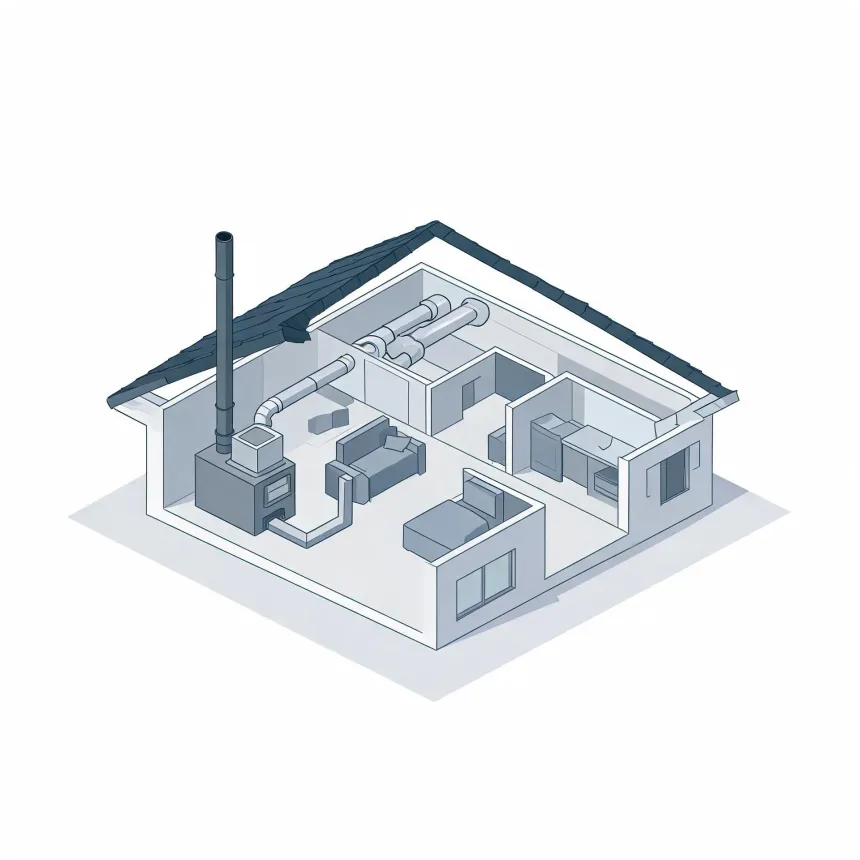
Isometric line illustration of a cutaway single-story house showing interior rooms with furniture, a furnace unit with a tall flue pipe, and connected ductwork running under the pitched roof.
Your furnace works hardest from November through March.

NOAA nClimDiv, 1991–2020 normals

Heat goes on in September around Center.

Get a new furnace in before August ends and nobody's rushing the job in the cold.

Nine months of heat a year means this furnace earns its keep

Heat runs September through May
Winter nights average 6°F
Climate zone 6A
Most furnaces here burn propane62.6% of homes in Oliver County heat with it, more than any other fuel

Oliver County falls under zone 6A in the 2021 energy code, a cold climate classification with a long heating season. Any furnace installed here has to meet that standard. Since November 2015, federal rules have required gas furnaces to turn at least 80 percent of the fuel they burn into heat over the season. That is the floor, not a target to aim for. A unit built to clear that minimum by a wide margin will cost less to run through a Center winter than one that just squeaks by. The floor itself is set to rise. Furnaces built on or after December 18, 2028 will need to hit 95 percent. Installing above today's minimum now means not having to think about that line later.

The efficiency rating is the number that follows you home

Propane here runs $17.33 per million Btu, and this furnace will burn it for years. When you're choosing between units, put the efficiency rating ahead of the sticker price. That's the number that decides what every winter after this one costs.

Find a contractor
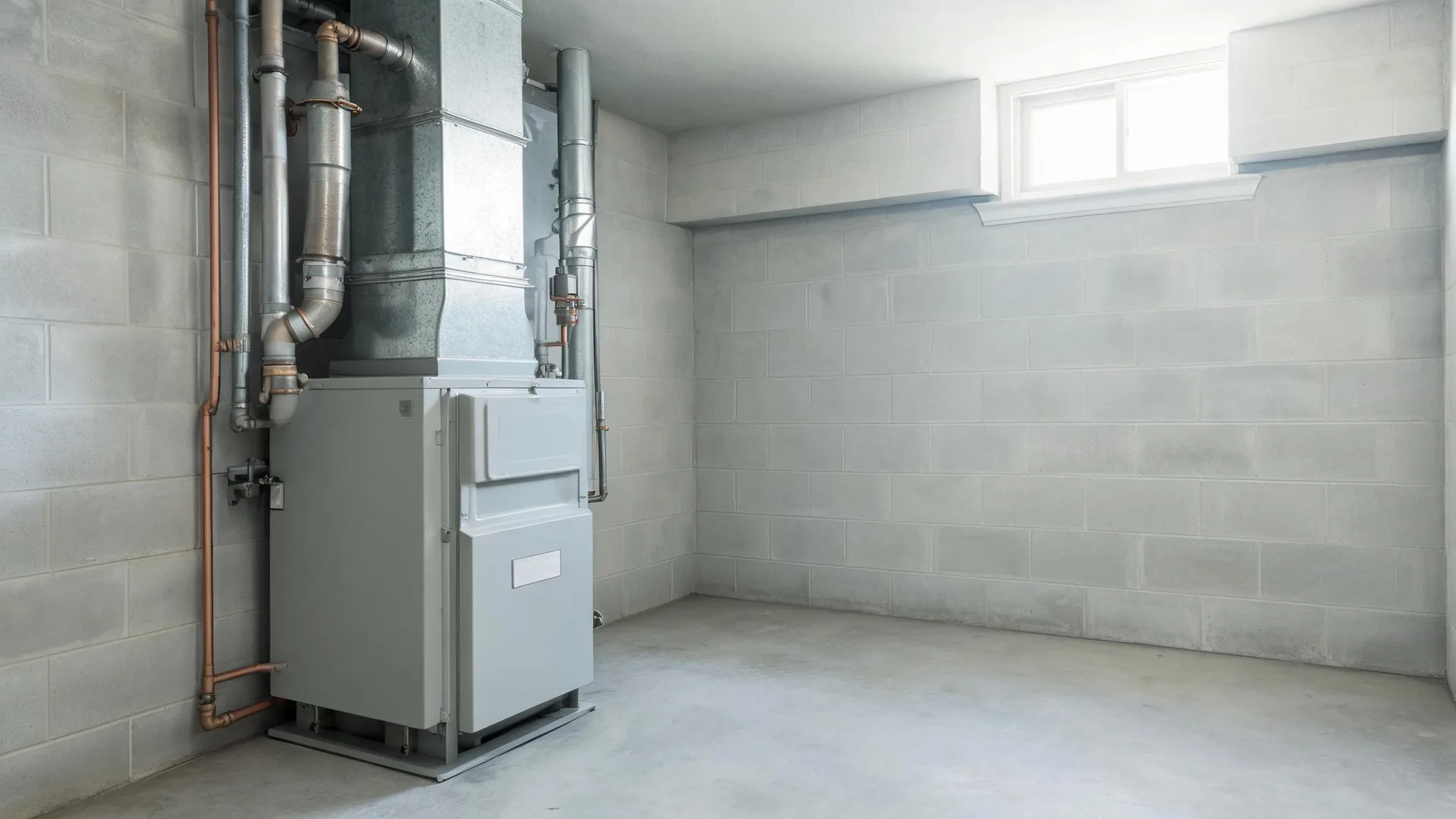
A gray gas furnace with attached ductwork and piping installed in an unfinished concrete basement.

Nine months of runtime means sizing isn't a detail here

Nine months of heat a year wears on a furnace the way a short mild winter never would. Pick a unit sized for this house, not the smallest one that fits the budget or the biggest one on the lot. Oversized units short cycle, turning on and off instead of running steady, and that extra cycling wears parts faster than the long runtime itself. A contractor sizing the job should be running a load calculation for this house, not going by the square footage of the last one. Get that number right and the furnace spends its nine months working the way it was built to, instead of fighting its own size the whole time.

The cabinet costs less than what's inside it

A furnace is a box, a burner, a heat exchanger and a blower. The box is cheap to make. What drives the price is the heat exchanger design, the stage of the burner and whether the blower is a fixed-speed motor or one that modulates. A single-stage furnace fires at one rate, full blast, every time it runs. A two-stage or modulating unit can hold a lower flame most of the time and only ramp up when it's truly cold out. That second kind costs more to build, so it costs more to buy.

The install is part of the price, not an add-on

Pulling the old furnace and setting the new one is the easy part. What takes the time is matching the venting to the new unit, since a high-efficiency furnace vents differently than an older one and may need different pipe run entirely. The ductwork has to be checked too. A furnace sized right for the house still won't heat evenly if the ducts feeding it are too small or leaking at the joints. Any of that work adds labor before the furnace even fires for the first time.

A gray forced-air furnace with ductwork stands in an unfinished concrete basement surrounded by storage items and clutter.

A high-efficiency propane furnace would save about $190 a year to run in Oliver County compared with a propane furnace.

  • A high-efficiency propane furnace$880 a year
  • A propane furnace$1,070 a year

Estimates for a typical Oliver County home, from EIA household energy data, North Dakota fuel prices and NOAA climate normals. Your home will differ.

The old furnace comes out first, along with the venting that served it, since a new unit almost never reuses the same setup. A high-efficiency furnace condenses exhaust gas into water, so it vents through PVC pipe instead of a metal flue, and that pipe has to run to someplace outside, sometimes through a wall that never had a penetration before. The gas line gets checked next, for the right size and a sound connection, before anyone opens the valve. Setting the cabinet and bolting the ductwork to it is straightforward work. Wiring the thermostat and control board takes more care, since a modulating furnace reads signals a single-stage one never used. Once it's buttoned up, the furnace gets fired and run through its paces, flame sensed, pressures checked, temperature rise measured across the heat exchanger. A furnace that passes that test on installation day is one that was put together right, not just one that turns on.