Profile view of a bearded man wearing a dark baseball cap and a dark gray T-shirt against a plain off-white background.

Repair or replace a gas furnace in Grafton, ND

New system or replacementFurnace or heatingWalsh County, ND
Step 1 of 2

What ZIP code is the job in?

Whether to repair or replace your furnace usually comes down to its age and what's failing. If it's a cracked heat exchanger, the blower motor, or the control board on a furnace that's handled many Grafton winters already, replacing it makes more sense than sinking money into a repair. A failed igniter or flame sensor on a furnace that's otherwise sound is a different story, that's a straightforward fix. Walsh County winters run long and cold, and most homes here heat with gas, so when a furnace quits in January there isn't much room to wait and see. A furnace that's struggling to keep up, short cycling, or running up gas use without explanation is telling you something even before it fails outright. A licensed local contractor who works on these systems all winter can look at yours and tell you straight whether it's worth fixing or time to put in a new one.

A smiling woman with long dark hair in a gray sweater sits at a white stone counter with a glass of white wine, with a kitchen, fireplace and sofa visible behind her.
A smiling woman with dark hair in a cream sweater sits at a marble table with a glass of red wine, with a lit lamp, sofa, fireplace and kitchen counter behind her.
A woman in a cream sweater laughs while seated at a marble countertop with a glass of red wine, with a dimly lit living room and sofa behind her.
A woman in a beige turtleneck sweater with her hair up sits laughing and looking to the side at a white marble table with a glass of red wine, in a dimly lit interior with a lamp and seating area behind her.

When repair is the right call

A furnace that's otherwise sound and just lost an igniter, a flame sensor, or a draft inducer is worth fixing. Those parts fail on their own regardless of the furnace's age, and swapping one out doesn't tell you anything about the rest of the unit. If the heat exchanger is still good and the blower runs fine, a repair gets you through the rest of a Walsh County winter without putting money into a cabinet that still has years left in it. A contractor who services furnaces around Grafton every winter can tell you fast whether that's what you're looking at.


When replacing makes more sense

A cracked heat exchanger isn't a part you patch. It's the one piece that separates combustion gas from the air moving through your house, and once it's split, the furnace needs to come out. Same logic applies to a control board failure on an old unit, or a blower motor going out on a furnace that's already worked through fifteen or more Grafton winters. At that point you're not fixing a furnace, you're keeping an old one alive one part at a time, and the next failure is already waiting somewhere else in the cabinet.

What does a Grafton winter actually ask of your furnace?

  • Winter nights average 1°F

    Nights this cold mean your furnace runs flat out for hours at a time, all winter long. A furnace near the end of its life struggles to keep up on nights like that.

  • Heat runs September through May

    Nine months of runtime a year wears parts down faster than a furnace built for occasional use can handle. That's most of the year your system can't just sit idle.

  • 40.4% of homes heat with gas

    With gas heating more homes here than any other fuel, parts suppliers and contractors in the area stock and service gas furnaces as routine work, not a special order.

NOAA nClimDiv 1991-2020 · ACS 2020-2024

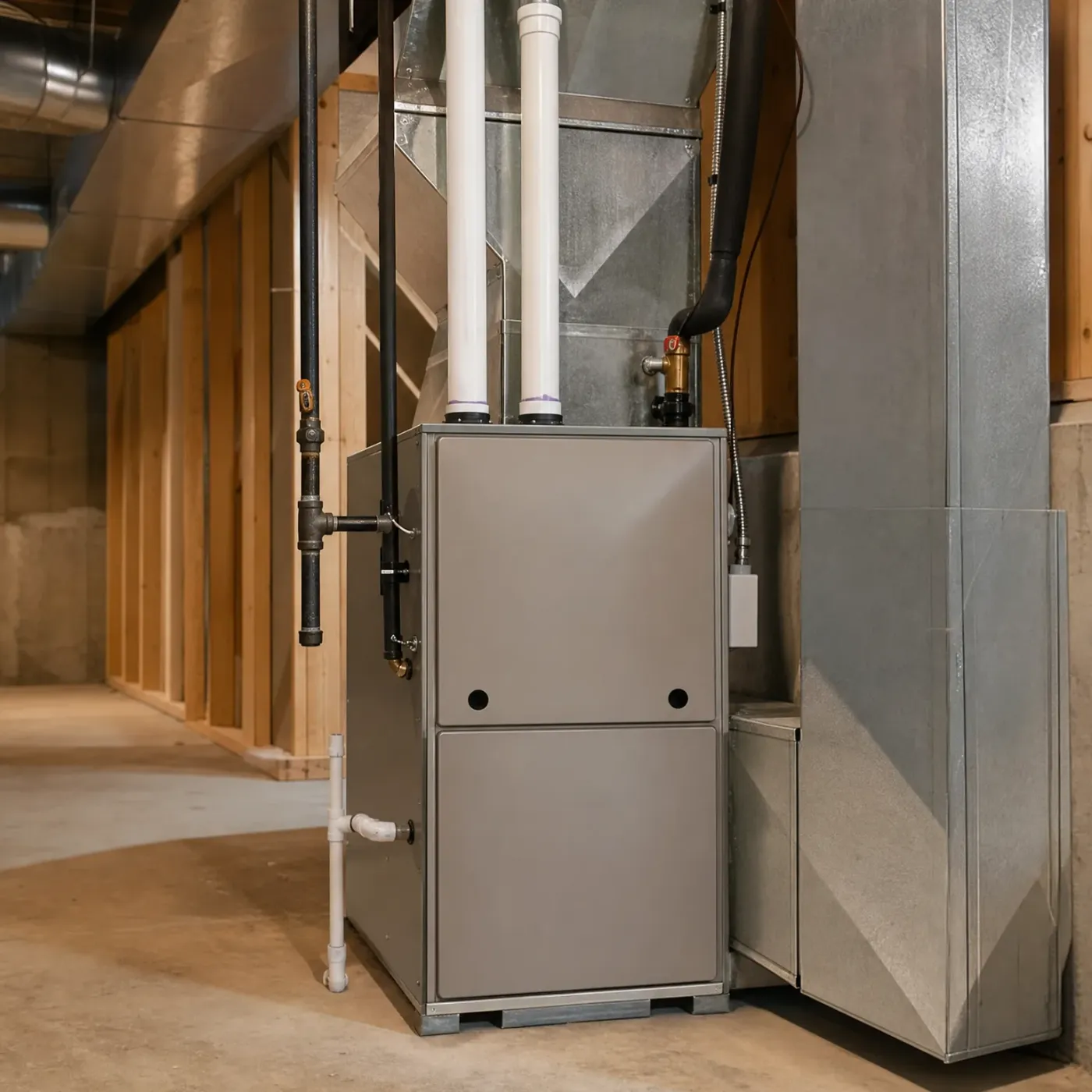
A gray high-efficiency furnace in a basement with PVC venting pipes, a yellow gas line, metal ductwork, concrete walls and floor, and a wood-framed stairway at left.

Furnace holding up

This is a furnace doing its job. Two-stage cabinet, PVC flue, a clean gas line feeding it, and ductwork sized to move the air it makes. Nothing here is straining. A furnace like this handles a Grafton winter without drama, and repairing whatever small part fails on it next is the right call.

A beige furnace with a louvered front panel and metal ductwork stands on a concrete basement floor beside pipes and a white cylindrical water heater.

Furnace on its way out

This furnace has seen a lot of winters. Louvered vents, older sheet-metal ductwork, a water heater crowding it from behind. Nothing about the picture says failure by itself, but a furnace this old running next to a full basement of other aging equipment is one you watch closely once something on it breaks.

Winter nights average 1°F

At 1°F, your furnace isn't cycling, it's running long stretches just to hold the house steady. An aging unit can keep the air moving at that temperature but still fall short, and that gap between running and keeping up is what pushes a repair-or-replace call.

NOAA nClimDiv 1991-2020

A gray high-efficiency furnace stands on a concrete basement floor beside galvanized sheet-metal ductwork, with white PVC vent pipes, gas and water lines, and unfinished wood framing behind it.

What a furnace in good shape looks like

This is a modern two-stage furnace, PVC flue pipe and all, set up next to ductwork sized to carry what it makes. The gas line and wiring are clean and well supported. A furnace installed like this is built to get through a Walsh County winter without complaint.

A beige furnace with two louvered front panels stands on a concrete basement floor beside galvanized ductwork, metal pipes, and a wooden post.

What a furnace near the end looks like

Older metal cabinet, galvanized duct overhead, a flex gas line and round flue vent tied in around it. None of that tells you the furnace is failing on its own. But paired with a cracked heat exchanger or a blower motor on its way out, it's a sign the furnace is nearing the end of what it can do.

A beige residential furnace stands on a concrete basement floor beside galvanized sheet-metal ductwork, a round flue pipe, copper gas piping, and a PVC condensate line, with a wood-paneled wall at right.
Before you get your furnace installation
A gray high-efficiency furnace in a basement with white PVC vent pipes, sheet-metal ductwork, copper and black piping, a condensate pump, and insulated walls above a concrete floor.
After you get your furnace installation
A gray high-efficiency furnace in an unfinished basement, connected to sheet metal ductwork, white PVC vent pipes, a black gas line and flexible conduit, with concrete floor and wood-framed walls nearby.

Skip calling around

A licensed pro who works in Walsh County gets your request.

Describe the project once instead of to every installer.

Skip calling around

No fee to send it, and nothing to sign.

Is your furnace actually keeping up this winter?

You notice it in the rooms farthest from the furnace, the ones that never quite get warm no matter where the thermostat is set. Maybe it's running longer than it used to, or cycling on and off more than it should on a night that isn't even that cold. You might hear a rattle on startup, a bang when the burners light, or notice the air coming out of the vents feels cooler than it used to. Some homeowners catch a faint gas smell near the unit, which is worth taking seriously right away. Left alone, a furnace that's struggling can mean higher gas bills all winter and, in the worst cases, a breakdown on the coldest night of the year.

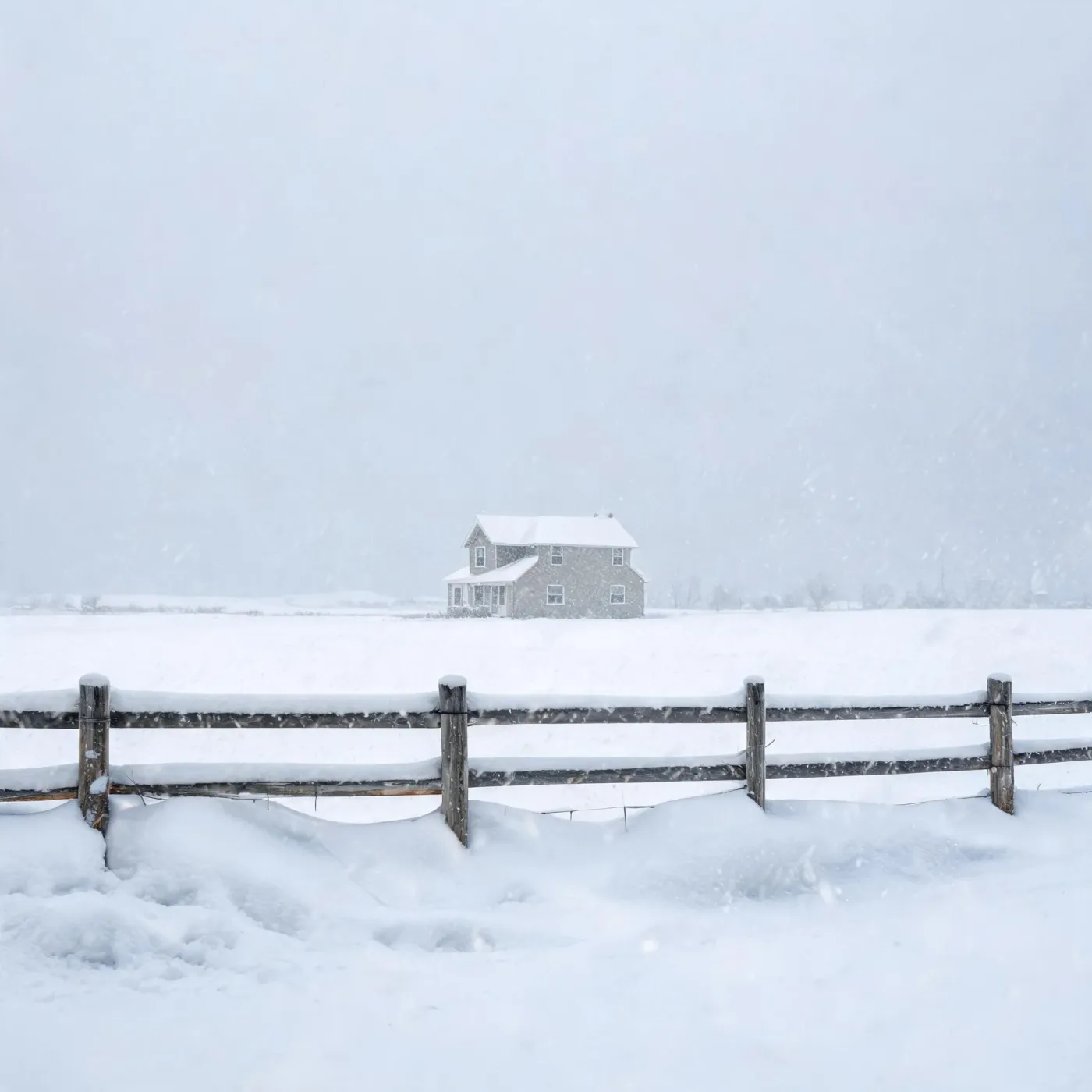
A two-story gray house with a snow-covered roof stands alone in a flat snow-covered field during falling snow, with a weathered wooden post-and-rail fence in the foreground.

Walsh County's overnight low averages 1°F across December, January and February, according to NOAA climate data. A furnace built to handle that runs for long stretches without a break, not quick bursts followed by rest. If the heat exchanger or blower is wearing down, that kind of steady demand is what exposes it. You'll notice it as rooms that take longer to warm, a furnace that seems to run most of the night, or a gas bill that climbs faster than the temperature outside explains. At 1°F, there's no easy stretch of winter where a weak furnace gets to coast.

NOAA nClimDiv 1991-2020

A closed laptop and a ceramic mug of coffee on a wooden table, with a blurred kitchen counter, cutting board, utensil jar and plant in the background.

Repair it or replace it, the furnace still has to get you through January

Most of the time the choice comes down to what's actually failing and how old the furnace is. A cracked heat exchanger or a control board going out on a furnace that's already logged a lot of Grafton winters points to replacing it. A bad igniter or flame sensor on a furnace that's otherwise sound points to fixing it. The facts of your situation decide which side of that line you're on, not a guess.

Either way, you're looking at calling around to find someone who'll actually show up, explaining the same problem to three different companies, then sitting with a stack of quotes trying to tell which one is honest. A licensed contractor working in Walsh County sees this exact furnace model and this exact failure every winter, and you deal with one person who already knows the territory instead of fielding calls from several.

A light-colored ceramic vase holding green leafy branches sits on a round wooden table, with a wooden-framed armchair draped in a cream throw, a tripod floor lamp, and sheer curtains blurred in the background.
A smiling middle-aged man in a dark green sweater sits at a candlelit table with wine glasses and a plate of greens in a dimly lit interior.
A woman in a dark knit turtleneck sweater reclines on a couch under a cream knit blanket, looking down at an open book, with a lit table lamp and framed pictures behind her.

Describe it once

Figuring out whether to repair or replace means getting a straight look at what's actually failing, and that's easier with someone who works on furnaces in Walsh County every winter and knows what tends to go on units that have logged this many seasons. Submit your furnace details once and a licensed local contractor follows up, so you're not explaining the same problem to three different companies or sorting through quotes on your own. One contractor, one call back, and you can get back to the real question: will this furnace hold up through January.

Fill out one form

Your request stays with one local pro.

Sending the form costs nothing.