
Heat pump vs gas heat in Dickinson, ND

Fill out one short form instead of calling around.

Skip calling around

Is a heat pump or gas furnace better for Dickinson, ND?

Dickinson winters run cold enough that the furnace is the system doing most of the work, and when it's time to replace it, the question of whether a heat pump could take over instead comes up fast. Gas is the fuel most homes here already use, so switching feels like a bigger decision than just swapping a unit.

A gas furnace is the better fit for heating in Dickinson

A standard heat pump loses capacity as outdoor temperatures drop, and Stark County winters spend plenty of time well below the point where a heat pump alone can keep a house warm. Gas furnaces do not have that problem. They burn fuel to produce heat directly, so a cold night doesn't change how hard they can work. Most homes in Dickinson already have a gas line in place, which keeps a furnace swap straightforward. A heat pump can still make sense for summer cooling or as a second system paired with a furnace for backup, but for carrying the heating load through a Dickinson winter on its own, gas is what holds up.

A basement utility area with a gray furnace, sheet-metal ductwork, pipes, plastic-covered walls, a concrete floor, and a black shelving unit holding storage bins.

What a furnace delivers through a Dickinson winter

A two-stage gas furnace can hold a steady temperature when it's well below zero outside. It steps up when the cold deepens and steps back when it doesn't need to work as hard. Gas here is cheap, and that matters when the furnace is running for months.


A gray metal furnace with louvered vent panels stands on a concrete basement floor beside galvanized ductwork, gas and plastic pipes, and foil-faced insulation along the ceiling and wall.

Why an older furnace falls behind

Rust on the cabinet and louvered panels often means the unit has logged a lot of winters already. A furnace this age may still fire, but it's working harder to do it, and a cold snap is when that catches up with it.

Why does your furnace run almost nonstop in January?

If your furnace runs long stretches and the house still feels cool near the windows, that's normal for a Dickinson winter once it's well below zero outside. What's not normal is short cycling, where it fires up, stops after a minute or two, and starts again. That points to a clogged filter, a cracked heat exchanger, or a blower that can't move enough air, and it's worth having looked at before the next cold snap. A yellow or flickering flame instead of blue, soot near the vent hood, or a burning smell that doesn't clear after a few minutes means stop running it and get it checked. Left alone, a cracked heat exchanger can let exhaust into the house.

A gray furnace with white PVC vent pipes stands beside sheet-metal ductwork in a basement with a smooth concrete floor, exposed wood framing, and plastic sheeting on the walls.

Furnace running right

This is what a furnace doing its job looks like. The burners fire, the air handler pushes heat through the ductwork, and the gas lines feed it steadily. No rust, no soot around the cabinet, no strain on the flue pipe. A furnace in this shape should carry you through a Dickinson winter without drama.

A beige furnace with two access panels stands against a concrete basement wall, with galvanized sheet-metal ductwork, a white PVC pipe, flexible conduit and insulated ducting around it.

Furnace showing its age

Rust on the cabinet and wear around the flue pipe mean the furnace is on borrowed time, even if it still lights. Corrosion like this often starts with a cracked heat exchanger or a flue that's not venting clean. Once you see it, the question isn't if it fails, it's when, and usually on the coldest night.

A wooden table in the foreground holds a closed laptop and a ceramic mug of coffee, with a spindle-back wooden chair behind it, a beige wall with paneled wainscoting, a window at left, and a kitchen counter with a cutting board, bowl of fruit and greenery at right.

What happens inside a furnace when it fires

When the thermostat calls for heat, the igniter glows and the gas valve opens. The burners light, and the heat exchanger starts to warm up. Once it reaches temperature, the blower kicks on and pushes air across that exchanger and out through your ducts. The flue carries the exhaust out of the house. On a two-stage furnace, it starts low and only moves to high fire if the house can't keep up, which is most of what you hear running on a January night in Dickinson.

A heat pump works nothing like that. It moves heat from the outside air into the house using a refrigerant cycle, the same basic process as the compressor in a window AC, just run in reverse when it's cold out. Below a certain outdoor temperature, there's not enough heat left in the air to pull, and the unit depends on backup electric resistance coils instead. That's the part worth understanding before you compare systems, not the sales pitch, just how each one actually produces heat in your house. If you're trying to figure out which setup makes sense for your place, a licensed heating contractor who works on both furnaces and heat pumps around Stark County can walk your ductwork and your current system and tell you straight what fits, rather than you calling around to three different companies and explaining your furnace three separate times.

A wooden table holding a stone vase with a bare branch, two stacked books and a small dark bowl, beside a window with green foliage outside and a sofa in the dim background.
A gray-haired man in a dark long-sleeve shirt sits on a gray sofa in a living room, looking toward a sunlit window with sheer curtains.
A gray-haired man in a dark green sweatshirt sits on a sofa in a living room, looking toward a bright window, with a houseplant, lamp, fireplace and framed art behind him.
A gray-haired bearded man in a dark green collared sweater sits on a sofa in a living room with a window, houseplant, floor lamp and bookshelves, looking off to the side.
A gray-haired man in a dark green sweater sits on a sofa in a sunlit living room, looking off to the side, with a framed landscape painting, dining table and shelving behind him.

One form, no calling around

One installer gets your project, so there's no bidding war over it.

Asking costs nothing, and the choice to hire stays yours.

A standard air-source heat pump loses capacity as the outdoor temperature drops, and below zero it can't pull enough heat from the air to keep up on its own.

A gas furnace doesn't work that way. It burns fuel to make heat, so a Stark County cold snap doesn't change what it can put out, which is why gas stays the stronger choice here.

A middle-aged woman with shoulder-length dark hair, wearing a gray cardigan over a cream top, sits in an upholstered armchair and looks toward a sunlit window, with a shelf holding framed pictures and a plant behind her.
A woman and a child wrapped together in a thick knitted blanket on a sofa, both with eyes closed, with a lit table lamp and houseplant in the dim background.

A heat pump doesn't make heat the way a furnace does. It moves heat, pulling warmth out of outdoor air and sending it inside through a refrigerant cycle, with a compressor doing the work. That cycle keeps running even in cold air, but there's a point where the air simply doesn't hold enough heat to pull. Once the outdoor temperature drops that low, the system leans on backup heat, either electric coils or a furnace tied into the same setup, and that backup carries the house until the air warms back up. Every so often the system also runs a defrost cycle, reversing briefly to clear frost off the outdoor coil. That's normal operation, not a malfunction, though it means a short pause in heat while it happens. In a dual-fuel system, the switch from heat pump to furnace happens on its own, no thermostat changes needed. What makes single-digit nights hard on a straight heat pump is the compressor working constantly to keep pace, cycling up and down trying to hold a temperature it's not built to hold alone that cold.

How a heat pump handles the cold

  • A cold-climate heat pump keeps a compressor and refrigerant cycle running outdoors even when the air feels too cold to hold any usable heat.
  • Below a certain outdoor temperature, the unit switches to a backup heat source because the refrigerant can no longer pull enough warmth from the air.
  • That backup is usually electric resistance coils or a paired furnace, and it carries the load until the outdoor temperature climbs again.
  • The defrost cycle reverses the system briefly to melt frost off the outdoor coil, which is normal but pauses heating output for a few minutes at a time.
  • A furnace paired with a heat pump in a dual-fuel setup switches on automatically once the heat pump can't keep up, without the homeowner doing anything.
  • The compressor has to ramp up and down constantly in single-digit weather, which is part of why a straight heat pump struggles to hold a steady temperature here.
A gas furnace with a louvered upper panel stands on a concrete pad in a basement, flanked by sheet-metal ductwork, white PVC and metal pipes, and insulated columns.
Before you get your furnace installation
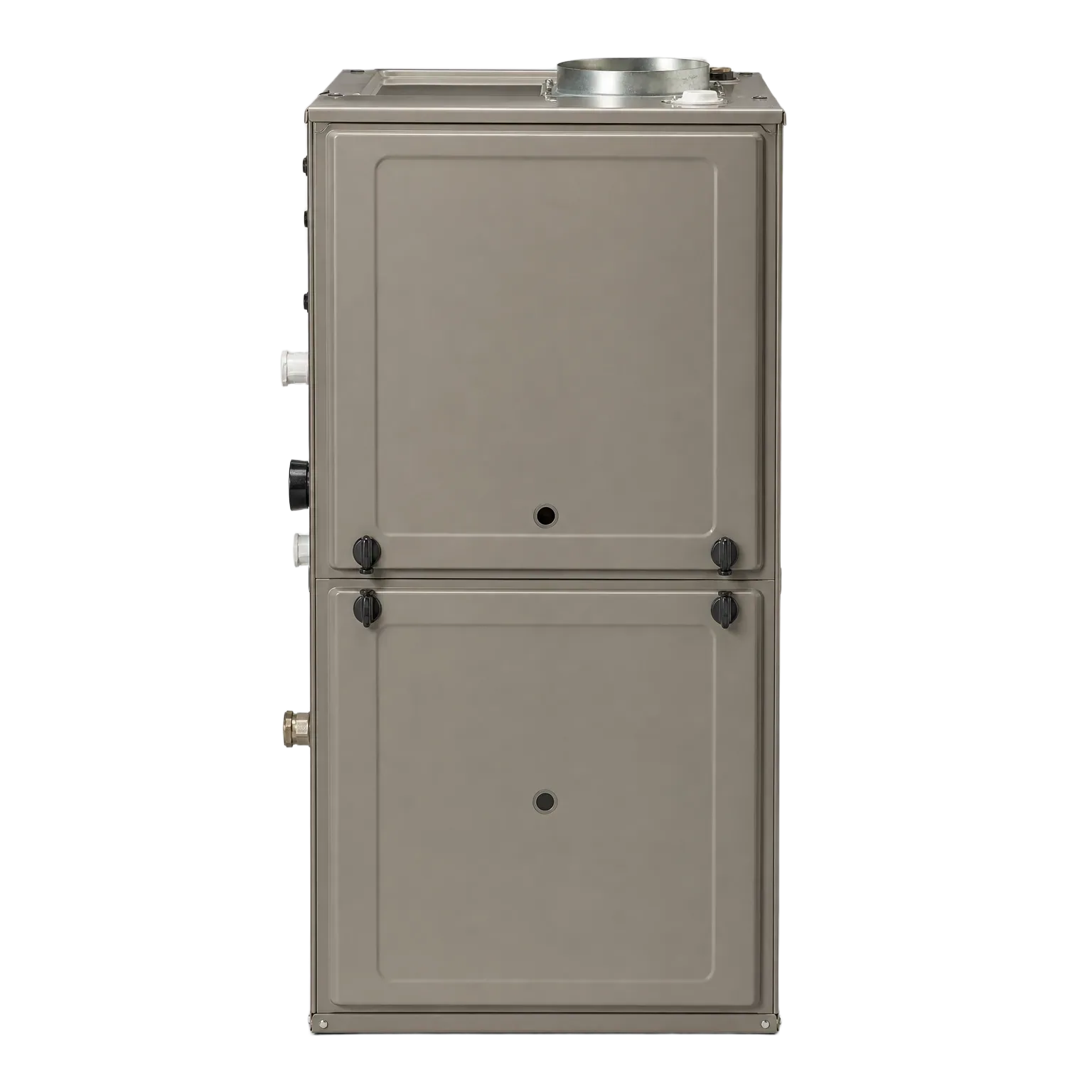
A dark high-efficiency furnace on a concrete pad in a basement, connected to galvanized ductwork, white PVC vent pipes, and copper and black gas piping, with concrete walls and wood framing nearby.
After you get your furnace installation

Gas furnace

Keeps pace no matter how far the temperature drops, since burning fuel doesn't lose capacity in the cold. In Stark County, gas is the cheaper fuel to run all winter.

Skip the search

Standard heat pump

Loses capacity as it gets colder and needs backup heat below zero. On a Dickinson winter night, it's working against the air itself, not just the thermostat.

Skip the search

How cold does it really get, and how long does the furnace run?

  • Winter nights average 7°F

    Winter nights here average 7°F across December, January and February, cold enough that a standard heat pump can't keep up on its own.

  • Heat runs September through June

    Heat runs from September through June in Stark County, about ten months, so whatever you install has to hold up through most of the year.

  • 51.4% of homes heat with gas

    51.4% of homes in Stark County heat with gas, more than any other fuel, which is why furnace parts and service are easy to find here.

NOAA nClimDiv 1991-2020 · ACS 2020-2024

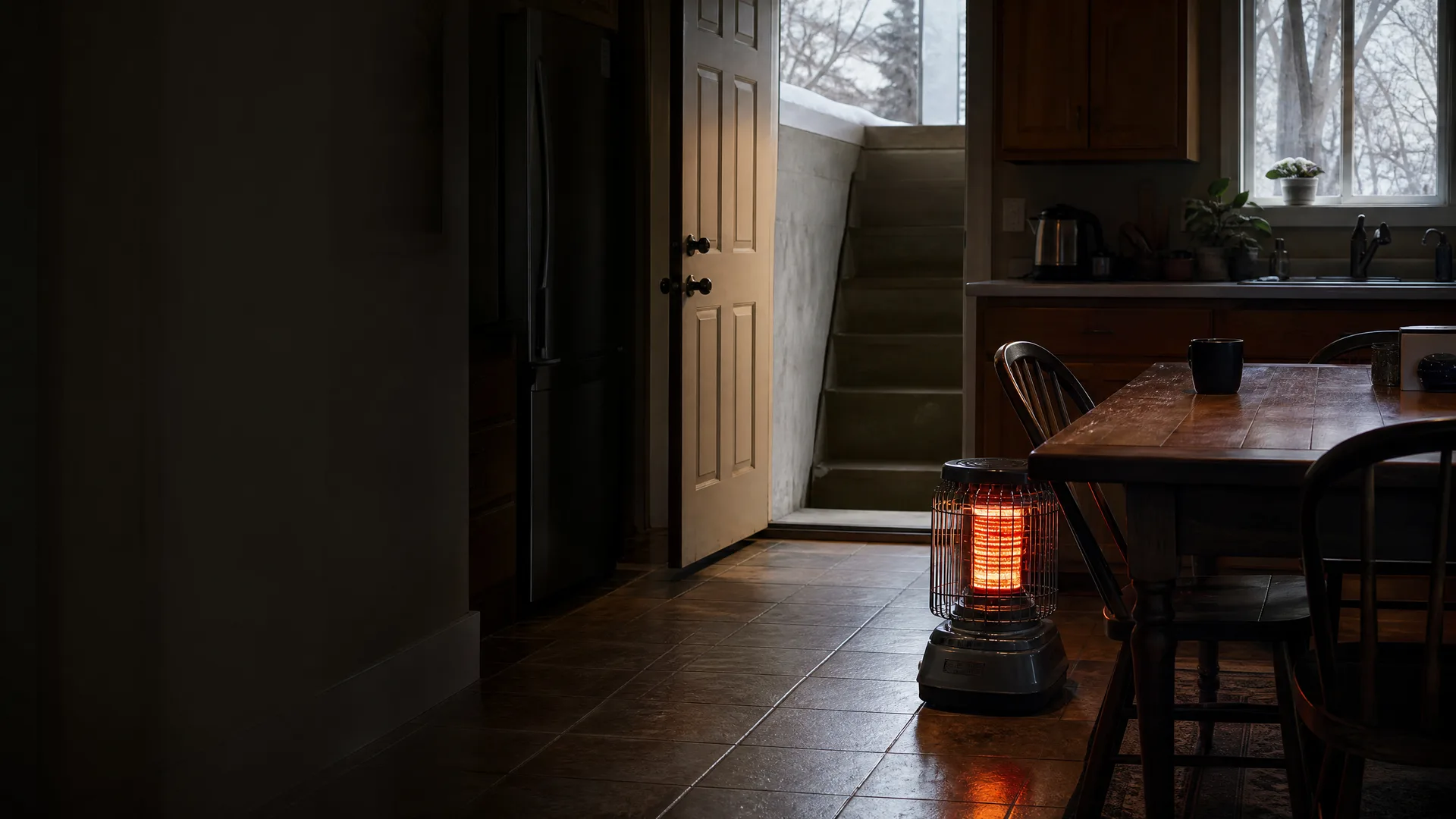
A dim interior with a glowing portable kerosene heater on a tiled floor beside a wooden table and chairs, an open white door leading to a staircase, and a kitchen sink by a window showing snow outside.

The thermometer outside the kitchen window still reads below zero at seven in the morning, and the furnace has been running since before you woke up. It's not keeping up. You've dragged the space heater in from the hall closet again, set it by the table where you'll eat breakfast, and left the basement door open so some of that heat drifts down toward the thermostat. The space heater's coil glows orange in the gray morning light. Outside, Stark County is locked in a stretch of single-digit nights, and the furnace downstairs is working as hard as it can, but it's not enough on its own anymore.

Winter nights average 7°F

A night that only reaches 7°F on average means your furnace spends most of its time near the top of its range just holding the house steady. Size it for that number, not for a milder one, or you'll feel it the first hard cold snap.

NOAA nClimDiv 1991-2020

  1. Thermostat calls for heat and the control board checks safety switches

  2. Inducer motor starts and clears the heat exchanger before ignition

  3. Igniter glows and the gas valve opens to feed the burners

  4. Burners light and heat the walls of the heat exchanger

A gas furnace is the right call for a Stark County winter, and a standard heat pump isn't built for the nights here. That's the answer, and nothing about your house changes it. What matters now is who puts the furnace in. You want someone who installs and services these in Dickinson every winter, who's seen what a hard cold snap does to a heat exchanger or an inducer motor and knows what to check before it fails. When you request help through this page, it goes to one licensed local contractor, not a handful of companies calling you back at once. You explain your situation once, to someone who already knows what a furnace has to handle out here, instead of repeating it to every name you can find on your own.

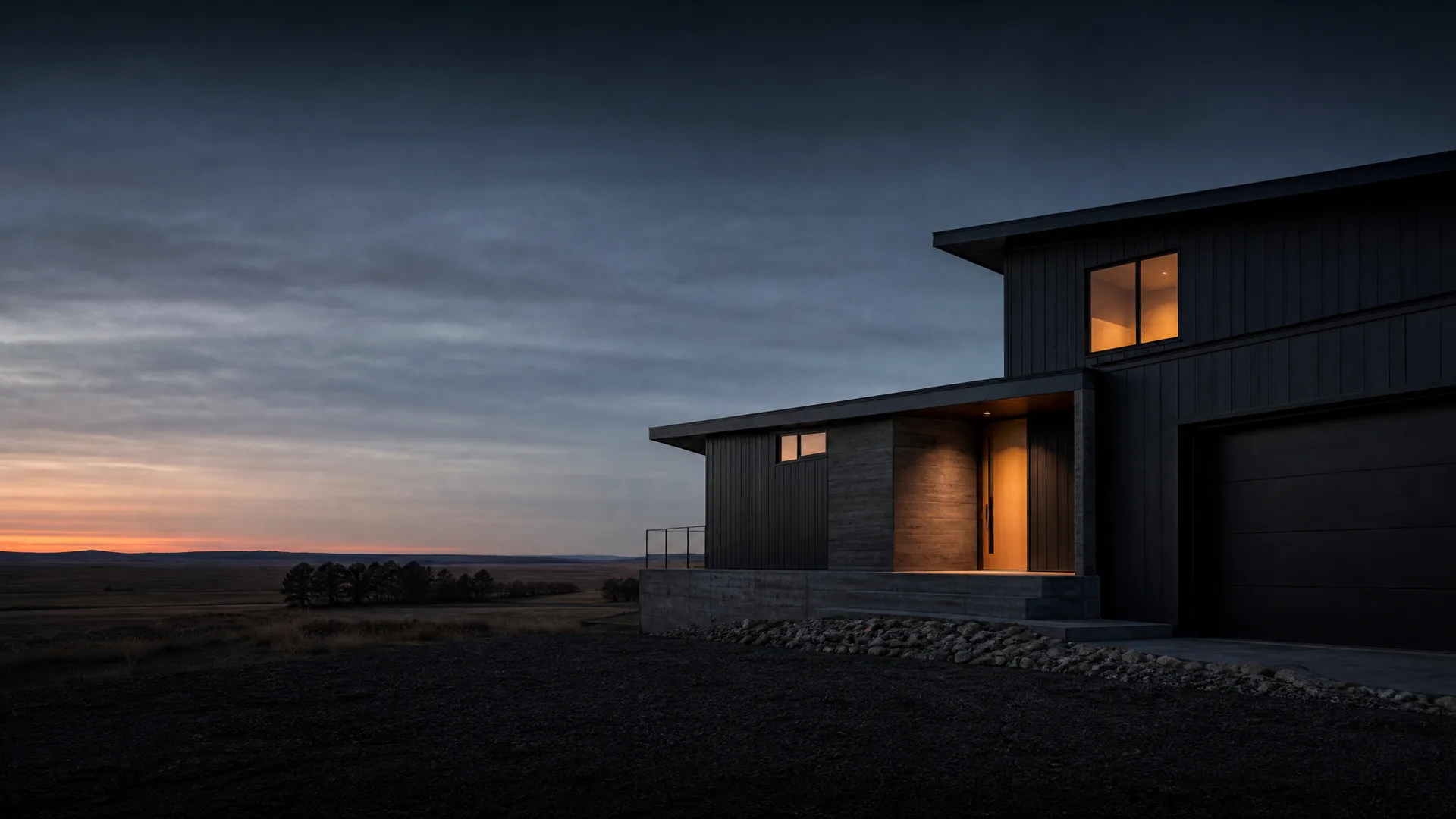
A modern two-story house with dark siding and stone base at dusk, with lit soffit lights, a path of large rectangular pavers set in dark gravel, planting beds, a lawn, and an orange and blue sunset sky above distant trees and water.

Furnace Installation

Explain it one time

New system or replacementFurnace or heatingStark County, ND
Step 1 of 2

What ZIP code is the job in?

  • A beige upholstered armchair with an olive cushion sits in a sunlit corner beside a wooden side table holding a ceramic vase with leafy branches, under a framed abstract artwork, on a woven rug over a wood floor.
    • A local installer who puts in furnaces gets your project.
    • Say what's going on with your furnace, and a pro who works on them reaches out.
  • A gray outdoor condenser unit on a concrete pad surrounded by dark gravel, beside a dark wood-sided wall with an electrical disconnect box and a stone veneer wall with a small evergreen shrub.
    • Send the request and finding a pro stops being your problem.
    • After this form, you can stop searching for a furnace pro.
  • A beige upholstered oversized armchair with a matching cushion and a knit throw draped over one arm, beside a round wooden side table holding a vase of greenery near a curtained window, with a framed landscape print on the wall and a woven rug on a wood floor.
    • Skip the round of in-home estimates for a new furnace.
    • Describe the project once instead of to every installer.
  • Sunlit living room corner with a beige upholstered sofa, cushion and knitted throw, a round wooden side table holding a white ceramic vase of leafy branches and a small wooden bowl, a framed landscape painting on the wall, and a window at right.
    • A licensed pro who works in Stark County gets your request.
    • Your request stays with one local pro.