
Repair or replace a gas furnace in Dickinson, ND

A local installer who puts in furnaces gets your project.

Get matched

A furnace that's quitting partway through a Dickinson winter is usually worth repairing if the cabinet and heat exchanger are sound, the problem is one part, and the unit hasn't run through many winters yet. Replacement makes more sense once the heat exchanger is cracked, the furnace won't hold a flame, or it's near the end of what gas furnaces here are built to last. A cracked heat exchanger isn't a repair you patch, because it can leak carbon monoxide into the house, so that alone settles the decision. Stark County winters put a furnace to work for months at a time, and a unit that's struggling in December usually isn't getting easier to live with in January. A local contractor can look at the actual unit and tell you which side of that line it's on.

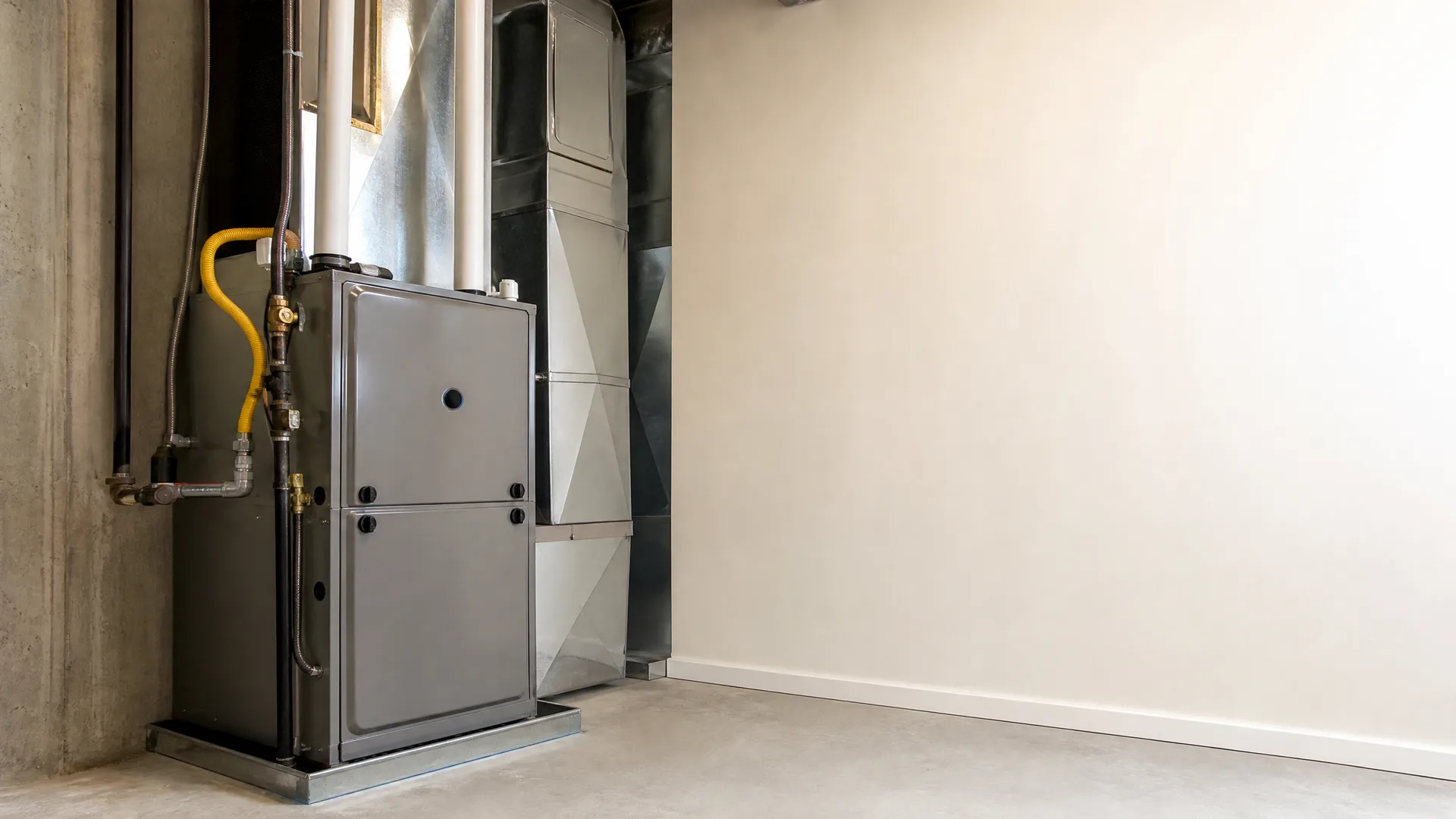
A gray gas furnace with attached yellow gas line, copper piping, white PVC vent pipes and sheet-metal ductwork stands against a wall in an empty basement room with a concrete floor.

Why the heat exchanger decides it

A cracked heat exchanger is the one failure that ends the conversation about repair. It's the part that separates the flame from the air moving through your ducts, and once it cracks, combustion gases can mix into that air. No contractor will patch it. They'll replace the unit instead, because the part isn't sold separately and welding it isn't a safe fix. Everything else on a furnace, from the igniter to the blower motor, can be swapped out on its own.

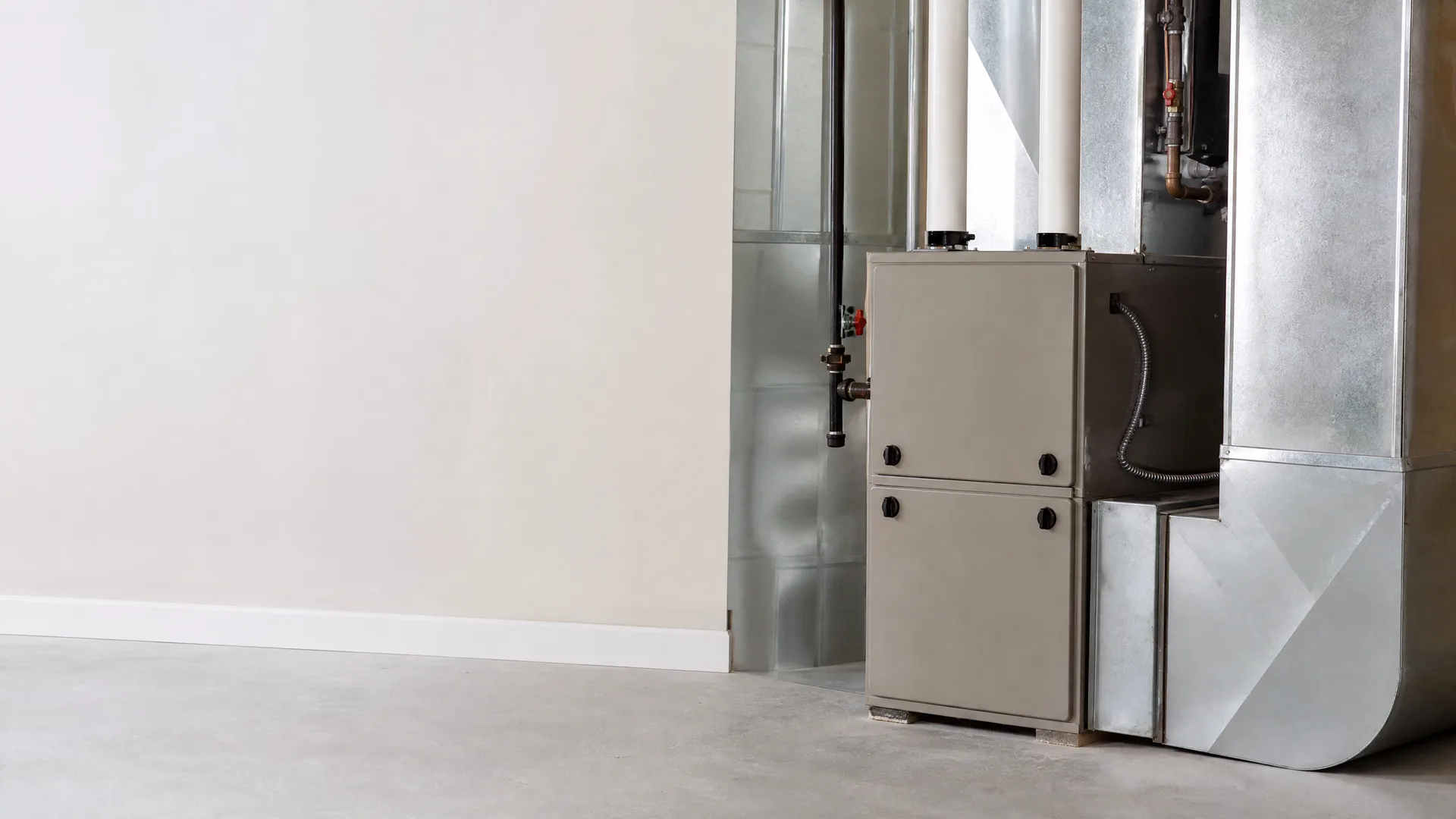
A beige high-efficiency furnace with white PVC vent pipes stands against a wall beside galvanized sheet-metal ductwork in an empty room with a concrete floor.

What a Stark County winter asks of it

Dickinson furnaces run long stretches without a break once the cold sets in, sometimes for days at a time. That kind of run time wears on a cabinet differently than a furnace that cycles on and off in milder weather. A unit with a handful of winters behind it has earned less wear than one that's been through a decade of these stretches. How many winters yours has seen, and whether it's the one that came with the house, is worth checking before you decide.

Repair the Furnace or Replace It

Repair

  • A single failed part, like an igniter or a flame sensor, usually costs far less to replace than the furnace itself.
  • If the heat exchanger and cabinet are still sound, fixing the one failed part gets you through the rest of this winter.
  • A furnace that's run through only a handful of Dickinson winters has more life left to justify the repair bill.
  • Parts for most residential gas furnaces are common enough that a local contractor can usually get the right one without a long wait.
  • Repair keeps you on a furnace and thermostat setup you already know how to run.
  • If the furnace has been reliable until now, one failure doesn't mean the rest of the unit is failing too.

Replace

  • A cracked heat exchanger means the furnace has to come out, since that part can't be patched or welded.
  • A furnace that's needed a repair call every winter for the last few years is costing you in both parts and labor that add up faster than one new unit.
  • Newer furnaces are rated for higher efficiency, so less of the gas you're burning goes up the flue instead of into your house.
  • If the blower motor or control board fails on an older unit, the repair cost can run close to what a new furnace costs installed.
  • A furnace near the end of its expected life is a harder sell to repair even when the current failure is minor.
  • Replacing before a hard failure in January means you're not choosing a furnace in a hurry during the coldest stretch of a Dickinson winter.
A gray furnace with white PVC vent pipes stands beside sheet-metal ductwork in a basement with a smooth concrete floor, exposed wood framing, and plastic sheeting on the walls.

Running the way it should

This is a furnace holding its own against a Dickinson winter. The cabinet is clean, the flue runs straight up, and the gas lines feeding it are sound. A furnace in this shape is almost always a repair: one part fails, a contractor replaces it, and it finishes out the season.


A beige furnace with two access panels stands against a concrete basement wall, with galvanized sheet-metal ductwork, a white PVC pipe, flexible conduit and insulated ducting around it.

Showing its age

Rust like this on the cabinet often means the metal inside has been wearing the same way, including the heat exchanger. Once that part is compromised, there's no fixing your way past it. A furnace in this condition is the one where a local contractor will likely tell you it's time to replace it.

An older man with gray hair, a dark coat and scarf dusted with snow stands in a warmly lit entryway with an open wooden door, a table lamp, framed pictures, and a plant in a vase.
An older man with gray hair and a beard wearing a dark snow-dusted coat stands in a home entryway, with a lamp-lit living room and a wooden staircase behind him.
An older man with gray hair and a beard, wearing a dark snow-dusted coat, stands in a warmly lit home entryway with a hallway, console table with lamp, patterned rug, and living room visible behind him.
A gray-haired bearded man in a dark snow-dusted coat and scarf stands inside a dimly lit home entryway, with a hallway, framed picture, lit table lamp and staircase behind him.

The right pro for this job

A furnace that won't light on a January morning in Dickinson doesn't wait well. You can run a space heater for a day while you weigh repair against replacement, but not much longer than that with the temperatures Stark County sees. What decides this fastest is someone who can look at the heat exchanger and the cabinet in person and tell you which side of that line your furnace falls on. A contractor who services furnaces around Dickinson all winter has seen which parts fail first in this cold and what a sound exchanger looks like versus one that's cracking. Getting matched with one contractor, rather than fielding calls from several, means the person who shows up already has a sense of what's common on equipment like yours in this area, and you're explaining your furnace once instead of five times. With a hard winter ahead, that's worth setting up now rather than after the next cold snap finds the weak part for you.

How a furnace actually starts

  • A furnace fires in a set order: the inducer motor starts, the igniter glows or sparks, gas opens, and the flame sensor confirms it caught.
  • The flame sensor is a thin metal rod that reads the flame itself and shuts the gas off in seconds if it doesn't sense one.
  • A dirty flame sensor is one of the most common reasons a furnace shuts down mid-cycle after running fine for a few minutes.
  • The limit switch cuts the burners if the air inside the cabinet gets too hot, often because a dirty filter is choking airflow.
  • Low gas pressure or a weak igniter can make a furnace try to start several times before it either catches or locks out.
  • The draft inducer has to prove airflow through the flue before the control board will even let gas open.

A furnace doesn't just dump gas in and light it. The control board runs through a sequence, and each step has to check out before the next one happens. First the draft inducer motor spins up and pulls air through the flue. A pressure switch confirms that air is actually moving before the board allows anything else, because gas should never open into a flue that's blocked. Once that's proven, the igniter heats up or sparks, gas valves open, and the burners light. Within a few seconds the flame sensor, a thin rod sitting right in the flame, has to detect current passing through the flame itself. If it doesn't, the board cuts gas and tries again, usually up to a few times before it locks out and shows a fault code on the control board.

Most of the furnace's safety switches exist to stop that sequence cold if something isn't right. The limit switch watches the temperature inside the cabinet and shuts the burners down if it gets too hot, which is often a filter that's choking airflow rather than anything wrong with the burners themselves. A dirty flame sensor is a common cause of a furnace that lights fine, runs a few minutes, then shuts off on its own, since a thin layer of soot is enough to stop it from reading the flame. Low gas pressure or a weakening igniter shows up as a furnace that tries to start two or three times before it either catches or gives up.

A gas furnace with a louvered upper panel stands on a concrete pad in a basement, flanked by sheet-metal ductwork, white PVC and metal pipes, and insulated columns.
Before you get your furnace installation
A dark high-efficiency furnace on a concrete pad in a basement, connected to galvanized ductwork, white PVC vent pipes, and copper and black gas piping, with concrete walls and wood framing nearby.
After you get your furnace installation
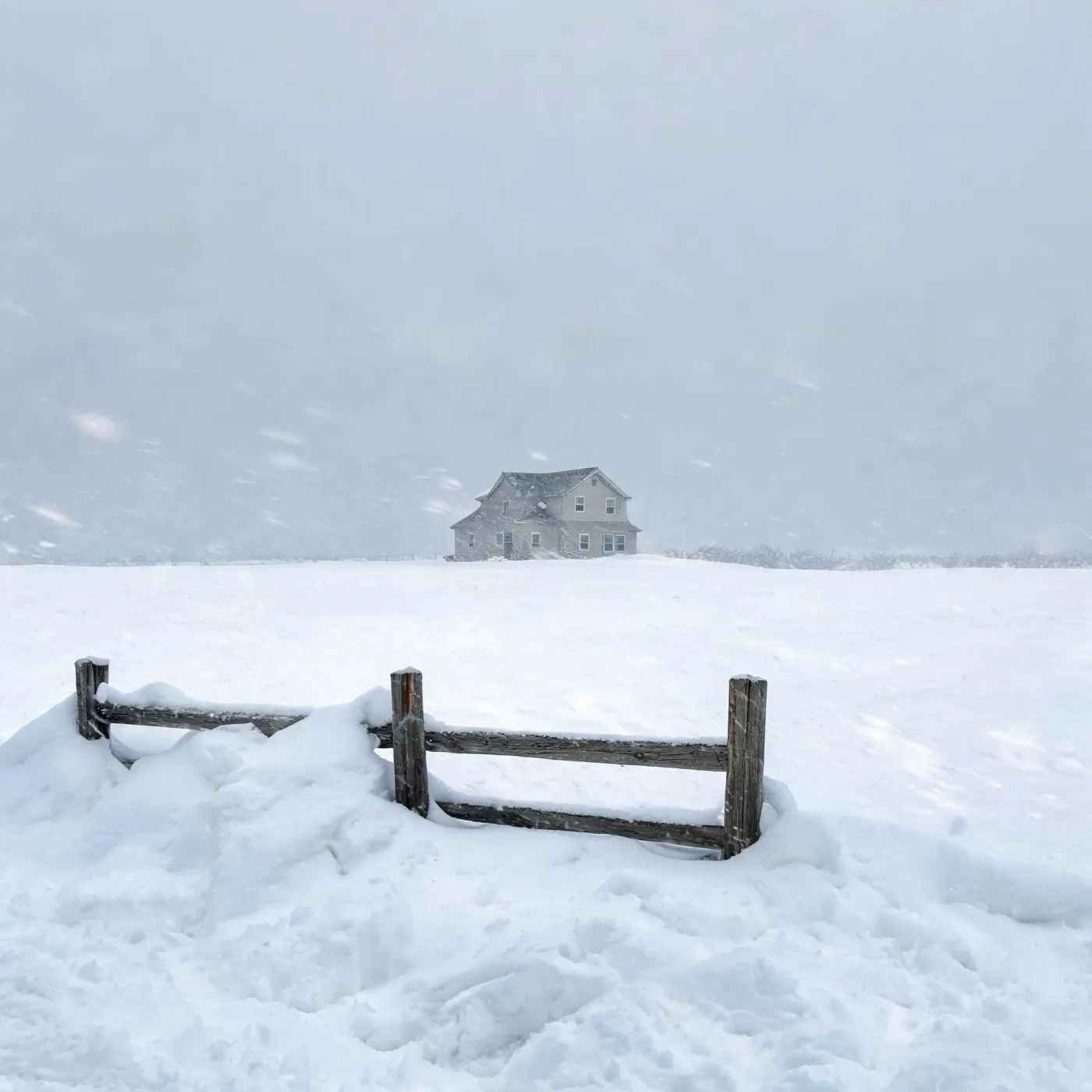
A two-story gabled house stands alone across a snow-covered field during falling snow, with a weathered wooden post-and-rail fence partly buried in a snowdrift in the foreground.

Winter nights in Stark County average 7°F, and that's the stretch that tells you whether your furnace still has what it takes. At that temperature it isn't cycling on and off like it does in milder weather. It's running long stretches to hold the house, and a weak igniter or a flame sensor on its way out tends to show itself right then, usually as short cycling or a furnace that won't stay lit past a few minutes. That's also where a failing heat exchanger gets found, since a cracked one often won't trip a furnace's limit switch until it's been run hard. Source: NOAA 1991-2020 Climate Normals.

NOAA nClimDiv 1991-2020

A woman wrapped in a thick cream knit blanket sits in an armchair beside a lit table lamp, with an open book in the foreground and a frost-covered window behind her.
A bearded man in a plaid flannel shirt stands indoors looking out a frost-covered window, with a steaming dark blue mug on the wooden sill and snow-covered trees outside.
A woman in a long cream cardigan and jeans stands at an open wooden front door of a gray shingled house with stone-based porch columns, with a second person visible inside, and potted flowers and shrubs beside the entry.

Where that leaves your furnace

A sound cabinet, a straight flue and one failed part point to repair. A cracked heat exchanger, or a furnace that's needed a few repairs already, points to replacement. Everything above comes down to that.

If you want a second opinion before you decide, a licensed contractor in Stark County who works on furnaces like yours all winter can look at what's actually failing and tell you which side of that line you're on. You'd be matched with one contractor, not several, and they'd reach out to you directly to go over what they find.

A mug and a small round vase sit on a wooden windowsill beside sheer and heavier curtains, with blurred autumn trees seen through the rain-speckled window and a sofa with cushions and a throw in the foreground.
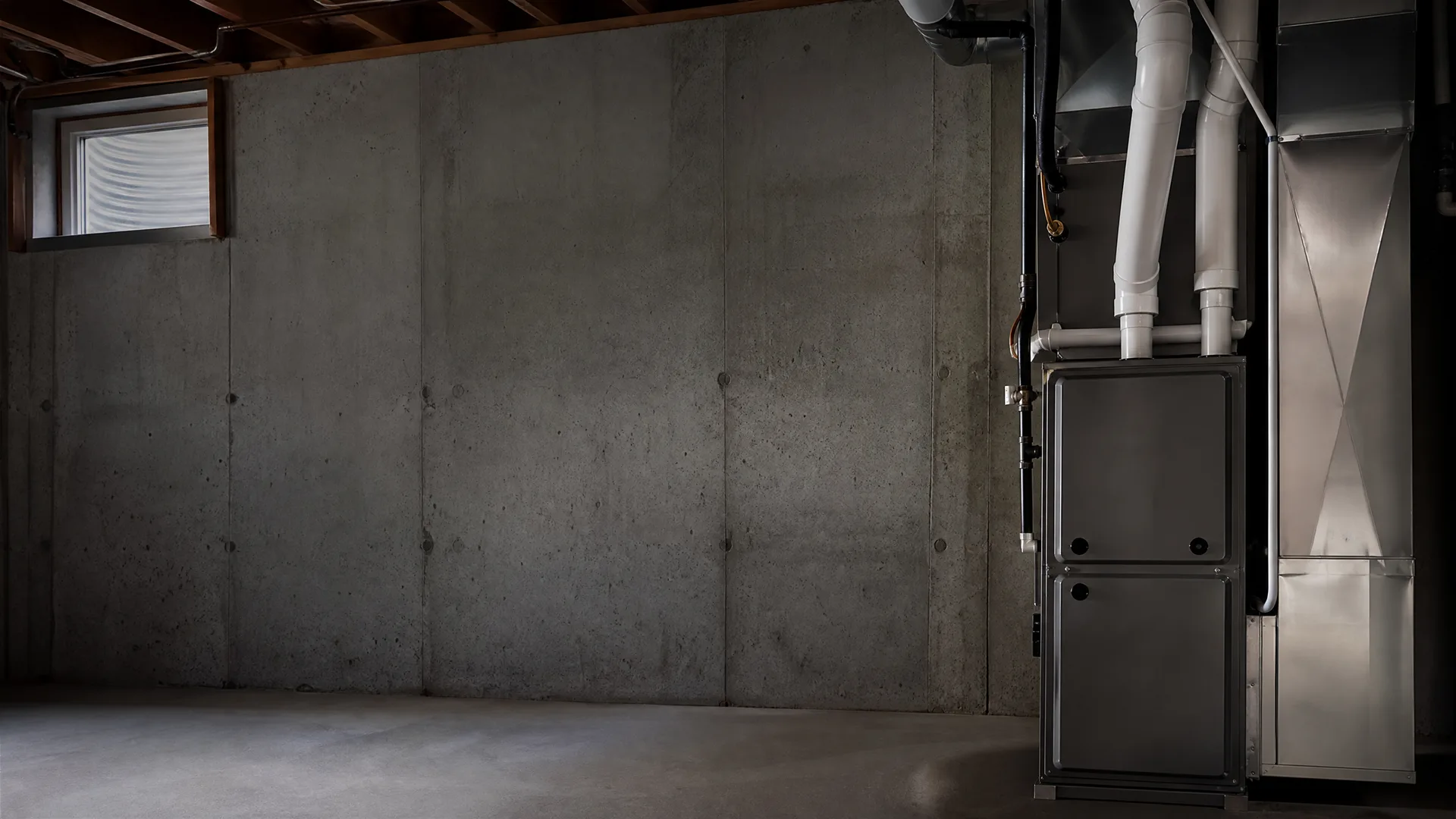
An empty unfinished basement with bare concrete walls and floor, a small window at upper left, and a furnace with white PVC vent pipes and metal ductwork at right.

Matched to your furnace job

Only one pro gets your request, so you hear from one company.

New system or replacementFurnace or heatingStark County, ND
Step 1 of 2

What ZIP code is the job in?