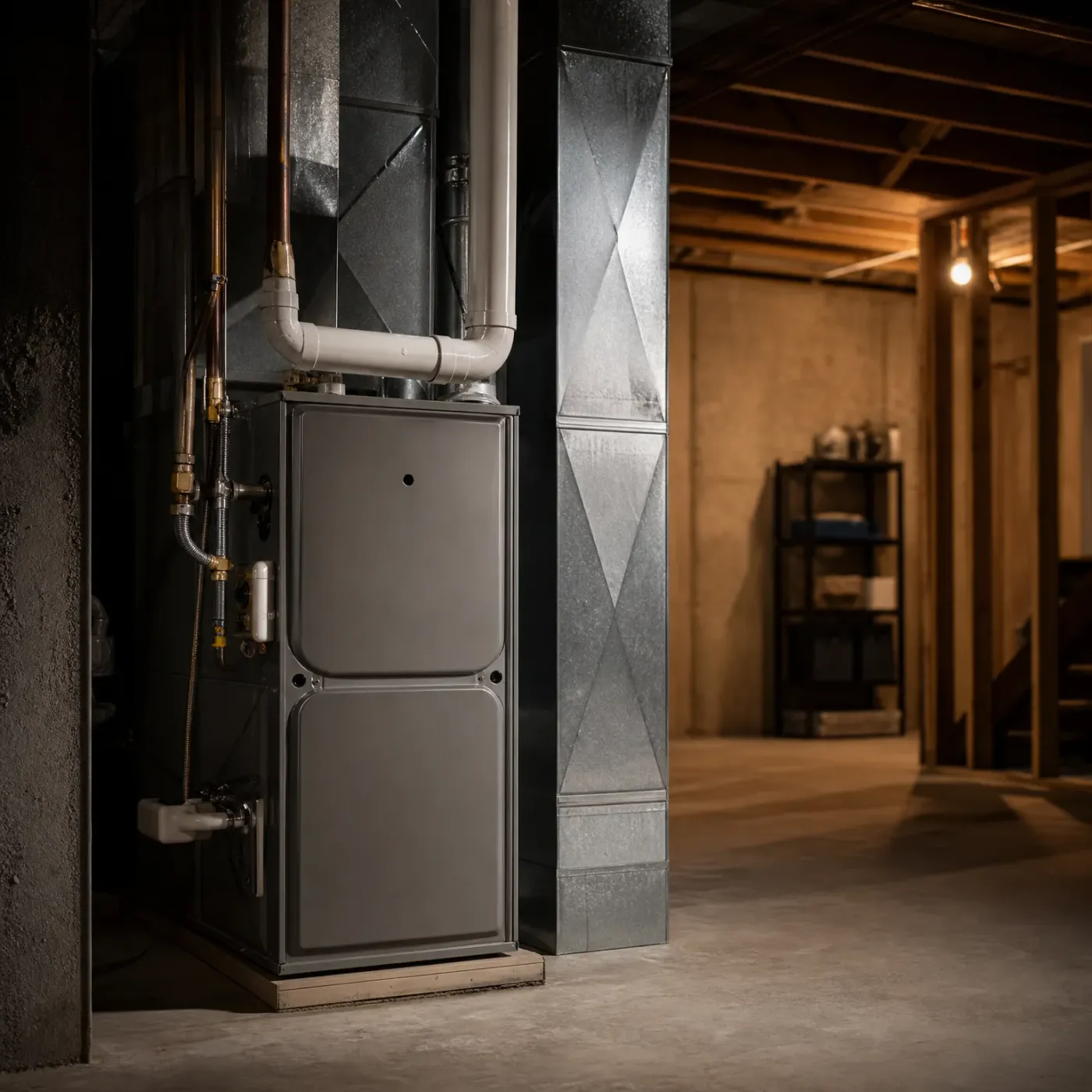
A gray gas furnace with copper and PVC piping stands beside large galvanized sheet-metal ductwork in an unfinished basement with concrete floor, wood framing, and a glowing bare bulb in the background.

A local pro for your furnace installation

Heat pump vs gas heat in Grafton, ND

Grafton winters are hard, and most homes here run on gas. A heat pump alone struggles once the temperature really drops, which has people asking if it's worth pairing with the furnace or skipping it altogether. This page gets into how the two stack up here. When you're ready, you can get matched with a contractor who'll look at your house and walk you through it.

Find my pro

Gas heat wins for a Walsh County winter. A heat pump moves heat from the outside air, and once temperatures drop into the single digits and below, which happens for stretches most winters in Grafton, there is less and less heat out there to move. The unit has to work harder for less warmth, and below a certain point it stops keeping up with the house at all. A furnace burns fuel to make heat directly, so it doesn't care how cold the air outside is. It puts out the same warmth at minus 20 as it does at 20 above. Some homes here pair a heat pump with the furnace, letting the heat pump handle the milder days and the furnace take over when it gets hard cold, but gas alone covers a North Dakota winter without asking the equipment to do something it isn't built for. For a house here, that's the safer bet on its own.

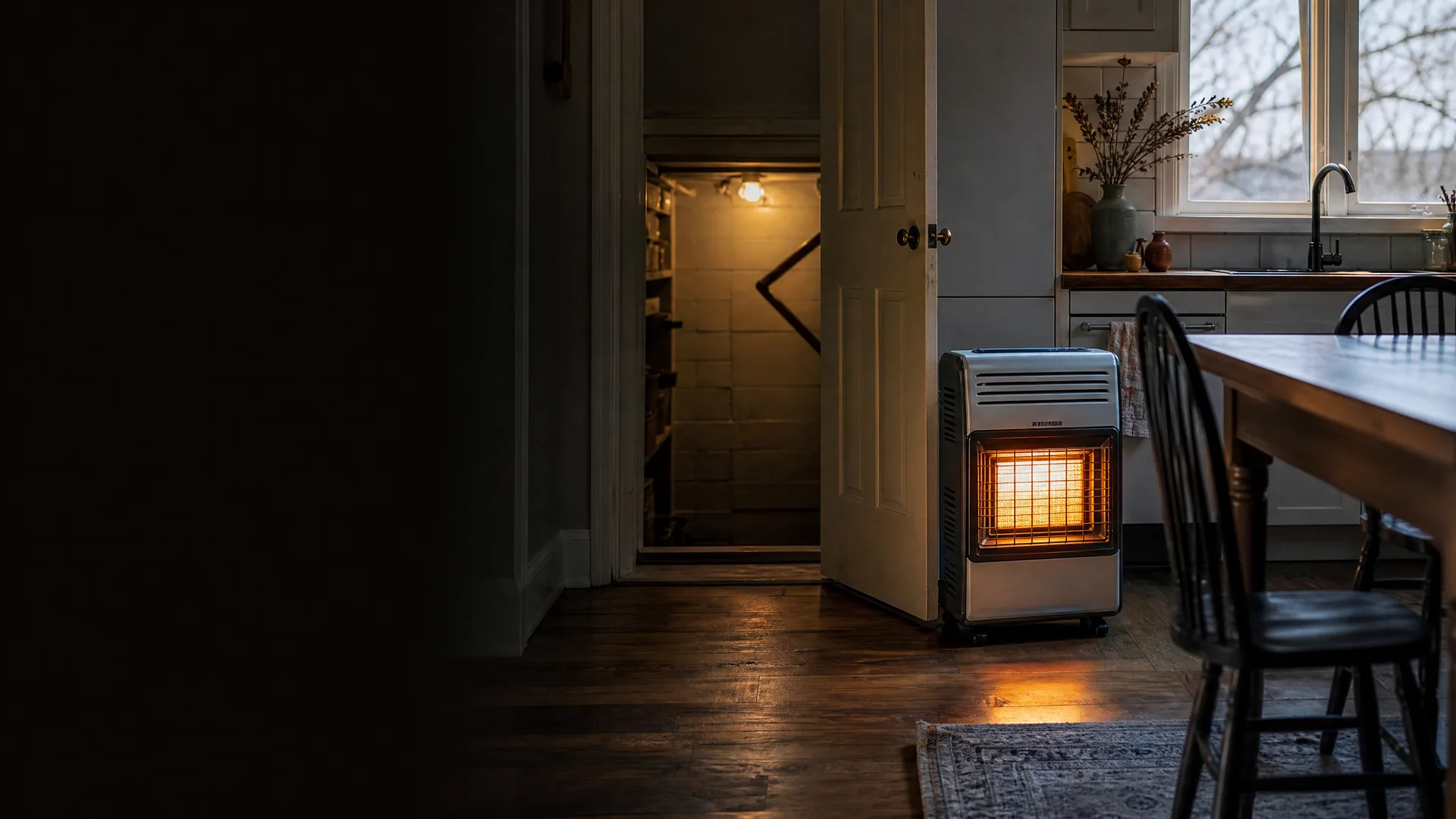
A white portable gas heater with a glowing orange element sits on a dark wood floor beside an open door and a kitchen counter with a window and wooden table and chairs.

Six in the morning and still dark outside your kitchen window. The space heater is pulled up close to the table, its coil glowing orange, because the furnace has been running since four and the air coming out of the vent feels barely warm. You've got a sweater on over your robe. The basement door behind the heater is open, the cord running down the stairs to the outlet by the water heater, same as it's been the last few mornings. Walsh County's gusting wind rattles the window over the sink. You pour the coffee and wait to hear the furnace kick back on, and start doing the math on what the gas bill is going to look like this month.
Why does the house feel cold even with the furnace running?

A gas furnace that's struggling shows itself a few ways. It runs longer stretches than it used to, and the air coming out of the vents doesn't feel as warm as it should. Some rooms stay cold no matter how high the thermostat goes, especially ones farthest from the furnace. You might hear it cycling on and off more than it used to, or notice the burner flame looks yellow or uneven instead of a steady blue. A furnace working harder than it needs to is burning more gas to make up the difference, and that shows up on the bill. Left alone through a Grafton winter, a furnace that's already struggling has less room to keep up when temperatures drop hard, and that's not a position you want the house in during January.

  1. The thermostat calls for heat and the furnace gets the signal.

  2. Gas flows in and the igniter lights the burners.

  3. The heat exchanger warms as the burner flame heats its metal walls.

  4. The blower pushes air across the heat exchanger and into the ducts.

Why does my furnace short cycle in cold weather?

Short cycling shows up most on the coldest nights of a Grafton winter, when the furnace seems to be working harder than ever but keeps shutting off and restarting instead of just running steady. It's a strange thing to watch happen over and over, and it usually has people wondering if the furnace is actually broken or just struggling to keep up with how cold it is outside.

A dirty flame sensor or a clogged filter usually causes it, not the cold itself

Cold weather doesn't make a furnace short cycle on its own. It exposes a problem that was already there. A flame sensor coated in residue can't read the flame reliably, so the furnace shuts the burners off as a safety measure, waits, then tries again. A filter clogged with dust restricts airflow across the heat exchanger, which can trip a high limit switch and shut the burners down the same way. Either one shows up more in January because the furnace is running longer and harder to keep up with a Walsh County cold snap. A furnace that's sized right and maintained will run long steady cycles through the coldest stretches instead of cutting on and off every few minutes.

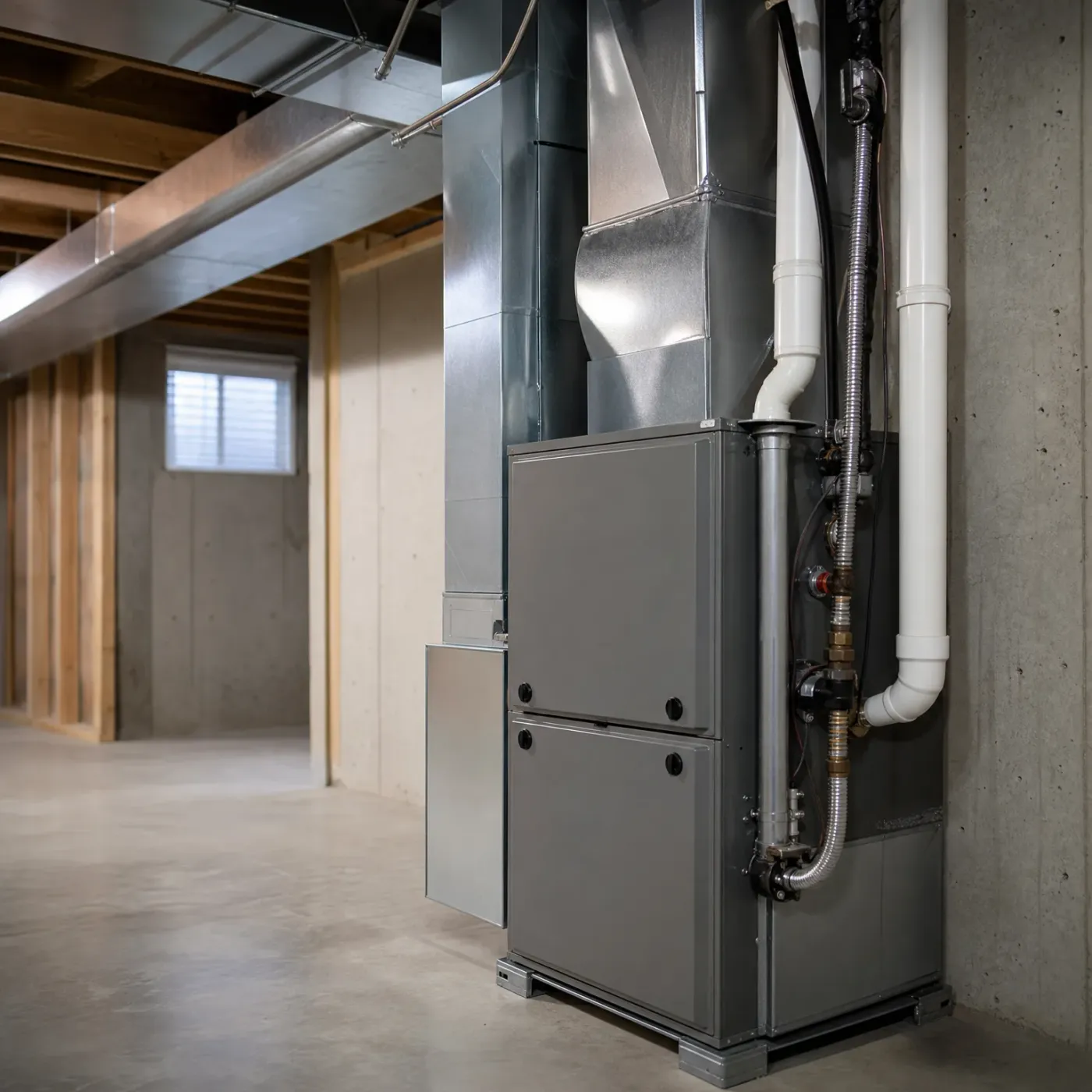
A gray high-efficiency furnace with two PVC vent pipes stands in an unfinished basement beside sheet-metal ductwork, a framed and plastic-covered wall, and a bare concrete wall with vertical pipes.

A furnace running the way it should

This is a gas furnace doing its job. The flue pipes carry exhaust out, the gas line feeds the burners, and warm air moves through the ducts into the house. On a cold Grafton night, this is what's keeping the place comfortable.

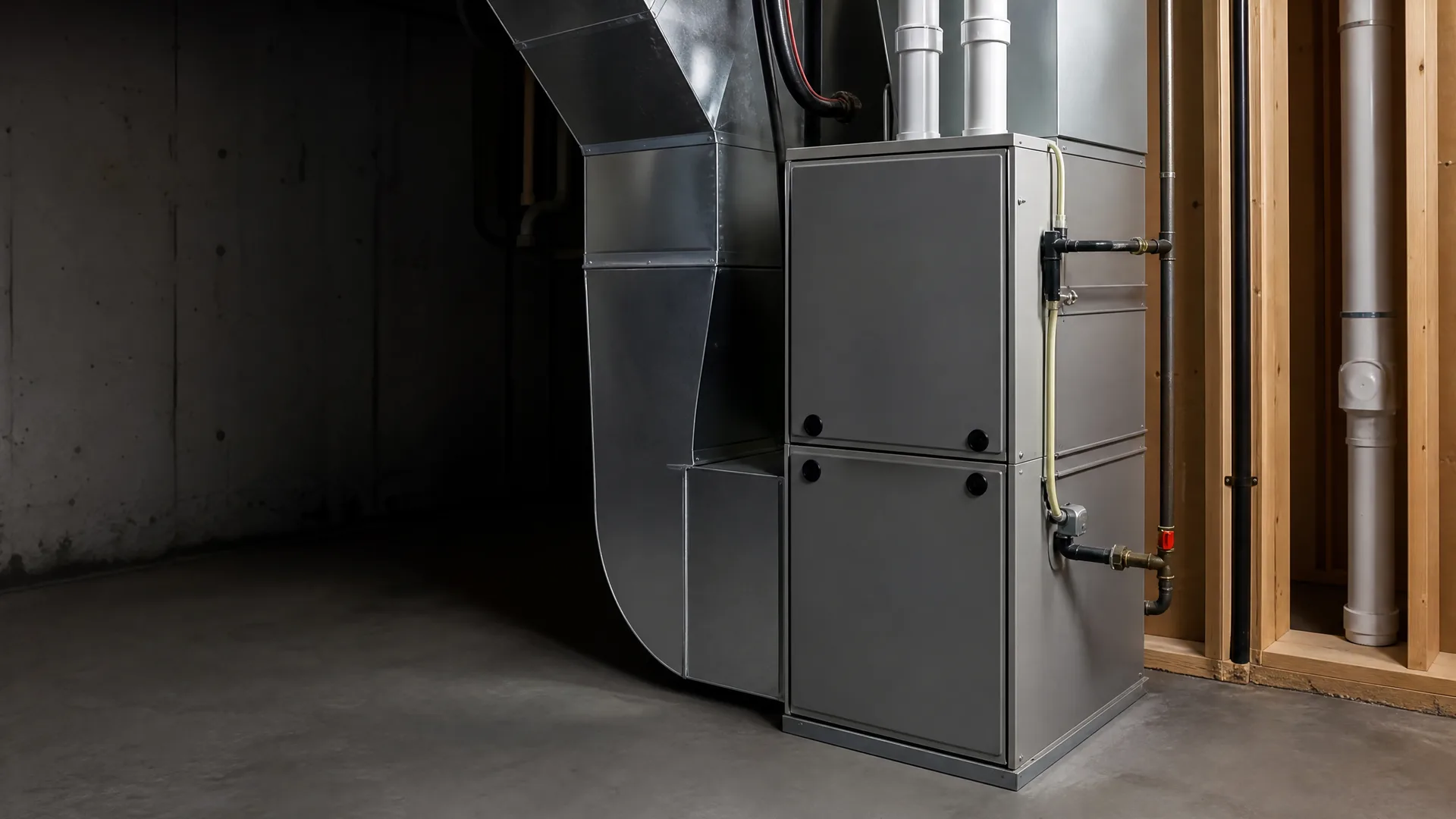
A gray furnace cabinet in a basement, connected to galvanized sheet-metal ductwork and white PVC pipes, against a concrete wall with exposed metal piping and insulation overhead.

A furnace set up on a pallet, waiting

This furnace hasn't been installed yet. It's sitting on a pallet, ducts and drain lines ready to connect. Before a heat pump decision gets made, this is the same question: what should tie into that ductwork for a Walsh County winter.

A gray-haired man in a dark coat dusted with snow stands in a warmly lit home entryway, with a lamp, sofa, window and white staircase banister behind him.
An older man with gray hair and a beard, wearing a dark coat dusted with snow and a blue plaid scarf, stands smiling in a dimly lit entryway with a window, framed picture, table lamp and staircase behind him.
A gray-haired, bearded man in a dark winter coat with snow on the shoulders stands in a doorway of a home interior with a lit lamp, framed pictures, a potted plant and a staircase behind him, and an evergreen wreath at the left edge.
A gray-haired man in a dark coat with snow on the shoulders and collar stands smiling in a dimly lit entryway with a paneled front door, lamps, and a framed picture in an adjoining room.
A gray high-efficiency furnace in an unfinished basement, connected to sheet-metal ductwork and white PVC vent pipes along a concrete wall, with wood-framed walls and a small window in the background.

Get the right pro for your furnace

One request and the search for a pro is handled.

Your new furnace project goes to an installer who works in Walsh County.

Get a furnace pro

Asking costs nothing, and the choice to hire stays yours.

Gas Furnace vs Heat Pump in Grafton

Gas Furnace

  • A gas furnace burns fuel to make heat, so it keeps full output no matter how far the temperature drops outside.
  • Grafton winters bring stretches of single digits and below, and a furnace doesn't lose capacity when that happens.
  • Gas is the fuel most homes in Walsh County already run on, so the furnace ties into a line that's already there.
  • Repairs center on known parts: the igniter, the heat exchanger, the gas valve, and a local contractor sees these failures often.
  • A furnace needs venting for exhaust, which means a flue pipe has to run to the outside somewhere in the house.

Heat Pump

  • A heat pump moves heat from the outside air instead of burning fuel, and it cools the house in summer too.
  • Its output drops as the outside air gets colder, and Grafton sees stretches cold enough to leave it struggling to keep up alone.
  • Power here is cheap, which matters because a heat pump runs on electricity rather than gas.
  • Paired with a furnace, a heat pump can handle the milder stretches of fall and spring and let the furnace take over once it turns hard cold.
  • Running one on its own through a full Walsh County winter means leaning on backup heat for the coldest weeks.
A gray furnace cabinet in a basement with sheet-metal ductwork, white PVC vent pipes, and black gas piping against a concrete wall and wood-framed partition on a bare concrete floor.
This furnace is clean and venting the way it should, with ductwork intact and no rust on the cabinet.
A gray metal furnace with two white PVC vent pipes stands on a concrete floor beside galvanized sheet-metal ductwork in a basement or utility space with wood framing.
This furnace shows surface rust and age on the cabinet, a sign it may be nearing the end of its working life.

A gas furnace burns fuel at the burner and sends the exhaust out through a flue, every time it runs. A heat pump never burns anything. It compresses refrigerant to pull heat out of the outside air and move it inside, which is why it needs no venting at all. The catch is capacity. A heat pump is rated for how much heat it can deliver at a given outdoor temperature, and that number falls as the air outside gets colder. A furnace doesn't work that way. Its output is set by BTU input and output, and it holds that output whether it's thirty degrees outside or well below zero. Some homes split the difference with a dual fuel setup, where the system switches between the heat pump and the furnace on its own, using whichever one suits the temperature outside at that moment. The heat pump still earns its keep in summer, running the air conditioning side of the house, something a furnace alone was never built to do.

How the two systems make heat

  • A heat pump moves heat by compressing refrigerant, while a gas furnace makes heat by burning fuel at the burner.
  • Every gas furnace needs a flue to carry combustion exhaust outside, something a heat pump never produces or requires.
  • A heat pump's output is rated by capacity at specific outdoor temperatures, so its heating ability drops as the air outside gets colder.
  • A dual fuel setup switches between the heat pump and the furnace automatically, using whichever one the outdoor temperature favors at the time.
  • Gas furnaces are sized by BTU input and output, not by the tonnage rating used for cooling equipment.
  • A heat pump also works as the home's air conditioner in summer, which a furnace alone never does.
An older metal furnace with a louvered front panel stands against a concrete basement wall, connected to sheet-metal ductwork and a flue pipe, with copper and steel pipes running alongside.
Before you get your furnace installation
A beige high-efficiency furnace stands on a concrete basement floor beside sheet-metal ductwork, with white PVC vent pipes and a gas line running along an insulated wood-framed wall.
After you get your furnace installation

Single digits and below

That's where a heat pump's output drops off fastest. A Grafton furnace keeps putting out full heat at that temperature because burning gas doesn't lose capacity in the cold.

Connect with a pro

No flue, no exhaust

A heat pump doesn't burn anything, so there's nothing to vent outside. A gas furnace needs a working flue for as long as it's running.

Connect with a pro

Why does gas heat make more sense than a heat pump here?

  • Winter nights average 1°F

    Winter nights average 1°F here, and that's the range where a heat pump has the least outside heat left to pull from.

  • Heat runs September through May

    Heat runs September through May in Walsh County, so whatever system you pick is working most of the year, not just a few cold weeks.

  • 40.4% of homes heat with gas

    40.4% of homes in Walsh County heat with gas, more than any other fuel, because it keeps its output when the temperature drops.

NOAA nClimDiv 1991-2020 · ACS 2020-2024

A woman wrapped in a thick wool blanket sits in an armchair with an open book on her lap, beside a lit lamp and a frost-patterned window.
A bearded man in a plaid flannel shirt sits indoors looking out a window at snow-covered trees, with a steaming mug on the sill and wooden kitchen shelves behind him.

Winter nights average 1°F

A 1°F night is a normal night here, not a cold snap. Your furnace has to make up the full difference between that and a warm house on its own, and it's built to do that by burning gas, not by pulling heat from outside air that barely has any left to give.

NOAA nClimDiv 1991-2020

A gray high-efficiency furnace with white PVC vent pipes stands on a concrete pad in a basement, beside sheet-metal ductwork, copper piping and a poured concrete wall with wood framing at left.

Furnace running clean

This is a furnace in good shape. The cabinet is free of rust, the flue carries exhaust straight up and out, and the ductwork overhead is tight. Gas lines and condensate pipes run where they should. A furnace like this holds full output no matter how far a Grafton night drops.

A beige gas furnace in a basement with a metal flue pipe, galvanized sheet-metal ductwork to its left, and gas and water pipes along the concrete wall to its right.

Furnace showing its age

This furnace is older, and it shows. The flue pipe still vents, but the unit near it works harder for the same heat. Shutoff valves and exposed pipes nearby mean any repair means shutting water and gas down first. A furnace at this stage is closer to needing a decision than a fix.

A man with a duffel bag walks up a concrete path toward a white board-and-batten house where a woman stands in the open wooden front door, flanked by potted plants and black lanterns.

Gas heat is the right call for a Grafton winter

A furnace burns fuel and makes its own heat, so it holds full output on a 1°F night the same as it would on a milder one. A heat pump has to pull heat from outside air, and on a Walsh County night there just isn't much of it left to pull. That's the difference that matters here, and it doesn't change from one winter to the next.

If your furnace is struggling, short cycling, or running longer than it used to, the fix is a furnace sized and installed for this climate, not a system that loses strength right when you need it most. A contractor who works on homes in Grafton can look at what you've got and tell you what it needs. Send in your information and one will reach out to go over your situation directly.

A light gray sofa with gray and beige textured throw pillows and a cream knit blanket beside a white-framed window, with a small round side table holding a ceramic vase and potted greenery.
A gray furnace with attached sheet-metal ductwork and PVC vent pipes stands in a basement with concrete walls and floor beside exposed wood framing and vertical pipes.

Get your furnace to the right pro

New system or replacementFurnace or heatingWalsh County, ND
Step 1 of 2

What ZIP code is the job in?