



Heat pump vs gas heat in Minot, ND

Skip the calls

Your furnace runs most of the year in Minot, and now you're weighing a heat pump against sticking with gas. That's not a quick comparison. It depends on your ductwork, your current system's age, and how your house holds heat at twenty below. Most research turns into an afternoon of calling contractors around Ward County, explaining your setup to each one, then trying to line up quotes that aren't even answering the same question. Submit this page's form instead and you'll hear from one licensed local contractor who installs and services both heat pumps and gas furnaces in this area, and knows which one actually makes sense for a house like yours in a winter like this one. No ten phone calls, no retelling your situation five times, no guessing which quote is apples to apples. Just a straight answer from someone who works on this equipment every season here.

In Minot, gas heat wins out for most homes, and the reason is what happens outside. A heat pump moves heat from the outdoor air into your house, and that works fine down into the thirties. Once temperatures drop into the single digits and below, which Ward County sees for weeks at a stretch each winter, a standard heat pump struggles to pull enough heat out of that cold air, and it leans harder on backup electric resistance heat to make up the difference. Gas doesn't have that problem. A furnace burns fuel to make heat, so it puts out the same warmth whether it's ten above or thirty below. There are cold-climate heat pumps built to keep working at lower temperatures, and some homeowners here pair one with a furnace for backup rather than choosing one over the other. But for straight, dependable heat through a Minot winter, gas still does the job a standard heat pump wasn't built for.

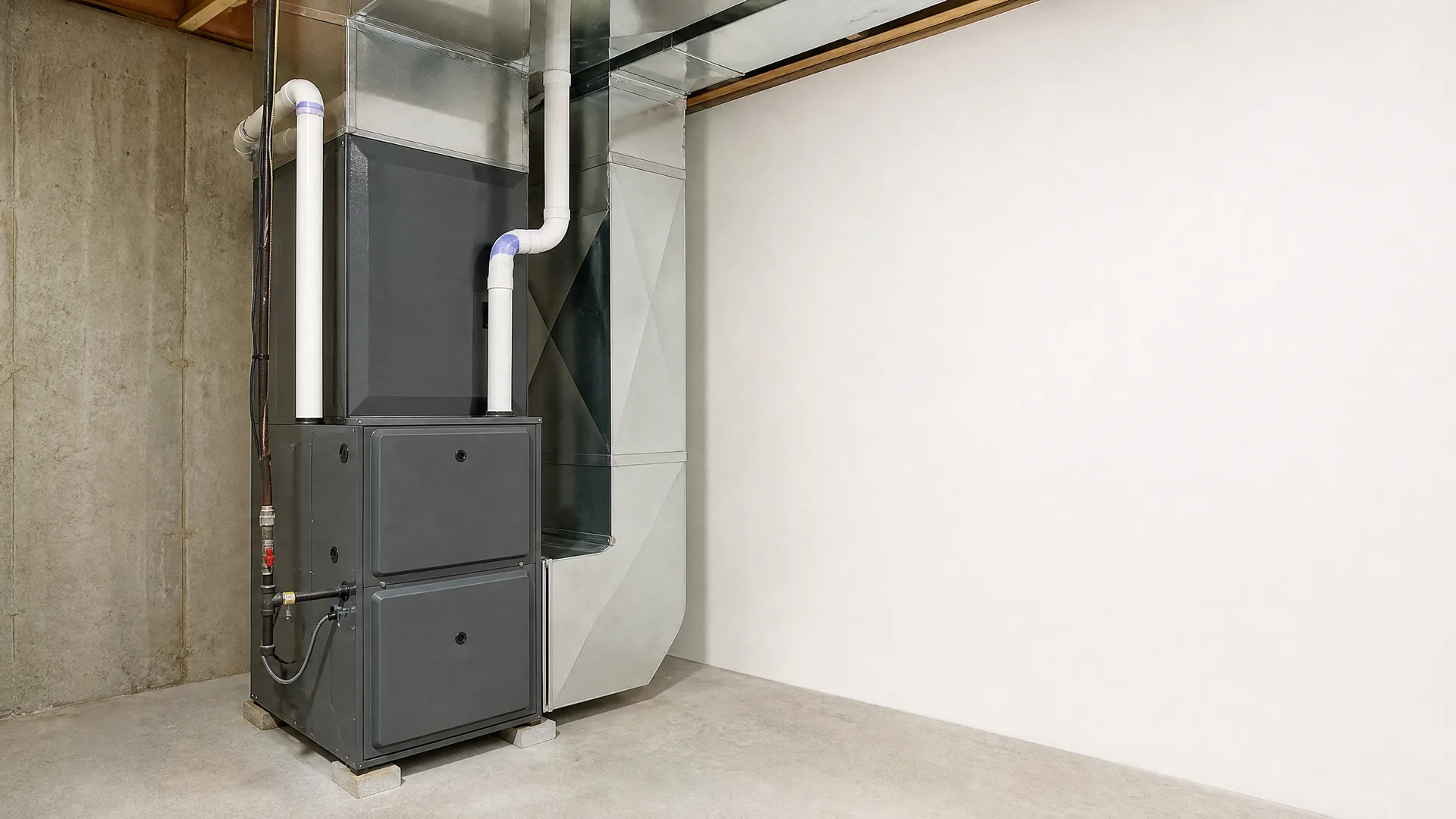
A dark gray high-efficiency furnace with white PVC vent pipes stands against a concrete basement wall, connected to sheet-metal ductwork running along the ceiling joists.

Why cold air works against heat pumps

A heat pump pulls heat out of outdoor air, and the colder that air gets, the less heat there is to pull. Below freezing, the unit has to work harder for the same warmth, and most models lose real capacity somewhere in the teens. Minot sees stretches below zero every winter, and Ward County's average January lows sit well under that line. At that point a heat pump needs backup heat to keep up, which is where the gas furnace earns its place.

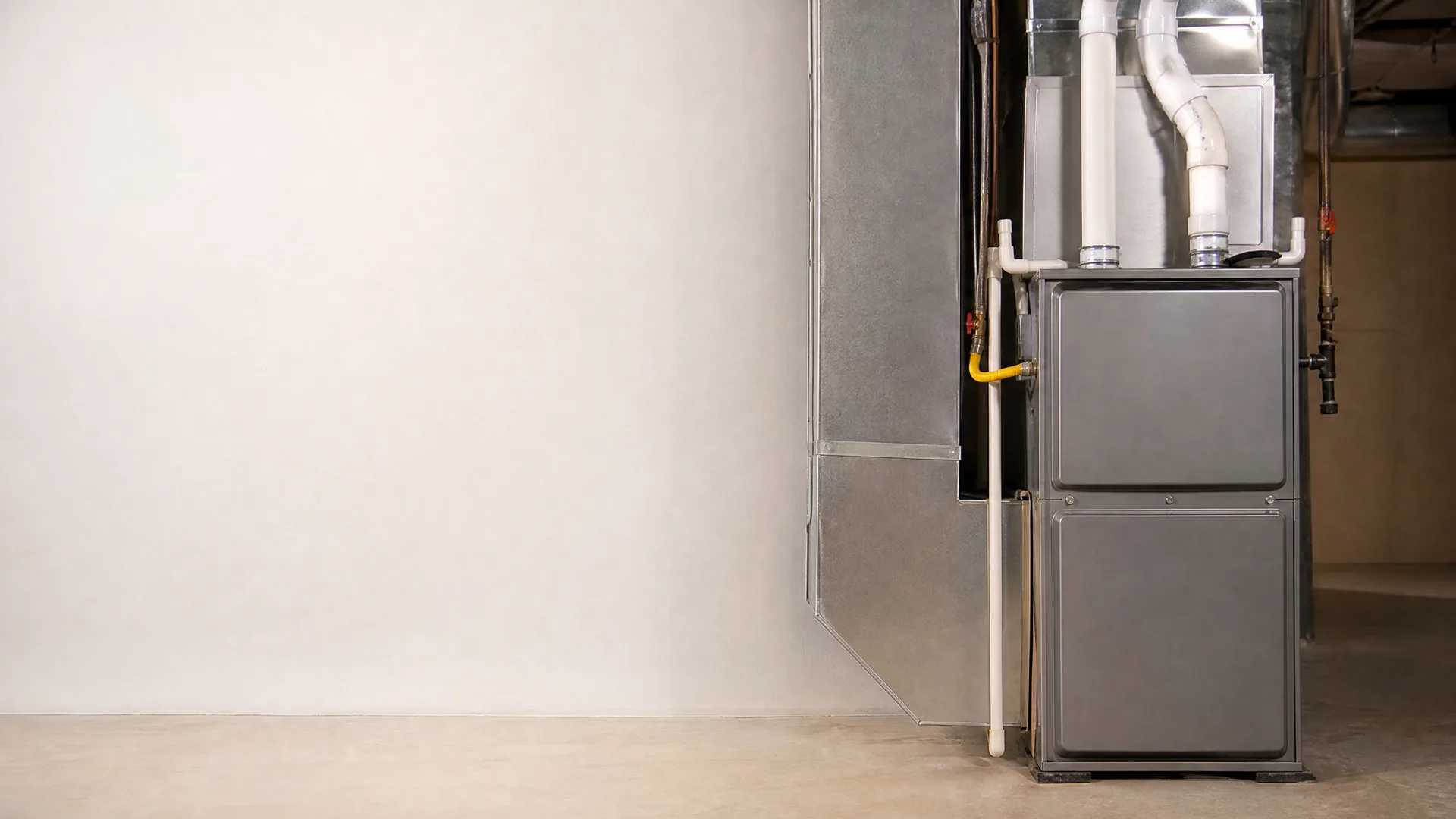
A gray high-efficiency furnace with white PVC vent pipes, a yellow gas line and metal ductwork stands against a plain light wall in a basement with a concrete floor.

What a dual fuel setup actually does

Some homes here pair a heat pump with the existing gas furnace instead of choosing one or the other. The heat pump handles the milder months, and the furnace takes over once outdoor temperatures drop past the point where the heat pump can keep the house warm on its own. A contractor sets the switchover point based on your equipment and your ductwork. It's a middle option worth asking about if you're not ready to pick a side outright.

Gas Furnace vs Heat Pump in Minot

Gas Furnace

  • Keeps full output no matter how far the temperature drops, which matters when Ward County sits at twenty below for days at a stretch.
  • Most homes here already have the gas line and ductwork in place, so a replacement furnace goes into the same spot the old one came out of.
  • Gas here runs cheap, so the fuel cost per hour of heat stays low through the worst of January and February.
  • A new furnace alone costs less to install than a heat pump system sized to handle this climate.
  • Runs on gas, so a power outage doesn't leave you without heat as long as the furnace has its usual electrical hookup for the blower and igniter.
  • Gives you one job: heat. Cooling still comes from a separate air conditioner.

Heat Pump

  • Handles both heating and cooling from one system, so you're not running a furnace and a separate AC unit.
  • Loses heating capacity as the outdoor air gets colder, and most models can't carry the whole load once temperatures fall into the single digits.
  • Needs backup heat for the coldest stretches of a Minot winter, usually electric resistance coils or a gas furnace paired alongside it.
  • Cheap power here helps the electric side of the bill, but it doesn't change how little heat a heat pump can pull from twenty-below air.
  • Costs more up front than a furnace alone, since you're paying for a system built to cover summer cooling too.
  • Works well into the thirties and milder fall and spring days, which is part of the year but not the part that drives your heating bill.
A woman in a cream sweater with her hair in a bun laughs while seated at a stone counter holding a glass of red wine, in a dimly lit interior with a sofa, houseplants and a large window at night.
A woman with long dark hair in a cream knit sweater laughs while looking off to the side, seated in front of a dimly lit kitchen with an island, stools, open shelving and a potted plant, with a glass of red wine in the foreground.
A smiling woman with long dark wavy hair in a light knit sweater sits at a marble counter with a glass of red wine, with a dimly lit living room and kitchen in the background.
A smiling woman with long wavy brown hair in a beige sweater sits at a white marble counter with a glass of red wine, with a living room, dining table and kitchen cabinets behind her.

No quotes to chase

You already know which way this leans for a house in Minot, but the actual decision still has specifics to work out: what furnace size fits your ductwork, whether a dual-fuel setup makes sense for your place, what a straight furnace swap runs compared to adding heat pump equipment you may not need. Working that out usually means calling around to a handful of HVAC companies, explaining your house and your current system to each one, then waiting on quotes to compare. That's hours you don't get back, and it's easy to end up guessing anyway. Submitting the request here sends your details to one licensed contractor working in the Minot area, someone who installs and services both furnaces and heat pumps in Ward County winters and has seen what holds up at twenty below and what doesn't. You get a straight answer on your actual house instead of five sales calls to sort through. Use the button to get that conversation started now, while you still have time to decide before you need the heat.

If you stay with gas

Your house keeps heating the way it already does. The furnace runs on the coldest nights without losing output, so a January morning at twenty below doesn't change how warm the house gets, only how long the furnace runs to get there. If your furnace is old enough that it's due anyway, swapping it for a new one is straightforward since the gas line and ducts are already sized for it. The risk is the one every furnace has: it's an old igniter or heat exchanger away from a cold house some night, same as it's always been.


If you switch to a heat pump

You'd notice it most on the coldest days, when the air outside has little heat left to pull from and the unit works harder to keep up. Some homeowners pair one with a furnace for backup rather than replacing gas outright, so the furnace kicks in once it gets cold enough and the heat pump handles the milder months. Going with a heat pump alone means your house depends on a system that loses capacity exactly when Ward County winters ask the most of it, and that's the part worth weighing against what you'd save the rest of the year.

Winter nights average 5°F

That average includes plenty of nights well below it. A furnace sized for Ward County winters has to hold your house steady at 5°F and still have something left for the nights that drop past it. That's the load a heat pump would be taking over if it ran alone.

NOAA nClimDiv 1991-2020

A beige high-efficiency furnace with white PVC vent pipes stands beside galvanized sheet-metal ductwork in a basement with a concrete floor, exposed wood studs, and metal piping along the wall.

Furnace running as it should

This is what a gas furnace looks like doing its job: PVC intake and exhaust run to the outside, and the sheet-metal plenum overhead feeds ductwork through the house. No flame to see, no smell, just steady heat whenever it calls for it. In a Minot basement, that's what normal looks like.

An older beige furnace with a louvered vent panel stands on a concrete basement floor beside galvanized sheet-metal ductwork, a metal flue pipe and vertical pipes along a concrete wall.

Furnace showing its age

An older furnace like this one still runs fine, usually, but the flue is a telling sign. Flexible metal pipe venting through the block wall means it's drafting the old way, not the sealed PVC system newer furnaces use. When a furnace like this finally quits on a January night, you want to already know who to call.

Why does gas heat make more sense than a heat pump in Minot?

  • Winter nights average 5°F

    Winter nights here average 5°F, and that's the average, not the floor. A furnace has to hold that line without losing output.

  • Heat runs September through May

    Nine months of heating a year means the system you choose is working most of the time you live in this house, not just a few cold snaps.

  • 56.7% of homes heat with gas

    56.7% of homes in Ward County already heat with gas. The lines and ductwork for it are the standard setup here, not an add-on.

NOAA nClimDiv 1991-2020 · ACS 2020-2024

A bearded man in a dark navy sweater over a collared shirt smiles and looks off to the side while seated at a dinner table with a glass of red wine, a lit candle, and a plate of food in the foreground of a dimly lit room.
A woman in a dark gray sweater reclines on a couch with her eyes closed and a knit blanket over her lap, an open book resting face-down in front of her, with a lit table lamp and shelving blurred in the background.
A closed silver laptop and a white cup of coffee on a saucer sit on a wooden table in front of a wooden chair, a plain beige wall, a potted leafy plant and a window with greenery outside.

Gas is the right call for your house in Minot

A furnace holds its output at twenty below. That's the whole case, and nothing about your house changes it. The gas line and ductwork are already there, so the next furnace goes into the same space the old one used.

Finding someone to install it is its own job: looking up contractors, calling a few, walking each one through your house and your ductwork again, then setting their quotes side by side to see who's actually worth hiring. A local contractor who works on furnaces all winter in Ward County already knows what fails first in a house like yours and what size unit it needs. You'd hear from one contractor, not four, and skip the round of calls it usually takes to get there.

A gray upholstered sofa with a beige cushion and knit blanket beside a curtained window, with a white mug and a book on a dark wooden table in the foreground and a lit lamp in the background.
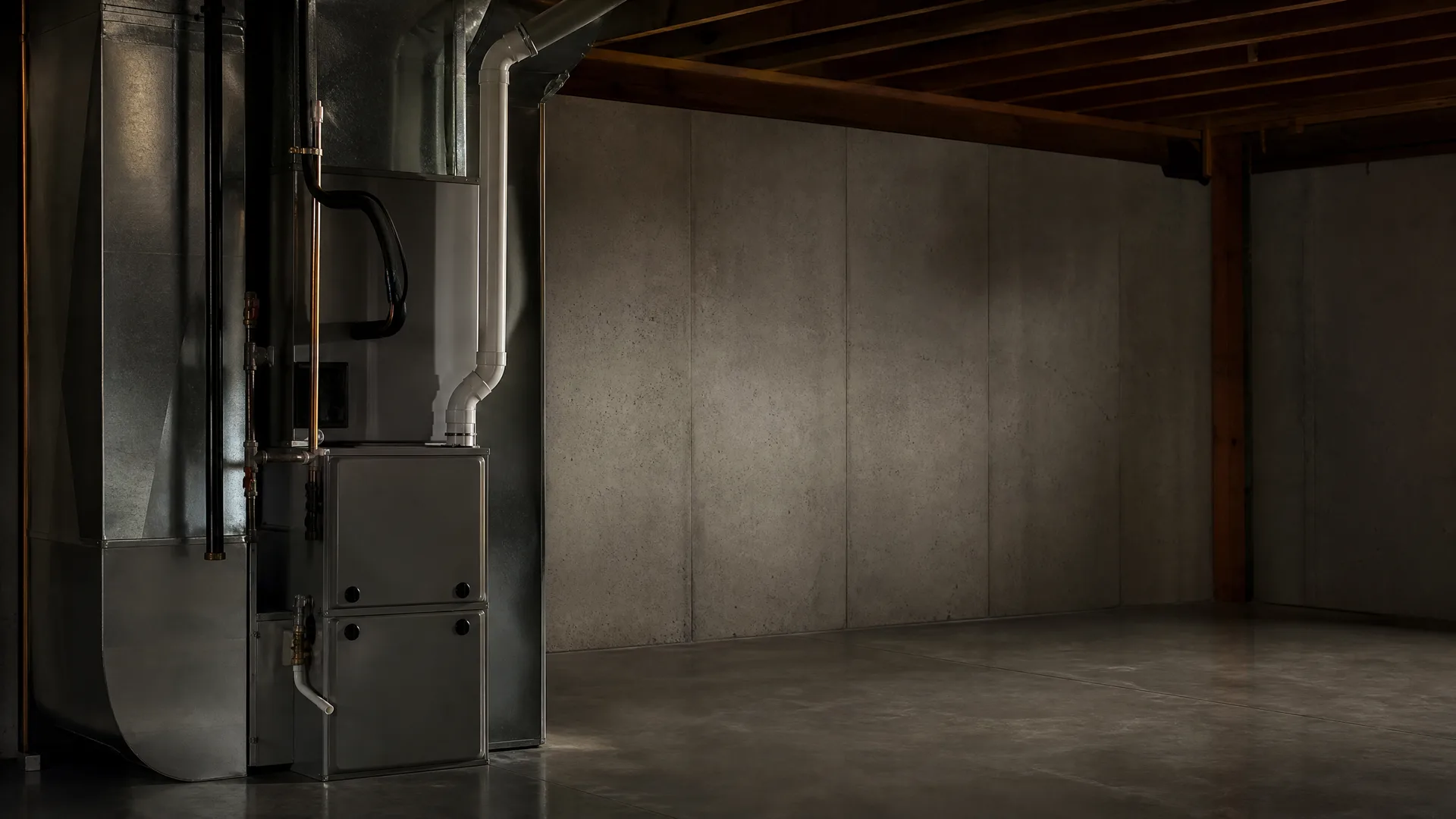
A dimly lit basement with concrete floor and walls, exposed wood joists, and a furnace with sheet-metal ductwork and copper piping on the left side.

Skip the calls to every shop

Your request goes to one pro, not a list of companies.

New system or replacementFurnace or heatingWard County, ND
Step 1 of 2

What ZIP code is the job in?