

A snow-covered suburban street at dusk with lit houses and bare trees under a twilight sky.

Furnace Repair in Minot, ND

Tell us about the job

Takes about a minute. No obligation.

RepairFurnace or heatingWard County, ND
Step 1 of 2

What ZIP code is the job in?

A furnace in Ward County runs from September through May. That's nine months of the year the burner and blower are cycling on and off, trying to keep up with whatever the wind is doing outside. A furnace in a milder state might run half that. More runtime means more cycles on the igniter, more hours on the blower motor, more wear on every part that moves. So when something starts acting up here, it's usually not bad luck. It's a machine that's been working since September and is showing it.

9 months
September through May, your furnace is on duty
5°F
the average winter night it heats against
57%
of homes here heat with gas, so most furnaces here burn gas
27 winter storms
in ten years, the nights a failure hurts most
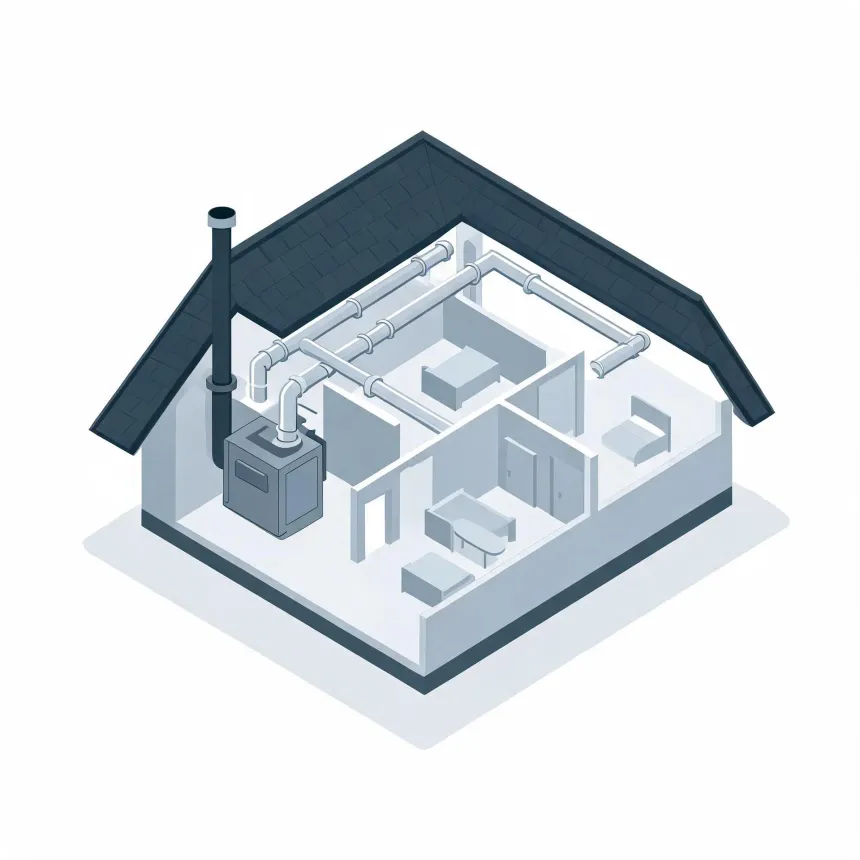
Isometric illustration of a cutaway house showing a dark furnace unit with a flue pipe and branching ductwork running through rooms with simple furniture under a dark gabled roof.
Your furnace works hardest from November through March.

NOAA nClimDiv, 1991–2020 normals

A furnace in Ward County sits idle most of the summer, then gets asked to run every day starting in September.

A part that was already worn from last season is most likely to fail in those first few weeks, not months later in the cold of January.

Natural gas in North Dakota ran $8.44 per million Btu in 2024. That's the fuel behind every cycle your furnace runs here, and a furnace that's working harder than it should turns more of that gas into wasted heat instead of warm air in your house. A clogged burner, a furnace that short cycles instead of running a full cycle, a cracked heat exchanger, all of them mean you're paying for gas that isn't doing its job. That cost doesn't show up once. It shows up on every bill until the problem gets fixed. A furnace acting up in Minot is worth calling about now, not watching for a while to see if it settles down.

Have your furnace checked before it has to work harder

Nine months of runtime means this furnace doesn't get much of a break to show you what's wrong before it has to go back to work. A noise or a short cycle now is worth having a contractor look at before the next cold stretch asks more of it.

Find a contractor
A man in a cap, gray long-sleeve shirt and tan pants walks up stone steps toward a dark blue front door, carrying a waxed canvas tool bag in his right hand.
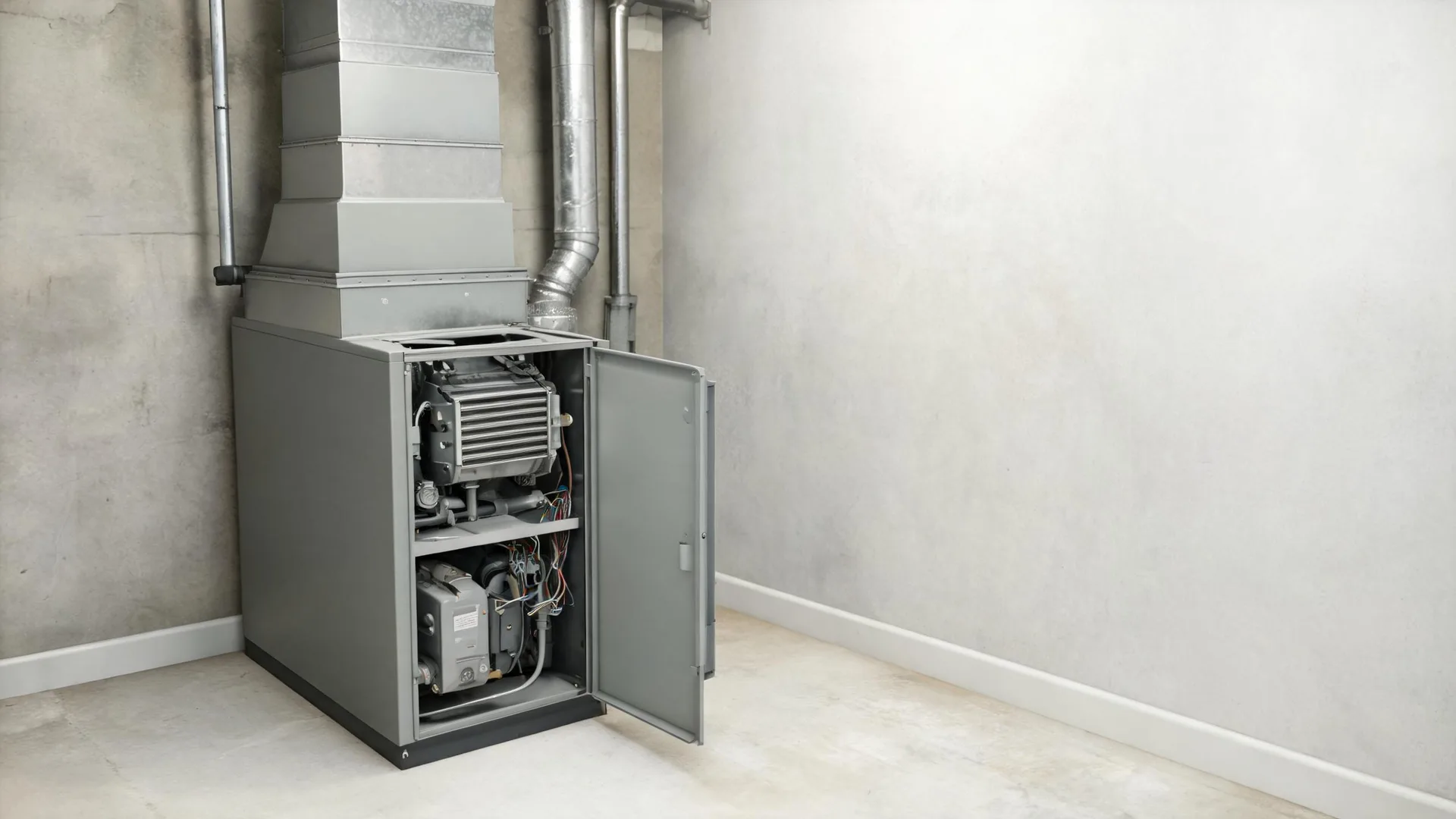
A gray gas furnace with attached ductwork and piping installed in an unfinished concrete basement.

A newer house usually means a furnace with life left in it

Half the homes in Ward County were built in 1984 or later. If yours is one of them, the furnace running right now is probably not the original unit that came with the house. Furnaces don't last as long as houses do, so a newer build doesn't rule out a worn-out part, but it does make a full replacement less likely to be the answer. A cracked heat exchanger is a different conversation in an old furnace than in one that's had only a handful of winters on it. Worth knowing which one you're dealing with before you decide how far to go with a repair.

What you'll notice first

A furnace that's struggling doesn't usually just quit. It tells you first. The blower runs longer than it used to. The air coming out of the vents feels cooler than it should. The burner clicks and tries to light but doesn't catch, or it lights and shuts back off within a minute. Some rooms stay cold while others heat fine, which usually points to the blower not moving enough air through the ducts. A burning or metallic smell when it kicks on is worth paying attention to right away, not waiting on.

Why it's worth a look now

A furnace with a bad igniter or a failing flame sensor will keep trying to start and keep failing, and each attempt puts more strain on the parts around it. A cracked heat exchanger can let exhaust mix into the air the blower pushes through the house, which isn't something to leave alone. Waiting rarely makes any of these cheaper or simpler to fix. It just gives a small problem more time to turn into a bigger one, usually on the coldest night it can.

An unfinished basement containing a gray HVAC furnace with ductwork, exposed wooden joists, a concrete floor, and miscellaneous clutter in one corner.

A new furnace would cut about $120 a year off heating for a typical Ward County home.

  • A new high-efficiency furnace$480 a year
  • An older furnace$600 a year

Estimates for a typical Ward County home, compared with an older unit built to the previous federal minimum, from EIA household energy data, North Dakota fuel prices and NOAA climate normals. Your home will differ.

Repair makes sense when one part has failed and the heat exchanger is sound.

Replacement makes sense when the heat exchanger is cracked or the furnace keeps needing parts.

A repair is usually the right call if the furnace is otherwise running fine and the problem is one part acting up. A new igniter, a new flame sensor, a new blower motor, these are normal repairs on a furnace that still has good years in it. Replacement starts to make more sense when the heat exchanger is cracked, or when the same problem keeps coming back after it's been fixed, or when the parts needed are no longer easy to get for that model. Age matters too, but not by itself. A furnace near the end of its expected life that needs a major part replaced is a different decision than a young furnace with the same issue. A contractor can look at the specific part that failed and tell you honestly which side of that line you're on.