




A gray forced-air furnace with metal ductwork stands in an unfinished basement with exposed wooden joists, concrete walls, and a single hanging light bulb.

Furnace Repair in Fort Yates, ND

Tell us about the job

Takes about a minute. No obligation.

RepairFurnace or heatingSioux County, ND
Step 1 of 2

What ZIP code is the job in?

Your furnace in Fort Yates runs from September through May. That's nine months of the year it's expected to fire up and keep working, not just a few cold snaps. Overnight lows average 7°F through December, January and February, so on the coldest nights it's running close to flat out for hours at a stretch. That kind of use adds up on an igniter, a blower motor, a pressure switch. If something's acting up now, it's probably not random. It's wear that's been building since fall, finally showing itself.

9 months
September through May, your furnace is on duty
7°F
the average winter night it heats against
30 winter storms
in ten years, the nights a failure hurts most
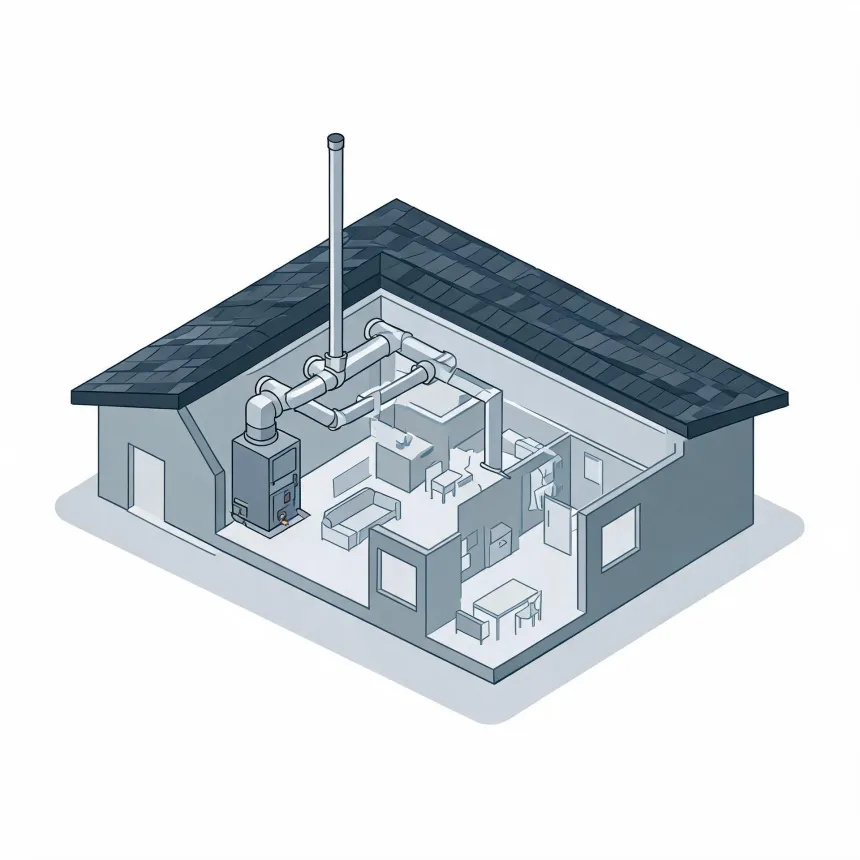
Isometric cutaway illustration of a single-story house showing interior rooms with furniture, a furnace unit with connected ductwork and a tall vertical flue pipe extending above the dark shingled roof.
Your furnace works hardest from November through March.

NOAA nClimDiv, 1991–2020 normals

Half the homes in Sioux County were built in 1984 or later.

A furnace that came with a newer house still has years in it, and wear from hard winters is usually something a repair can fix.

Propane here runs $17.33 per million Btu, so a furnace losing efficiency costs you all winter long

Heat runs September through May
Winter nights average 7°F
Climate zone 6A

August is worth paying attention to. Heat kicks on in September here, and the first real cold is when a weak igniter or a failing pressure switch finally gets found out. A part that was limping along in spring won't announce itself until the furnace has to run for real, and that's usually the first few weeks, not months in. If your furnace struggled last season, coughed on startup, short cycled, took a few tries to light, that same part is still in there. Getting it looked at before September beats finding out the hard way once the season's underway.

Get the cause found now, not in January

Nine months of heat a year and nights down near 7°F don't leave a furnace much time to rest. If yours is acting up, get it looked at and fixed properly now, so it's not quitting on you in January.

Find a contractor
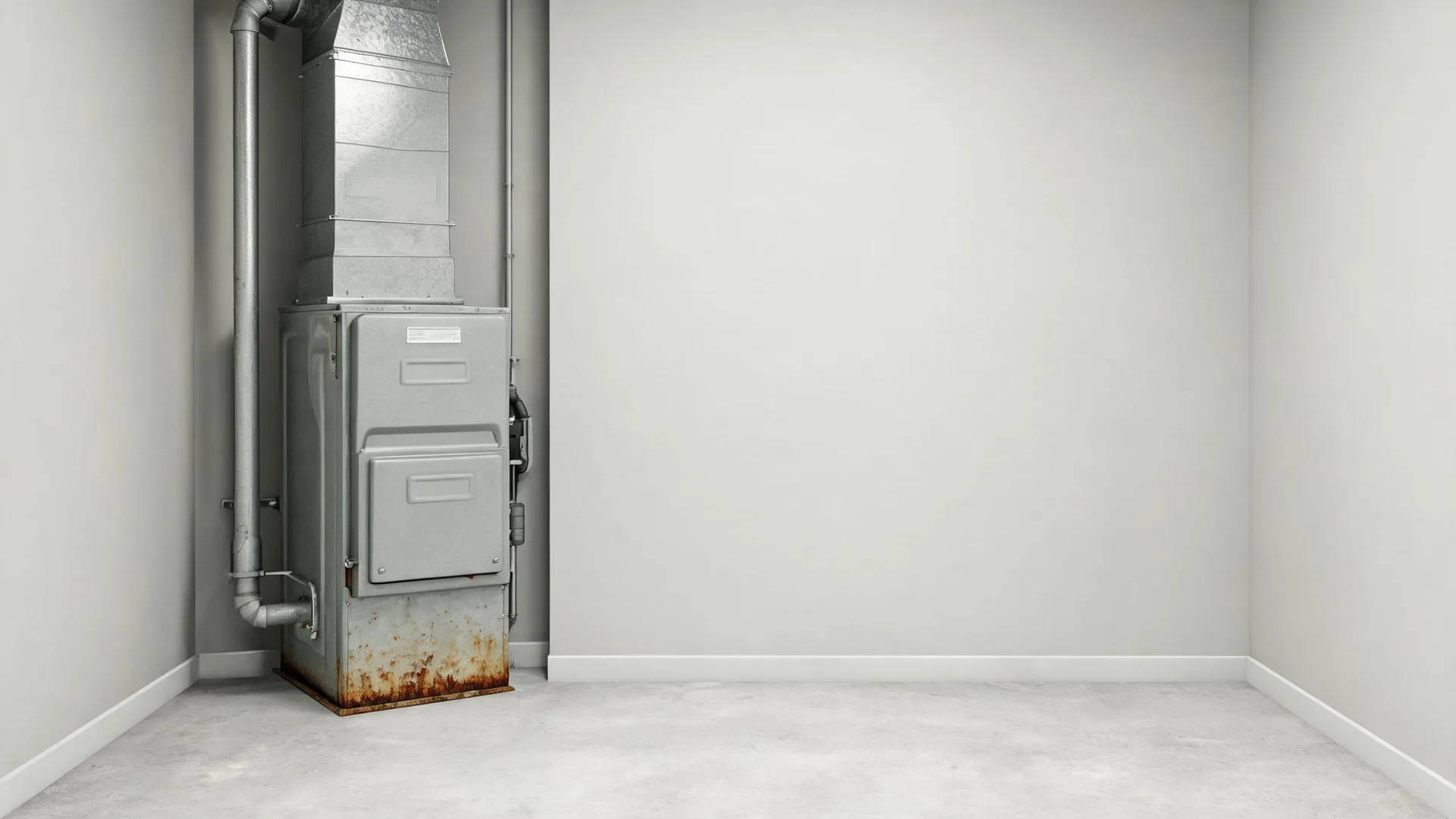
A gray residential gas furnace installed in an unfinished basement, connected to sheet-metal ductwork and PVC pipes.

The parts that wear out, and why

Most furnace failures trace back to a handful of parts, and they tend to go in the same order. The igniter is usually first. It heats up to light the gas, and that filament wears a little thinner every time it fires. Eventually it cracks or stops glowing hot enough, and the furnace tries to start but never catches. After that it's the flame sensor, a small rod that proves to the control board there's actually a flame once the gas valve opens. Let it build up a coating of oxidation and the board shuts the gas off a few seconds in, thinking nothing lit. The blower motor is the other big one. It runs the longest of any part in the system, and the bearings inside it wear down over years until the motor runs hot, seizes, or starts making a grinding or whining noise before it quits. A pressure switch can fail too, usually from dust or a cracked tube, and when it does the furnace won't start at all because it can't confirm the draft is pulling right. None of these fail from one cold snap. They fail from the plain accumulation of on and off cycles, one winter after another, until the part that always worked finally doesn't.

What you can check safely

Start with the thermostat. Make sure it is set to heat and set above room temperature, and check the batteries if it takes them. At the furnace, pull the filter and look at it. A filter packed with dust chokes airflow and can make the furnace shut itself off partway through a cycle, so if it looks gray and solid instead of white, swap it. Check the furnace switch, the one that looks like a light switch on or near the unit, and make sure it is flipped on. Check the breaker it runs on too, since a tripped breaker stops the furnace cold with no warning sound at all.

What to leave to a contractor

A furnace that will not fire, or lights and then shuts off a few seconds later, even with a clean filter and the thermostat calling for heat, has a problem with the gas valve, the igniter, the flame sensor or the pressure switch. None of those are safe or sensible to open up without training. A smell of gas, a flame that looks yellow instead of blue, or a new grinding or booming sound is worth a call right away rather than waiting. A contractor can test each part with a meter in a few minutes, which is faster and safer than guessing at it.

An unfinished concrete basement containing a gas furnace with sheet-metal ductwork, utility shelving, and exposed overhead joists.

A new furnace would cut about $210 a year off heating for a typical Sioux County home.

  • A new high-efficiency furnace$850 a year
  • An older furnace$1,060 a year

Estimates for a typical Sioux County home, compared with an older unit built to the previous federal minimum, from EIA household energy data, North Dakota fuel prices and NOAA climate normals. Your home will differ.

Repair makes sense when one part has failed and the heat exchanger is sound.

Replacement makes sense when the heat exchanger is cracked or the furnace keeps needing parts.

A diagnostic visit starts before any panel comes off. A contractor will ask what the furnace was doing right before it quit, whether it tried to light and failed or never attempted at all, and whether you heard or smelled anything unusual. That history narrows things down fast. From there it's a meter, not a guess. Each part, the igniter, the flame sensor, the pressure switch, the gas valve, carries a signal a meter can read, and a working part reads within a known range while a failing one doesn't. Testing in sequence, following the same order the furnace itself fires in, usually finds the fault in minutes rather than hours. Once it's found, the contractor can tell you plainly whether it's a single part or a sign of something bigger.