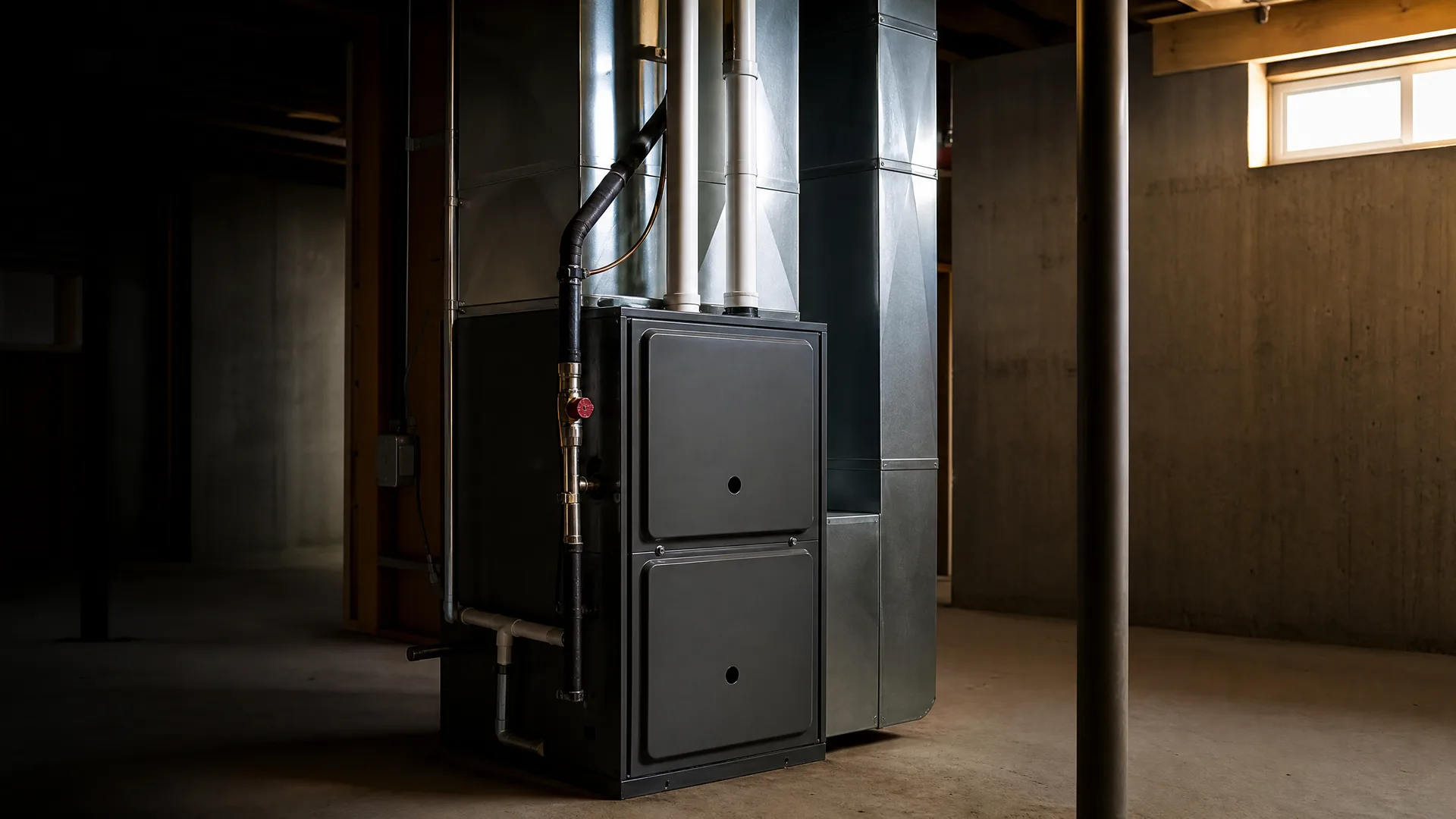


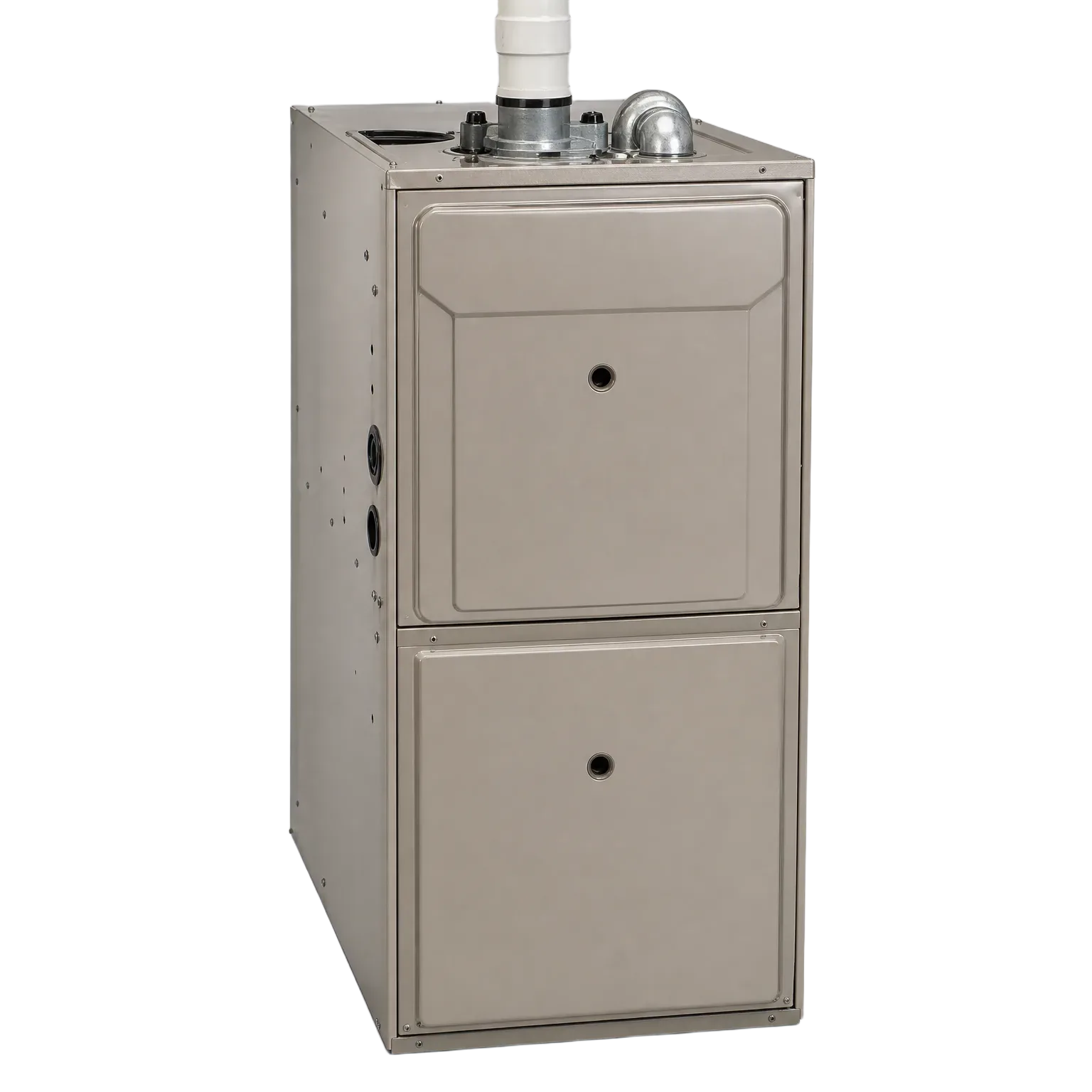
A gray high-efficiency furnace with two white PVC vent pipes stands beside galvanized sheet-metal ductwork in a dim basement with exposed joists and a concrete floor.

One request and it's handed off

Heat pump vs gas heat in Bismarck, ND

Winters in Bismarck are hard on a furnace, and a heat pump works on a different idea than the gas system you have now. This page gets into how each one holds up here, what gas costs against cheap power, and which makes sense for your house. Send the form and skip the work of calling around for someone who can walk you through it.

Hand it over

In Bismarck, gas heat is the safer bet for most houses, and a furnace stays the main or backup source even if a heat pump gets added. The reason is the cold itself. A standard heat pump loses capacity as the outdoor air drops, and once temperatures sit well below freezing for stretches, as they do here from December through February, it has to lean on backup heat strips to keep up, which cost more to run than a furnace. Newer cold-climate heat pumps hold their output lower, but there is still a point on a hard January night where gas is doing more of the work. For your house, that means a furnace isn't optional here, and a heat pump makes sense as a way to cut gas use in fall and spring rather than as a full replacement. Power here is cheap, which helps the math, but it doesn't change what the cold does to the equipment itself.

A smiling bearded man in a dark green hooded jacket and blue t-shirt sits on a couch in a living room with shelves, a potted plant, and a bowl of popcorn on a wooden table.
A smiling man in a green long-sleeved shirt sits on a beige sofa in a living room, with a bowl of popcorn in the foreground, a large potted plant and shelving behind him.
A smiling man in a dark blue T-shirt sits on a couch in a dimly lit living room with a bowl of popcorn and a remote on a wooden table, a lit floor lamp and bookshelves behind him, and windows showing greenery.
A smiling bearded man in a dark green long-sleeved shirt sits on a leather couch in a living room, with a bowl of popcorn and a remote control on a wooden table in the foreground.
A gray high-efficiency furnace in a basement, connected to sheet-metal ductwork on the left and white PVC vent pipes above, with black gas and drain piping and an exposed wood-stud wall with OSB sheathing on the right.
A gas furnace like this one keeps the house warm straight through a January cold snap without losing capacity.
An older gas furnace with two louvered front panels stands on a concrete basement floor beside galvanized sheet-metal ductwork, pipes, and a weathered concrete wall.
A furnace in this shape is still running on gas alone, with no heat pump to share the load once winter sets in.
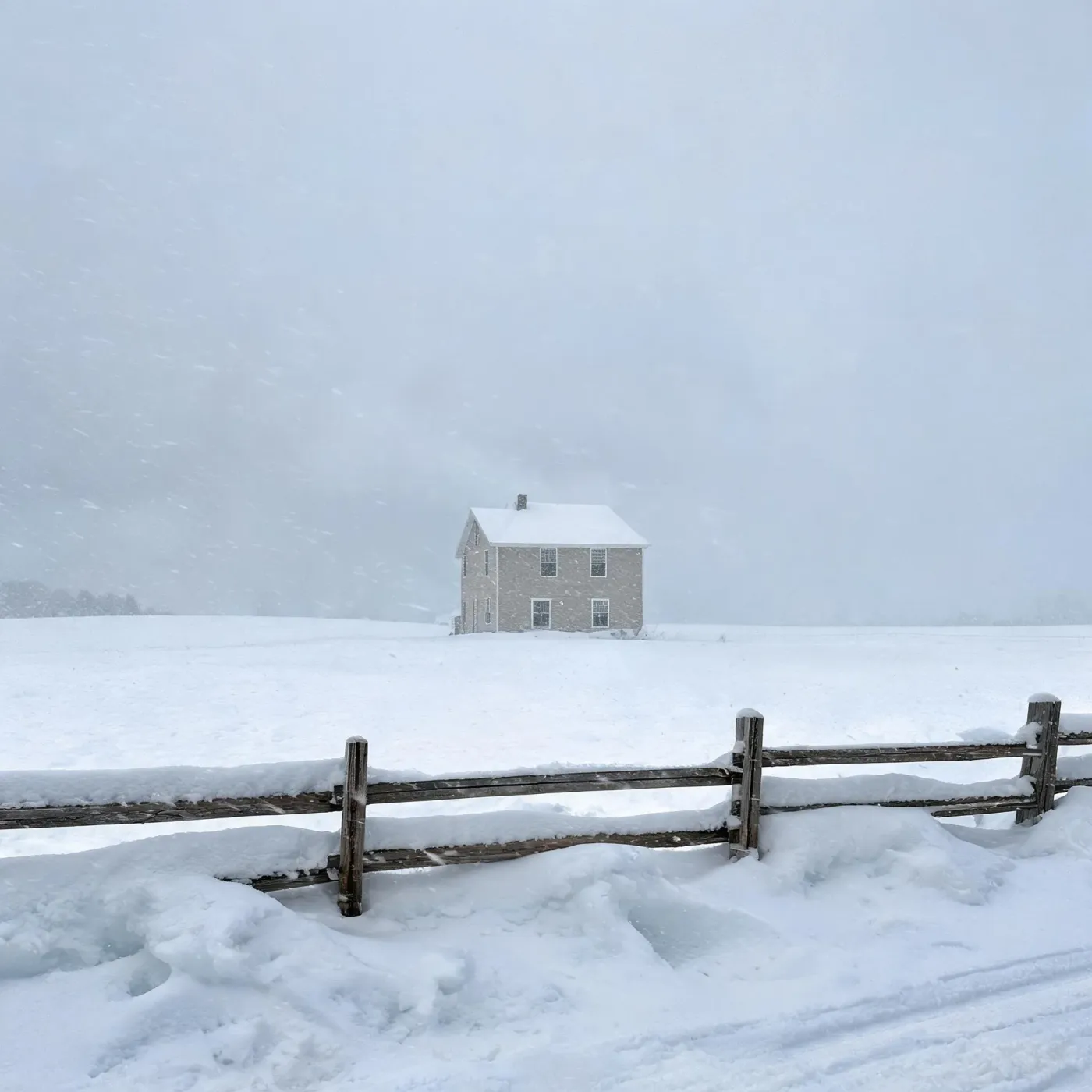
A two-story house with a snow-covered roof and chimney stands alone in a white field during falling snow, with a wooden post-and-rail fence in the foreground.

Overnight lows here average 5°F across December, January and February, NOAA climate data for Burleigh County shows. That's the stretch where a heat pump without backup falls behind. A gas furnace doesn't care how far the temperature drops. It fires the same burner at 5 degrees as it does at 35, and the house holds its heat. You'll notice it most around 2 or 3 in the morning, when the furnace is running close to nonstop just to hold the thermostat set point and the air coming out of the vents still feels hot to the hand.

NOAA nClimDiv 1991-2020

Gas Furnace vs Heat Pump

Gas Furnace

  • A furnace fires at full output no matter how cold it gets outside, so a night at 20 below gets the same heat as a night at zero.
  • Gas here is cheap enough that running a furnace all winter doesn't compete with electricity on cost the way it does in other states.
  • A furnace that's already in the house and venting properly can usually be replaced with a similar unit without touching the ductwork.
  • Parts like igniters and flame sensors are common failures and most heating contractors in the area carry them or can get them fast.
  • A furnace does nothing for you in July, so the house still needs a separate air conditioner for the warm months.

Heat Pump

  • A heat pump moves heat instead of burning fuel, which means it can also run in reverse and cool the house in summer.
  • Capacity drops as the outdoor temperature drops, and below a certain point the unit can no longer keep up with a Bismarck winter on its own.
  • Paired with a furnace as backup, it can handle the milder stretches of fall and spring while the furnace takes over once it's truly cold.
  • Installing one means adding an outdoor unit and the refrigerant lines to go with it, not just swapping one box for another.
  • Cheap electricity here doesn't help a heat pump much, since the savings come from efficiency rather than a lower rate per kilowatt-hour.
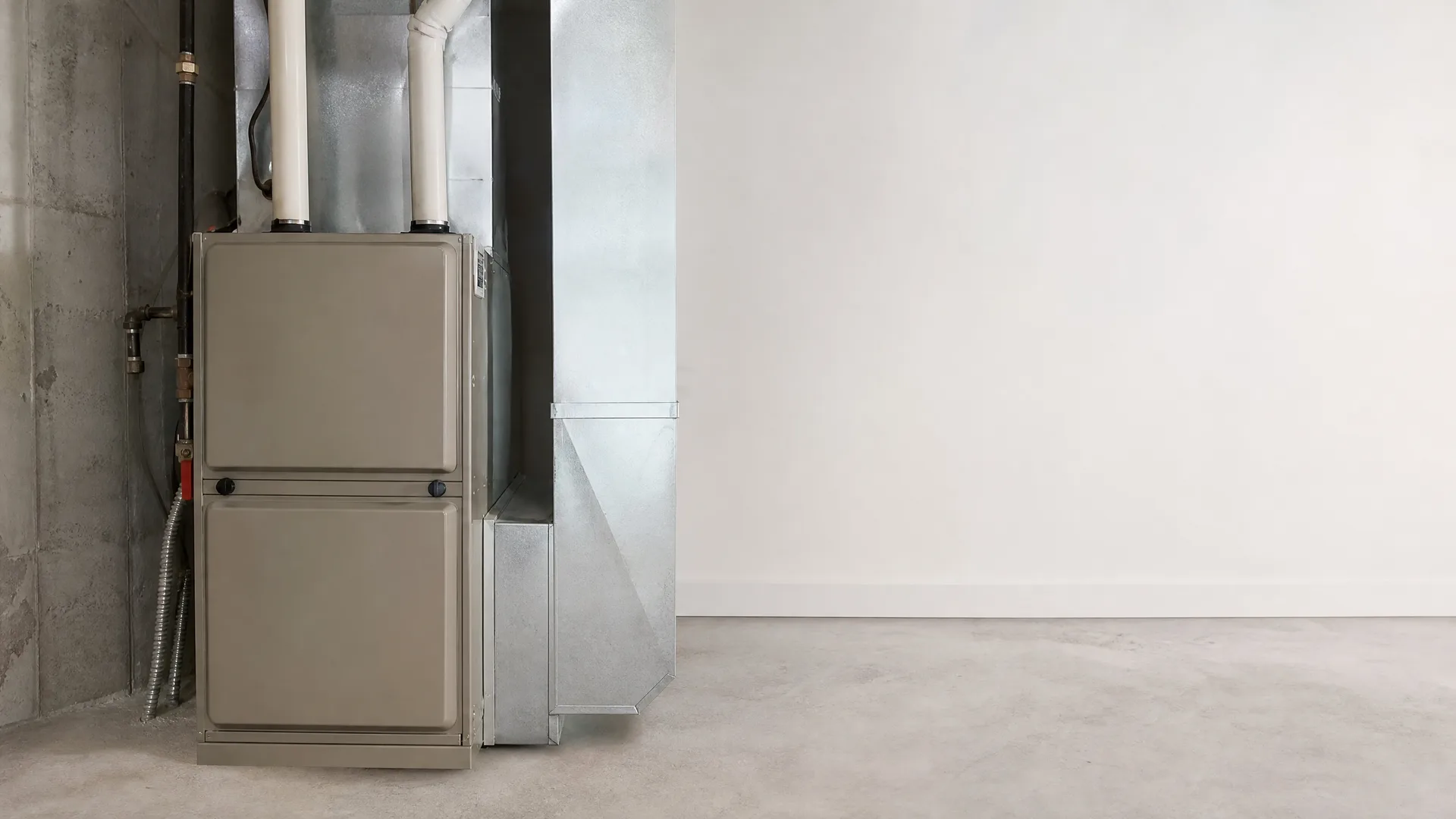
A beige high-efficiency furnace with two white PVC pipes stands beside sheet-metal ductwork and a concrete wall in an empty basement with a bare light-colored wall and concrete floor.

What a heat pump still gives you

A heat pump moves heat instead of burning gas, and that works both directions. Come July, the same unit pulls heat out of the house and runs as your air conditioner, so you're not paying for a separate AC system. Through the shoulder months, when it's 40 or 50 outside, a heat pump covers the house on its own and the furnace can sit idle. It's only once the outdoor air drops hard that the furnace has to take over.

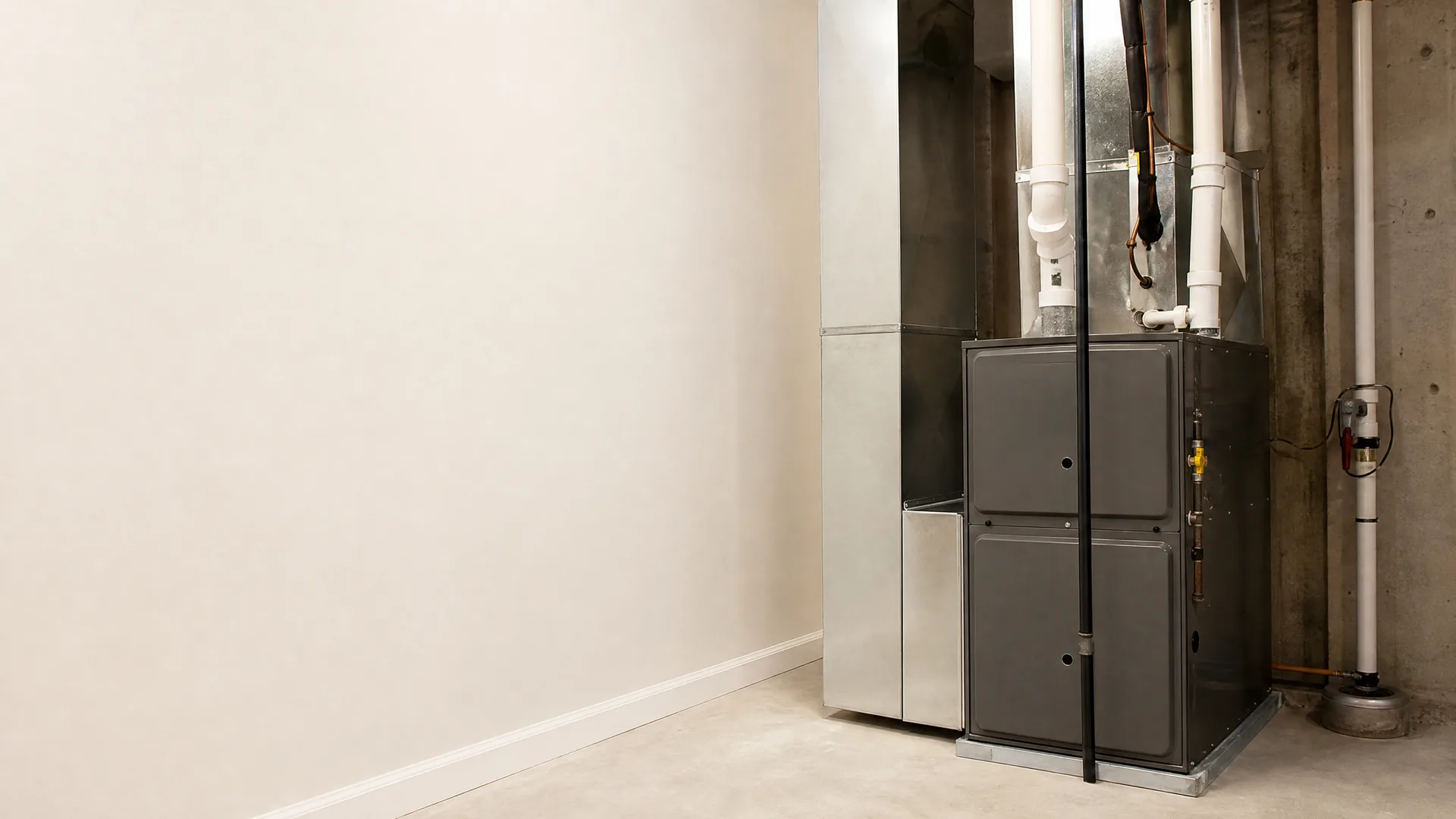
A gray furnace with sheet-metal ductwork and white PVC vent pipes stands in the corner of a finished basement room with a blank beige wall and concrete floor.

Why the switchover matters

A dual fuel setup puts a thermostat or an outdoor sensor in charge of deciding which system runs. Above a set outdoor temperature, the heat pump handles the house. Below it, the system switches to the furnace automatically, no one touching a dial at 2 a.m. Getting that switch point right for Bismarck's winters is part of the install, not something you set once and forget, and it's why this is a job for a contractor who knows the local cold.

How does a heat pump actually keep a house warm when it's below zero outside?

A furnace makes heat by burning gas. A heat pump doesn't burn anything, so it's fair to wonder how it pulls warmth out of air that's already freezing cold outside. The idea seems backward until you know what's actually happening inside the unit.

It pulls heat out of outdoor air and moves it indoors, even when that air is cold

A heat pump runs refrigerant through a cycle, the same way your fridge does. The refrigerant absorbs heat from the outdoor air, even air well below freezing still holds some heat, then a compressor raises its pressure and temperature, and that heat gets released inside the house through the indoor coil. No flame, no gas line, just heat moving from one side of the system to the other. The catch is capacity. As the outdoor air gets colder, there's less heat in it to pull, so the unit works harder to deliver the same warmth. Below a certain point, a standard heat pump can't keep up on its own, which is why a backup heat source matters once Bismarck winters set in.

  1. Outdoor coil pulls heat out of the cold air itself

  2. A refrigerant gas carries that heat into the house

  3. The compressor squeezes the gas to raise its temperature further

  4. Indoor coil releases that heat into the air your ducts carry

A gray sheet-metal furnace with flue pipe and adjacent ductwork stands against a stone basement wall on a concrete floor, with white PVC and metal pipes running nearby.
Before you get your furnace installation
A gray high-efficiency furnace with white PVC vent pipes stands against a concrete basement wall beside sheet-metal ductwork, a small condensate pump on the floor, and exposed wood framing at left.
After you get your furnace installation

Done looking for a furnace pro

Describe your furnace job once, to one pro.

It costs nothing to send, and you don't have to hire anyone.

If you stay on gas alone

Your furnace keeps doing what it already does. It fires at full output on the coldest night of the year the same as it does in October, so nothing about how your house feels in January changes. The gas bill moves with the weather, heavier in December and January than in a mild stretch, but you're not watching a thermostat for signs the system is falling behind. The risk is the furnace itself. It's the only thing standing between your house and a cold snap, so a breakdown in February isn't a minor repair, it's a house with no heat until someone fixes it.


If you add a heat pump

You'd notice it most in the shoulder months, spring and fall, when it can carry the house on electricity instead of gas. Once temperatures drop hard, it loses capacity and the furnace has to pick up the difference, so you're running two systems instead of one and leaning on whichever one matches the weather outside. That split carries some cost of its own, the equipment and the install, and it only pays you back if the electric savings in the milder months add up to more than that. Your furnace still has to be sized to carry the house alone on the worst nights.

A woman in a dark gray sweater reclines on a light sofa with eyes closed and a slight smile, under a textured gray blanket with an open book resting on her lap, with a lit table lamp and plant in the background.
A smiling bearded man in a navy crewneck sweater sits at a dinner table with a glass of red wine, plates and glasses in the foreground, in a dimly lit room with a lamp and framed picture behind him.

How a dual fuel setup decides

  • A dual fuel setup pairs a heat pump with your existing furnace instead of replacing it.
  • The heat pump handles the milder months and the furnace takes over once it gets too cold for the heat pump to work efficiently.
  • A switchover point, often somewhere between 25 and 35 degrees, tells the system when to stop using the heat pump and start the furnace.
  • Your thermostat or a separate control board tracks outdoor temperature and makes that switch on its own.
  • The furnace still needs its gas line, vent and ductwork in place, since dual fuel adds the heat pump onto that system rather than removing it.
  • Sizing the heat pump for shoulder season demand, not for January's cold, is what keeps the setup from running the furnace more than it should.

A dual fuel system keeps the furnace you already have and adds a heat pump alongside it, so neither one carries the whole winter by itself. The heat pump takes the months where the outdoor air is still mild enough for it to move heat efficiently, usually the shoulder months on either side of the hard cold. Once the outdoor temperature drops past a set point, often somewhere between 25 and 35 degrees, the system hands the job to the furnace. That handoff isn't something you manage yourself. A thermostat or a control board wired into the system reads the outdoor temperature and switches fuel sources on its own, so the house stays warm through the changeover without anyone adjusting a setting.

Nothing about the furnace side changes just because a heat pump gets added. The gas line, the vent and the ductwork all stay exactly as they are, because the furnace still has to fire the same way it always did once temperatures drop low enough. The heat pump sits on top of that system rather than replacing any part of it.

The sizing matters more than people expect. A heat pump sized to handle Bismarck's coldest nights would run oversized and inefficient the rest of the year. Sizing it instead for the milder stretch it's actually meant to cover is what keeps the furnace doing the job it's built for once January sets in.

Why does gas heat still make sense here?

  • Winter nights average 5°F

    Nine months of heat, nine months of nights that drop into the single digits. Gas carries that load without losing output.

  • Heat runs September through May

    A furnace works the same at 5°F as it does the night winter starts, in September. That's most of your year on gas.

  • 63.6% of homes heat with gas

    63.6% of homes in Burleigh County already heat with gas. That's not habit, it's what holds up through a Bismarck winter.

NOAA nClimDiv 1991-2020 · ACS 2020-2024

A closed silver laptop and a glazed ceramic mug on a wooden table, with a blurred kitchen counter, potted plant, cutting board and window in the background.

Gas heat still carries Bismarck through winter

A furnace is the right call for most houses in Burleigh County, and a heat pump is only worth adding if you want the summer cooling that comes with it. That's the answer. The cold here doesn't let up long enough for a heat pump to do the job alone, and gas is cheap enough that there's no real reason to push it to try.

What changes now is how you get there. Instead of searching around for a contractor, calling a few, explaining the same thing about your house and your furnace to each one, then sitting with quotes trying to compare them against each other, you send one form. Whoever reaches out already knows what you're deciding between and why. The decision is simple once you see it laid out. Finding someone to install it shouldn't be the hard part.

A dark ceramic mug on a round wooden table beside a light grey sofa with a woven cushion and knit throw, with a window, potted plant, floor lamp and wooden cabinet blurred in the background.
A dark gray high-efficiency furnace with two white vent pipes and connected sheet-metal ductwork stands in an unfinished basement with concrete walls, a support pole, and a small window.

It's off your list after this

New system or replacementFurnace or heatingBurleigh County, ND
Step 1 of 2

What ZIP code is the job in?