A snow-covered small-town street at dusk, lined with illuminated two-story houses and a grain elevator on the horizon.

Heat Pump Repair in Wahpeton, ND

Tell us about the job

Takes about a minute. No obligation.

RepairHeat PumpRichland County, ND
Step 1 of 2

What ZIP code is the job in?

A heat pump that runs year round

A heat pump in Richland County doesn't get a season off. It's pulling heating duty through a long, cold winter, then switching over to cool homes in the summer. That's more total run hours than a system that only handles one job, and more hours means parts wear down sooner.


What that means for a repair here

When a heat pump in this county breaks down, it's often a part that's simply worn out ahead of schedule, not a one-off defect. A reversing valve, a contactor, or a sensor that's been cycling constantly for years will fail sooner than the same part running half as much. Finding the actual cause matters more here than a quick patch.

9 months
September through May, your system heats
3 months
June through August, it cools
5°F
the average winter night it heats against
80°F
the average summer afternoon it cools against
Isometric line illustration of a cutaway house showing interior rooms with furniture, ceiling ductwork connected to an indoor air handler, and refrigerant lines running to an outdoor condenser unit on a pad.
Your system heats September through May and cools June through August.

NOAA nClimDiv, 1991–2020 normals

September is when heat takes over here, nine months of it through May.

A heat pump limping along in August often fails in the first cold snap, right when a weak part finally meets a full load.

A struggling heat pump still runs up the meter

Power here costs 12.47 cents per kilowatt-hour
Climate zone 6A
Cooling runs June through August
Half the Homes Here Are Older Than the Heat Pumps Running ThemIn Richland County, half the houses were built in 1972 or earlier.

A heat pump that's low on charge or struggling to switch modes doesn't just heat or cool poorly, it draws more power doing it. The compressor runs longer trying to hit the thermostat setting, and in a county where electric heat is the norm, that extra runtime shows up on next month's bill before it shows up as a full breakdown. Waiting to see if it gets worse usually means paying more for less heat in the meantime. A system running on a weak part is already costing you something every day it's left alone.

A worn part found now is a fix. Left alone, it's a breakdown.

Your heat pump has been cycling on and off for years without a break. That kind of run time catches up with a reversing valve or a contactor before it should. A proper diagnosis finds the part that's actually failing instead of guessing at it, and that's what makes the repair hold.

Find a contractor
A man in a cap, dark shirt and tan work pants walks up stone steps toward a dark blue front door, carrying a canvas tool bag, with a potted shrub beside the entry.
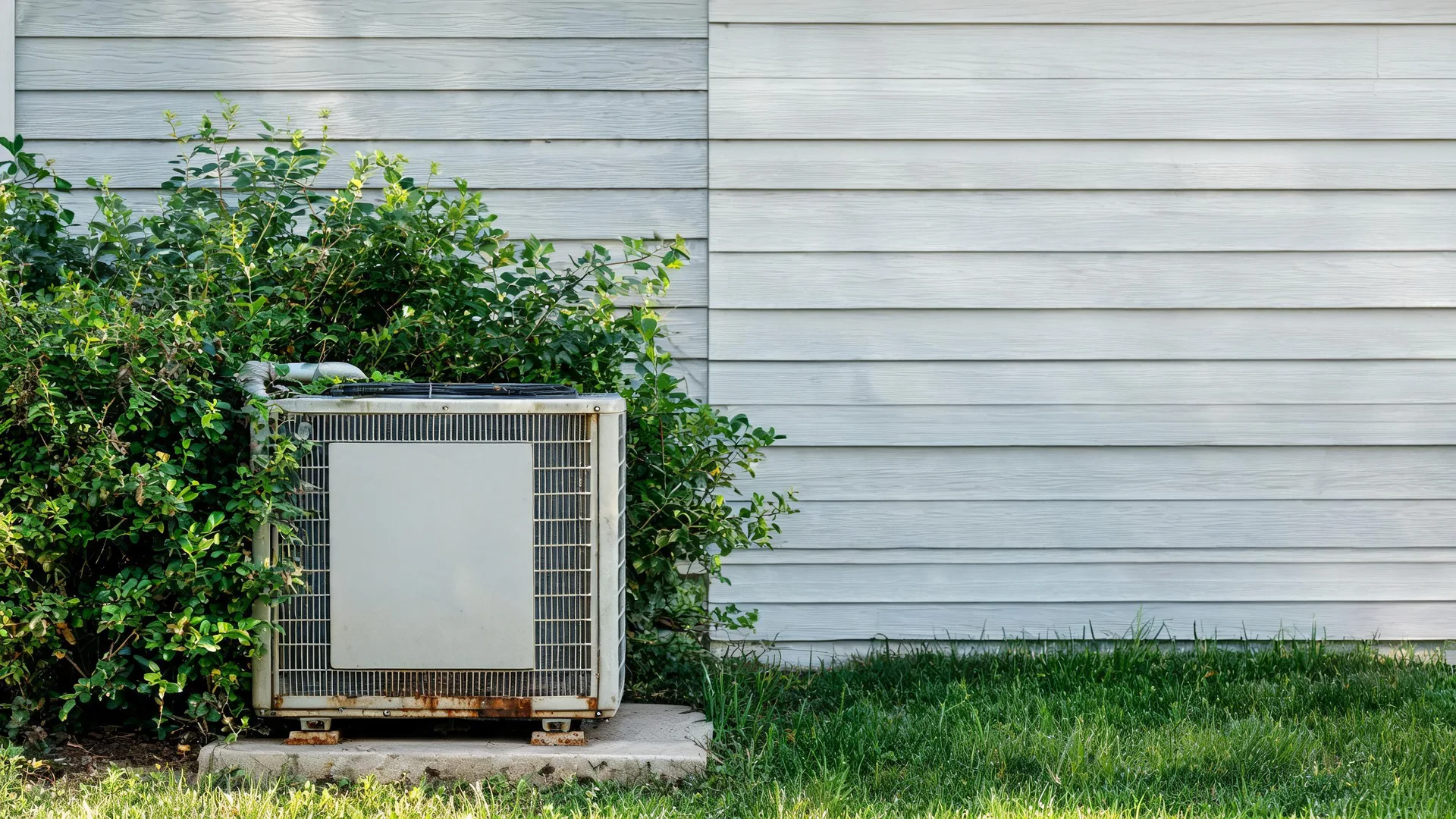
A dark gray heat pump unit mounted on a concrete pad next to a house with gray siding and a stone veneer wall.

Know the Age Before You Pay for the Repair

If your heat pump came with the house, ask the contractor how old it actually is before approving a repair. A house built decades ago can still have a heat pump from last year, so the house doesn't answer the question, only a look at the unit does. Once you know its age, the repair decision gets simpler. A reversing valve or a compressor is worth replacing on a system with years left in it. On a unit near the end of its run, that same part is the first of several, and the next bill is already waiting behind it.

What a failing heat pump sounds and feels like

Air coming from the vents that's lukewarm instead of hot or cold is usually the first thing anyone notices. The system is running, the fan is moving air, but it isn't doing its job. A clicking sound when it tries to switch between heating and cooling points to the reversing valve. Ice building up on the outdoor unit when it should be defrosting itself points to the defrost control or the sensor that tells it when to kick in. Short cycling, where it turns on and off every few minutes instead of running a full cycle, wears out the compressor faster every time it happens.

Which signs mean call now, not later

A heat pump that won't switch from heating to cooling, or the other way around, needs a contractor out before the next big swing in weather, not after. Ice that doesn't melt off during the defrost cycle will keep building until the outdoor unit can't pull in air at all. A breaker that trips more than once isn't a fluke, something is drawing too much current and that gets worse, not better, if it's ignored. The parts that fail from constant cycling, the contactor, the reversing valve, the sensors, don't usually fail all at once. They give out a little at a time, and the warning signs show up well before the breakdown does.

Most heat pump failures trace back to the same handful of parts, and all of them fail from the same thing: use. The compressor is the heart of the system, and it's also the most expensive part to replace, so a contractor will usually check everything else first. Capacitors weaken over years of starting and stopping the compressor and the fan motor, and a weak capacitor shows up as a system that hums but won't start, or a fan that spins slow. Refrigerant doesn't get used up, so a system that's low almost always has a leak somewhere in the line, and running it low on charge for long stretches puts extra strain on the compressor itself. The reversing valve, which is what lets a heat pump switch between heating and cooling, can stick or fail from the constant back and forth, and once it won't shift, the system is stuck doing one job badly. Outdoor coils collect dirt and debris over time, and a dirty coil makes the whole system work harder to move the same amount of heat. None of these fail overnight. They wear down a little at a time until the day they don't work at all.

At some point every contractor has to answer a plain question: fix it or replace it. Age and condition matter more than what just broke. A reversing valve or a capacitor is a straightforward swap, and if the rest of the system is sound, that repair is worth doing. The harder case is a compressor failure. The compressor is the most expensive part in the system, and replacing one in an older unit often costs close to what the rest of the equipment is worth, so that repair can turn into a replacement conversation fast. A system that's needed a string of repairs in a short span is telling you something too, even when each fix was small on its own. The honest version of this answer always starts with what's actually failed and how much life is left in everything around it, not just whether a part is available.