A dark-painted two-story house with a covered porch and gabled roof stands behind a wire fence, with a mown lawn in the foreground and a dense row of tall deciduous trees under an overcast sky behind it.

Heat Pump Repair in Rugby, ND

Tell us about the job

Takes about a minute. No obligation.

RepairHeat PumpPierce County, ND
Step 1 of 2

What ZIP code is the job in?

The outdoor unit takes a beating here

A heat pump in Pierce County sits through winter storms that hit the area 32 times between 2015 and 2024, plus the hail that comes with it, 29 events in that same stretch. That coil and fan outside are exposed to all of it, year after year.

What that means for your repair

A heat pump that's been through this much weather doesn't fail for simple reasons. The problem you're seeing now may trace back to stress the unit has been carrying for a while. It's worth having someone check the real cause instead of just clearing the symptom.

9 months
September through May, your system heats
2 months
July through August, it cools
1°F
the average winter night it heats against
78°F
the average summer afternoon it cools against
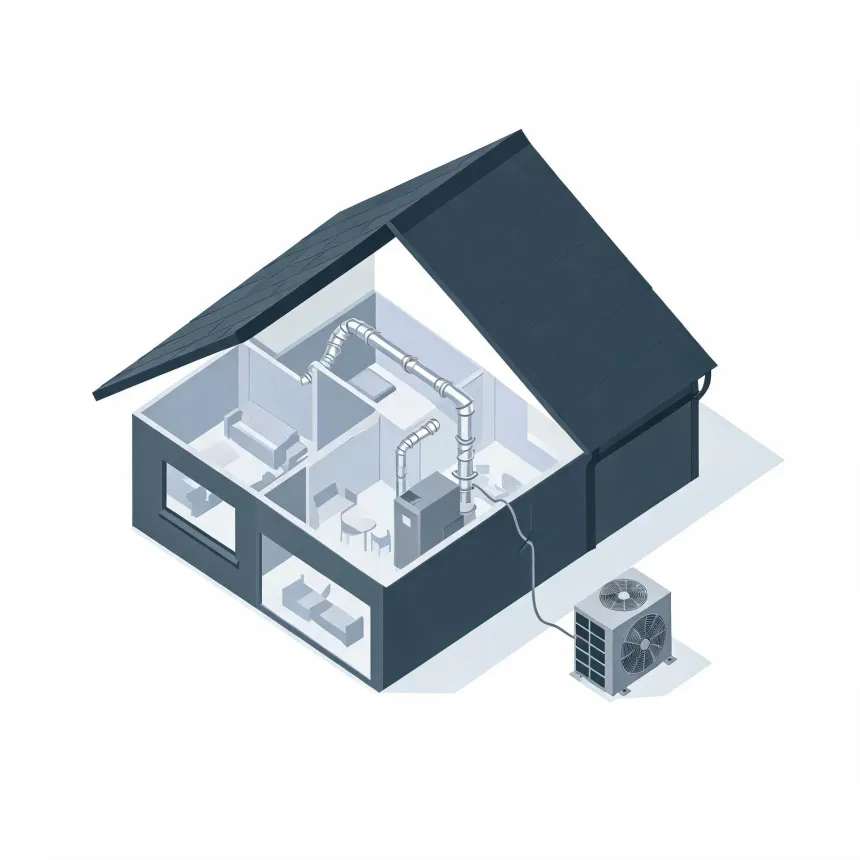
Isometric illustration of a cutaway house showing interior rooms with furniture, a furnace and ductwork, connected by a line to an outdoor condenser unit on the ground outside.
Your system heats September through May and cools July through August.

NOAA nClimDiv, 1991–2020 normals

Half the homes in Pierce County were built in 1972 or earlier.

A heat pump installed in a house that old has likely been running for years already, and that history matters when you're deciding whether to fix it or replace it.

Electricity here is cheap, but a heat pump running wrong still burns it fast

Power here costs 11.00 cents per kilowatt-hour
29 hail events from 2015 to 2024
32 winter storms from 2015 to 2024
August is when a weak heat pump gets found outHeat here runs September through May, nine months, and the first cold snap finds whatever was already wearing thin.

A diagnostic visit starts outside at the unit itself, not with a clipboard and a guess. The tech checks refrigerant pressure, pulls the capacitor and tests it under load, and watches how the compressor actually starts instead of just listening for a hum. Inside, they'll check the air handler for the same things: a dirty coil, a weak blower motor, a control board throwing a fault code it's been storing for weeks. Electrical readings matter more than how a part looks, since a capacitor can look fine and still test far outside spec. A good diagnosis also checks the reversing valve and defrost control, since a fault there can mimic a refrigerant problem and send you toward the wrong fix. The point of all this is to find the part actually causing the symptom, not the first thing that looks worn.

Get the cause checked, not just the symptom

The weather that wears this unit down is also what makes it hard to diagnose over the phone. A contractor who checks the actual cause, not just the symptom you're seeing, is more likely to get a fix that holds through the next storm season.

Find a contractor
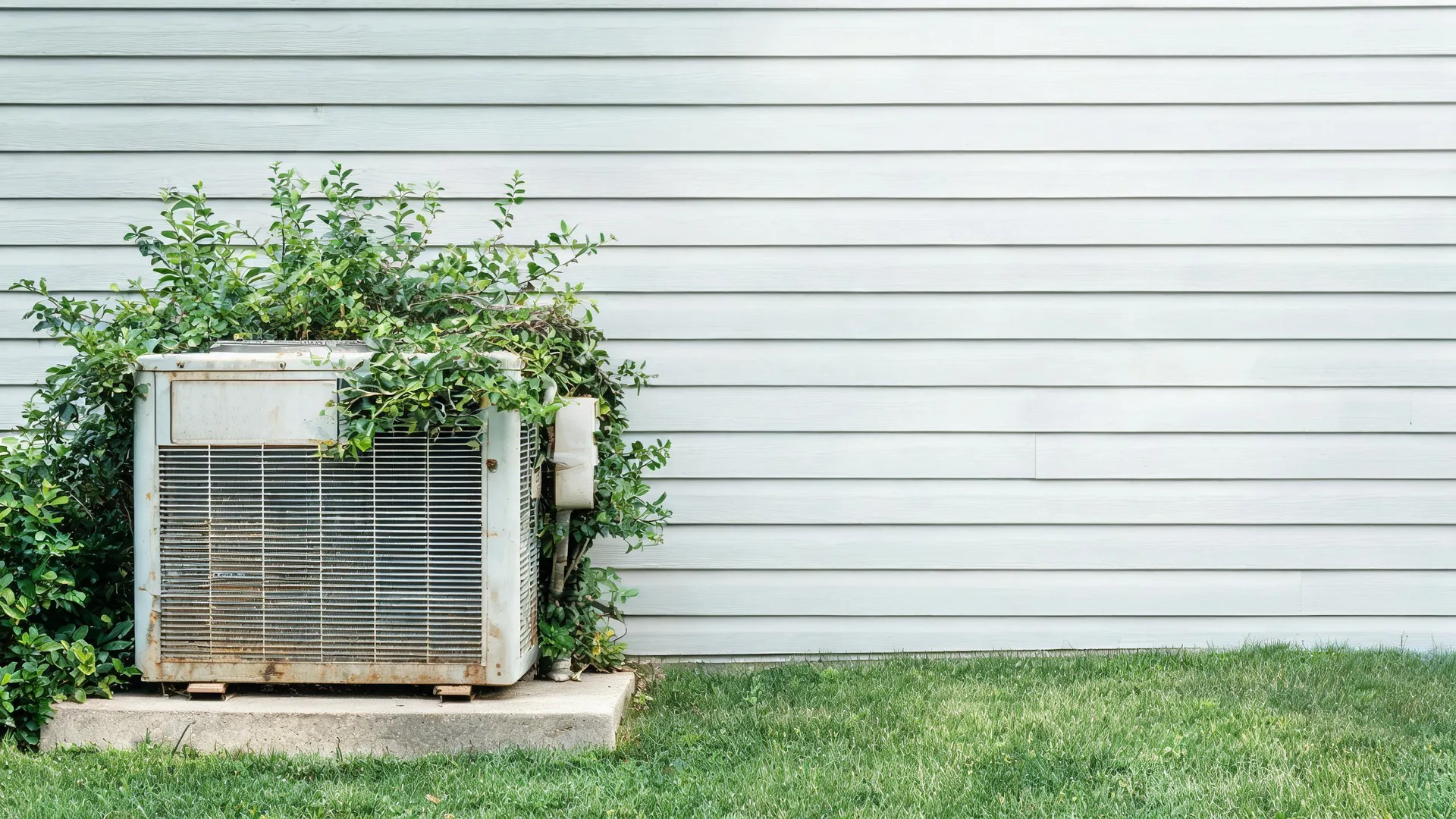
A gray outdoor HVAC unit mounted on a concrete pad beside a house with gray lap siding and a stone foundation.

A machine that never gets a season off

A heat pump has one job all year, moving heat in or out, and that means its parts run in every season instead of getting a break. The reversing valve that switches it between heating and cooling cycles constantly and is a common failure point because of that. The defrost cycle is another: in cold weather the outdoor coil ices up, and the system has to sense that, switch modes, melt the ice, then switch back. The sensors and control board that manage this wear out from doing it so often. Outside, the fan motor and compressor run on a duty cycle that never really stops for months at a stretch, so bearings wear and windings break down from the heat of constant use. A system that runs steadily like this tends to show problems gradually: a longer cycle to reach temperature, a coil that stays frosted past when it should clear, a compressor that hums but doesn't start. Those are signs of a part giving out, not a system about to quit outright, and catching them early is what keeps a small repair from turning into a failed compressor.

A small fault makes the compressor carry the load

A refrigerant leak or a weak capacitor doesn't stop a heat pump from running. The system keeps trying to hit the temperature it's told to reach, so the compressor works past the point it should. Low refrigerant means less gas to carry heat but the compressor still pumps it at the same speed, so it runs hotter than it was built to. Keep that up for days and the windings inside take the damage, not just the part that failed first.

Ice left alone spreads past the coil

A defrost problem usually starts small, a coil that clears a little slower each cycle. Left running, the frost builds instead of melting off, and it blocks airflow across the coil. The system reads that as a reason to run longer, which feeds more frost, not less. By the time the unit can't heat at all, the fix is often bigger than the sensor or control board that started it.

A heat pump that's cycling too long or short is putting that cheap electricity to waste every single day it keeps running that way. You won't see it as one big number, just a bill that's higher than it should be month after month. The part causing it, a bad capacitor, a failing sensor, a refrigerant leak, usually isn't expensive to fix on its own. Waiting costs you twice: once in the power it's burning now, and again if the strain pushes the compressor toward failure. Get it looked at this week rather than waiting for it to get worse.

A straight answer on repair versus replacement comes down to the compressor, not the part that just failed. If the compressor is still sound, fixing the capacitor or sensor or whatever gave out is worth doing almost every time. If the compressor itself is the thing failing, humming without starting, tripping its overload, running weak, that's a different conversation, because a compressor swap costs close to what a new system costs installed. Age matters less than how the system has been maintained and how many repairs it's already needed. One repair on a unit that's otherwise been reliable is just maintenance. A second or third repair inside a short stretch is usually the system telling you the next part is already lining up to fail. A contractor who's honest with you will say plainly which of those two situations you're in before you spend money on either path.