A snow-covered small-town street at dusk, with lit white clapboard houses, bare trees, and a grain elevator silhouetted against an orange and blue twilight sky.

Heat Pump Repair in Rolla, ND

Tell us about the job

Takes about a minute. No obligation.

RepairHeat PumpRolette County, ND
Step 1 of 2

What ZIP code is the job in?

A heat pump running at both ends of the year

A heat pump in Rolette County doesn't get an easy season. Winter storms hit the county 33 times between 2015 and 2024, and the unit has to keep pulling heat from outside air on the coldest days. Hail has struck 23 times in that same stretch, and the outdoor unit sits right in the weather, coil exposed. The lower dew point through summer takes some of the strain off the cooling side, but that's only part of the year. The rest of it, this machine is working.


What that means when something's wrong

A part that's worn from steady hard use fails differently than one that's just old. The fix that holds depends on knowing which one happened. A technician checking a heat pump here has to look at what the winter and the hail have put it through, not just what part stopped working. Skip that step and the same problem can turn up again next season.

10 months
September through June, your system heats
1 months
July through July, it cools
0°F
the average winter night it heats against
76°F
the average summer afternoon it cools against
Isometric cutaway illustration of a small house showing interior rooms with furniture, an indoor air handler with ductwork, and lines running to an outdoor condenser unit beside the building.
Your system heats September through June and cools July through July.

NOAA nClimDiv, 1991–2020 normals

Heat here runs from September through June, with July the only month off.

A weak part usually gives out in the first cold snap, not the quiet months before it.

Cheap power doesn't stay cheap when the unit's struggling

Power here costs 10.99 cents per kilowatt-hour
23 hail events from 2015 to 2024
33 winter storms from 2015 to 2024

A heat pump that's struggling still has to run most of the year here. Cheap power is the only reason the bill doesn't already show it. A stuck defrost cycle, a low charge, a failing compressor, any of these make the unit run longer to put out the same heat, and that longer runtime adds up fast even at a low rate. The part giving you trouble now is also the part most likely to quit outright on the first hard cold snap. Getting it looked at now costs less than finding out what it costs to go without heat when it fails.

A heat pump worked this hard needs a real diagnosis, not a guess

The wear is already on the unit, from the storms and from the long stretch of running it does here. Whatever's going wrong now is tied to that, not a one-off. Getting it diagnosed against what the machine's actually been through is what makes the repair hold.

Find a contractor
A man in a dark cap, gray long-sleeve shirt and brown work pants climbs porch steps toward a navy front door, carrying a canvas tool tote with tools in its pockets, beside a potted evergreen shrub in a blue planter.
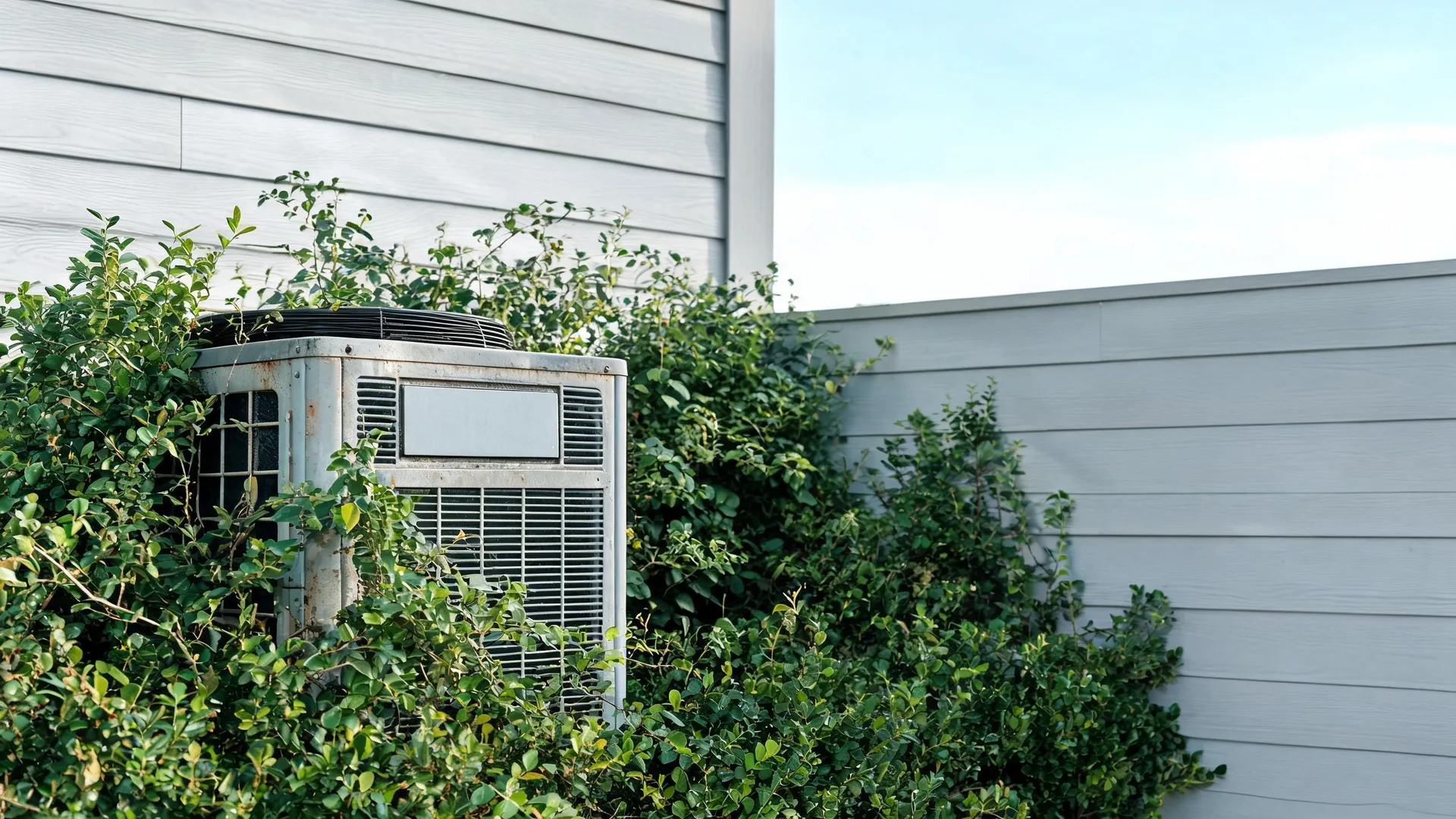
A residential heat pump outdoor unit mounted on a concrete pad next to a house with gray vinyl siding.

What to check yourself before you call

Before anyone comes out, there are a few things worth checking yourself. Start at the thermostat. Make sure it's set to heat and the set point is actually above room temperature, because a setting bumped by accident looks exactly like a broken unit. Check the air filter next. A clogged filter starves the system of airflow, and a heat pump that can't move air will ice up or shut down trying to protect itself. Walk outside and look at the outdoor unit. If it's buried in snow or packed with ice beyond the thin coat that melts off in normal defrost, clear away what you can safely reach. Leaves, grass clippings and debris pressed against the coil block airflow the same way snow does. Look along the house for the breaker panel and check that the breakers for the indoor and outdoor units haven't tripped. A tripped breaker that resets and trips again is telling you something is actively wrong, and that's a sign to stop and call rather than keep resetting it. Check any supply and return vents in the house to make sure none are closed or blocked by furniture or rugs. If the system is running but blowing air that doesn't feel warm, that's not something to chase further yourself. The same goes for a unit that's short cycling, turning on and off in quick bursts, or one making a new noise it didn't make before. Those point to something inside the system, not something sitting on top of it.

What a failing heat pump sounds and feels like

Air coming out of the vents that feels cool instead of warm is usually the first thing people notice, even when the unit is running fine otherwise. Short cycling, where the unit kicks on and off in quick bursts instead of running a steady stretch, points to a sensor or a control board problem. A new rattle, a hum that wasn't there before, or a grinding sound usually means a motor bearing or a fan blade, not something you can tighten yourself. Ice building up on the outdoor coil beyond what a normal defrost clears is a sign the defrost board or a sensor has stopped doing its job.

Why none of these should wait

A heat pump that's already struggling is still the only thing standing between the house and outdoor temperature. A refrigerant leak or a weak compressor doesn't fix itself, it just makes the unit work harder to hit the same set point, and that extra strain lands on whatever part is already worn. The same fault that shows up as weak heat on a mild day is often the one that knocks the system out entirely once the temperature drops hard. Catching it while it's still just an odd noise or lukewarm air is what keeps it from becoming a no-heat call.

Most heat pump failures trace back to a handful of parts, and they tend to fail the same way each time. The reversing valve is a common one. It's what switches the system between heating and cooling, and when it sticks, the unit keeps running but stops doing what the thermostat is asking for. Capacitors wear out from the simple strain of starting the compressor and fan motors over and over, and a weak one makes the compressor struggle to start rather than failing it outright. The defrost board and its sensor are another weak point, since they're what tells the unit to clear ice off the outdoor coil, and when one of them fails the ice just keeps building until the coil can't pull in air at all. Low refrigerant almost always means a leak somewhere in the lines, not the system using it up like a fluid that depletes on its own. Fan motors and their bearings wear from years of continuous running, and a new grinding or humming sound is usually that wear announcing itself before the motor seizes.

A diagnostic visit starts outside at the unit itself, not with a clipboard. A technician checks refrigerant pressures on both the high and low side, because that number tells them whether the charge is right, whether there's a leak, or whether the compressor itself is struggling. They'll check amp draw on the compressor and fan motors, since a motor pulling more current than it should is wearing out even if it's still running. The reversing valve gets tested directly, energized and de-energized, to see if it actually switches or just hums and stays put. Inside, they'll pull the filter and check airflow across the coil, because low airflow can mimic a dozen other problems that have nothing to do with the refrigerant side. The defrost board gets checked against its sensor, since a board that's timing correctly but reading a bad sensor will still let ice pile up. None of this is guesswork. Each reading either points at a part or rules one out.