A dark-clad two-story house with a metal roof and covered porch stands behind a mown lawn, with deciduous trees and a wire fence to the left under an overcast sky.

Heat Pump Repair in Powers Lake, ND

Tell us about the job

Takes about a minute. No obligation.

RepairHeat PumpBurke County, ND
Step 1 of 2

What ZIP code is the job in?

A heat pump that runs year round

A heat pump here doesn't get the summer off. It handles both sides of the year, and Burke County throws a lot at it: 24 winter storms between 2015 and 2024, plus 25 hail events in that same stretch. Every one of those is a load on the outdoor unit.

What that means for your repair

A problem that shows up now has usually been building for a while under that kind of strain. Whatever's going on with your system, it's worth having someone trace it back to the actual cause rather than just clearing the symptom. A fix that skips that step tends to come back.

10 months
September through June, your system heats
2 months
July through August, it cools
2°F
the average winter night it heats against
78°F
the average summer afternoon it cools against
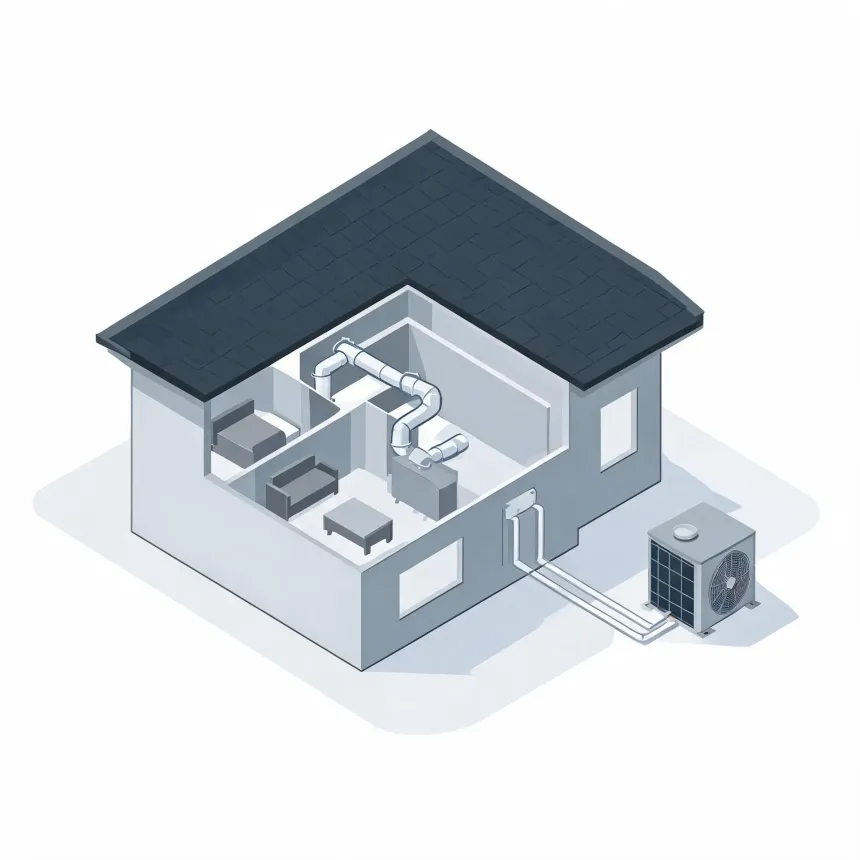
Isometric illustration of a cutaway single-story house showing interior ductwork, an indoor air handler and simple furniture, connected by lines to an outdoor condenser unit beside the building.
Your system heats September through June and cools July through August.

NOAA nClimDiv, 1991–2020 normals

Half the homes around Powers Lake were built in 1969 or earlier.

A heat pump in a house that old is more likely to be on its original ductwork and wiring, and may be nearing the end of its own run too.

Cheap power still adds up when a heat pump is struggling

Power here costs 10.26 cents per kilowatt-hour
Climate zone 7
Cooling runs July through August

Heat runs here from September through June, so August is when a weak heat pump gets found out. The first real cold snap asks the system for more than it's given all year, and whatever part was already marginal gives out right then. That's the pattern worth knowing if something's acting up now: it rarely comes out of nowhere. By December through February the overnight low around Powers Lake averages 2 degrees, and a heat pump running on a failing part has no slack left to work with at that temperature. Getting it looked at before the load hits is a lot more straightforward than getting it looked at after.

Worth fixing, or worth replacing. Get an answer before you pay for either.

Before paying for a repair on a system this old, it's worth asking a technician for a straight answer: is this worth fixing, or is the repair money better put toward a new unit. On a system that came with a house built in 1969 or earlier, that's a fair question to put to whoever comes out.

Find a contractor
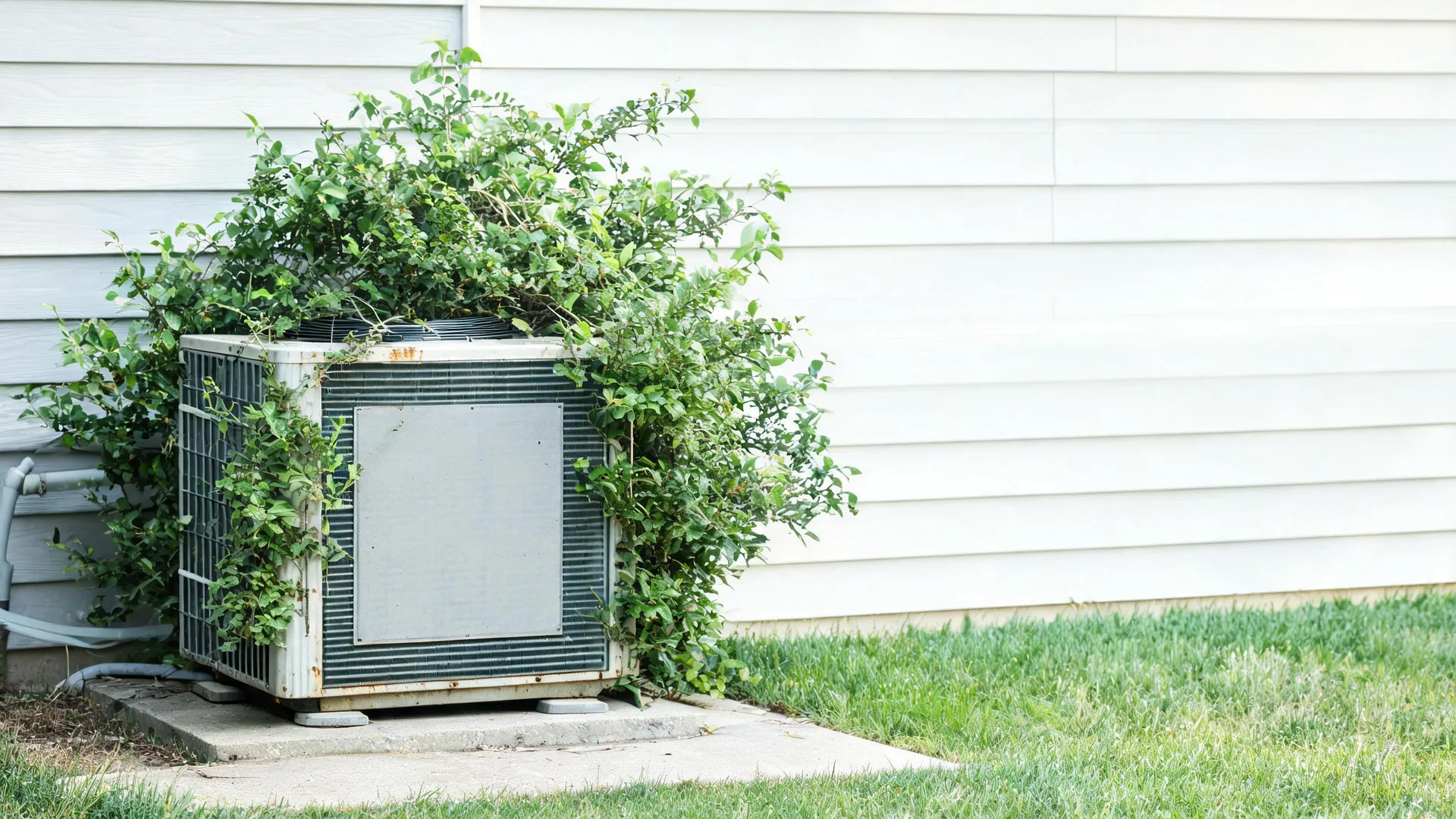
A gray heat pump condenser unit mounted on a concrete pad against the gray lap-siding exterior wall of a house.

It doesn't get a season off

The clip beside this runs the same unit from daylight into dark because that's the job here. A heat pump works through the cold months and the warm ones, with no stretch of the year when it sits idle. That kind of run time is what turns a small issue into a breakdown instead of a quiet fix. An outdoor unit that's been losing a fight with ice, or a compressor that short cycles instead of running a full stretch, is showing the kind of wear that comes from a machine that never gets downtime to recover. Get the actual part identified before more hours get run on it.

What actually wears out

The reversing valve is the part unique to a heat pump, and it's a common failure point because it switches position every time the system changes between heat and cool. A stuck reversing valve will leave the system blowing cold air when it should be heating, or running nonstop without catching up. The other common failures are a run capacitor that weakens until the compressor or fan can't start, a contactor with pitted contacts that stops sending power reliably, and a defrost control board or sensor that fails and lets the outdoor coil ice over without clearing it.

What it means for a repair call

A heat pump that's low on refrigerant isn't leaking from use, it's leaking from a hole somewhere in the line set or coil, and topping it off without finding that hole just means doing it again. A compressor that hums but won't start is usually the capacitor, not the compressor itself, and that's a straightforward swap if it's caught before the compressor takes the strain and fails too. An outdoor unit caked in ice that never clears on its own points to the defrost board, not the weather. Getting the actual part named before anything gets replaced is what keeps a repair from turning into a second repair.

Before calling anyone out, a few things are worth checking yourself. Go outside and look at the outdoor unit. If the coil is caked in ice or snow, clear away any leaves or debris around the base and make sure nothing is blocking airflow into it, a fence, bushes, a snowdrift. Inside, pull the air filter and hold it up to the light. If you can't see through it, that's enough to choke airflow and make the whole system work harder than it should. Check the thermostat is actually set to heat and the temperature is set above room temperature, it sounds obvious but it gets missed. Check the breaker for both the indoor air handler and the outdoor unit haven't tripped. If the system is running but blowing air that doesn't feel warm, let it run a full cycle before deciding something's wrong, a heat pump's supply air naturally feels cooler than a furnace's even when it's working right. None of this fixes a stuck reversing valve or a bad capacitor, but it rules out the simple stuff before you pay someone to find it.

Power is cheap around Powers Lake, but a heat pump that's struggling doesn't know that. A weak capacitor or a stuck reversing valve makes the compressor work harder to do the same job, and that shows up on the bill before it shows up as a breakdown. The longer a bad part runs, the more hours it's pulling extra power to limp along. That's the case for not waiting it out until the next bill, or the one after, to see if it was nothing. Get the part named now, while it's still one repair instead of a compressor replacement.