A snow-covered suburban street at dusk with lit houses and bare trees under a twilight sky.

Heat Pump Repair in Oakes, ND

Tell us about the job

Takes about a minute. No obligation.

RepairHeat PumpDickey County, ND
Step 1 of 2

What ZIP code is the job in?

A heat pump in Dickey County carries both seasons

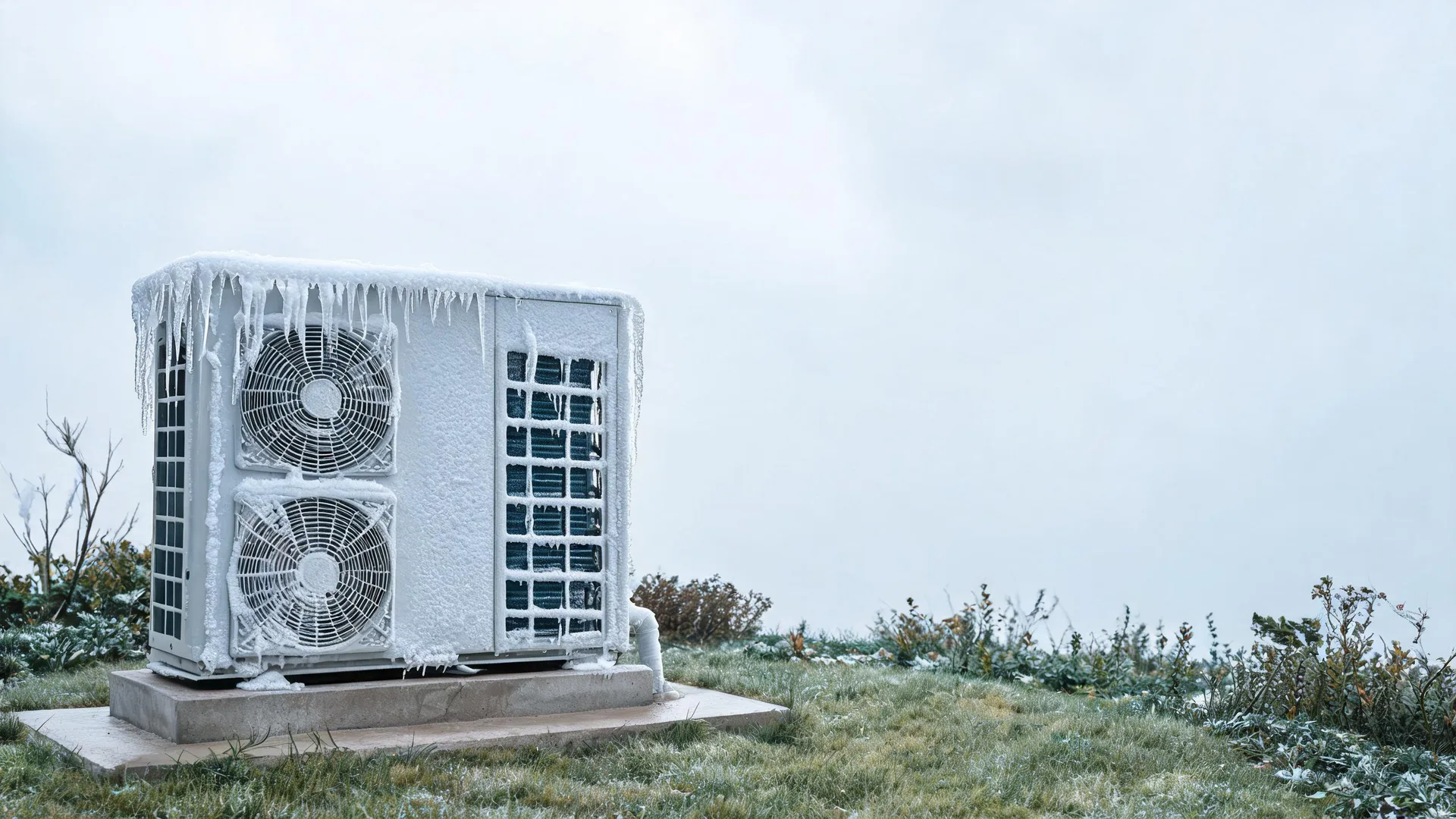
A furnace only fires up and heats. A heat pump also carries the cooling load, and it does that through winters that bring heavy snow, ice and blizzards, 42 of those events hit the county between 2015 and 2024. The compressor and outdoor coil are working against real weather, not just a thermostat setting.


Hail leaves marks that show up later

Dickey County has seen 39 hail events in that same stretch. A dented outdoor coil or bent fins restrict airflow well before the unit stops working altogether. When a heat pump here is acting up, the cause is often something that happened to the equipment outside, not a part that simply gave out.

9 months
September through May, your system heats
3 months
June through August, it cools
6°F
the average winter night it heats against
79°F
the average summer afternoon it cools against
Isometric cutaway illustration of a single-story house showing interior rooms with furniture, an attic duct system connected to an indoor air handler, and an outdoor condenser unit linked by lines along the exterior wall.
Your system heats September through May and cools June through August.

NOAA nClimDiv, 1991–2020 normals

A heat pump in Dickey County starts its heating run in September.

Get it looked at in August, before the first cold morning asks something of a part that's already weak.

Half the homes around Oakes are older, and so is the heat pump inside

Half the homes here were built by 1964
Climate zone 6A
Power here costs 12.17 cents per kilowatt-hour

Electricity here runs 12.17 cents a kilowatt-hour, lower than most of the country pays. That helps, but it only goes so far when a heat pump is struggling. A unit low on charge or fighting a weak capacitor draws power and gives you less heat for it, every hour it runs. In Dickey County that's most of the year, since the same system carries you through summer and winter both. A small problem that would cost little to run in a mild climate adds up fast when the equipment barely gets a break.

Find out what's really wrong before it gets worse

Whatever's causing the trouble, hail scars on the coil or fins, a winter storm, or just the strain of running both seasons, a tech can trace it back and fix the actual cause, not just the symptom. That's the difference between a repair that holds and one you'll call about again in a month.

Find a contractor
A residential heat pump outdoor unit mounted on a concrete pad next to a house with gray vinyl siding.

A system this old is worth asking about before you fix it

Half the homes here went up in 1964 or earlier. If yours is one of them, the heat pump inside it has likely been replaced at least once already, maybe more. Ask the tech how many years this one has left before you put money into it. A compressor near the end doesn't always announce it. Sometimes it just runs a repair, then another, each one costing more than the last.

Most failures start with the outdoor unit

The compressor and outdoor coil sit outside and do the hardest work in the system. A refrigerant leak, a failing capacitor, or a contactor with pitted contacts will stop the compressor from running or make it short cycle. Fan motor bearings wear out too, and when the outdoor fan slows down or quits, the whole system loses its ability to move heat in either direction.

A reversing valve problem hides in plain sight

The reversing valve is what lets a heat pump switch between heating and cooling, and it fails in ways that look like other problems. A valve stuck in one position means the system blows cold air when it should heat, or never shuts off the way it should. If a tech checks one thing early on a heat pump that is not working right, it is usually this valve and the solenoid that drives it.

A heat pump that's struggling still tries to keep up, and that's the problem. A compressor low on refrigerant works harder to move the same amount of heat, and that extra strain shows up as more wear on the windings and bearings inside it. A weak capacitor makes the compressor or fan motor draw more current just to start, and every hard start shortens what's left of its life. Ice on the outdoor coil blocks airflow, so the system runs longer to do the same job, and that longer runtime stresses the same worn parts further. None of this fixes itself by waiting. A problem caught when it's small, a part replaced before it fails, usually costs less than the breakdown it would have caused a month later.

If the heat pump is drawing more to do less, that cost shows up on the next bill, not next year. Don't wait on a diagnosis to see if the problem gets worse on its own. A tech can check the charge, the capacitor, the contactor, and tell you which one is making the system work harder than it should. That's a cheaper visit than the one you'd make after a compressor gives out from the strain. Ask for the actual reading, the refrigerant pressure or the capacitor's microfarad rating, not just whether it passed.