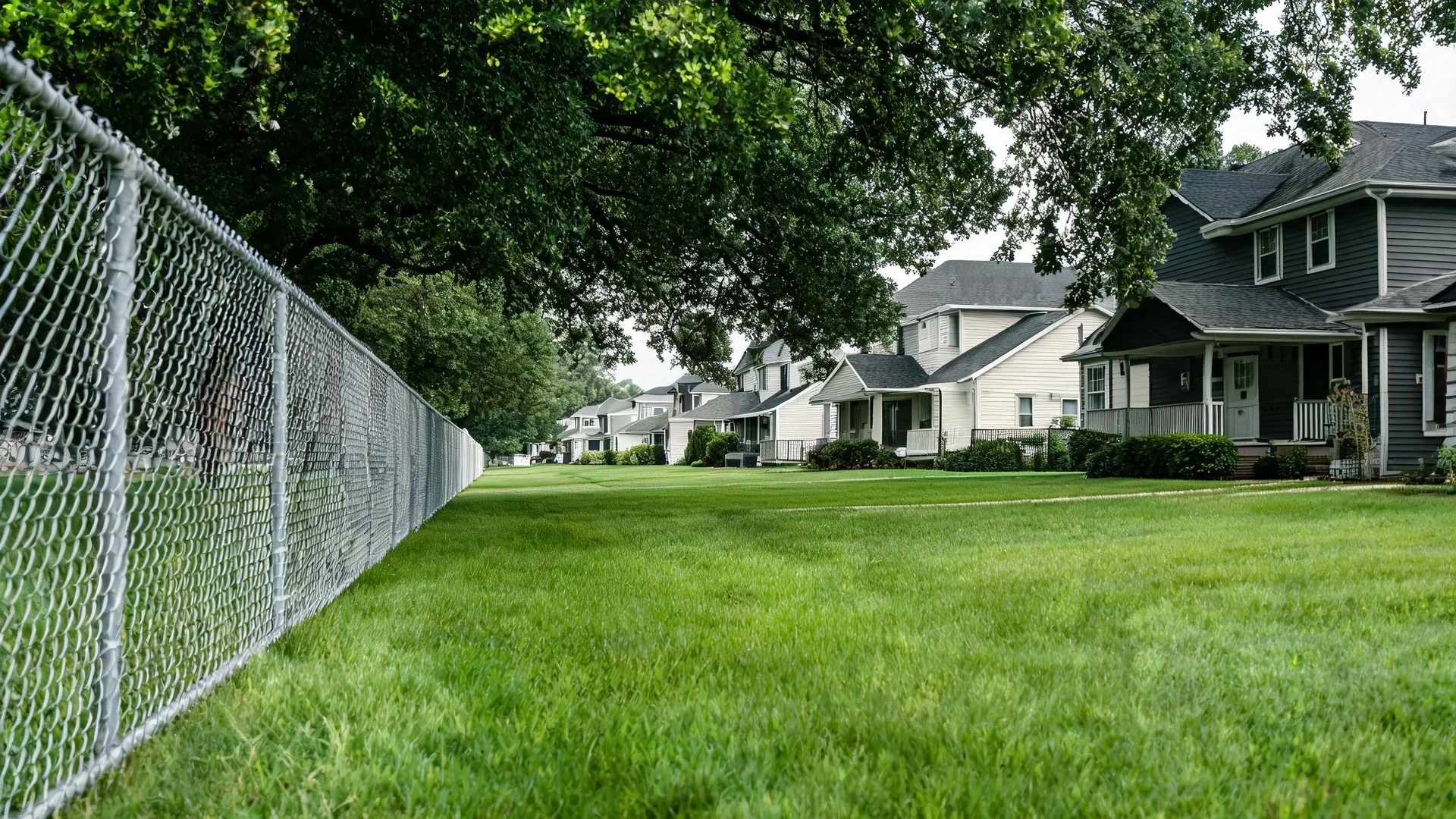





A chain-link fence runs along the left edge of a mowed grass lawn, with a row of two-story houses with porches and large leafy trees on the right under an overcast sky.

Heat Pump Repair in New Town, ND

Tell us about the job

Takes about a minute. No obligation.

RepairHeat PumpMountrail County, ND
Step 1 of 2

What ZIP code is the job in?

A heat pump in Mountrail County earns its keep differently than one in a milder state. Zone 6A means a long cold season, and that compressor runs hard to pull heat out of winter air that doesn't have much to give. Winter storms hit the county 21 times between 2015 and 2024, and each one means hours of the system working against wind and cold it wasn't built to shrug off. The outdoor unit sits exposed to that weather year-round, coils and fan motor and all, with 59 hail events over the same stretch and nothing standing between it and the sky. None of that means a breakdown was coming. It means that when something does go wrong, the cause is usually plain wear from a machine that works harder here than most, and a tech who knows that will look in the right place first.

10 months
September through June, your system heats
2 months
July through August, it cools
4°F
the average winter night it heats against
79°F
the average summer afternoon it cools against
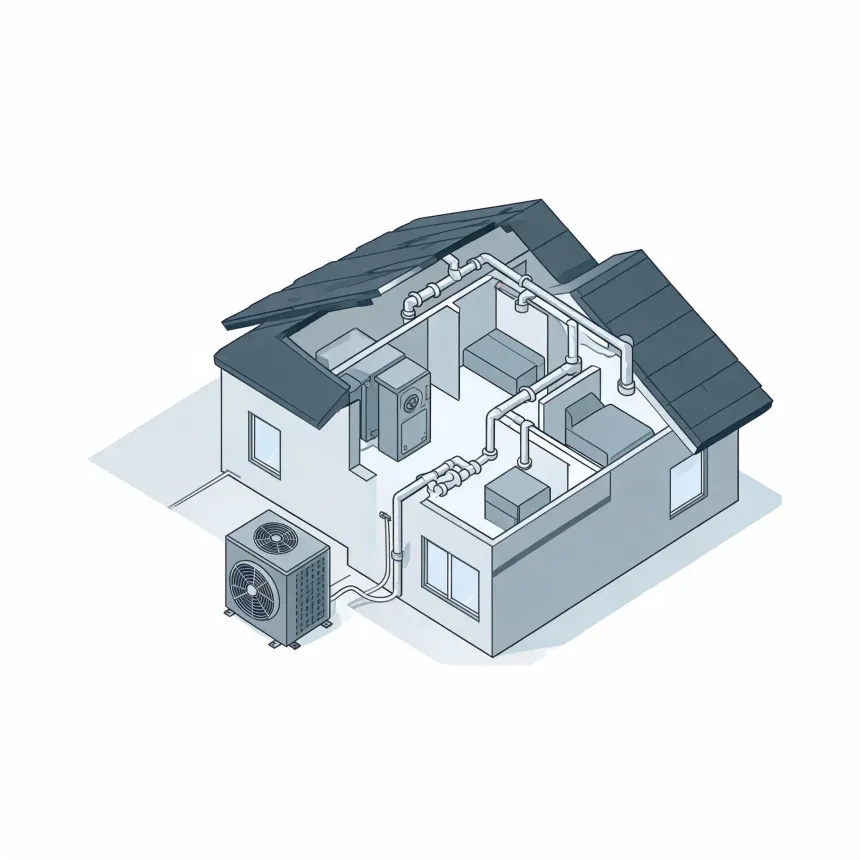
Isometric grayscale illustration of a cutaway two-story house showing interior ductwork, an indoor air handler unit, and an outdoor condenser unit on a pad beside the building.
Your system heats September through June and cools July through August.

NOAA nClimDiv, 1991–2020 normals

Half the homes in Mountrail County were built in 1997 or later.

A heat pump that came with a newer house still has working life in it, and that makes repair the right first call.

Ten months of heat against two of cooling, same compressor carrying both

Cooling runs July through August
Heat runs September through June
59 damaging wind events from 2015 to 2024

Electricity here runs 9.61 cents a kilowatt-hour, cheaper than most of the country sees. That helps, because a heat pump that runs most of the year here still isn't fighting a high rate to do it. But a unit that's struggling, low on refrigerant, a weak capacitor, a coil working harder than it should, pulls more power to do the same job no matter what the rate is. Cheap electricity doesn't offset a system that's straining. It just means the waste shows up smaller on the bill than it would somewhere else, not that it isn't there.

Find out why it's struggling, then fix that

Get the cause found before a stopgap fix wears out too. A tech who knows what this county puts a heat pump through will check the parts that take the brunt of it first, not the obvious one.

Find a contractor
A man in a gray t-shirt and tan work pants, seen from behind, carries a canvas tool bag up wooden porch steps toward a dark blue front door beside a potted shrub.
A residential heat pump outdoor unit mounted on a concrete pad next to a house with gray vinyl siding.

How long this one has been running matters more than how long heat pumps usually last

A heat pump works around the clock here, day into night, for most of the year. If yours came with the house and the house is newer, that clock hasn't been running as long as it has for a lot of the county. Get a tech to check the age and condition of the unit before deciding anything else. A compressor with years left in it is worth repairing. One that's been straining since before you owned the place is a different conversation.

A small fault forces everything else to work harder

A heat pump low on refrigerant still tries to hit the temperature on the thermostat. The compressor runs longer to make up for what the system can't deliver, and it runs hotter doing it. A failing capacitor makes the compressor or fan motor draw harder to start and keep spinning. None of that fixes itself by running more. It just wears the part faster until it gives out.
What happens if it keeps running anyway

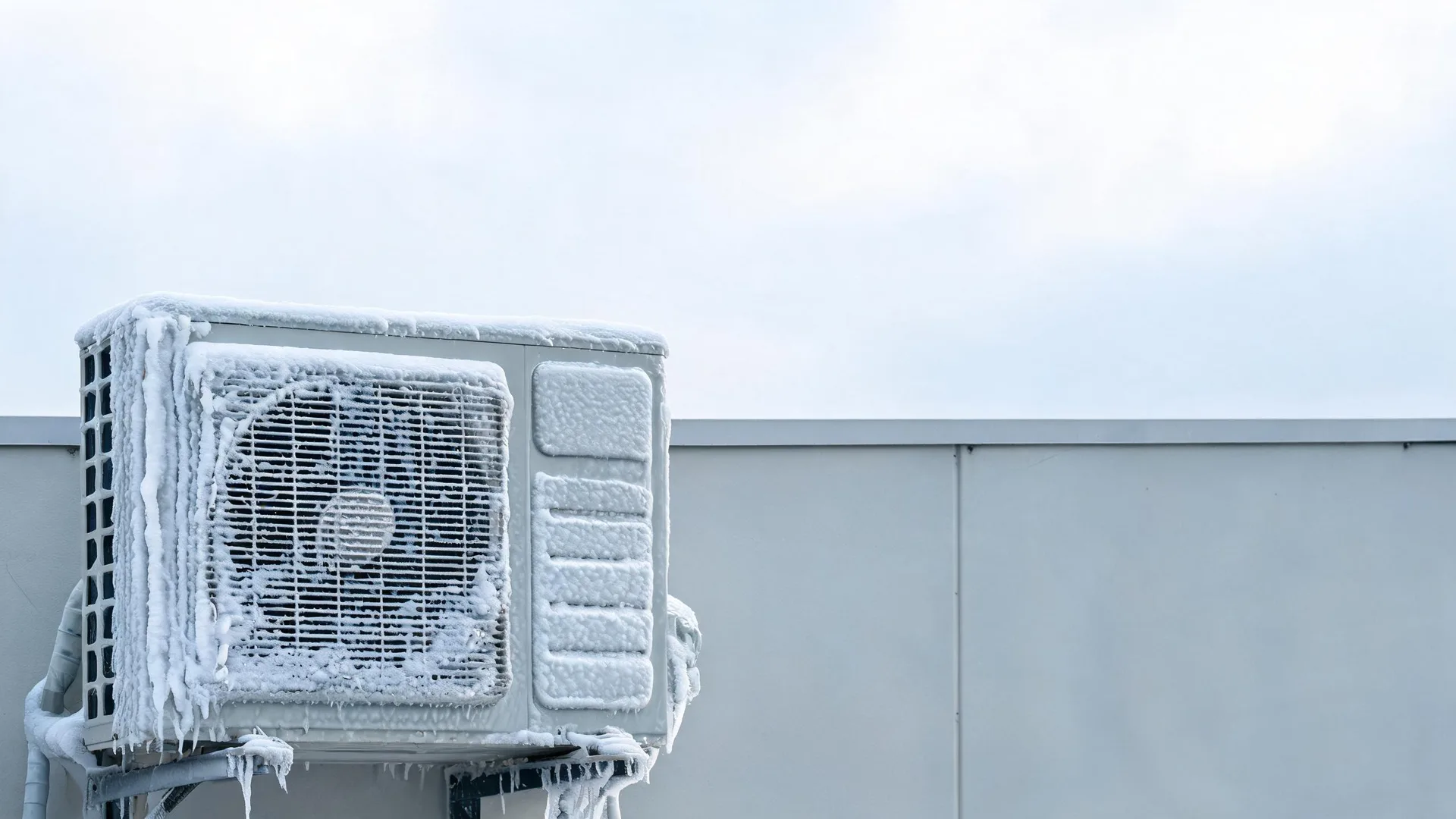
Run a heat pump with a refrigerant leak long enough and the compressor can overheat or flood with liquid it wasn't built to handle, the kind of damage that turns a repair into a replacement. A coil icing over blocks airflow further the longer it's ignored, so the system strains harder to move air that can't get through. Shutting it down and calling someone when the signs first show up protects the compressor, which is the part worth protecting.

A few checks are safe to do before anyone comes out. Look at the outdoor unit and clear away leaves, grass clippings or snow piled against the coil, since blocked airflow there makes the whole system work harder. Check the air filter inside and swap it if it's gray with dust, because a clogged filter starves the system the same way a blocked coil does. Look at the outdoor fan and make sure it spins freely and isn't rattling or grinding. Check the thermostat batteries and settings, since a heat pump that won't respond sometimes just has dead batteries or a setting bumped by accident. If the outdoor unit is coated in ice beyond a thin frost, don't chip at it. Turn the system off and call someone, because ice like that usually means a problem inside the system, not outside it.

A heat pump straining in Mountrail County still runs on a cheap rate, but that rate doesn't change how many hours it runs to keep a house warm through the winter. If the compressor is working harder because of low refrigerant or a weak capacitor, those extra hours show up on the bill every month it goes unfixed, not just once. Waiting doesn't make the fix smaller later. It makes the strain longer, and the part that's already working too hard keeps doing it until someone looks at it. Getting a tech out now stops the bill from carrying a problem that's only going to get more expensive to ignore.