A snow-covered residential street at twilight with illuminated houses, bare trees, and an orange horizon glow beneath a deep blue sky.

Heat Pump Repair in New Rockford, ND

Tell us about the job

Takes about a minute. No obligation.

RepairHeat PumpEddy County, ND
Step 1 of 2

What ZIP code is the job in?

Half these homes were built in 1966 or earlier

Half the houses in Eddy County went up in 1966 or earlier. A heat pump that came with a house that age has likely been replaced once already, maybe twice. If yours is original to the house or close to it, a repair bill is worth weighing against what's left in the machine.

What that means for a repair call

An older heat pump nearing the end of its life can still run, but each repair is a bet on how much time you're buying. Before paying for a major part, ask the contractor how many years they'd expect out of the unit after the fix.

9 months
September through May, your system heats
2 months
July through August, it cools
2°F
the average winter night it heats against
78°F
the average summer afternoon it cools against
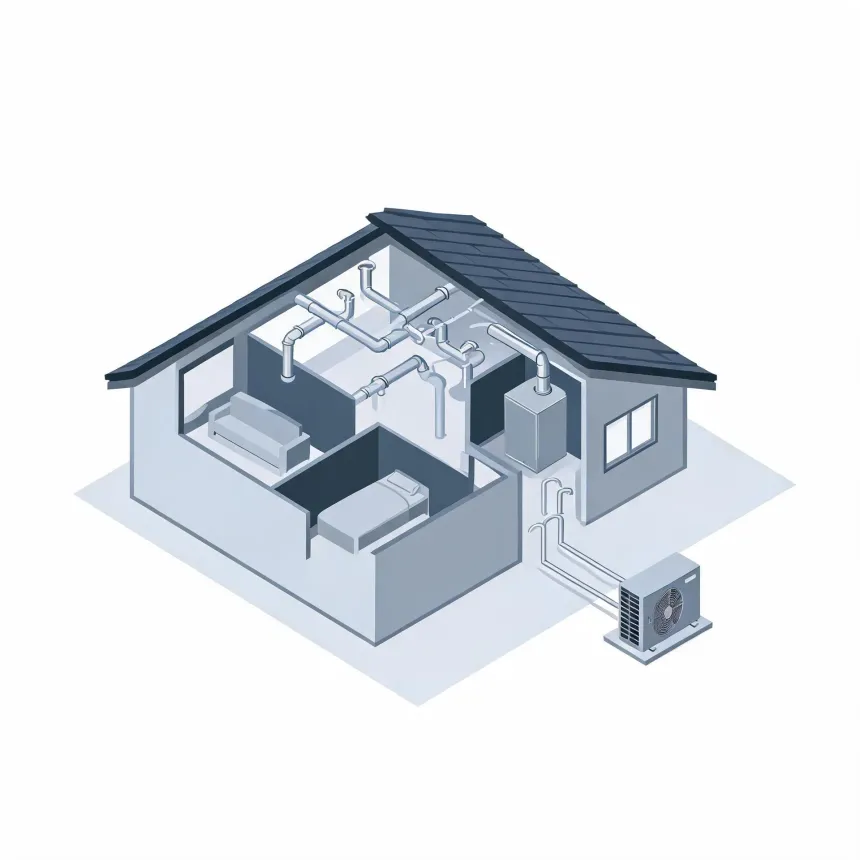
Isometric cutaway illustration of a small house showing ducted air distribution, an indoor air handler, and an outdoor condenser unit connected by lines, with a sofa and bed in the rooms.
Your system heats September through May and cools July through August.

NOAA nClimDiv, 1991–2020 normals

A tech checks the reversing valve before anything else, since it's what decides whether the unit heats or cools.

If the valve is stuck, the system can blow the wrong temperature air or get stuck between modes.

Power here is cheap, but a heat pump running wrong still costs you every month

Power here costs 11.03 cents per kilowatt-hour
40 hail events from 2015 to 2024
42 winter storms from 2015 to 2024
September is when a weak heat pump gets found outHeat here comes on in September and runs through May, nine months of asking this unit to work.

If the system is short cycling, iced up, or running constantly to hold a setpoint, it's pulling power the whole time it does that. Cheap electricity doesn't change what a struggling unit draws, it just keeps the bill from looking as bad as it could. That's easy to miss here, which is exactly why a repair that seems minor is worth calling in sooner. A tech can tell you in one visit whether you're looking at a part worth fixing or a unit that's going to keep costing you no matter what gets replaced.

Know what you're repairing before you repair it

A repair call is a good time to ask the age question, not after the part is already paid for. If the unit is original to the house, get the contractor's honest read on how many years are left before you commit to the fix.

Find a contractor
A man in a navy shirt and tan trousers, seen from behind, carries a canvas tool bag up wooden porch steps toward a dark blue front door, with shrubs and a large planter nearby.
A white mini-split heat pump outdoor unit mounted on a concrete pad beside a gray-sided house, surrounded by gravel and green shrubs.

Built for weather most heat pumps never see

This unit runs hard in both directions here, just not for the same reason each time. Winter is the bigger ask. Eddy County has had 42 winter storms between 2015 and 2024, heavy snow, ice, blizzards, and every one of them means the outdoor unit is pulling heat from air that's working against it. Summer doesn't pile on the same way. The dew point only averages 53°F across June, July and August, lower than most of the country, so the unit isn't fighting heavy air the way it would further south. Hail is in the mix too, 40 events over that same stretch, and the outdoor coil sits right out in it. A part that could coast for years in a milder spot gets tested every season here, and that's usually what's behind the repair call you're making now.

What you can check before the call

Go to the breaker panel and make sure the breakers for both the indoor and outdoor unit are on. Check the thermostat batteries if it uses them, and make sure it's set to call for heat or cool rather than sitting in off or fan only. Look at the outdoor unit and clear away anything stacked against it, leaves, snow, ice, so air can move through the coil. Inside, pull the filter and hold it up to a light. If you can't see light through it, swap it or wash it if it's the reusable kind, since a blocked filter can make a heat pump look like it's failing when it's just starved for airflow.

What to leave alone

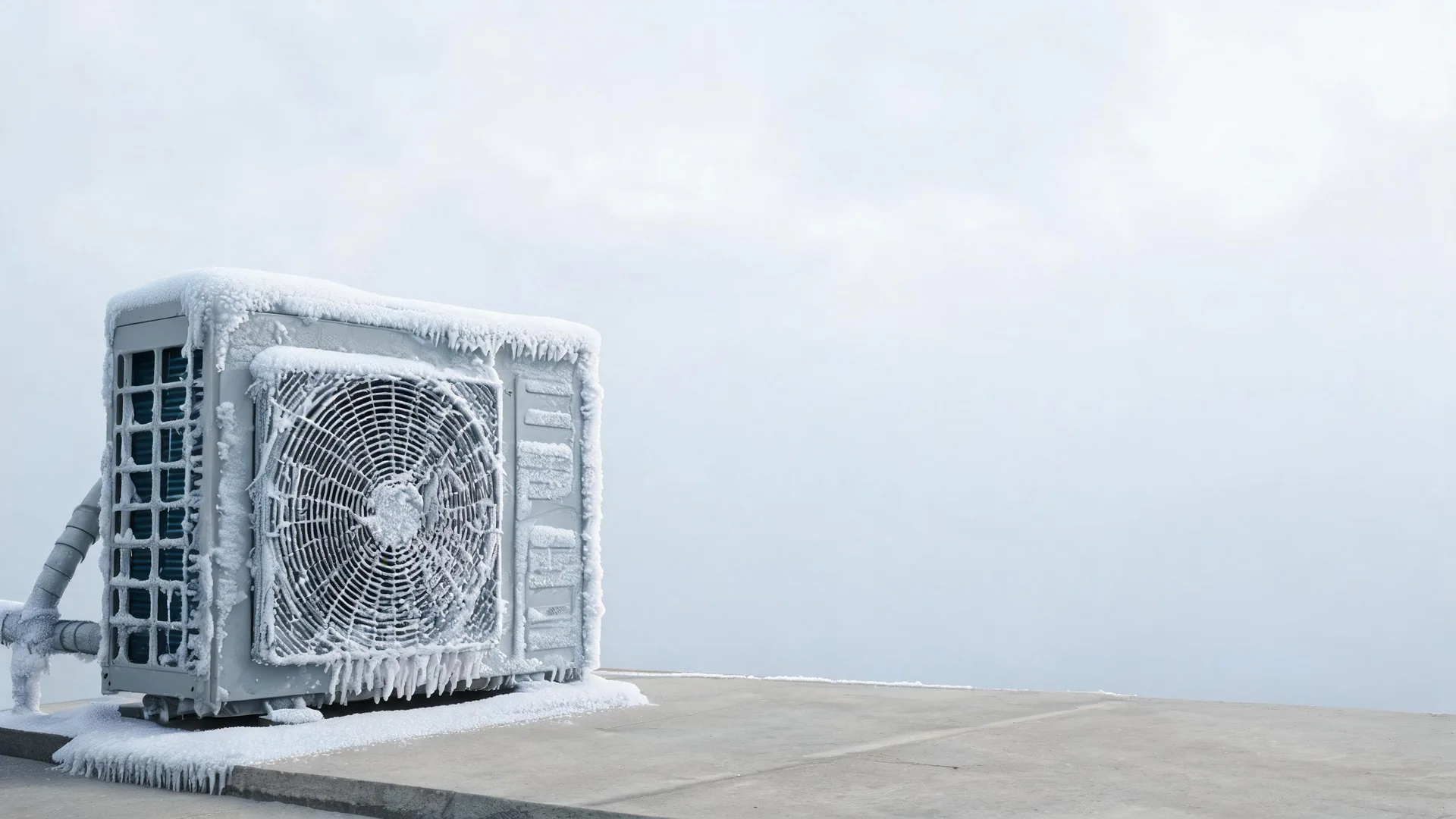
Don't take the outdoor cabinet apart or go near the refrigerant lines, that's sealed equipment and opening it without the right gauges and recovery setup turns a repair into a bigger job. If the outdoor coil has a heavy coat of ice on it, don't chip at it. Most heat pumps run a defrost cycle on their own, and forcing ice off by hand can bend the fins or crack the coil underneath. If the system is making a grinding or screeching sound, shut it off at the thermostat and leave it off until someone looks at it, since running a bad motor or bearing usually turns a repair into a replacement.

Most heat pump failures trace back to a handful of parts, and the reversing valve already got its due above. After that, the capacitor is the one that gives out most often. It's what gives the compressor and fans the jolt they need to start, and it weakens with every cycle until a motor hums and stalls instead of starting clean. The compressor itself is the expensive failure, and it's usually not the first thing to go bad, it's what dies after something smaller got ignored too long, like a refrigerant leak that starved it or a capacitor that made it strain to start over and over. Fan motors wear out on bearings the same way any motor does, and you'll hear it before the unit stops working, a grinding or rattling that gets worse over weeks. Clogged condensate drains cause more no-heat calls than people expect, since a float switch will shut the whole system down rather than let water back up into the house. None of these fail on a schedule. They fail from running, and a heat pump that runs year round simply racks up the hours faster.

A repair decision usually comes down to what the failed part says about the rest of the system. A capacitor failing on a unit that's otherwise been quiet is a fair trade to fix, since nothing else is asking to be replaced. A compressor failing on a unit that's needed two or three other repairs already is a harder case, since you're paying for the most expensive part to keep an aging system limping along. Ask the contractor what else shows wear while they're in there, not just what broke this time. A unit that keeps needing different parts fixed is usually further along than any single repair bill makes it look.