A snow-covered small-town street at dusk, with lit white clapboard houses, bare trees, and a grain elevator silhouetted against an orange and blue twilight sky.

Heat Pump Repair in New England, ND

Tell us about the job

Takes about a minute. No obligation.

RepairHeat PumpHettinger County, ND
Step 1 of 2

What ZIP code is the job in?

A heat pump here runs through a long, cold season

Hettinger County sits in zone 6A, a cold climate with a long heating season. A heat pump here is working most months of the year just to keep up, and that steady demand wears on the compressor and the coils faster than it would somewhere milder.


What that means when yours breaks down

A unit under this kind of load shows problems sooner, and a strange noise or a system that won't hold temperature is worth taking seriously rather than waiting out. Getting the actual cause diagnosed, instead of guessing, is what makes a repair hold.

9 months
September through May, your system heats
2 months
July through August, it cools
8°F
the average winter night it heats against
81°F
the average summer afternoon it cools against
Isometric cutaway illustration of a small house showing interior rooms with furniture, an indoor air handler with flexible ducting, and refrigerant lines running to an outdoor condenser unit beside the building.
Your system heats September through May and cools July through August.

NOAA nClimDiv, 1991–2020 normals

Half the homes in Hettinger County were built in 1964 or earlier.

A heat pump in a house that old is more likely near the end of its working life than at the start of one.

Cheap power still adds up when the system is struggling

Power here costs 12.64 cents per kilowatt-hour
72 damaging wind events from 2015 to 2024
54 hail events from 2015 to 2024
Heat pumps here break down on scheduleSeptember turns on nine months of heat, and a weak unit fails in the first cold snap, not the last.

A heat pump that's short cycling or running constantly still draws power the whole time it does it, and power bills here run on usage more than rate. If yours is struggling, the cost shows up fast even with cheap electricity behind it. A stuck defrost cycle, a failing compressor, or low refrigerant all make the unit run longer to do less, and that extra runtime is what you're paying for. Waiting to see if it sorts itself out usually just means paying more for the same problem a month from now. Have it looked at while the repair is still a repair.

Know what you're repairing before you pay for it

A repair can still be the right call. But if your heat pump came with a house built in 1964 or earlier, ask the contractor how much life is left in it before you put money into fixing it.

Find a contractor
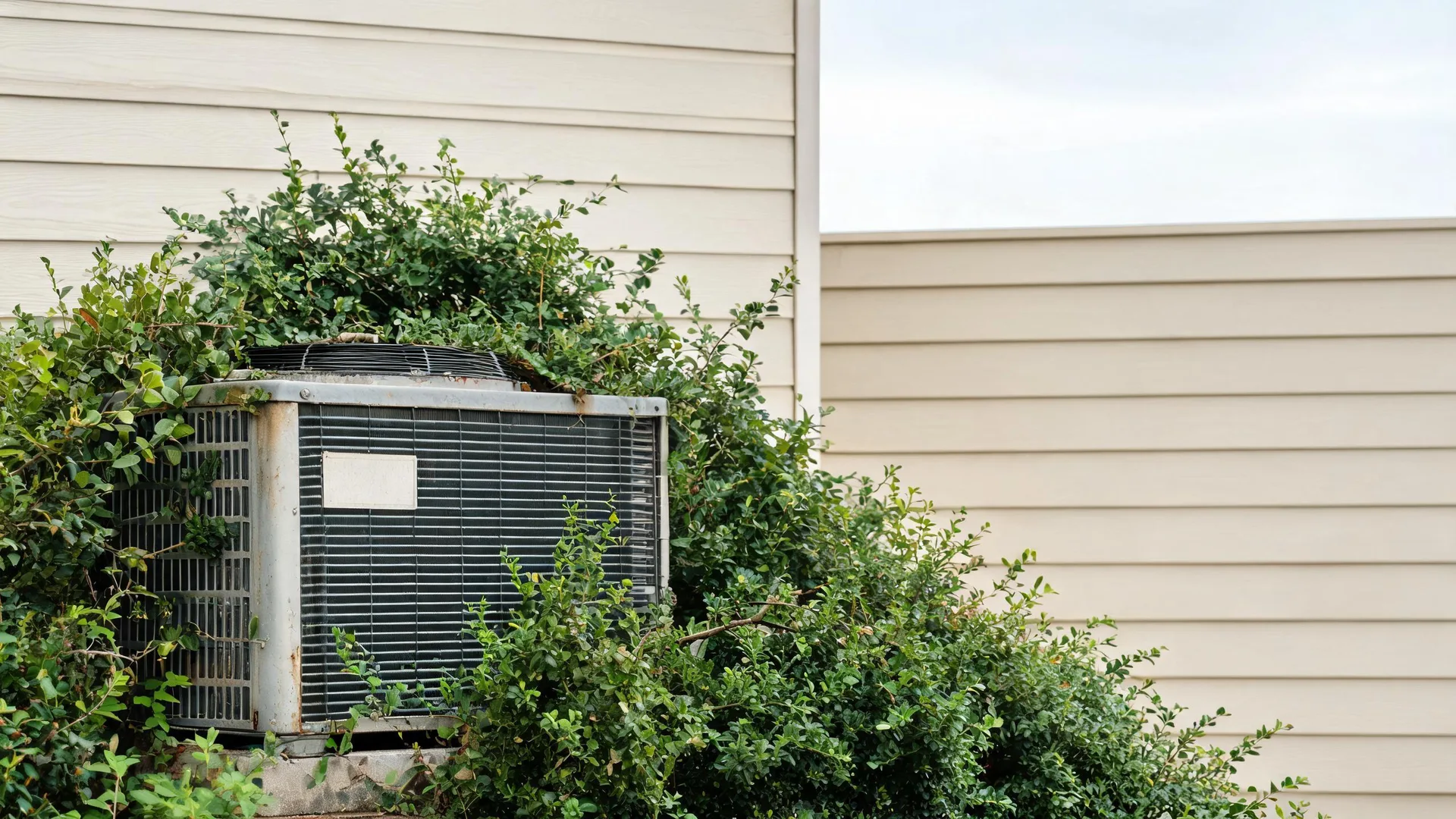
A gray heat pump outdoor unit mounted on a concrete pad next to the stone-accented exterior wall of a house.

This machine has been through more than one hard season

Wind, hail and winter storms show up often enough here that a heat pump takes a beating from more than just the cold. Seventy-two damaging wind events and 54 hail events hit this county between 2015 and 2024, along with 20 winter storms. None of that causes the kind of wear steady cold demand does, but it adds stress to a system that's already working hard most of the year. If your unit has been through a few rough seasons on top of that long heating load, don't assume a strange noise or a weak cycle is a one-time thing. Have it checked and find out what's actually going on before it gets worse.

A refrigerant leak doesn't stay small

A heat pump low on refrigerant still tries to move the same amount of heat, so the compressor works harder to make up for it. That extra strain shows up as heat, and heat is what kills a compressor. What starts as a slow leak and a system that runs a little long can end with a compressor that has to be replaced instead of a line that has to be patched.

A noise is the easy stage

A rattle, a squeal, or a clicking that wasn't there before means something is loose, worn, or about to fail outright. At this stage it's usually one part. Keep running the unit and that part can take others down with it, a bad bearing can wreck a motor, a failing capacitor can take out a compressor. The repair gets bigger the longer the noise gets ignored.

Before you call anyone, a few things are worth a look. Check the outdoor unit for ice built up on the coil or the lines, and make sure nothing is blocking airflow around it, leaves, snow, a fence line too close. Check the filter. A clogged filter starves the system of airflow and makes it work harder on both heating and cooling, and it's the one thing on this list you can fix yourself in a few minutes. Look at the thermostat, confirm it's set to the right mode and the batteries aren't dying, since a dead thermostat can look exactly like a dead system. If you see the outdoor fan not spinning while the indoor unit runs, or you hear it cycling on and off in short bursts, that's worth noting to tell the contractor, but not something to take apart yourself. Anything involving the refrigerant lines or the electrical panel isn't a homeowner fix, so once you've ruled out the filter and the thermostat, the rest is a job for someone with gauges and training.

A diagnostic visit starts outside, not with a toolbox. A tech checks the outdoor unit first, the coil, the fan, the refrigerant lines, because that's where a heat pump usually tells on itself. Indoors they'll pull the cover and check the air handler, the filter, the condensate line, and run the system through both a heating and a cooling cycle if the weather allows it, since a problem can hide in one mode and show up plainly in the other. Gauges go on the lines to check refrigerant pressure, because low pressure points to a leak and high pressure points somewhere else entirely, a bad valve or a failing compressor. They'll also check the electrical side, the capacitor, the contactor, the wiring at the board, since a part that's weak but not dead can still run the system poorly without ever shutting it down. By the end you should know exactly which part is failing and why, not just that something is wrong.