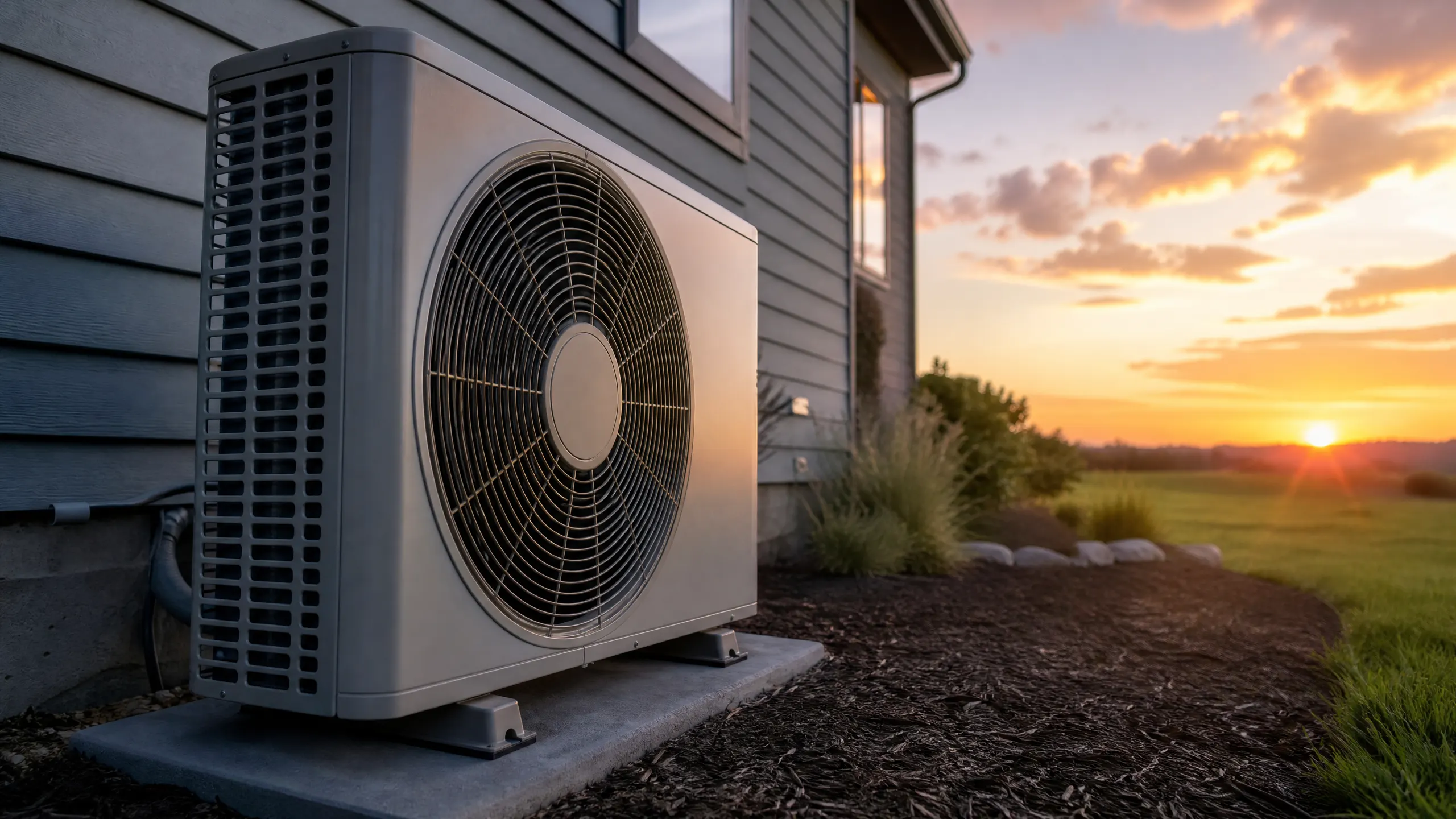
A grey residential air-conditioning condenser unit mounted on a concrete pad beside a house, photographed at sunset.

Heat Pump Repair in Minot, ND

Tell us about the job

Takes about a minute. No obligation.

RepairHeat PumpWard County, ND
Step 1 of 2

What ZIP code is the job in?

Age and history matter more than the symptom

A heat pump that's had one compressor issue or a refrigerant leak before is more likely to see another. If the outdoor unit is getting old and this isn't the first repair call, put more weight toward replacing it. A unit with a clean history is usually worth fixing again.


Compare the repair to the part, not the whole system

A failed capacitor, contactor, or blower motor is a routine fix on a unit that otherwise runs fine. A cracked heat exchanger or a failing compressor is different, since that part is central to how the whole system works and costly to replace on its own. Ask what's actually failing before deciding it's not worth fixing.

9 months
September through May, your system heats
2 months
July through August, it cools
5°F
the average winter night it heats against
79°F
the average summer afternoon it cools against
Isometric illustration of a cutaway single-story house showing interior ductwork and vents connected to an outdoor condenser unit beside the building, on a white background.
Your system heats September through May and cools July through August.

NOAA nClimDiv, 1991–2020 normals

A heat pump blowing air that isn't warm is usually stuck in defrost or low on charge, not dead.

Call while it's still running rough. Once the compressor quits trying altogether, it's a different repair.

Nine months of heat, starting in September, is what wears a heat pump down in Ward County

Cooling runs July through August
Heat runs September through May
70 hail events from 2015 to 2024

Half the homes in Ward County were built in 1984 or later, so a lot of the heat pumps out there are running in houses that aren't old themselves. If yours came with a newer build, the system is probably still within its working life, not at the end of it. That's worth knowing before you decide a repair isn't worth making. A unit that's seen one or two issues in a house this age is usually still a repair, not a replacement.

Get it looked at early

Problems tend to show up in the first weeks of the season, when the load hits a part that was already weak.

Find a contractor
A man in a cap, long-sleeve shirt and work pants climbs porch steps toward a dark blue front door, carrying a worn canvas tool bag, with a small potted evergreen beside the entry.
A gray heat pump outdoor unit mounted on a concrete pad next to a residential house with lap siding and stone accents.

A newer house usually means years left in the system

If your house is one of the newer ones, check when the heat pump itself was put in. A system installed with the house, or close to it, still has years ahead of it. That's reason enough to get a repair quote before you start pricing a replacement.

The reversing valve is a common failure point

The reversing valve switches a heat pump between heating and cooling. When it sticks, the system blows the wrong temperature or gets stuck in one mode. A stuck valve is a contained repair. It doesn't mean the compressor is failing.

Outdoor coil problems build up slowly

The outdoor coil exchanges heat with the outside air in every condition, and over years it can corrode or get caked with debris. A system that's lost capacity gradually, rather than quit all at once, is often a coil or airflow problem that's been building for a while.

A low charge is the clearest case of a problem that gets worse left alone. The compressor is built to move refrigerant, not air, and when the charge is low it starts pulling in gas instead of liquid on every cycle. That's what wears it down, not age by itself. A reversing valve that's starting to stick works the same way. It'll get worse the more the system switches between heat and cool on it, and that strain lands on the compressor too. Same with a coil that's lost airflow to dirt or corrosion. The compressor still runs the same cycle, just against more resistance, every time the system calls for heat. None of this means shut the unit off. It means a stuck valve or a dirty coil is a straightforward repair now, and waiting is what turns it into a compressor problem later.

A diagnostic visit starts outside, at the unit itself. A tech checks refrigerant pressure, looks at the reversing valve, and watches how the system responds when it's told to switch between heat and cool. Electrical readings come next, since a weak capacitor or a failing contactor shows up as a number that's off from what it should be, not just a part that looks worn. Airflow gets checked too, because a coil that's caked with debris or a blower that's underperforming can mimic a refrigerant problem even when the charge is fine. The point of all this is narrowing down which part is actually failing before anyone talks about fixing or replacing anything. A tech who can't tell you what's wrong, only that something is, hasn't finished the job yet.